The first time I heard the phrase “five-year replacement rule,” I was staring at a dental bill that looked more like a mortgage payment. I had this nagging feeling that my old porcelain cap was on its last legs—it felt slightly off when I chewed—but because it had only been four years since it was placed, my insurance provider basically told me I was on my own. It’s a gut punch, right? You pay your premiums every month, but when the time comes to maintain your smile, the fine print suddenly becomes an insurmountable wall. In my early days of navigating complex dental work, I assumed the dentist’s recommendation was the final word. I didn’t realize there was a second, invisible hurdle: the insurance adjuster’s stopwatch. Today, I want to peel back the curtain on why these denials happen and, more importantly, how you can navigate the system to get the care you actually need without draining your savings.
The Secret Five-Year Clock Ticking in Your Mouth
Most people assume that if a crown breaks or starts causing trouble, the insurance company will just cover the fix. I made the mistake of thinking my coverage was a safety net for any dental mishap. Early in my journey with cosmetic dentistry, I didn’t realize that most policies have a “frequency limitation” clause. If you’ve ever wondered about understanding dental crowns: when and why they are needed, you probably know they are meant to last, but insurance companies take that very literally. They usually won’t pay for a replacement unless that specific tooth has been crowned for at least five to seven years, regardless of whether you are trying to figure out how to tell if your crown is leaking and trapping bacteria. This period is arbitrary and doesn’t account for the fact that life happens—accidents, secondary decay, or even just poor initial placement can all cut that lifespan short.
Is My Dental Plan Actually Working Against My Health?
It certainly feels that way when you’re looking at a $1,500 bill. The reality is that insurance is a business of risk management, not necessarily a health-first endeavor. According to the American Dental Association, while the average lifespan of a crown is significantly longer, insurance companies use these strict timelines to cap their own costs. If you find yourself in a situation where your porcelain crown feels too high when you bite down or is physically cracked, you might be surprised to learn that “clinical necessity” isn’t always enough to bypass their internal clock. They want proof that the tooth can’t be saved any other way, and often, they’ll push for cheaper alternatives first.
Why Clinical Necessity Doesn’t Always Win the Argument
I learned the hard way that just because my dentist said I needed a new one, the insurance adjuster (who has never even seen my mouth) could still say “no.” It’s one of the biggest frustrations in the role of family dentistry today. They often classify replacements as elective if the structural failure doesn’t meet their specific “radiographic evidence” criteria. Have you ever been told your crown “looks fine on the X-ray” even though you know something is wrong? Drop a comment below if you’ve ever felt ignored by your provider; I’d love to hear your story. We’re going to look at the specific loopholes and documentation your dentist needs to provide to actually stand a chance at an appeal, especially when dealing with dental crowns explained: the ultimate solution for damaged teeth.To get past the insurance goalie, your dentist needs to speak ‘Adjuster.’ When I was dealing with my own crown failure, I sat down with my provider and realized we weren’t being specific enough. We were telling the company ‘it hurts,’ but insurance wants to hear ‘the margin is open and bacteria is ingress-ing.’ Think of your crown like a roof on a house; insurance won’t replace a roof just because it is old, but they will if a tree limb smashed a hole in it.
Force Their Hand with Diagnostic Evidence
If you are looking for dental crowns explained: the ultimate solution for damaged teeth, you’ll see they are sturdy, but not invincible. When a replacement is needed before the five-year mark, a simple X-ray usually isn’t enough because 2D images often hide what’s happening beneath the porcelain. You need your dentist to take high-resolution intraoral photos. When I finally won my appeal, it was because of a clear photo showing a gap where the crown met the gum line—evidence that couldn’t be ignored.
Identify the Functional Failure
Insurance companies love to label early replacements as ‘cosmetic.’ To fight this, your dentist must document a ‘functional failure.’ This means showing that the tooth is at risk of further damage, such as a root canal, if the crown isn’t swapped out immediately. If you’re weighing dental crowns vs other restorations: which is right for you, remember that a failed crown is a ticking time bomb for the structure beneath. 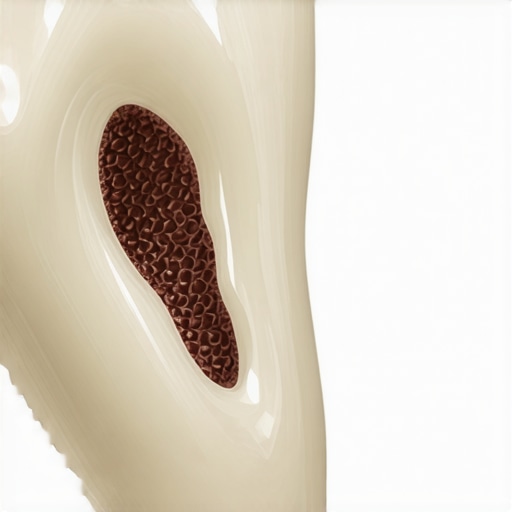
Demand a Peer-to-Peer Review
If the standard appeal gets rejected, ask your dentist to request a ‘peer-to-peer’ review. This is where your dentist speaks directly to the insurance company’s dental consultant. It’s the equivalent of a lawyer arguing before a judge instead of just filing paperwork. In the role of family dentistry, your provider should act as your advocate. This step often bypasses the automated rejection systems that keep many patients stuck with damaged teeth.
Explain the Decay Beyond the Porcelain
Sometimes the issue isn’t the crown itself, but the tooth underneath. If there is recurrent decay, the five-year rule often goes out the window. If you’ve been wondering why your porcelain crown feels too high when you bite down, it might be shifting due to underlying issues. We once had a patient who was told she had to wait two more years for a replacement, but by proving that the decay was threatening the nerve, we bypassed the frequency limitation entirely. This saved her from the real cost of delaying a root canal for a month.
The Secret of Clinical Narratives
Every word in your dentist’s notes counts. Think of it as building a legal case. When I worked with a patient named Sarah, her insurance denied a crown because she was only at four years and three months. We didn’t just resubmit the same claim; we added a narrative describing how the ‘integrity of the abutment’ was compromised. This sounds technical, but it’s the language of approval. By showing that the foundation of the tooth was at risk, the insurance company was forced to acknowledge that a replacement wasn’t just a choice—it was a necessity to prevent an extraction later. Even if you’re trying to make dental bonding last more than five years, the documentation requirements remain just as strict.The biggest misconception I encounter in my practice is the rigid wall insurance companies build between ‘cosmetic’ and ‘functional’ care. Patients often think they have to choose one or the other, but in high-level dentistry, the two are inseparable. A crown that isn’t aesthetically designed—meaning it doesn’t perfectly mimic the natural anatomy and contours of your tooth—is often a crown that will fail functionally. If a restoration lacks the correct ’emergence profile,’ it becomes a trap for bacteria and plaque at the gumline. This is where the role of family dentistry evolves from basic maintenance into specialized advocacy. You aren’t just buying a porcelain cap; you are investing in a biological seal that protects the tooth’s root.
The Dangerous Gap Between Cosmetic and Functional Care
Insurance adjusters love to categorize early crown replacements as ‘elective’ if the crown is still physically attached to the tooth. However, a crown can be ‘leaking’ at the margins long before it falls off or shows up as a dark shadow on a standard 2D X-ray. To combat this, we often have to prove that the current restoration is a health hazard. In the world of expert cosmetic dentistry solutions, we look for ‘micro-leakage’—tiny gaps that allow sugar and bacteria to seep underneath. If your dentist isn’t documenting these microscopic failures with intraoral photos, the insurance company will likely hide behind their arbitrary five-year clock.
Why Does Your Bite Matter More Than the X-Ray?
One ‘oops’ factor I see constantly is the failure to address why the first crown broke in the first place. If you have a heavy bite or a night-grinding habit, even the most expensive crown is just a temporary fix. Insurance adjusters rarely look at ‘occlusal wear’ unless it’s documented as a primary cause of structural failure. If you’re constantly wondering how to stop clenching your jaw when you feel stressed, you need to solve that underlying issue before placing a new restoration. A study published in the Journal of Prosthetic Dentistry highlights that mechanical failures, such as ceramic fractures, are significantly higher in patients with untreated parafunctional habits (like grinding) compared to those using protective night guards. 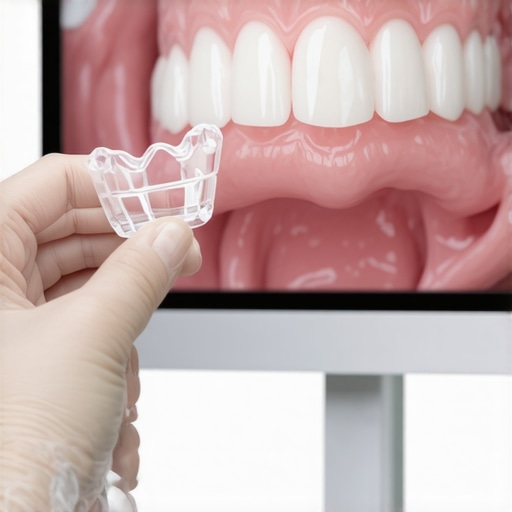
Stop Letting the LEAT Clause Dictate Your Oral Health
Another trap that catches patients off guard is the ‘Least Expensive Alternative Treatment’ (LEAT) clause. This is the insurance company’s way of saying they will only pay for the cheapest material possible, regardless of what is best for your specific mouth. They might offer to pay for a silver filling or a base-metal crown when your tooth actually requires high-strength zirconia to survive your bite force. While cosmetic dentistry innovations to watch show we are moving toward incredibly durable metal-free materials, insurance companies are slow to update their payment structures. When weighing dental crowns vs other restorations: which is right for you, never let a corporate policy manual dictate the biology of your smile. Choosing the wrong material just because it’s ‘covered’ often leads to a second failure within two years, putting you right back in the denial loop. Have you ever fallen into this trap where you chose the cheaper option only for it to fail prematurely? Let me know in the comments.Once you have successfully navigated the insurance maze and secured your restoration, the real work shifts from advocacy to preservation. I have seen too many patients fight tooth and nail for a high-end zirconia crown only to treat it like a natural tooth that can handle anything. It can’t. If you want to avoid a repeat of the five-year-rule headache, you need a maintenance kit that goes beyond a standard toothbrush. Personally, I never recommend a traditional string floss for crowns because of the risk of catching a margin and slowly lifting it over time. Instead, I advocate for an oral irrigator, but with a specific caveat: use the ‘orthodontic’ or ‘plaque seeker’ tip. This isn’t just about water pressure; it’s about the mechanical action of the bristles at the crown-to-gum interface where cosmetic dentistry is most vulnerable. This is how you prevent how to tell if your crown is leaking and trapping bacteria from becoming a reality.
The Tools That Actually Save Your Smile
Most people buy the most expensive electric toothbrush and think they are done. In my practice, I’ve found that the biggest game-changer is actually a high-quality night guard. According to a study by Dr. Gordon Christensen of the Clinical Research Associates (CRA), a significant percentage of porcelain failures are attributed not to material defect, but to nighttime bruxism. If you are investing in dental crowns explained: the ultimate solution for damaged teeth, a custom-fitted occlusal guard is your insurance policy against your own jaw. I personally use a dual-laminate guard—hard on the outside for durability and soft on the inside for comfort. This prevents the micro-fractures that insurance companies use as an excuse to deny your next claim. 
How do I maintain my dental restorations over time?
The secret lies in the chemistry of your cleaning routine. I tell my patients to stop using abrasive charcoal toothpastes immediately. They are the enemy of top cosmetic dentistry trends for 2025 because they scratch the glaze on your porcelain, making it look dull and attracting more stains. When it comes to your protective gear, you must learn how to clean a night guard without using harsh chemicals or bleach to ensure you aren’t introducing corrosive elements into your mouth. Looking forward, the trend is moving toward AI-integrated diagnostic software. In the next few years, we will likely have home-use intraoral cameras that sync with your dentist’s office, alerting us to a margin failure before it ever becomes painful. This proactive approach is the ultimate evolution of the role of family dentistry. I strongly encourage you to ask your dentist about digital scanning (like iTero) at your next check-up; having a 3D digital baseline of your mouth makes it nearly impossible for an insurance company to argue that a future ‘shift’ or ‘failure’ isn’t clinically significant. Try asking for a ‘digital scan record’ at your next cleaning—it’s the best way to document your oral health for the long haul.
What Nobody Tells You About the Insurance Waiting Game
After years in this field, I’ve realized the biggest myth is that dental health is linear. It is not. Sometimes a restoration fails because of a microscopic error during placement, and other times it is simply your body’s biology reacting to the material. I have learned that the truth about the lifespan of composite tooth colored fillings and crowns is often more about the environment of your mouth than the material itself. If you are stuck in a denial loop, remember that insurance adjusters are trained to look for ‘standard’ cases; your job is to prove why you are the exception by highlighting unique clinical factors.
My Personal Kit for Outlasting the Five-Year Rule
If you want to ensure you never have to argue with an adjuster again, you need a proactive defense. First, I always suggest patients look into dental crowns vs other restorations: which is right for you before even starting the process, as the right material choice, like high-strength zirconia, can prevent early fractures. Second, once the crown is in, you must protect it from the silent killer of dental work: nighttime grinding. I trust a custom-fit dual-laminate guard above all else. However, keeping it pristine is key, so make sure you know how to clean a night guard without using harsh chemicals or bleach to avoid degrading the material. Finally, I swear by a high-end water flosser; it is the only way to reach the deep margins where bacteria love to hide. #IMAGE_PLACEHOLDER_E#
Claim Your Seat in the Dental Chair with Confidence
You are the ultimate advocate for your own health. Don’t let a corporate policy manual define the quality of your life or the longevity of your smile. By partnering with a provider who understands the role of family dentistry as a form of clinical advocacy, you can navigate these hurdles with ease. The future of your oral health is not written in a fine-print clause; it is built in the daily habits and the expert care you choose today. Have you ever had a dental claim denied for a reason that felt totally unfair? Let me know in the comments below!