I woke up last Tuesday with that familiar, nagging throb right at the back of my jaw. My first instinct? “Oh great, my wisdom teeth are acting up.” Then I remembered—my wisdom teeth have been sitting in a biohazard jar at a surgeon’s office since 2008. It is a bizarre, unsettling sensation to feel pain in a place where nothing is supposed to be happening. If you have ever reached back there with your tongue, feeling only smooth gum tissue while your brain screams that there is an impaction, you are not losing your mind. I spent years thinking this was just some weird ‘phantom limb’ situation for my mouth, but the reality is often much more practical—and fixable. Today, I am going to walk you through exactly why that empty space is causing you grief and how to tell the difference between a minor annoyance and a dental emergency. Have you ever felt a pulse in your jaw and wondered if your old teeth were somehow making a comeback?
That Nagging Ache in the Back of Your Jaw
When I first started experiencing this, I made the classic mistake of ignoring it. I figured if the teeth were gone, the problems were gone too. I actually waited so long to see a professional that a simple gum irritation turned into a full-blown infection that required a round of heavy-duty antibiotics. It turns out, your mouth is a crowded neighborhood, and even when a tenant (like a wisdom tooth) moves out, the neighbors can still cause a ruckus. Sometimes, the pain isn’t even coming from your jaw at all. For instance, I’ve learned that knowing if your jaw pain is actually a sinus infection can save you a lot of unnecessary stress, as those maxillary sinuses sit right on top of your upper molar roots.
Is this ghost pain actually worth the panic?
It is easy to get skeptical. You might think, “It’s just a little soreness, I’ll sleep it off.” But according to the American Association of Endodontists, referred pain is one of the most common reasons patients misidentify the source of their discomfort. Your nerves are like a tangled mess of Christmas lights; when one bulb flickers in the back, you might feel the heat three bulbs down. This is why maintaining a solid foundation through consistent family dentistry is so vital—it helps track these changes before they become mysteries.
Why Your Mouth Is Lying to You About the Pain
The most common reason for that back-of-the-mouth throb isn’t a ghost tooth, but rather the health of the gums and the surrounding teeth. If you have a restoration nearby, you might find your gums throb only when you lay down at night, which is a classic sign of blood pressure changes affecting inflamed tissue. We also have to consider the second molars. Without those wisdom teeth to lean on, sometimes those back molars take the brunt of your bite, leading to issues like pain that only flares up when you are stressed and subconsciously clenching. It’s a complex puzzle, but once you stop looking for teeth that aren’t there and start looking at the structures that remain, the solution usually becomes pretty clear.
Flush Out the Source of the Ache
The first thing you should do is perform a gentle irrigation. Even years after an extraction, the gum tissue in the back of your mouth can form small pockets or indentations that act as debris traps. I recommend using a warm salt water rinse—think of it as a mini-power wash for your gums. Swish vigorously for 30 seconds. If the pain subsides, you likely had a piece of stray food irritating the nerve endings. If you have a deeper pocket, learning how to clean food out of a wisdom tooth hole safely without poking around blindly is a game changer. I once spent twenty minutes with a wooden toothpick trying to ‘rescue’ a piece of almond skin from the back of my jaw. I didn’t get the almond, but I did manage to puncture the delicate tissue, and within 24 hours, my jaw was twice its normal size. It was a painful lesson in why the hidden dangers of using a toothpick to clean your gums are no joke.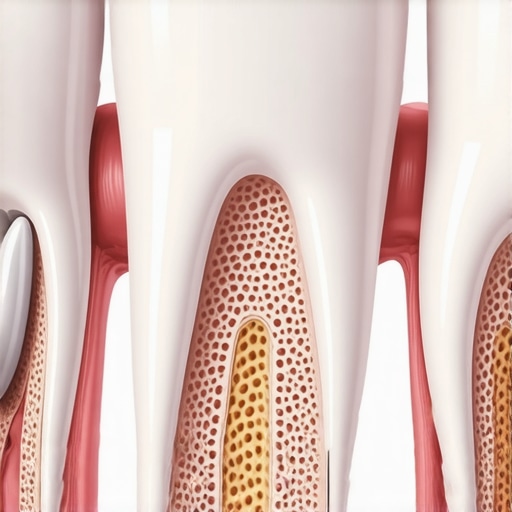
Look Closely at Your Neighboring Teeth
When the ‘ghost’ wisdom tooth hurts, the culprit is often actually the second molar right next door. Because there is no longer a tooth behind it, that molar can shift or become harder to clean on its backside. Check for any bumps or redness in the mirror. You need to know how to tell if that bump on your gum is a pimple or an abscess, because a localized infection at the root of the next tooth can mimic that deep, throbbing wisdom tooth pain. If that tooth has been heavily repaired in the past, it might be reaching its limit. Sometimes, dental crowns are the ultimate solution for damaged teeth that are flexing under the pressure of your bite. If you already have one, keep an eye on the edges; why your gums look dark around a dental crown can often be an early indicator of recession or margin issues that allow bacteria to seep in and cause that dull, phantom ache.
The Danger of Playing Amateur Dentist with Sharp Objects
Stop the urge to probe the area with your fingernails or metallic objects. If the salt water doesn’t work, your next step is a bite assessment. Try to notice if you are clenching your jaw during the day or if your teeth feel sore after a long night of sleep. Without the wisdom teeth to distribute the force, your remaining molars and the TMJ (temporomandibular joint) can become overworked. This mechanical stress feels exactly like a toothache. I found that even the risks of skipping your night guard for just one week were enough to bring that ‘ghost pain’ back in full force. Use a soft-bristled brush to gently massage the area and see if the pain is surface-level or deep in the bone. Surface-level pain usually points to a gum issue, while deep, rhythmic throbbing usually suggests it is time to have a professional look for hidden structural issues.I woke up last Tuesday with that familiar, nagging throb right at the back of my jaw. My first instinct? “Oh great, my wisdom teeth are acting up.” Then I remembered—my wisdom teeth have been sitting in a biohazard jar at a surgeon’s office since 2008. It is a bizarre, unsettling sensation to feel pain in a place where nothing is supposed to be happening. If you have ever reached back there with your tongue, feeling only smooth gum tissue while your brain screams that there is an impaction, you are not losing your mind. I spent years thinking this was just some weird ‘phantom limb’ situation for my mouth, but the reality is often much more practical—and fixable. Today, I am going to walk you through exactly why that empty space is causing you grief and how to tell the difference between a minor annoyance and a dental emergency. Have you ever felt a pulse in your jaw and wondered if your old teeth were somehow making a comeback?
That Nagging Ache in the Back of Your Jaw
When I first started experiencing this, I made the classic mistake of ignoring it. I figured if the teeth were gone, the problems were gone too. I actually waited so long to see a professional that a simple gum irritation turned into a full-blown infection that required a round of heavy-duty antibiotics. It turns out, your mouth is a crowded neighborhood, and even when a tenant (like a wisdom tooth) moves out, the neighbors can still cause a ruckus. Sometimes, the pain isn’t even coming from your jaw at all. For instance, I’ve learned that knowing if your jaw pain is actually a sinus infection can save you a lot of unnecessary stress, as those maxillary sinuses sit right on top of your upper molar roots.
Is this ghost pain actually worth the panic?
It is easy to get skeptical. You might think, “It’s just a little soreness, I’ll sleep it off.” But according to the American Association of Endodontists, referred pain is one of the most common reasons patients misidentify the source of their discomfort. Your nerves are like a tangled mess of Christmas lights; when one bulb flickers in the back, you might feel the heat three bulbs down. This is why maintaining a solid foundation through consistent family dentistry is so vital—it helps track these changes before they become mysteries.
Why Your Mouth Is Lying to You About the Pain
The most common reason for that back-of-the-mouth throb isn’t a ghost tooth, but rather the health of the gums and the surrounding teeth. If you have a restoration nearby, you might find your gums throb only when you lay down at night, which is a classic sign of blood pressure changes affecting inflamed tissue. We also have to consider the second molars. Without those wisdom teeth to lean on, sometimes those back molars take the brunt of your bite, leading to issues like pain that only flares up when you are stressed and subconsciously clenching. It’s a complex puzzle, but once you stop looking for teeth that aren’t there and start looking at the structures that remain, the solution usually becomes pretty clear.
Flush Out the Source of the Ache
The first thing you should do is perform a gentle irrigation. Even years after an extraction, the gum tissue in the back of your mouth can form small pockets or indentations that act as debris traps. I recommend using a warm salt water rinse—think of it as a mini-power wash for your gums. Swish vigorously for 30 seconds. If the pain subsides, you likely had a piece of stray food irritating the nerve endings. If you have a deeper pocket, learning how to clean food out of a wisdom tooth hole safely without poking around blindly is a game changer. I once spent twenty minutes with a wooden toothpick trying to ‘rescue’ a piece of almond skin from the back of my jaw. I didn’t get the almond, but I did manage to puncture the delicate tissue, and within 24 hours, my jaw was twice its normal size. It was a painful lesson in why the hidden dangers of using a toothpick to clean your gums are no joke.
Look Closely at Your Neighboring Teeth
When the ‘ghost’ wisdom tooth hurts, the culprit is often actually the second molar right next door. Because there is no longer a tooth behind it, that molar can shift or become harder to clean on its backside. Check for any bumps or redness in the mirror. You need to know how to tell if that bump on your gum is a pimple or an abscess, because a localized infection at the root of the next tooth can mimic that deep, throbbing wisdom tooth pain. If that tooth has been heavily repaired in the past, it might be reaching its limit. Sometimes, dental crowns are the ultimate solution for damaged teeth that are flexing under the pressure of your bite. If you already have one, keep an eye on the edges; why your gums look dark around a dental crown can often be an early indicator of recession or margin issues that allow bacteria to seep in and cause that dull, phantom ache.
The Danger of Playing Amateur Dentist with Sharp Objects
Stop the urge to probe the area with your fingernails or metallic objects. If the salt water doesn’t work, your next step is a bite assessment. Try to notice if you are clenching your jaw during the day or if your teeth feel sore after a long night of sleep. Without the wisdom teeth to distribute the force, your remaining molars and the TMJ (temporomandibular joint) can become overworked. This mechanical stress feels exactly like a toothache. I found that even the risks of skipping your night guard for just one week were enough to bring that ‘ghost pain’ back in full force. Use a soft-bristled brush to gently massage the area and see if the pain is surface-level or deep in the bone. Surface-level pain usually points to a gum issue, while deep, rhythmic throbbing usually suggests it is time to have a professional look for hidden structural issues.
Why a Crown Isn’t a Forever Shield
Most people assume that once a tooth is capped with a crown, it is safe from decay forever. This is perhaps the most dangerous myth in family dentistry. In reality, a crown is a precision-engineered cover, but the seam where the porcelain meets your natural tooth—the margin—is still susceptible to plaque. If you have noticed why your gum line looks dark around an old crown, you might be looking at more than just a cosmetic issue; it could be a sign that the seal is failing. A study in the Journal of Dentistry indicates that marginal leakage is a primary cause of secondary cavities, which often go undetected because the crown hides the decay from the naked eye. This is why choosing between dental crowns and other restorations requires a deep look at your long-term hygiene habits, not just a quick fix.
The Expensive Mistake of Ignoring a Loose Fit
When a restoration starts to feel ‘off,’ many patients wait for actual pain to strike before booking an appointment. This is the ultimate trap. By the time a crowned tooth hurts, the decay has often reached the nerve, turning a simple resealing job into a costly root canal or extraction. Some people even try to take matters into their own hands, but I cannot stress enough the danger of using super glue to fix a broken crown. The chemicals in household adhesives are toxic to living pulp tissue and can cause irreversible damage in minutes. If you are looking to enhance your confidence with cosmetic dentistry innovations to watch, remember that the most beautiful smile is built on a foundation of structural integrity. High-end ceramics and digital scans are great, but they cannot overcome the mistake of delaying basic maintenance.
Could your bite be the hidden culprit behind that phantom ache?
Sometimes the pain in that empty wisdom tooth space has nothing to do with bacteria at all. If your remaining teeth have shifted even a fraction of a millimeter, your bite can become ‘heavy’ on a single spot. Have you ever wondered why your tooth hurts only when you release your bite? This is a classic symptom of a micro-crack or a high spot on a restoration. When you bite down, you are compressing the tooth; when you let go, the internal pressure equalizes sharply, causing a zap of pain that can radiate to the back of the jaw. This is where advanced tools like 3D occlusal mapping come into play, helping us find the imbalance that a standard visual exam might miss. Have you ever fallen into the trap of thinking a crown was a permanent, maintenance-free solution? Let me know in the comments.
I have realized that standard flossing is just the basic entry-level requirement once you have moved into the world of crowns or had major extractions. Personally, I swear by a high-end water flosser equipped with a specialized periodontal tip. Why? Because the back of your mouth, especially that empty space where a wisdom tooth once sat, is a topographical nightmare for traditional string. If you are struggling with why your gums are receding despite using a soft toothbrush, it is often because you are scrubbing the surface but missing the bacterial colonies hiding in the deep architecture of your jaw.
The Specialized Kit Every Adult Needs for Maintenance
My daily routine changed when I stopped treating my mouth like a flat surface and started treating it like a complex mechanical system. I use interdental brushes of varying sizes to reach the areas where my second molars and crowns meet. These tools are far more effective at removing biofilm than a standard brush. If you have been looking into dental crowns as the ultimate solution for damaged teeth, you must accept that the crown is only as good as the gum line supporting it. Neglect that margin, and you are basically building a house on sand.
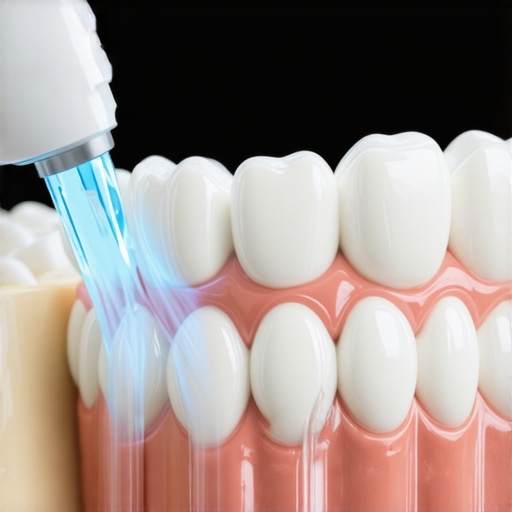
Beyond physical tools, I have started using pH-balancing mouth rinses. Most people don’t realize that a highly acidic mouth can actually accelerate the breakdown of dental cements. By keeping your oral environment alkaline, you are effectively extending the life of your investment. This is a crucial part of building a lifetime of healthy smiles. I also keep a set of disclosing tablets in my cabinet—those little purple pills that highlight plaque—to use once a month. It is a humbling experience to see exactly where your technique is failing, but it is the only way to scale your hygiene to a professional level at home.
How can I ensure my dental restorations last a lifetime?
The secret is proactive monitoring rather than reactive repair. You need to be looking for the smallest changes in sensation. If you feel your tooth hurts only when you release your bite, you aren’t just imagining things; you are feeling the early warning signs of a structural shift. According to the International Journal of Computerized Dentistry, the integration of 3D intraoral scanners has significantly increased the success rate of restorations because they allow for a perfect fit that doesn’t put undue stress on the surrounding bone. This is exactly why your dentist might need a 3D scan to find hidden tooth pain that a traditional X-ray would miss.
Why 3D Scans Are the New Standard for Hidden Pain
I predict that within the next five years, AI-assisted diagnostic software will be able to predict the failure of a crown or the onset of gum disease years before a human eye can detect it. We are already seeing cosmetic dentistry innovations that focus as much on the biological longevity of the tooth as they do on the aesthetic. Moving forward, the trend is shifting toward ‘bio-emulation’—using materials that mimic the exact expansion and contraction of natural enamel. This reduces the risk of that phantom pain returning because the tooth and the restoration move as one unit.
If you take nothing else away from my experience, let it be this: buy a high-quality water flosser today and use it on a low setting to irrigate those back-of-the-jaw pockets. It is the single most effective way to stop ‘ghost’ wisdom tooth pain in its tracks. Have you checked the margins of your old dental work lately?
What My Phantom Tooth Taught Me About Dental Reality
I used to think that dental health was a destination—once the wisdom teeth were out or the crown was in, I was finally finished. I have since learned that your mouth is a living, shifting landscape where even an empty socket requires attention. One major takeaway is that your gums have a long memory; they react to the structural changes left behind and often need more care than the actual teeth. I also discovered that referred pain is a master of disguise. Often, what feels like a recurring wisdom tooth issue is actually a nearby restoration needing adjustment. Since dental crowns are the ultimate solution for damaged teeth, we often ignore them until they fail, but keeping a close eye on the integrity of the gum line is the best way to prevent that phantom throb. Lastly, never underestimate the power of your bite; even a microscopic shift in how your molars meet can radiate a dull ache right to the back of your jaw.
The Daily Gear That Finally Silenced the Ghost
To keep my mouth from lying to me about pain, I have curated a specific toolkit that goes beyond the standard toothbrush. First, a water flosser is non-negotiable for properly irrigating the small pockets where wisdom teeth once lived. I also rely on pH-balancing rinses to protect the chemical seals on my existing dental work, ensuring the environment remains alkaline. I have found that the role of family dentistry in ensuring oral health for all ages is more about proactive coaching than just reactive drilling. Finally, I advocate for high-tech diagnostics. If you are feeling a mystery ache that won’t go away, understanding why your dentist might need a 3D scan to find hidden tooth pain becomes very clear once you see the precision these digital maps provide.
Take Control Before the Throb Returns
Do not let a ghost tooth haunt your daily life or disrupt your sleep. That nagging sensation in your jaw is your body asking for a closer look, whether it is a simple debris issue or a sign that your bite needs a professional tune-up. By staying proactive and utilizing modern tools like water flossers and interdental brushes, you can ensure that wisdom tooth pain remains a part of your medical history rather than a daily struggle. Your long-term comfort is worth the extra few minutes of maintenance every night. Have you ever felt a phantom pulse in a spot where you no longer have a tooth? Let me know your experience in the comments below!