I was standing in front of my bathroom mirror, leaning in so close my breath was fogging up the glass, when I saw it. My lower left canine looked… different. It was longer. Not because the tooth had grown, but because the pink gum line had beat a hasty retreat, leaving a yellowish root exposed. I felt that cold spike of “dentist dread” hit my stomach. I’ve always been a bit of a stickler for oral health, following every tip in a family dentistry guide, yet here I was with a lopsided smile. It felt personal, like that one tooth was betraying the rest of my mouth. I remember running my tongue over it and feeling a weird little shelf where there used to be smooth gum tissue. I actually cancelled my weekend plans because I was convinced I needed an emergency gum graft. [image_placeholder_1]
That Morning I Noticed My Tooth Looked a Little Too Long
If you are currently staring at one specific gap in your gum line and wondering why your gums are receding in only one area of your mouth, I want you to take a deep breath. You aren’t losing all your teeth by Tuesday. Usually, when recession happens in a localized spot, it’s not a mystery systemic illness—it’s a specific habit or a mechanical quirk that we can actually fix. It took me three different dentist visits and a lot of self-observation to realize my issue wasn’t disease, it was my own aggressive behavior with a toothbrush. Today, I’m going to walk you through exactly how I identified the culprit in my own routine and how you can stop that gum line from moving another millimeter without jumping straight to surgery.
Is localized gum recession actually worth the worry?
You might be thinking, “It’s just one tooth, can’t I just ignore it?” I tried that for a month, hoping it would just… grow back? Spoiler alert: gums don’t work like hair. The problem is that once that root is exposed, it’s like a house without siding; it’s vulnerable to sensitivity and decay. According to the American Academy of Periodontology, localized recession affects nearly 50% of the population, and it’s often more about physical trauma than just “not brushing enough.” If you let it go, that sensitivity when you drink cold water becomes a permanent part of your life. Plus, it can eventually lead to bone loss in that specific area, which is a much bigger headache to fix than a simple habit change.
Stop Scrubbing That One Spot Like You Are Sanding a Deck
It turns out, I was my own worst enemy. I didn’t know how to tell if your gum recession is caused by brushing too hard, so I just doubled down on the pressure. I thought I was being a “pro” at family dentistry at home, but I was actually mechanically pushing my gums away. I would stand there, thinking about work or what to make for dinner, and I would just hammer away at that lower left quadrant. Have you ever noticed that you tend to press harder on the side of your mouth opposite your dominant hand? That little realization was my “lightbulb moment.” It’s a classic mistake made by those of us who are “over-achievers” with our oral hygiene. Have you ever looked in the mirror and realized one side of your mouth looks completely different from the other? We’re going to look at why these specific “hot spots” happen—whether it’s your brushing technique, a misaligned bite, or even a hidden clenching habit. Let’s get into the nitty-gritty of why your body is sounding the alarm on just one tooth.
Hold your toothbrush like a pencil instead of a hammer
The first thing I did to save my receding gum was changing my grip. I used to hold my toothbrush in a full fist, which gave me way too much leverage. Think of your gums like delicate silk, not a dirty rug. If you scrub silk with a wire brush, it’s going to fray and pull apart. To fix this, I started using the two-finger rule: hold the brush only with your thumb and index finger. This makes it physically impossible to apply enough force to damage the tissue. I remember the first morning I tried this; I felt like I wasn’t even cleaning my teeth. But when I checked the mirror, they were just as shiny, and my gums didn’t have that angry red glow they usually had after a ‘deep scrub.’ If you’ve been aggressive, you need to learn how to tell if your gum recession is caused by brushing too hard to stop the damage before it hits the bone. 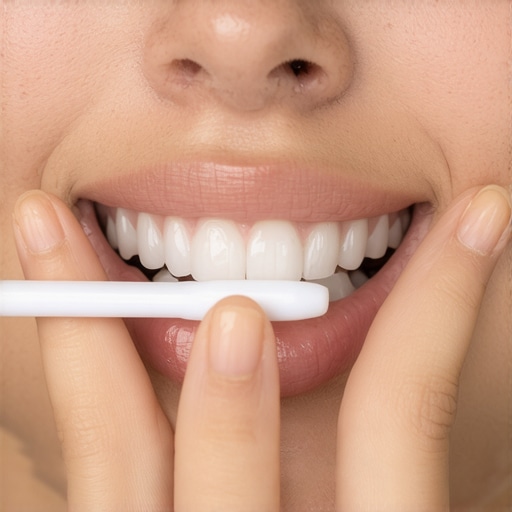
Check your mouth for the telltale signs of midnight clenching
It wasn’t just my brushing; it was what I was doing while I slept. My dentist pointed out that localized recession is often a ‘pressure relief’ valve for the tooth. If you are clenching your jaw at night, that specific tooth might be taking the brunt of the force, causing the gum to pull away as the tooth slightly flexes. I started checking for a ‘scalloped tongue’—which is when the edges of your tongue have little indentations from being pressed against your teeth. Once I realized I was a grinder, I had to learn how to stop clenching your jaw when you feel stressed during the day so it wouldn’t carry over into my sleep. I even started using a night guard, and you have to be diligent about hygiene there too, so make sure you know how to clean a night guard without using harsh chemicals or bleach to keep your breath fresh.
Why some teeth need a literal helmet to survive
Sometimes the recession has moved so far that the tooth structure itself is at risk. This is where the ‘mechanical’ part of family dentistry comes in. If the enamel is worn thin, the tooth becomes brittle. In my case, my dentist discussed the possibility of a crown. Think of a crown like a helmet for a quarterback; it absorbs the impact so the player doesn’t get a concussion. By understanding dental crowns when and why they are needed, you can see how they protect the remaining tooth from further recession-related decay. It’s not just about aesthetics; it’s about structural integrity.
When cosmetic fixes do more than just look pretty
If the gap in your gums is making you self-conscious, you don’t always have to jump to a surgical graft immediately. There are modern ways to mask the area and protect the root simultaneously. Looking into revamp your smile top cosmetic dentistry trends for 2025, I found that composite bonding can often ‘fill in’ the space where the gum has retreated, acting as a shield for the sensitive root. This approach is much less invasive than surgery and can be done in a single visit to the dentist. I opted for a small amount of bonding on my canine, and the shooting pain I used to get when drinking ice water vanished almost instantly. It felt like finally putting a jacket on a shivering tooth.
Most people think of the core of the role of family dentistry as a passive ‘wait and see’ game—just get your cleanings and hope for the best. But when it comes to localized gum recession, the real expertise lies in the structural nuances we often ignore until we feel that sharp zing of sensitivity. There is a common myth that getting a crown is a sign of failure, a ‘white flag’ you wave when a tooth is past its prime. In reality, a well-engineered restoration can be the only thing stopping your gums from receding into oblivion. I have seen countless cases where someone avoids a restoration because they want to stay ‘natural,’ only to end up with a fractured root that requires a full extraction. When you are understanding dental crowns when and why they are needed, you realize they are often the last line of defense for your delicate gum architecture.
Here is the big ‘oops’ factor I learned after hours of research and dental consultations: not all restorations are created equal, and a bad fit is worse than no fit at all. If the margin of a crown—the exact line where the ceramic meets your natural tooth—is not perfectly flush, it becomes a literal magnet for bacteria. You might think you are a hygiene superstar, but you need to know how to tell if your crown is leaking and trapping bacteria. A landmark study in the Journal of Periodontology highlights that even a microscopic gap can trigger chronic localized inflammation that mimics the effects of aggressive scrubbing. This results in the gum pulling away even further to escape the irritation. It is a vicious cycle where a ‘fix’ actually accelerates the damage if the precision is not absolute. 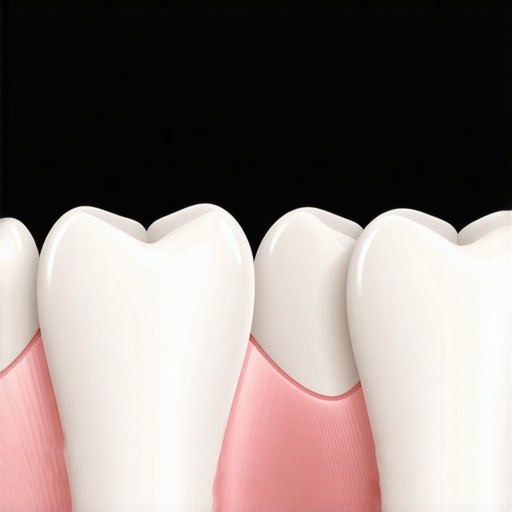
Why does my gum recession keep progressing even after I switched to a soft brush?
This is the question that haunts people who have already optimized their morning routine. If you have traded your hard bristles for a gentle touch and the pink line is still moving, the culprit is likely ‘occlusal trauma.’ This is a sophisticated way of saying your teeth are hitting each other with too much force at the wrong angles. When one tooth strikes another awkwardly, it creates lateral pressure that ‘flexes’ the tooth in its socket. This micro-trauma causes the thin bone and gum tissue to retreat as a biological defense mechanism. In these instances, no amount of following a family dentistry guide for cleaning will help until the physical bite is corrected. Sometimes, evaluating dental crowns vs other restorations which is right for you is less about aesthetics and more about reshaping the tooth to distribute that pressure evenly.
We often get so caught up in the latest revamp your smile top cosmetic dentistry trends for 2025 that we forget the foundation must be stable before the ‘pretty’ stuff can last. Do not be seduced by a quick cosmetic fix if the underlying mechanics are broken; it is like painting a house with a cracked foundation. Have you ever fallen into this trap where a ‘simple’ fix or a minor tooth gap led to more complex issues down the road? Let me know in the comments—I would love to hear how you handled it.
Stop guessing and let a pressure sensor do the heavy lifting
For years, I thought I had a ‘feel’ for how hard I was brushing, but my receding canine proved me wrong. The single most important tool I integrated into my routine was an electric toothbrush with a visible pressure sensor, specifically the Oral-B iO series. It lights up red the second you apply too much force. It sounds like a small thing, but it gamifies your oral health. Instead of mindlessly scrubbing, I am now laser-focused on keeping that light green. This is crucial if you have spent money on a revamp your smile top cosmetic dentistry trends for 2025 style makeover, because even the best bonding can’t withstand a human-powered jackhammer every morning. If you are still using a manual brush, you are essentially flying blind while your gum line pays the price. A study published in the International Journal of Dental Hygiene confirmed that power brushes with pressure sensors significantly reduce the risk of gingival recession compared to manual brushing. I also swear by the ‘water flossing’ method before bed. While traditional floss is great, a high-quality water flosser allows me to flush out the tiny margins around my crown without the mechanical friction that might irritate an already sensitive area. This is especially helpful if you are worried about why your dental implant crown feels loose after several years, as keeping those deep pockets clean is the only way to prevent bone loss. 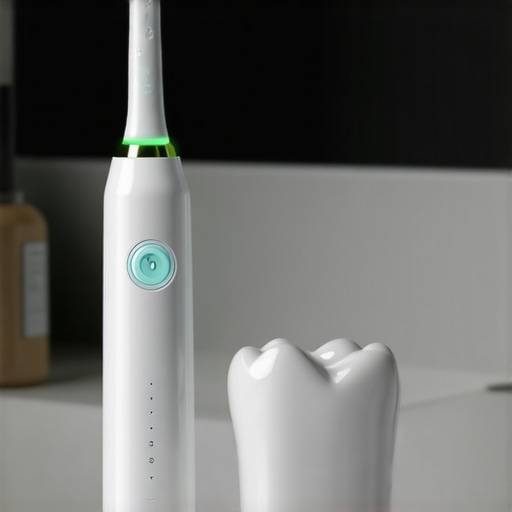
How do I maintain my gum health and dental restorations over time?
Maintenance isn’t just about what you do at the sink; it’s about the environment you create in your mouth. I’ve started using a pH-neutralizing mouthwash because acidic environments soften enamel and make gums more prone to inflammation. Also, if you’ve had orthodontic work, you need to know how to keep your teeth from shifting after your braces come off, because shifted teeth create new pressure points that lead to more recession. For my bonding, I follow the secret to making your dental bonding last more than five years by avoiding ‘tearing’ motions with my front teeth—no more opening packages or biting directly into hard apples with the tooth that has the recession.
Smart sensors are about to change how we brush forever
I predict that within the next five years, we won’t just have pressure sensors; we will have ‘bio-feedback’ brushes that analyze the bacteria in your saliva in real-time. We are already seeing enhance your confidence cosmetic dentistry innovations to watch that include AI-driven apps that map exactly where you are losing gum tissue. This takes the guesswork out of family dentistry and puts the power back in your hands. If you are struggling with a specific ‘hot spot’ of recession, my challenge to you today is this: switch to a pressure-sensing electric brush for just two weeks. Pay attention to how often that red light flashes. You might be surprised at how much ‘hidden’ aggression you’ve been using on your smile. If you’ve already noticed a restoration feeling ‘off,’ don’t ignore it—learning how to tell if your dental implant is failing or just healing or if your crown has a micro-gap can save you thousands in the long run. Even if you’ve used the truth about using whitening strips on crooked teeth and noticed sensitivity, a change in tool choice can be the reset button your gums desperately need.
The Lesson My Receding Canine Taught Me
Looking back, the biggest mistake I made was assuming that “clean” required force. I realized that my gums weren’t failing because of age or genetics; they were retreating from a battle I didn’t know I was fighting. First, I learned that silence isn’t always golden—if your tooth isn’t ‘talking’ to you through sensitivity, it doesn’t mean the damage isn’t happening. Second, I discovered that opting for dental crowns explained by my dentist wasn’t a failure of my hygiene, but a strategic move to save the bone underneath. Finally, I realized that the best part of the family dentistry guide logic is consistency over intensity. If you treat your mouth like a construction site, it will eventually break down.
#IMAGE_PLACEHOLDER_E#
My Personal Toolkit for Gum Preservation
I don’t trust products just because they have a ‘dentist-recommended’ sticker; I trust them because they provide data. I swear by electric toothbrushes with built-in sensors because they remove the guesswork—the pressure light is a literal life-saver for my canine. I also integrated a high-quality water flosser, which I find far more effective than manual flossing for cleaning the tricky margins of a crown without irritating the tissue. For those looking at enhance your confidence cosmetic dentistry innovations to watch, I recommend looking into remineralizing toothpastes that help shield that exposed root. These tools shifted my focus from ‘scrubbing’ to ‘maintaining,’ and my gum line hasn’t moved a millimeter since.
Start Saving Your Smile Today
It is easy to get overwhelmed when you see a yellow root peeking through, but remember that modern family dentistry has moved far beyond the ‘pull it out’ mentality. You have the power to stop the progression and even mask the damage with expert solutions. Don’t wait for a toothache to start taking these small, mechanical changes seriously. Have you ever noticed your gums receding on just one side of your mouth, and did you figure out if it was your brushing or your bite? Let me know in the comments below!