I’ll never forget the Tuesday morning my espresso turned into a sharp, shooting reminder that I am not invincible. I was sitting at my kitchen table, minding my own business, when a single sip sent a jolt of electricity straight into my jaw. My first thought? ‘Oh, it’s just the cold.’ My second thought, once the panic subsided, was that something was wrong with the porcelain crown I’d had for three years. I made the classic mistake of waiting another month, thinking if I just chewed on the other side, it would ‘heal’ itself. Newsflash: dental work doesn’t heal like a scraped knee. I eventually learned that I had a hairline fracture, and by the time I visited my family dentist, it was nearly a catastrophe.
Today, I want to share exactly how you can tell if your crown is failing you before you end up in the emergency chair. We’re going to dive into the subtle signals your mouth is sending—the ones I ignored until it was almost too late.
That Weird Zing When You Sip Coffee Isn’t Just Your Imagination
If you’ve started to notice a sharp pain that vanishes as quickly as it appears, you might be dealing with more than just sensitive teeth. When I first felt that ‘zing,’ I tried to convince myself I was overreacting. But the truth is, tooth sensitivity is often a hidden fracture masquerading as a minor inconvenience. A tiny crack in a crown allows microscopic bacteria and temperature changes to reach the sensitive natural tooth underneath. This isn’t just about a bit of discomfort; it’s an open door for decay.
Can a crown actually break if it is supposed to be strong?
It sounds counterintuitive, right? These things are built to withstand the pressure of chewing steak and almonds. However, even the most durable solutions for damaged teeth aren’t indestructible. Whether it’s from grinding your teeth at night or a sudden impact, porcelain can develop ‘craze lines’ or deeper structural cracks. According to the American Association of Endodontists, even a microscopic crack can lead to a ‘cracked tooth syndrome’ where the pain only happens when you release your bite. Have you ever felt a sharp pain specifically when you *stop* biting down on something crunchy? That was my first real clue, and I blew it off.
Check the Gum Line for Subtle Warning Signs
Sometimes the crown itself looks perfect in the mirror, but your gums are trying to tell you a different story. Early in my journey, I noticed a slight puffiness around my capped tooth. I figured I just needed to floss better. In reality, that inflammation was caused by the edge of a tiny crack irritating the soft tissue. If you notice your gums look different around one specific tooth, it’s time to take a closer look. You should definitely check out why gums might look dark or irritated around an old crown, as it’s often the first physical sign of a structural issue.
Waiting for the crown to literally fall off—much like what happens when a temporary crown pops off—is a recipe for a very expensive root canal. By catching these micro-fissures early, you can often save the underlying tooth and avoid a total replacement. Have you felt any of these ‘phantom’ pains lately, or are you hoping it’s just a passing phase? Trust me, your future self will thank you for being proactive.
Spot the Damage Before the Problem Spreads
Identifying a failing crown early is like catching a roof leak before the entire ceiling collapses; it saves you from a massive renovation and an even bigger bill. Think of your crown as a protective helmet for your natural tooth. If the helmet is cracked, the brain underneath is at risk.
The Simple Bite and Release Test
One of the most reliable ways to check for structural failure is what I call the ‘pressure check.’ Instead of focusing on the pain while you chew, pay attention to the exact second you open your jaw. If you feel a sharp, stabbing sensation the moment you release the pressure, you likely have a fracture. This happens because the crack opens and closes like a microscopic hinge, irritating the nerve inside. I remember doing this with a piece of chewy sourdough bread; every time I let go, it felt like a needle was hitting my gum line. This specific type of discomfort is often the real reason your crown feels loose when you chew gum or eat sticky foods.
Why Your Floss Keeps Shredding in the Same Place
This was the wake-up call I couldn’t ignore. I was getting ready for a dinner date when my floss got stuck between my crown and the neighboring tooth. When I pulled it through, it came out frayed and ragged. I thought I just had a piece of ‘bad floss,’ but in reality, a tiny chip in the porcelain had created a jagged edge. If your floss consistently catches or shreds in one specific spot, it means the smooth seal of your crown has been compromised. This creates a ‘catch-all’ for bacteria, which can lead to decay underneath the restoration. When you compare dental crowns vs other restorations, their main advantage is their seamless fit. If that fit is gone, the crown isn’t doing its job anymore.
Check for the Dark Halo Near Your Gums
Grab a flashlight and a mirror for this one. Look closely at where the porcelain meets your gum tissue. While some older metal-fused crowns naturally show a thin dark line, a new or widening gap is a major red flag.  If you see a grayish shadow or a visible space where you can see the natural tooth structure, the cement is likely washing out. This gap acts like an open window during a rainstorm, letting everything in that shouldn’t be there. You should investigate the hidden reason your gums look dark around an old dental crown to determine if it is just cosmetic or a sign of a looming failure.
Don’t Ignore a Sour Taste or Metallic Smell
If you find yourself reaching for gum or mouthwash more often than usual because of a localized ‘sour’ taste, your crown might be leaking. When bacteria get trapped under a loose crown, they produce sulfur compounds that smell and taste terrible. It’s essentially a miniature compost pile happening inside your mouth. I once ignored a metallic taste for weeks, thinking it was just my new vitamins, only to find out my crown had a hairline fracture that was letting saliva seep into the core. Understanding the real cause of those tiny cracks in your tooth enamel and restorations can help you realize that even the smallest breach can lead to a foul-smelling infection.
Distinguish Between Sensitivity and a True Abscess
It is vital to know how to tell if your toothache is a cavity or an abscess when dealing with an old crown. If the pain is constant, throbbing, and radiates into your jaw, the failure has likely reached the root. However, if it’s just a quick zap of sensitivity to cold, you might still be in the ‘repairable’ phase. A quick way to test this is to apply a cold compress to the outside of your cheek near the crown. If the pain lingers for more than 30 seconds after you remove the cold, the nerve is in distress. Gaining a deeper perspective on understanding dental crowns when and why they are needed will help you decide if a simple repair or a full replacement is the next logical step in your dental care routine.
Why a ‘Permanent’ Crown Is Actually a Marketing Myth
Let’s look past the surface-level cracks and dig into the real reason most restorations eventually fail. There is a common misconception in family dentistry that once a crown is cemented, that tooth is ‘armored’ for life. In my experience, the opposite is true. While dental crowns are the ultimate solution for damaged teeth, they actually require more vigilance than a natural tooth. The vulnerable ‘seam’ where the porcelain meets your gum—known as the margin—is a microscopic playground for bacteria. If your hygiene routine slips even slightly, that seam becomes the entry point for recurrent decay that you can’t even see.
#IMAGE_PLACE_HOLDER_C#
Stop Waiting for Pain to Call Your Dentist
The biggest ‘oops’ factor I see patients fall for is the belief that if it doesn’t hurt, it isn’t broken. This is the ultimate trap. By the time you feel a throbbing sensation, you’ve likely moved past the need for a simple replacement and are headed toward a root canal or an extraction. Modern family dentistry practices emphasize that pain is a late-stage symptom. A study in the Journal of Prosthetic Dentistry highlights that marginal leakage can exist for years without a single ‘zing’ of sensitivity. If you wait for the ‘ouch,’ you’ve waited too long.
Can Your Crown Fail Even If the X-ray Looks Normal?
This is the nuanced reality that surprises many: 2D X-rays are fantastic, but they don’t always catch ‘interproximal’ micro-leakage occurring behind the metal or thick porcelain of a crown. This is why a physical ‘tactile’ exam is so vital. When you are understanding dental crowns when and why they are needed, you have to realize that the dentist’s explorer tool—that little metal hook—often finds soft spots that the X-ray missed entirely. This is why regular checkups are non-negotiable.
As we look toward the future of cosmetic dentistry trends for 2025, the focus is shifting from just ‘fixing’ teeth to ‘biological integration.’ This means ensuring the crown doesn’t just look pretty, but mimics the natural expansion and contraction of your tooth. Have you ever fallen into the ‘it doesn’t hurt, so it’s fine’ trap with your dental work? I’d love to hear your story in the comments. If you suspect something is off, don’t wait for a catastrophe—reach out and contact us to get a professional eyes-on assessment before a small fix becomes a big surgery.
Once you’ve identified that your crown is still in the ‘safe zone,’ the game changes from detection to preservation. I used to think a standard toothbrush was enough, but after my first failure, I realized I needed a more surgical approach to daily care. I’ve become obsessed with the intersection of cosmetic dentistry and home maintenance. If you want that investment to last fifteen years instead of five, you have to treat it like a high-performance engine.
Upgrade Your Toolkit Beyond the Basics
The single most important tool in my arsenal is a high-pressure water flosser. While traditional flossing is great, it often misses the tight ‘pockets’ where the crown meets the gum. I personally use a model with a specialized plaque-seeking tip because it’s specifically designed to clean around restorations. A study published in the Journal of Clinical Dentistry found that water flossing was significantly more effective at removing biofilm around dental work compared to manual string floss alone. This isn’t just a gadget; it’s a necessity for anyone with multiple crowns who wants to avoid the ‘leaky margin’ syndrome we discussed earlier.
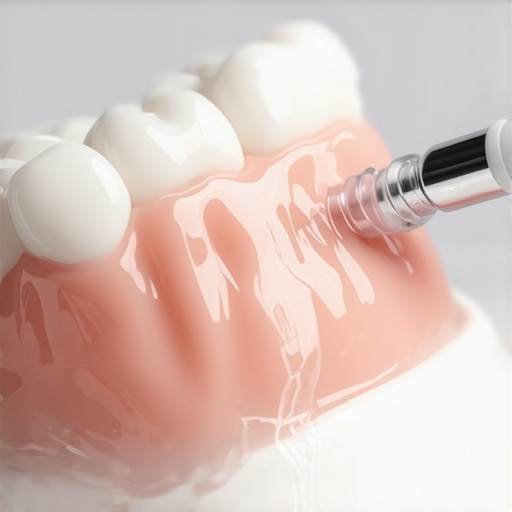
How do I keep my dental work from failing again?
The secret isn’t just cleaning—it’s protection from your own subconscious habits. Many of us don’t realize we are ‘bruxers’ until we see the flattened porcelain on a $1,500 crown. If you wake up with a tight jaw or a dull headache, you are likely grinding your teeth at night. I cannot stress this enough: get a custom-fitted night guard from your dentist. It acts as a sacrificial barrier, so you wear down the plastic instead of your expensive ceramic. Once you have one, make sure you know the best way to clean your night guard so it doesn’t smell, because a bacteria-laden guard is just as dangerous for your gums as no guard at all.
The High-Tech Future of Personalized Dentistry
Looking ahead, the way we maintain and create these restorations is changing rapidly. As we look at top cosmetic dentistry trends for 2025, we’re seeing the rise of AI-driven monitoring. Some clinics are already testing smart mouthguards that can alert you via a smartphone app if your grinding pressure is reaching levels that could fracture a crown. We are moving toward a world where ‘set it and forget it’ dentistry is replaced by real-time health data that empowers the patient.
While you might be focused on your own teeth, don’t forget that these habits start early in the family home. If you have kids, applying essential family dentistry tips now will prevent them from ever needing the complex crowns we’re talking about today. It’s all about building a lifetime of defense rather than a lifetime of repairs. My biggest piece of advice? Start using a water flosser tonight; it is the single most effective ‘reset button’ for your gum health. If you’re worried about the state of your current dental work, or if you’re ready to transform your look with expert cosmetic dentistry solutions, don’t hesitate to contact us for a professional assessment. It’s much easier to adjust a bite than it is to replace a shattered porcelain tooth.
Hard Truths About Living with Dental Porcelain
After years of navigating the world of cosmetic dentistry, I’ve realized that the ‘set it and forget it’ mindset is the fastest way to a dental emergency. Here are the lightbulb moments I wish I had known sooner:
- The Margin is the Front Line: That tiny area where the porcelain meets your gum is the only place bacteria can enter. If you focus your brushing there, you’ll double the life of your restoration.
- X-Rays Aren’t Psychics: A crown can look perfect on a screen but be hollowed out by decay underneath. Trust your gut—if it feels ‘off,’ it probably is.
- Insurance Games: Did you know there’s a strategy for coverage? Learning the secret to getting your insurance to cover a dental crown can save you thousands when a five-year-old restoration finally gives out.
#IMAGE_PLACEHOLDER_E#
The Survival Guide for Your New Smile
You’ve invested time and money into your teeth; now it’s time to protect that investment with the right tools. I don’t just recommend these; I use them every single morning.
- The Water Flosser: Don’t settle for manual string. A high-quality water flosser reaches the ‘pockets’ that standard floss simply can’t touch.
- Sacrificial Barriers: If you grind your teeth, you’re basically sandpapering your crowns. A custom night guard is a must. Once you have one, make sure you’re using the best way to clean your night guard so it doesn’t smell to keep your breath fresh.
- Professional Eyes: Regular visits for building a lifetime of healthy smiles are the only way to catch micro-fissures before they become fractures.
Your Smile Is an Asset Worth Defending
Taking care of your dental work shouldn’t feel like a chore; think of it as maintaining a high-performance vehicle. Whether you are looking to transform your look with expert cosmetic dentistry solutions or simply want to keep what you have, being proactive is the ultimate secret. Don’t wait for the pain to tell you something is wrong—stay one step ahead of the decay. If you have questions or want a checkup, feel free to contact us anytime. Have you ever felt that annoying ‘zing’ while drinking coffee? Let me know in the comments how you handled it!