I will never forget the morning I first saw them. I was 28, leaning into my bathroom mirror under a harsh LED bulb, when I noticed a series of vertical, hair-thin lines running down my front teeth. My heart physically dropped. I was convinced my entire smile was about to crumble like a windshield hit by a pebble. I immediately started googling expert cosmetic dentistry solutions, thinking I’d need a full set of veneers by Friday. I spent years worrying that every bite of an apple was a gamble, but the reality was much more nuanced than I feared. Today, I want to pull back the curtain on what those lines—clinically known as craze lines—actually are, why they appear, and how we can keep them from turning into a real nightmare.
Those Hairline Fractures Are Not Always an Emergency
For a long time, I made the massive mistake of trying to ‘scrub’ the lines away with abrasive charcoal toothpaste. Don’t do that. I ended up stripping my enamel and making the stains inside the cracks look even worse. I realized then that craze lines aren’t usually a sign of a hidden fracture that will split the tooth in half. Instead, they are often just the result of years of ‘milage’ on your teeth. According to the American Association of Endodontists, craze lines are tiny cracks that affect only the outer enamel and are incredibly common in adult teeth. They happen because our teeth are constantly under pressure. Whether it is from years of chewing, clenching your jaw during a stressful work week, or even the expansion and contraction caused by switching between hot coffee and ice water, your enamel is surprisingly flexible—until it isn’t. If you have been worried about these lines, have you noticed them getting darker lately, or are they just visible when the light hits them a certain way?
Do these tiny lines mean my tooth is dying?
It is the question that kept me up at night. The short answer is no, but they can be a precursor to bigger issues if you don’t address the underlying cause. If you are a heavy soda drinker, you might find these lines becoming more prominent because sugar-free soda still ruins your enamel by weakening the structure around these micro-cracks. My own ‘lightbulb moment’ came when I realized my habit of chewing on pen caps was the primary culprit. Once I stopped the mechanical stress, the lines stopped progressing. We are going to look at how to distinguish a harmless craze line from a situation where you might actually need a dental crown to save the tooth. It is all about knowing the difference between a cosmetic fluke and a structural failure.
Stop the Pressure Before Your Enamel Gives Up
Think of your tooth enamel like the clear coat on a high-end sports car. It is incredibly durable, but if you keep hitting it with tiny pebbles or subjecting it to extreme weather, it starts to develop those fine, web-like cracks. To manage craze lines, you have to stop the mechanical abuse. The most common culprit isn’t what you eat, but how you hold your stress. I spent months subconsciously grinding my teeth while answering emails, and that constant micro-trauma was basically acting like a jackhammer on my front teeth. If you catch yourself with your jaw tight, you need to learn how to stop clenching your jaw when you feel stressed before those surface lines turn into deep, painful fractures. If you ignore the pressure, you aren’t just looking at a cosmetic line; you are looking at a structural failure waiting to happen.
The Night Guard Is Your Best Defense Against Future Cracks
I’ll be honest, the first time my dentist suggested a custom night guard, I balked at the price. I thought I could just buy a cheap one at the drugstore. That was a mistake. The bulky, over-the-counter versions made me gag and threw off my bite, actually making my jaw pain worse. When I finally invested in a professional, slim-profile guard, the progression of my craze lines finally stopped. It acts as a shock absorber, taking the brunt of the force so your teeth don’t have to. Once you have one, maintenance is everything. I learned the hard way that a dirty guard is a breeding ground for bacteria, so you must master the best way to clean your night guard so it doesnt smell. Using the right methods, like how to clean a night guard without using harsh chemicals or bleach, ensures that your protective gear doesn’t become a health hazard. 
Differentiate Between a Cosmetic Flaw and a Dental Emergency
It is vital to know when to breathe easy and when to call the office. If you shine a flashlight behind your tooth and the light passes through the line, it is likely just a craze line in the enamel. However, if the light stops at the line, or if you feel a sharp zing when you release your bite from a sandwich, you are dealing with a different beast. You need to know how to tell if your tooth sensitivity is actually a hidden fracture. A craze line doesn’t hurt; a crack does. If you find yourself avoiding cold water or hot coffee because of a specific tooth, that line has likely gone deeper than the surface. In those cases, you might be transitioning from needing a simple polish to understanding dental crowns when and why they are needed to hold the tooth together.
Modern Solutions for Brightening Those Visible Lines
If the lines are purely cosmetic but they are stained from years of coffee and red wine, you don’t have to just live with them. Because these lines are technically ‘open’ at the very surface, they soak up pigments easily. While standard whitening can help, it sometimes makes the lines look more obvious by whitening the surrounding tooth while the crack remains stained. This is where revamp your smile top cosmetic dentistry solutions for 2025 come into play. Many dentists now use high-tech resin infiltration to ‘fill’ the line and seal it off from future stains. It is a game-changer. For slightly deeper lines, dental bonding is an excellent middle ground, though you should learn the secret to making your dental bonding last more than five years to keep that investment looking fresh. Sometimes, the root cause isn’t even just stress—it can be a medical issue. I was shocked to learn about the hidden link between sleep apnea and grinding your teeth, which means treating your sleep could be the key to saving your smile.One of the most pervasive myths I encounter in the world of family dentistry is the idea that a restorative crown is a ‘last resort.’ Many patients view it as a sign of failure, assuming that if you need one, you have somehow lost the battle for your natural tooth. I used to think this too, often begging for ‘one more filling’ to delay the inevitable. But here is the contrarian truth: repeatedly patching a large cavity with composite resin can actually lead to the very fracture we are trying to avoid. Large fillings lack the structural integrity to support the tooth’s walls during heavy biting forces. In many cases, understanding dental crowns when and why they are needed early can prevent a catastrophic split that would otherwise require an extraction. According to research published in the Journal of Prosthetic Dentistry, oversized composite restorations have a significantly higher risk of catastrophic cusp failure compared to full-coverage ceramic. You are not ‘losing’ the tooth by crowning it; you are reinforcing the foundation.
Stop Treating Your Dental Crown Like a Sign of Failure
A common ‘trap’ I see people fall into—and one I fell into myself—is focusing on the material rather than the fit. We often get caught up in revamp your smile top cosmetic dentistry solutions for 2025, looking for the most translucent porcelain, while ignoring the biological seal. A crown is only as good as its margin. If the edge of the crown doesn’t fit perfectly against the tooth, you are looking at a ticking time bomb for decay. This is especially true for parents to remember; even the mistake parents make when a toddler chips a tooth often involves ignoring the structural integrity for the sake of aesthetics. If you are noticing a strange odor or a persistent bad taste around an existing restoration, you need to learn how to tell if your crown is leaking and trapping bacteria. It is a nuance that most people miss until the tooth underneath has rotted away.
Can You Actually Save a Cracked Tooth Without a Full Crown?
For sophisticated cases where the crack is localized to a single cusp, an onlay or an ‘overlay’ might be a better choice than a full crown. This is the ‘hidden nuance’ of conservative dentistry: preserving as much natural tooth structure as possible is always the goal. When comparing dental crowns vs other restorations which is right for you, the decision should be based on the volume of remaining healthy enamel. However, if that craze line we discussed earlier has progressed into a symptomatic crack, conservative bonding often isn’t enough to stop the flex. 
Avoid the Dark Line Trap in Your Cosmetic Restoration
If you’ve ever noticed a gray or black shadow at the gum line of an older crown, you’re looking at a common ‘Oops’ factor from previous decades of dentistry. Many people assume this is a sign of a new cavity or gum disease, but it is often just the metal framework of a PFM (porcelain-fused-to-metal) crown showing through. You can finally fix why your gums look dark around an old metal-fused crown by switching to modern all-ceramic or zirconia options. These newer materials allow light to pass through the restoration just like a natural tooth, eliminating that tell-tale ‘dental work’ look. Have you ever fallen into the trap of ‘patching’ a tooth until it finally broke? Let me know your experience in the comments below.I used to think that once the dentist finished the final polish, my job was over. I couldn’t have been more wrong. The longevity of any high-end restoration—be it a crown, veneer, or bridge—is actually determined in your bathroom, not the dental chair. I personally switched to using a high-end sonic toothbrush with a pressure sensor because I realized I was ‘scrubbing’ my gums away, which is the fastest way to expose the margins of a crown. If you have a bridge, you absolutely must master how to clean your dental bridge to prevent chronic gum disease. I recommend the ‘bridge and implant’ spongy floss by Oral-B; the stiff end allows you to thread it under the restoration without fraying, which is a life-saver for keeping the tissue healthy.
Don’t Let Your New Smile Fade After Six Months
It’s easy to get complacent when your teeth finally look perfect. However, even the most expensive understanding dental crowns when and why they are needed won’t protect you from recurrent decay if you aren’t diligent. I’ve started using a pH-neutralizing mouth rinse every night to counteract the acidity from my evening tea. This is a game-changer because acid is the silent killer of dental cement. For those of us with composite work, you need to know the secret to making your dental bonding last more than five years, which involves avoiding the ‘stain-heavy’ quartet: turmeric, red wine, coffee, and tobacco. 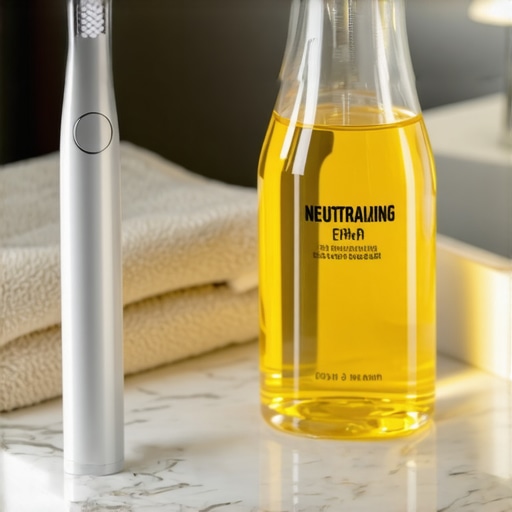
How can I keep my cosmetic work looking brand new for years?
The trick is consistency and professional oversight. You shouldn’t just wait for something to hurt. I schedule a ‘maintenance polish’ every six months where my hygienist uses a non-abrasive glycine powder air polisher rather than the standard gritty paste. This preserves the glaze on the ceramic. If you have moved beyond natural teeth entirely, focusing on the secret to keeping your dental implants healthy for life is paramount. According to Dr. Pascal Magne, a leading authority in biomimetic dentistry, the goal of modern restorations should be to emulate the natural ‘flex’ of a tooth. This means avoiding overly stiff materials that don’t absorb shock.
The Future of Dentistry Is Not Just Harder Porcelain
I predict that by 2030, we will move away from ‘drilling and filling’ toward bio-regenerative materials that actually encourage enamel to repair itself. We are already seeing this in revamp your smile top cosmetic dentistry trends for 2025, where 3D-printed zirconia is becoming more lifelike and biocompatible than ever. The industry is shifting from ‘replacement’ to ‘preservation.’ For families, this means the focus is moving toward caring for your childs teeth essential family dentistry tips that emphasize early intervention and sealants. My advanced tip for you today: buy an interdental brush (the tiny Christmas tree-looking ones) and use it once a day around your crown margins. It cleans the ‘nook’ that standard floss often misses. Try this for one week, and you’ll notice your gums look significantly pinker and tighter.
What My Dentist Finally Admitted About Craze Lines
After years of anxiety, I finally realized that my craze lines were a barometer for my stress level, not a countdown to losing my teeth. I learned the hard way that ignoring the ‘clicking’ in my jaw was a fast track to more enamel damage; it is exactly why the role of family dentistry in ensuring oral health for all ages is so vital—they catch these grinding habits before they become full fractures. I also discovered that a crown isn’t a failure, but a tactical reinforcement for a tooth that has done its job well. Finally, I accepted that while revamp your smile top cosmetic dentistry trends for 2025 are exciting, the basics of bite alignment and pressure management are what keep those restorations in place for decades. It is about playing the long game with your enamel.
My Daily Toolkit for a Bulletproof Smile
I don’t leave my dental health to chance anymore, and I’ve curated a specific toolkit that keeps my craze lines from darkening. My essential kit includes a custom-molded night guard, which is non-negotiable if you clench during sleep. To keep it from becoming a bacterial hazard, I always follow the guide on the best way to clean your night guard so it doesnt smell. I also swear by interdental brushes to protect the edges of my restorations, and I keep the family dentistry guide building a lifetime of healthy smiles as a reference for my kids’ oral care routines. These tools aren’t just about cleaning; they are about preservation and peace of mind. #IMAGE_PLACEHOLDER_E#
Your Teeth Are Worth the Extra Effort
Whether you are currently dealing with a minor cosmetic blemish or understanding dental crowns when and why they are needed for a structural issue, remember that your smile is a living part of you. It deserves more than a ‘quick fix’ or a cheap drugstore solution that might cause more harm than good. By staying proactive and seeking out transform your look with expert cosmetic dentistry solutions, you can ensure that those tiny lines remain a harmless part of your history, not the end of your smile’s story. Don’t let fear stop you from getting the professional check-up you need to keep your enamel strong. Have you ever panicked after seeing a tiny line in your tooth and thought it was a fracture? Let me know your experience in the comments below!