I remember sitting at my kitchen table, staring down at my aligner case with a sinking feeling in my chest. I had only been wearing this specific set for ten days, but instead of the crystal-clear plastic I started with, they looked like they’d been soaked in old lemonade. They were dull, cloudy, and had a distinct yellowish tint that made my teeth look like I hadn’t brushed since the nineties. I felt a weird mix of shame and frustration—after all, I was paying good money for these! I tried scrubbing them with my regular whitening toothpaste, thinking I was being clever, but that was my first big mistake. Instead of fixing the glow, I ended up micro-scratching the surface, making them even more prone to staining. It’s a common trap many of us fall into when navigating the world of modern cosmetic dentistry. We’re going to fix those cloudy trays today without the amateur mistakes I made. [image_placeholder_1]
Why those crystal-clear trays suddenly look like old lemon peels
If you’ve ever felt like you’re failing at your orthodontic journey because of a little discoloration, take a breath. You aren’t alone. That yellowing usually comes from the pigments in our favorite drinks or the simple buildup of biofilm. In fact, a study published in the Journal of Clinical Dentistry confirms that clear aligners can harbor significant bacterial biofilm if they aren’t maintained with very specific, non-abrasive techniques. It’s not just about looks; it’s about hygiene. When I first started, I didn’t realize that even a quick sip of coffee while wearing them could bake the stains right in. I also learned the hard way that skipping just one night of proper cleaning can lead to a funky odor that no amount of mouthwash can hide. We often treat our aligners like an afterthought, but they require as much specialized care as dental crowns or other restorations. My goal today is to walk you through the exact methods I used to salvage my trays—and my confidence—using stuff you probably already have in your bathroom cabinet. Have you ever looked at your aligners in the morning and wondered if you were accidentally wearing a piece of yellowed scotch tape?
Is it actually possible to get that day one sparkle back?
Many people fear that once the plastic turns cloudy, the structural integrity is compromised or the ‘clear’ part of the aligner is gone forever. I certainly did. I thought I’d have to call my family dentistry provider and beg for a replacement set, which is a conversation nobody wants to have. The good news is that most of that cloudiness is just superficial buildup or calcium deposits from your saliva. It’s very similar to the white film you might find on a mouth guard, and the solutions are surprisingly simple if you avoid the ‘harsh’ chemicals. Much like learning the best way to clean a night guard, the trick for aligners is a gentle touch and the right pH balance. We aren’t just cleaning; we’re restoring.
Stop Using Abrasives Before You Ruin the Plastic
The biggest mistake I ever made was treating my aligners like they were part of my natural teeth. I thought, ‘Hey, whitening toothpaste gets the stains off my enamel, so why not my trays?’ Wrong. Aligners are made of a porous thermoplastic that hates abrasives. When you use standard toothpaste, the microscopic silica particles create tiny grooves in the plastic. These grooves are like five-star hotels for bacteria and food particles. If you’ve already made this mistake, you’ve probably noticed they get dirty even faster now. To stop the cycle, switch immediately to a mild, clear, scent-free liquid dish soap or specialized cleaning tablets. Much like the best way to clean a night guard to prevent odors, the goal is to sanitize without scratching. I remember the first time I used a lemon-scented soap; for three days, it felt like I was sucking on a cleaning supply bottle. Stick to fragrance-free options to save your taste buds.
The Vinegar and Baking Soda Soak That Actually Works
If your trays have developed that stubborn white crust—which is actually calcium and tartar buildup from your saliva—you need a chemical reaction, not a physical scrub. Mix one part white distilled vinegar with three parts lukewarm water. Let your trays sit for about fifteen minutes. The acidity of the vinegar breaks down the mineral deposits. I once had a set that was so cloudy I couldn’t see my own thumb through them. After a vinegar soak and a gentle nudge with a cotton swab, the ‘fog’ literally peeled away. This is a far safer approach than the aggressive chemicals some people try when looking for the most effective way to whiten teeth with deep coffee stains. If the smell of vinegar bothers you, a mixture of baking soda and water works as a great alternative to neutralize odors and lift light surface stains.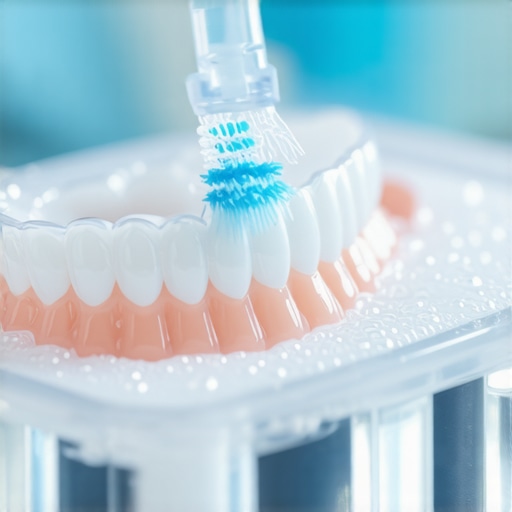
Why Lukewarm Water is Your Best Friend
It’s tempting to use boiling water to ‘kill the germs,’ but that is a one-way ticket to a ruined treatment plan. High heat can warp the plastic, and even a fraction of a millimeter of change means your teeth aren’t moving where they need to go. If you warp them, you’ll find why your clear aligners stop fitting if you skip just one night becomes a permanent reality because the tray no longer matches your dental map. Always use water that is room temperature or slightly warm to the touch—never hot. This maintains the structural integrity while allowing your cleaning agents to activate properly.
Gentle Brushing is the Only Way Forward
After the soak, you need to mechanically remove the loosened biofilm. Use a dedicated ‘soft’ or ‘extra-soft’ toothbrush that is different from the one you use on your teeth. I used to use a medium-bristled brush until I noticed the trays were losing their ‘day one’ shine. Now, I use light, circular motions, focusing on the deep crevices where the molars sit. This meticulous care is similar to how one might handle dental crowns or other restorations. You aren’t trying to power-wash the plastic; you’re gently sweeping away what the soak has already loosened. When you finish, rinse them thoroughly under a steady stream of cool water. The result should be a tray that looks almost as invisible as the day your provider first handed them to you, helping you enhance your confidence with cosmetic dentistry innovations without the yellow tint.Most patients think that once they get dental crowns or other restorations, the ‘real’ work is over. They assume porcelain is indestructible. But here is the contrarian truth: cosmetic dental work is often more vulnerable than your natural enamel, not because of the material itself, but because of the junction where the tooth meets the restoration. I’ve seen so many people treat their veneers like they’re bulletproof, only to wonder why their porcelain crown has a dark line at the gum line just a few years later. It’s usually not a failure of the dentist, but a failure of the ‘after-care’ logic.
Could your daily mouthwash be destroying your dental bonding?
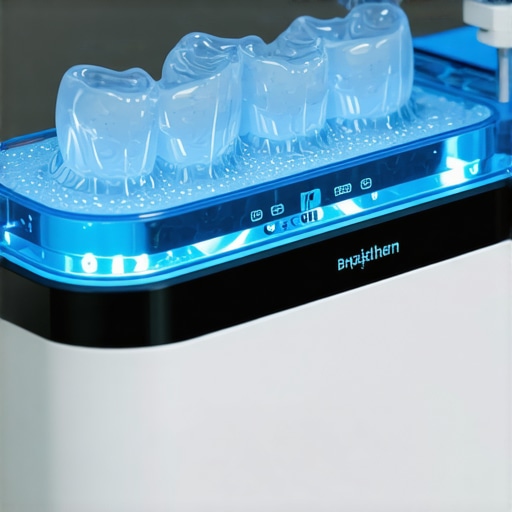
This is the ‘oops’ factor nobody tells you at the checkout counter. Most commercial mouthwashes are loaded with alcohol to provide that ‘clean’ sting. However, alcohol is a solvent. Clinical data from the Journal of Adhesive Dentistry suggests that chronic exposure to ethanol can actually soften the resin cements used to bond crowns and veneers. If you’re using a high-alcohol rinse while wearing aligners or sporting fresh cosmetic work, you might be slowly dissolving the very thing keeping your smile together. This leads to microleakage, and suddenly you’re searching for how to tell if your dental crown is leaking bacteria. Switch to an alcohol-free, pH-neutral rinse immediately to protect that investment.  Another hidden nuance involves how we view family dentistry versus specialized cosmetic care. Many people believe a general dentist can’t handle complex aesthetics, but the best results often come from those who understand the long-term health of the whole family’s bite. If the foundation isn’t right, even the most expensive veneers will fail. You might find the real reason your porcelain crown keeps chipping isn’t because you bit a popcorn kernel, but because your underlying bite alignment—something a family dentist tracks for years—is off. Have you ever fallen into this trap of thinking cosmetic work is ‘one and done’? Let me know in the comments. We need to stop treating our smiles like static objects and start treating them like living systems that require specific, chemical-aware maintenance.I finally caved and bought an ultrasonic cleaner last year, and honestly, I feel like I was living in the Stone Age before it arrived. If you’re serious about maintaining clear aligners or a night guard, manual scrubbing is like trying to wash a car with a toothbrush—you’re missing the microscopic stuff. I use a unit that operates at 42,000Hz. According to clinical evaluations by Dr. Gordon Christensen at Clinicians Report, this specific frequency creates “cavitation bubbles” that implode and blast away biofilm without any mechanical abrasion. It’s the difference between guessing if your trays are clean and knowing they are sterile. If you want to clean a night guard to prevent odors properly, this is the gold standard. It literally vibrates the bacteria out of the tiny pores in the plastic where a brush simply cannot reach.
How can I make my cosmetic dental work last for a decade?
The secret isn’t just the tools; it’s the technique. Most of us were taught to floss by dragging a string between our teeth, but when you have dental crowns, that horizontal motion can actually snag the margin—the point where the crown meets the tooth—over time. I’ve switched to using interdental brushes, those tiny little brushes that look like miniature pipe cleaners. They reach the concave areas of the tooth root that floss simply skips over. This is vital for preventing the gum recession that makes people search for why their porcelain crown has a dark line. I personally keep a pack in my car and my office; they are far more effective at clearing debris from the edges of a chipping porcelain crown than standard string. I also keep a stash of pH-neutralizing mouth sprays. Our mouths are naturally acidic after we eat, and that acid is what slowly etches the surface of veneers and composite fillings. By neutralizing the environment immediately, I’m protecting the expert cosmetic dentistry solutions I spent thousands on. It’s about proactive preservation, not just reactive repair. Even the best family dentistry can’t save a smile that is constantly bathed in acidic coffee without intervention. Looking ahead, I predict we are moving toward smart dental maintenance. Within the next few years, I expect at-home dental scans to become the norm for everyone. You’ll snap a photo with your phone, and an AI will compare it to your baseline to see if your gums have receded or if a dental implant is failing. This tech is already surfacing in cosmetic dentistry trends for 2025, and it will bridge the gap between your annual visit to the family dentistry guide and your daily routine. Stop relying on your eyes to tell you if your teeth are clean. Go find a high-quality ultrasonic cleaner today—specifically one that hits that 42kHz mark—and see the difference in your aligners after just one cycle. It’s the single best investment I’ve made for my oral health this year.
Three Hard-Earned Lessons That Saved My Aligners From the Trash
Looking back at my first few weeks of orthodontic treatment, I realize I treated my trays like indestructible plastic. I was wrong. The first big lesson is that biofilm never sleeps; even if they look clean, bacteria are colonizing those pores every minute they are in your mouth. Secondly, consistency beats intensity every time. A quick, gentle daily soak is worth more than a frantic, abrasive scrub once a week. Finally, I learned that the role of family dentistry extends far beyond just checking for cavities; it’s about the professional guidance that prevents you from making rookie mistakes like using hot water on your trays. If you catch signs like cloudiness early, you can avoid a situation where you are wondering if your dental crown is leaking bacteria or if your aligner hygiene is the culprit.
The Toolkit I Use to Keep My Aligners Crystal Clear Every Single Day
If you want to move beyond basic scrubbing, you need the right gear. I personally swear by an ultrasonic cleaner because it reaches the microscopic level that no brush can touch. [image_placeholder_5] I also recommend switching to pH-neutral cleaning tablets specifically formulated for orthodontics—avoiding generic denture cleaners that can be too harsh. For those with permanent dental work, I always have a supply of interdental brushes to ensure I am caring for dental health with the same precision I use for my aligners. These small tools bridge the gap between a good smile and a stunning one. Keeping an eye on top cosmetic dentistry trends for 2025 can also help you find the next generation of cleaning tech before it hits the mainstream.
Take Control of Your Smile’s Future Today
Your aligners and cosmetic restorations are more than just dental hardware; they are an investment in your self-esteem and your long-term health. By ditching the abrasives and embracing a gentle, tech-forward cleaning routine, you’re ensuring that your day one sparkle lasts until the very end of your treatment. Don’t let a little cloudiness discourage you from the path to a perfect smile. Whether you are navigating expert cosmetic dentistry solutions or just keeping your natural teeth bright, the effort you put in today will pay off for decades. What’s the one cleaning hack that finally saved your aligners from turning yellow? Let me know in the comments!