I remember standing in the bathroom before my best friend’s wedding, leaning so close to the mirror that my breath fogged the glass. I wasn’t checking my tie or my hair; I was staring, horrified, at a thin, shadowy gray line right at the base of my front tooth. I’d paid a lot of money for that crown years ago. I thought I was done with dental drama. Instead, it looked like I had a permanent stain or, worse, a gap where my tooth should be. It felt like a betrayal of my investment in expert cosmetic dentistry solutions. That moment of realization—that my ‘perfect’ smile had a glaring flaw—is exactly why I want to help you figure this out today. We’re going to dig into why that dark line appears and, more importantly, how we can make it vanish so you can stop hiding your smile in photos.
That Gray Shadow Isn’t Just in Your Head
When I first noticed my dark margin, I actually tried to brush it away. I scrubbed until my gums were sore, thinking it was just coffee stain buildup. I was wrong. If you are seeing a dark or grayish line, you aren’t imagining things, and no amount of whitening toothpaste is going to touch it. Most of the time, this is a classic case of what happens with older restorative techniques. I made the mistake early on of choosing the ‘strongest’ option without asking about the aesthetic trade-offs. I didn’t realize that why your gum line looks dark around an old crown often has everything to do with what is hidden underneath the porcelain. Have you ever caught yourself tilting your head in the mirror, trying to see if the lighting makes that line look better or worse?
Is This Just a Sign of My Crown Failing?
It’s the question that keeps us up at night: is my tooth rotting under there? The short answer is: not necessarily. While a dark line can sometimes indicate a ‘leaking’ margin where bacteria are getting in, it is frequently just a cosmetic issue caused by the metal structure of the crown becoming visible as our gums naturally shift. According to the American Academy of Cosmetic Dentistry, gingival recession—the shrinking of gum tissue—is one of the most common reasons these dark metal margins are exposed over time.
The Real Reason Your Smile Has a Metal Rim
To understand the fix, you have to understand the ‘sandwich’ that is your tooth. For decades, the standard was a Porcelain-Fused-to-Metal (PFM) crown. These are incredibly durable, but they have a literal silver lining—or rather, a dark metal base. When the crown is first placed, that metal edge is tucked neatly under your gum line. However, gums are living tissue; they move, they recede, and eventually, they ‘unzip’ to reveal the metal framework beneath. This is a common hurdle when understanding dental crowns and their long-term behavior. If I had known then what I know now about all-porcelain or zirconia options, I would have saved myself a lot of heartache. Today, dental crowns explained by modern standards focus much more on light-transmitting materials that don’t leave you with a ‘black line’ legacy. We’re about to walk through the specific steps you can take to trade that gray shadow for a seamless, natural look.
Start by Checking for Structural Failure
Before you worry about the aesthetics, you have to ensure the tooth underneath is actually safe. I learned this the hard way with a molar that didn’t just have a dark line, but a strange metallic taste. Think of your crown like a roof on a beach house; it takes a constant beating from salt and moisture. If the seal—the ‘flashing’ of your tooth—breaks, water (or in this case, bacteria) gets underneath. You should learn how to tell if your dental crown is leaking bacteria by looking for more than just the gray shadow. If you see redness at the gum line or feel a slight sensitivity to sugar, the line isn’t just a cosmetic metal rim; it is a gap where your natural tooth is vulnerable.
Look for the Red Flags
If the area feels tender or if you’ve been wondering how to tell if your crown needs to be replaced immediately, try the floss test. If the floss shreds or catches specifically on that dark line, the margin is ‘open.’ When this happens, the crown isn’t just ugly—it’s a ticking time bomb for a cavity. 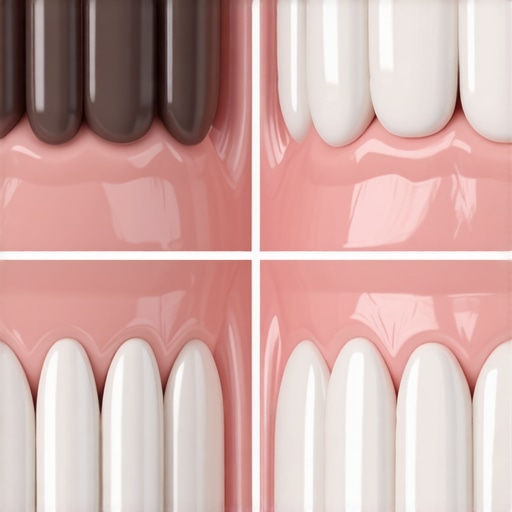
Trade Your Metal Base for an All-Ceramic Upgrade
The most direct way to vanish that gray shadow is to swap the old Porcelain-Fused-to-Metal (PFM) crown for a modern all-ceramic or zirconia version. PFM crowns are like a wooden table painted white; if you scratch the surface or the edges wear down, the dark wood shows through. Modern zirconia is like a solid marble slab—it is the same color all the way through. When you are weighing dental crowns vs other restorations which is right for you, remember that all-ceramic options allow light to pass through the tooth and into the gum tissue, keeping the area looking pink and healthy rather than bruised and gray.
The Magic of Light Transmittance
In my own journey, I replaced a front PFM with an E-max crown. The difference was night and day. Instead of a ‘dead’ looking tooth that blocked all light, the new crown looked alive. It didn’t have a metal collar, so even if my gums recede a millimeter in ten years, there is no ‘black line’ waiting to haunt me.
Don’t Wait Until the Shadow Becomes a Problem
I once ignored a crown that felt slightly ‘off’ for months. I convinced myself it was just fine because it didn’t hurt. However, I kept noticing why your crown feels tight when you wake up can actually be a sign of minor shifting or a poor fit. By the time I went in, the dark line had widened because the crown was slightly loose, allowing my gums to pull away in defense. Ignoring the shadow can lead to bigger problems, and the real cost of delaying a necessary dental crown often includes more invasive procedures like root canals if the underlying tooth decays.
Protect Your Gums to Keep the Line Hidden
Even with a perfect crown, you have to maintain the ‘curtain’—your gums. If your gums recede, they reveal the junction where the crown meets the tooth. You might be surprised to learn why your gums are receding despite using a soft toothbrush, which often comes down to technique rather than the brush itself. Scrubbing horizontally is like using a saw on your gums. Instead, use gentle circular motions to keep the tissue high and tight against the crown, ensuring that even if there is a tiny margin, it stays tucked away where no one can see it.
The Strength Myth That Ruins Front-Row Smiles
We often hear that the strongest material is always the best choice for longevity. In my years of obsessing over dental aesthetics, I’ve found that this belief is actually a trap. While a monolithic zirconia crown might be tough enough to hammer a nail, it often lacks the soul of a natural tooth. Natural teeth have a quality called ‘incisal translucency’—the way light dances through the edges. If you prioritize raw strength over light play, you end up with a tooth that looks like a bright white Lego block in your mouth. This is a common pitfall when revamp your smile top cosmetic dentistry trends for 2025 focus too much on durability and not enough on optical properties.
Why High-End Porcelain Still Looks Fake Sometimes
Here is the nuance most people miss: even the most expensive crown can look ‘off’ if your dentist doesn’t consider your gingival biotype. If you have thin gum tissue, the dark shadow of the underlying root (especially if it has had a root canal) can shine through the gum itself, making it look bruised even if the crown margin is perfect. This is why why your porcelain veneers might look bulky or unnatural often has less to do with the ceramic and more to do with the preparation of the tooth underneath. A study published in the Journal of Esthetic and Restorative Dentistry highlights that translucency—not just color—is the most critical factor in matching a restoration to a natural tooth. If the porcelain is too opaque to hide a dark stump, it loses its lifelike quality. 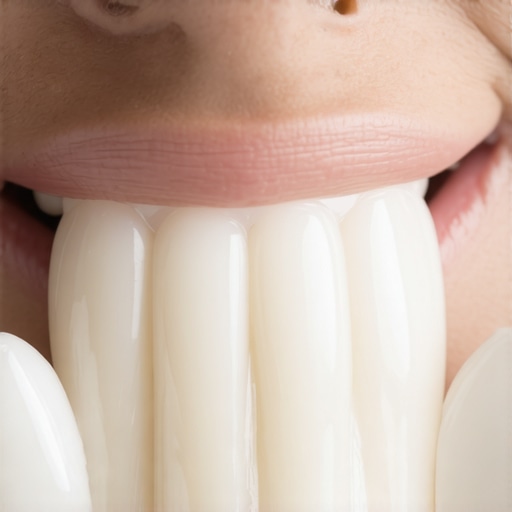
Can Your Gums Actually Grow Back Over a Visible Crown Margin?
It’s the ultimate dream for anyone seeing that gray line: can I just make the gums move back down? Unfortunately, once gum tissue has receded due to trauma or PFM irritation, it rarely ‘creeps’ back on its own. While some advanced grafting procedures exist, they are complex and expensive. The more predictable solution is nearly always replacing the restoration. When you are looking at dental crowns vs other restorations which is right for you, you must choose a material that is ‘biocompatible,’ meaning it doesn’t irritate the gums and cause them to run away in the first place.
Don’t Ignore the Foundation of the Whole Family
In our house, we treat dental health as a team sport. It is easy to get hyper-focused on one cosmetic fix, but those results only last if the oral environment is healthy. This is the core philosophy behind a family dentistry guide building a lifetime of healthy smiles. If you are fixing a crown but ignoring the localized gum disease next door, you are just building a mansion on a swamp. Have you ever fallen into the trap of fixing the ‘pretty’ parts while ignoring the foundation? Let me know in the comments if you’ve ever had a cosmetic fix that didn’t go quite as planned.
Stop Using a Manual Brush if You Have Crowns
I learned the hard way that a manual toothbrush is a blunt instrument when you’re dealing with high-end ceramic work. After investing in expert cosmetic dentistry solutions, you can’t just ‘scrub and go.’ I switched to a sonic toothbrush with a pressure sensor because it prevents me from being my own worst enemy. If you press too hard, you’re not just cleaning; you’re literally sanding down your gum line. This is a vital part of caring for your childs teeth essential family dentistry tips as well—teaching the next generation that ‘harder’ isn’t ‘cleaner’ saves them from the dark margins I struggled with. Plus, the truth about how often you should replace your toothbrush head is that old, frayed bristles harbor bacteria that love to hide in the microscopic gap between your crown and your natural tooth.
How do I keep my dental work looking fresh long-term?
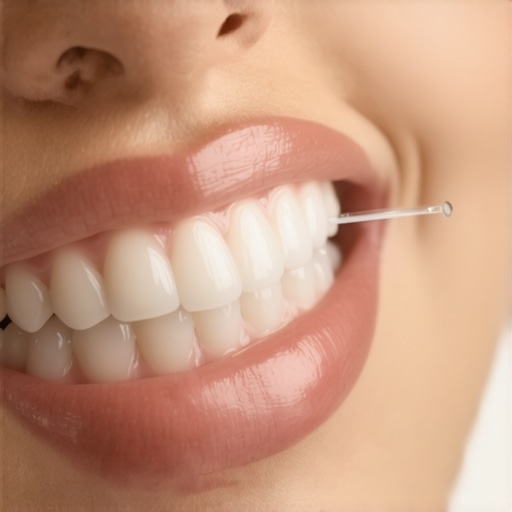
Maintenance isn’t just about brushing; it’s about the tools that reach where a brush can’t. I personally swear by a high-end water flosser like the Waterpik Aquarius. Why? Because manual floss can sometimes snag on the edge of a restoration, whereas a targeted stream of water flushes out the ‘sulcus’—that little pocket of gum around the tooth—without physical friction. This is especially true if you are following the best routine for cleaning under a dental bridge or around complex crowns. Dr. Pascal Magne, a pioneer in biomimetic dentistry and author of ‘Biomimetic Restorative Dentistry,’ argues that maintaining the ‘biological width’—the natural seal of your gums—is the only way to ensure a restoration lasts twenty years instead of five. He emphasizes that the goal isn’t just a strong tooth, but a tooth that functions like a natural organ.
Look Ahead to the Era of Digital Tooth Twins
We are moving into an incredible time for dental tech. I’ve been reading up on enhance your confidence cosmetic dentistry innovations to watch, and the most exciting thing on the horizon is the ‘digital twin.’ Soon, your dentist will have a 3D digital map of your mouth that tracks gum recession to the tenth of a millimeter every year. This means we can catch that ‘dark line’ before it even becomes visible to the naked eye. We’re also seeing a shift toward 3D-printed bio-ceramics that mimic the wear patterns of natural enamel, so your crowns won’t feel like ‘foreign objects’ anymore. If you want to stay ahead of the curve, I highly recommend asking your dentist about ‘biomimetic’ options next time you’re in for a checkup. Try the water flosser trick today—aim it at a 45-degree angle toward the gum line for thirty seconds—and see how much ‘tighter’ your gums feel after just a week.
I remember standing in the bathroom before my best friend’s wedding, leaning so close to the mirror that my breath fogged the glass. I wasn’t checking my tie or my hair; I was staring, horrified, at a thin, shadowy gray line right at the base of my front tooth. I’d paid a lot of money for that crown years ago. I thought I was done with dental drama. Instead, it looked like I had a permanent stain or, worse, a gap where my tooth should be. It felt like a betrayal of my investment in expert cosmetic dentistry solutions. That moment of realization—that my ‘perfect’ smile had a glaring flaw—is exactly why I want to help you figure this out today. We’re going to dig into why that dark line appears and, more importantly, how we can make it vanish so you can stop hiding your smile in photos.
That Gray Shadow Isn’t Just in Your Head
When I first noticed my dark margin, I actually tried to brush it away. I scrubbed until my gums were sore, thinking it was just coffee stain buildup. I was wrong. If you are seeing a dark or grayish line, you aren’t imagining things, and no amount of whitening toothpaste is going to touch it. Most of the time, this is a classic case of what happens with older restorative techniques. I made the mistake early on of choosing the ‘strongest’ option without asking about the aesthetic trade-offs. I didn’t realize that why your gum line looks dark around an old crown often has everything to do with what is hidden underneath the porcelain. Have you ever caught yourself tilting your head in the mirror, trying to see if the lighting makes that line look better or worse?
Is This Just a Sign of My Crown Failing?
It’s the question that keeps us up at night: is my tooth rotting under there? The short answer is: not necessarily. While a dark line can sometimes indicate a ‘leaking’ margin where bacteria are getting in, it is frequently just a cosmetic issue caused by the metal structure of the crown becoming visible as our gums naturally shift. According to the American Academy of Cosmetic Dentistry, gingival recession—the shrinking of gum tissue—is one of the most common reasons these dark metal margins are exposed over time.
The Real Reason Your Smile Has a Metal Rim
To understand the fix, you have to understand the ‘sandwich’ that is your tooth. For decades, the standard was a Porcelain-Fused-to-Metal (PFM) crown. These are incredibly durable, but they have a literal silver lining—or rather, a dark metal base. When the crown is first placed, that metal edge is tucked neatly under your gum line. However, gums are living tissue; they move, they recede, and eventually, they ‘unzip’ to reveal the metal framework beneath. This is a common hurdle when understanding dental crowns and their long-term behavior. If I had known then what I know now about all-porcelain or zirconia options, I would have saved myself a lot of heartache. Today, dental crowns explained by modern standards focus much more on light-transmitting materials that don’t leave you with a ‘black line’ legacy. We’re about to walk through the specific steps you can take to trade that gray shadow for a seamless, natural look.
Start by Checking for Structural Failure
Before you worry about the aesthetics, you have to ensure the tooth underneath is actually safe. I learned this the hard way with a molar that didn’t just have a dark line, but a strange metallic taste. Think of your crown like a roof on a beach house; it takes a constant beating from salt and moisture. If the seal—the ‘flashing’ of your tooth—breaks, water (or in this case, bacteria) gets underneath. You should learn how to tell if your dental crown is leaking bacteria by looking for more than just the gray shadow. If you see redness at the gum line or feel a slight sensitivity to sugar, the line isn’t just a cosmetic metal rim; it is a gap where your natural tooth is vulnerable.
Look for the Red Flags
If the area feels tender or if you’ve been wondering how to tell if your crown needs to be replaced immediately, try the floss test. If the floss shreds or catches specifically on that dark line, the margin is ‘open.’ When this happens, the crown isn’t just ugly—it’s a ticking time bomb for a cavity.
Trade Your Metal Base for an All-Ceramic Upgrade
The most direct way to vanish that gray shadow is to swap the old Porcelain-Fused-to-Metal (PFM) crown for a modern all-ceramic or zirconia version. PFM crowns are like a wooden table painted white; if you scratch the surface or the edges wear down, the dark wood shows through. Modern zirconia is like a solid marble slab—it is the same color all the way through. When you are weighing dental crowns vs other restorations which is right for you, remember that all-ceramic options allow light to pass through the tooth and into the gum tissue, keeping the area looking pink and healthy rather than bruised and gray.
The Magic of Light Transmittance
In my own journey, I replaced a front PFM with an E-max crown. The difference was night and day. Instead of a ‘dead’ looking tooth that blocked all light, the new crown looked alive. It didn’t have a metal collar, so even if my gums recede a millimeter in ten years, there is no ‘black line’ waiting to haunt me.
Don’t Wait Until the Shadow Becomes a Problem
I once ignored a crown that felt slightly ‘off’ for months. I convinced myself it was just fine because it didn’t hurt. However, I kept noticing why your crown feels tight when you wake up can actually be a sign of minor shifting or a poor fit. By the time I went in, the dark line had widened because the crown was slightly loose, allowing my gums to pull away in defense. Ignoring the shadow can lead to bigger problems, and the real cost of delaying a necessary dental crown often includes more invasive procedures like root canals if the underlying tooth decays.
Protect Your Gums to Keep the Line Hidden
Even with a perfect crown, you have to maintain the ‘curtain’—your gums. If your gums recede, they reveal the junction where the crown meets the tooth. You might be surprised to learn why your gums are receding despite using a soft toothbrush, which often comes down to technique rather than the brush itself. Scrubbing horizontally is like using a saw on your gums. Instead, use gentle circular motions to keep the tissue high and tight against the crown, ensuring that even if there is a tiny margin, it stays tucked away where no one can see it.
The Strength Myth That Ruins Front-Row Smiles
We often hear that the strongest material is always the best choice for longevity. In my years of obsessing over dental aesthetics, I’ve found that this belief is actually a trap. While a monolithic zirconia crown might be tough enough to hammer a nail, it often lacks the soul of a natural tooth. Natural teeth have a quality called ‘incisal translucency’—the way light dances through the edges. If you prioritize raw strength over light play, you end up with a tooth that looks like a bright white Lego block in your mouth. This is a common pitfall when revamp your smile top cosmetic dentistry trends for 2025 focus too much on durability and not enough on optical properties.
Why High-End Porcelain Still Looks Fake Sometimes
Here is the nuance most people miss: even the most expensive crown can look ‘off’ if your dentist doesn’t consider your gingival biotype. If you have thin gum tissue, the dark shadow of the underlying root (especially if it has had a root canal) can shine through the gum itself, making it look bruised even if the crown margin is perfect. This is why why your porcelain veneers might look bulky or unnatural often has less to do with the ceramic and more to do with the preparation of the tooth underneath. A study published in the Journal of Esthetic and Restorative Dentistry highlights that translucency—not just color—is the most critical factor in matching a restoration to a natural tooth. If the porcelain is too opaque to hide a dark stump, it loses its lifelike quality.
Can Your Gums Actually Grow Back Over a Visible Crown Margin?
It’s the ultimate dream for anyone seeing that gray line: can I just make the gums move back down? Unfortunately, once gum tissue has receded due to trauma or PFM irritation, it rarely ‘creeps’ back on its own. While some advanced grafting procedures exist, they are complex and expensive. The more predictable solution is nearly always replacing the restoration. When you are looking at dental crowns vs other restorations which is right for you, you must choose a material that is ‘biocompatible,’ meaning it doesn’t irritate the gums and cause them to run away in the first place.
Don’t Ignore the Foundation of the Whole Family
In our house, we treat dental health as a team sport. It is easy to get hyper-focused on one cosmetic fix, but those results only last if the oral environment is healthy. This is the core philosophy behind a family dentistry guide building a lifetime of healthy smiles. If you are fixing a crown but ignoring the localized gum disease next door, you are just building a mansion on a swamp. Have you ever fallen into the trap of fixing the ‘pretty’ parts while ignoring the foundation? Let me know in the comments if you’ve ever had a cosmetic fix that didn’t go quite as planned.
Stop Using a Manual Brush if You Have Crowns
I learned the hard way that a manual toothbrush is a blunt instrument when you’re dealing with high-end ceramic work. After investing in expert cosmetic dentistry solutions, you can’t just ‘scrub and go.’ I switched to a sonic toothbrush with a pressure sensor because it prevents me from being my own worst enemy. If you press too hard, you’re not just cleaning; you’re literally sanding down your gum line. This is a vital part of caring for your childs teeth essential family dentistry tips as well—teaching the next generation that ‘harder’ isn’t ‘cleaner’ saves them from the dark margins I struggled with. Plus, the truth about how often you should replace your toothbrush head is that old, frayed bristles harbor bacteria that love to hide in the microscopic gap between your crown and your natural tooth.
How do I keep my dental work looking fresh long-term?
Maintenance isn’t just about brushing; it’s about the tools that reach where a brush can’t. I personally swear by a high-end water flosser like the Waterpik Aquarius. Why? Because manual floss can sometimes snag on the edge of a restoration, whereas a targeted stream of water flushes out the ‘sulcus’—that little pocket of gum around the tooth—without physical friction. This is especially true if you are following the best routine for cleaning under a dental bridge or around complex crowns. Dr. Pascal Magne, a pioneer in biomimetic dentistry and author of ‘Biomimetic Restorative Dentistry,’ argues that maintaining the ‘biological width’—the natural seal of your gums—is the only way to ensure a restoration lasts twenty years instead of five. He emphasizes that the goal isn’t just a strong tooth, but a tooth that functions like a natural organ.
Look Ahead to the Era of Digital Tooth Twins
We are moving into an incredible time for dental tech. I’ve been reading up on enhance your confidence cosmetic dentistry innovations to watch, and the most exciting thing on the horizon is the ‘digital twin.’ Soon, your dentist will have a 3D digital map of your mouth that tracks gum recession to the tenth of a millimeter every year. This means we can catch that ‘dark line’ before it even becomes visible to the naked eye. We’re also seeing a shift toward 3D-printed bio-ceramics that mimic the wear patterns of natural enamel, so your crowns won’t feel like ‘foreign objects’ anymore. If you want to stay ahead of the curve, I highly recommend asking your dentist about ‘biomimetic’ options next time you’re in for a checkup. Try the water flosser trick today—aim it at a 45-degree angle toward the gum line for thirty seconds—and see how much ‘tighter’ your gums feel after just a week.
Lessons From My Own Battle With the Gray Gum Line
Looking back, my biggest ‘lightbulb moment’ was realizing that a dark margin is rarely just about the tooth—it’s about the relationship between the material and your body. Here is what I wish I understood sooner: Cheap materials cost more in the long run. Opting for a PFM crown saved me money in my 20s, but the cost of replacement and gum treatment in my 30s was much higher. Second, translucency is the secret to realism. A crown that blocks all light will always look like a fake tooth, regardless of how white it is. Lastly, your gum health is the frame for the artwork. You can have the most expensive zirconia in the world, but if your gums are inflamed, the result will always look suboptimal. Transitioning to the role of family dentistry in ensuring oral health for all ages has taught me that preventative maintenance is the only real way to keep these cosmetic issues at bay.
The Daily Toolkit for a Shadow-Free Smile
If you want to protect your investment and keep that dark line from appearing, I personally trust these specific resources and habits. I rely on the Oral-B iO Series because the light-up pressure sensor is the only thing that stopped my horizontal scrubbing habit. For education, I constantly check the American Academy of Cosmetic Dentistry (AACD) patient resources to stay informed on revamp your smile top cosmetic dentistry trends for 2025. Finally, never underestimate the power of a custom-fitted night guard if you are a grinder; physical trauma is a fast-track to gum recession and margin exposure.
Stop Hiding Your Smile in the Back of the Group Photo
You deserve to feel confident every time the camera comes out. The gray shadow that has been bothering you isn’t a permanent sentence; it is a solvable puzzle. By choosing modern, light-passing materials and adopting a gentle, high-tech cleaning routine, you can ensure your smile looks as vibrant and natural as it feels. Whether you are currently researching dental crowns vs other restorations which is right for you or ready to make the switch, take that first step toward a seamless look today. Have you ever noticed a dark line and assumed it was just a stain, or are you ready to plan your first ceramic upgrade? Let me know in the comments below!