I remember sitting at a cozy Italian bistro, halfway through a slice of warm sourdough, when I heard it. A sharp, crystalline snap. My heart sank faster than a stone in a pond. I didn’t even have to look in a mirror; I knew that familiar, jagged edge against my tongue meant my third porcelain crown in two years had just surrendered. I spent thousands on expert cosmetic dentistry solutions, yet here I was, spitting out a ceramic shard into a cloth napkin. It’s frustrating, expensive, and honestly, a bit embarrassing when you feel like your smile is constantly under construction.
Stop Blaming the Bread: The Real Culprits Behind the Damage
If you’re like me, you probably think you just have weak teeth or that your dentist must have used a bad batch of porcelain. I spent months being angry at my family dentistry provider, assuming they were doing something wrong. But the truth is, the reason your porcelain crown keeps failing often has more to do with what’s happening in your mouth while you aren’t even looking. Today, I’m going to walk you through the structural and mechanical reasons these expensive little caps fail and show you exactly what I changed to finally keep my smile intact for more than six months.
Is Porcelain Actually Durable Enough for Daily Use?
I used to think porcelain was basically bulletproof. That was my first big mistake. While it looks beautiful and mimics natural enamel perfectly, it is actually a glass-like material that is prone to brittle fracture. According to a study published by the Journal of the American Dental Association, while porcelain-fused-to-metal (PFM) crowns have a high survival rate, the most common reason for replacement is actually the fracturing of the ceramic veneer itself. It’s not just about what you eat; it’s about the sheer force of your bite. If your bite is slightly off, or if you have a hidden crack in your crown that goes unnoticed, that porcelain is under constant, uneven pressure.
Before we go any further, I have to ask: Have you ever felt a sharp zap when you bite down, or noticed your crown feels just a tiny bit tall compared to your other teeth? Let me know in the comments, because that tiny detail is usually the smoking gun. In my early days of dealing with this, I ignored the real cost of delaying a necessary crown adjustment. I thought I could just tough it out or adapt my chewing. Big mistake. Your mouth is a precision machine, and even a fraction of a millimeter of misalignment can turn your crown into a ticking time bomb. It wasn’t until I started understanding dental crowns from a mechanical perspective rather than just an aesthetic one that things finally clicked.
Stop the Grinding Before It Shatters Your Investment
I used to treat my dental work like a set-it-and-forget-it appliance. That was my first major error. Think of your bite like the wheel alignment on a truck. If one tire hits the pavement at even a slightly wrong angle, you aren’t just wearing down the rubber; you’re straining the whole axle. In my case, a ‘high spot’ on my second molar was catching every time I chewed, sending micro-shocks into my jawbone. I thought it would eventually settle in, but ignoring the real cost of delaying a necessary dental crown adjustment led to a vertical fracture that nearly cost me the whole tooth.
Get Your Bite Mapped by a Professional
The first step is ensuring your ‘occlusion’—how your teeth meet—is perfect. Dentists use thin articulating paper to mark where your teeth touch. If your crown is hitting first, even by a hair, it’s absorbing 100% of the force of your jaw muscles before the other teeth even help out. This is why you might experience a situation why your crown feels tight when you wake up. I once sat in the chair for forty-five minutes just having the dentist shave down microscopic layers of porcelain until my bite felt like silk. It felt tedious at the time, but that crown has lasted five years without a single chip.
The Night Guard Is Your Best Insurance Policy
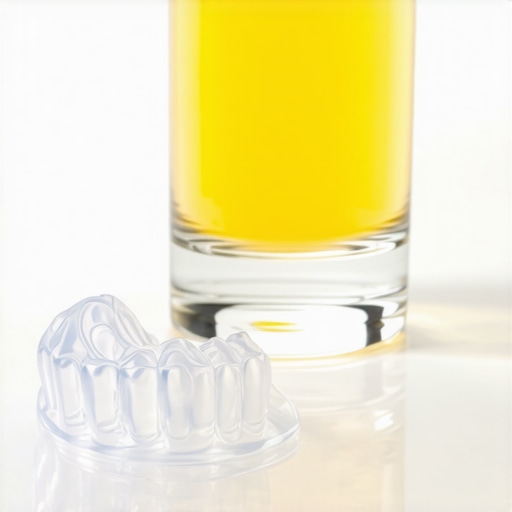
If you wake up with a dull headache or a sore face, you are likely grinding your teeth in your sleep. This is the ‘silent killer’ of cosmetic dentistry. Porcelain is incredibly strong under vertical pressure (crushing), but it’s weak under lateral pressure (shearing). When you grind, you are applying shearing forces that can snap the bond or the ceramic itself. I learned the hard way that the risks of skipping your night guard for just one week are very real. I went on a camping trip, forgot my guard, and came home with a jagged edge on my front veneer. Now, I never sleep without it—it’s like a helmet for your smile.
Maintain the Foundation to Prevent Hidden Decay
Clean Under the Margins Like a Specialist
A crown doesn’t protect you from cavities; it just covers the top of the tooth. The ‘margin’—the place where the porcelain meets your natural gum line—is a magnet for bacteria. If decay starts under that edge, the crown loses its support and eventually falls off. I started using a dedicated routine, similar to the best routine for cleaning under a dental bridge, involving a water flosser and interdental brushes. If you don’t keep this area pristine, you might start wondering how to tell if your dental crown is causing your bad breath, which is often the first sign of trapped bacteria or an impending failure.
Listen to What Your Jaw Is Telling You
Pain is a data point. After a recent procedure, I noticed a dull ache that wouldn’t go away. I initially thought it was just a normal recovery phase, similar to why your jaw is sore after a filling replacement. However, that ache was actually a signal that my crown was slightly misaligned. By catching it early and having the dentist perform a quick 3D scan, we saved the porcelain from fracturing under the stress of my morning coffee routine. Never ignore a persistent ‘throb’ or a sense of ‘fullness’ around a new restoration.
Let’s get something straight: most people think that once the porcelain is bonded, the job is done. I used to believe that too. But in my journey through various expert cosmetic dentistry solutions, I discovered a hard truth: your crown is not a diamond; it’s a prosthetic. Many dental influencers will tell you that modern materials make these restorations invincible, but in my experience, the material is only 20% of the equation. The real secret to longevity lies in the preparation of the underlying tooth. According to a report in the International Journal of Prosthodontics, the specific taper and height of the tooth preparation (how the dentist shapes your original tooth) are far more predictive of whether a crown stays put than the brand of cement used. If your dentist over-tapers the tooth, the crown becomes a literal ‘hat’ that can slide off at any moment, regardless of how much you paid.
Why Does a Perfectly Installed Crown Still Develop That Dark Line?
One of the most common complaints I hear (and experienced myself) is the appearance of a gray or dark shadow near the gums after a few years. Most people assume it’s decay, but often, it’s a nuance of the material choice or gum recession. If you have a thin ‘gingival biotype’ (thin gum tissue), the metal substructure of an older PFM crown will eventually show through. This is why I’ve become such a fan of checking out top cosmetic dentistry trends for 2025, which favor translucent zirconia or lithium disilicate. These materials don’t just look better; they interact with light like natural enamel, preventing that dreaded ‘dead tooth’ look. If you’re currently seeing a shadow, you should investigate why your gum line looks dark around an old crown before jumping to the conclusion that you need a root canal. Have you ever fallen into this trap of assuming a dark line meant a cavity? Let me know in the comments.
The Trap of Rushing Into Aesthetics Without a Foundation
The ‘oops’ factor I see most often is people treating cosmetic work as a shortcut. I once tried to get a front veneer to cover a slight overlap without addressing my underlying bite issues first. Big mistake. Your mouth is an ecosystem. If your family dentistry provider hasn’t cleared you for periodontal health or stable occlusion, a new crown is just a expensive band-aid. You must fix the foundation. I learned that the truth about the lifespan of composite vs. porcelain veneers depends entirely on how well you manage your bite force. If you rush the process, you’ll find yourself back in the chair for a replacement in three years instead of fifteen. Always ensure you are understanding dental crowns as functional components of your jaw, not just pretty accessories for your Instagram photos.
After years of trial and error, I’ve realized that the tools in your bathroom cabinet matter just as much as the specialized instruments in your dentist’s office. I don’t just use any toothbrush anymore; I switched to an ultrasonic model with a built-in pressure sensor. Why? Because I was ‘scrubbing’ my gums away, which leads to recession and exposes the crown margin—the most vulnerable part of the tooth. I also swear by a high-end water flosser. It’s not just about removing food; it’s about disrupting the biofilm that loves to congregate where your porcelain meets your natural tooth. If you want to avoid that heart-sinking moment when you realize you are understanding dental crowns the hard way because one fell out during dinner, you need to treat your mouth like a high-performance engine.
How do I maintain my cosmetic restorations over time?
It ultimately comes down to mechanical protection and chemical balance. I now carry a pH-neutralizing spray if I’m out drinking coffee or wine. This might sound extreme, but acidity weakens the resin cements that hold your work in place over time. I’ve also mastered the ‘C-shape’ flossing technique. If you aren’t wrapping the floss tightly around the base of the crown, you are missing nearly 40% of the plaque buildup. I’ve seen people spend a fortune on expert cosmetic dentistry solutions only to let a five-dollar cavity ruin the entire restoration because they were inconsistent with their interdental brushes. According to Dr. John Cranham and the experts at the Dawson Academy, the stability of any restoration is almost entirely dependent on ‘Centric Relation’—ensuring your jaw joints are seated properly so the porcelain isn’t taking uneven hits.
If you’re serious about your smile, you need to think like a curator of fine art, not just a dental patient. I’ve added a specific tool to my routine that most people overlook: the specialized interdental brush. Unlike standard floss, these tiny brushes scrub the ‘concavities’ of the tooth roots. This is critical when you have work like dental-crowns-vs-other-restorations-which-is-right-for-you because the contours of a crowned tooth are slightly different from a natural one. I personally use plastic-coated wires to ensure I never scratch the surface of my zirconia. This level of detail is what separates a smile that lasts five years from one that lasts twenty.
The Future of Home Dental Monitoring
Looking ahead, I predict that by late 2025, we will see a massive shift toward AI-driven home monitoring. We are already seeing the first wave of apps where you can take a high-resolution photo of your teeth and an algorithm flags potential margin leaks or gum inflammation before they become emergencies. This will revolutionize how family dentistry functions, moving us from reactive ‘drilling and filling’ to true proactive care. You won’t have to guess if a crown is failing; your phone will likely tell you. This is one of the most exciting cosmetic dentistry innovations to watch because it puts the power back in the patient’s hands. My final tip? Get a professional, laboratory-made night guard today. It is the single best insurance policy you can buy for your smile. Stop what you’re doing and call your dentist to schedule an impression—it’s the one thing I wish I had done before my first crown snapped.
The Hard Truth My Dental Bills Taught Me About Porcelain
Looking back on my journey, the biggest realization wasn’t that I needed better materials, but that I needed to become a more informed advocate for my own health. I learned the hard way that knowing how to tell if your crown needs to be replaced immediately is a skill every patient should have. It’s also vital to realize that the real reason your dental bridge feels loose or your crown feels slightly off is often a sign of underlying bite pressure rather than a failure of the porcelain itself. My lightbulb moment came when I realized my teeth weren’t breaking because they were ‘weak’—they were breaking because I was treating my mouth like a tool instead of a precision instrument. If you ever feel a shift, don’t wait; small adjustments today prevent massive bills tomorrow.
Tools That Saved My Teeth from More Drills
I only trust a few specific items in my daily routine now to protect my dental investments. First and foremost is a laboratory-grade night guard. Once you have one, you’ll need to learn the best way to clean a night guard to prevent odors to ensure you actually wear it every night. Secondly, I stopped trying to fix things myself. I cannot emphasize enough the danger of using super glue to fix a broken crown at home; the chemicals can damage the natural tooth structure beyond repair. Finally, I switched to high-alkaline mouthwashes to protect the resin bonds from acidic erosion, a small change that has extended the life of my margins significantly.
Your Smile Deserves the Best Protection
Your journey to a resilient and confident smile doesn’t have to be as stressful or expensive as mine was. By shifting your focus from purely aesthetic goals to the mechanics of your bite and the health of your gums, you can ensure that your expert cosmetic dentistry solutions last for decades. You have the power to stop the cycle of repairs. If you are currently feeling any discomfort or are ready to take the next step in your dental health journey, please feel free to contact us to discuss your options. Have you ever experienced that sudden, terrifying snap while eating your favorite meal? Let me know your story in the comments below.