It was 7:00 AM, and the aroma of freshly ground beans was the only thing keeping me going. I took a big, hopeful gulp of my French press coffee, and my world tilted. It wasn’t just a twinge; it was a searing, white-hot flash of agony that made me drop my mug. I’ve dealt with sensitive teeth before—usually the kind that makes you wince at a popsicle—but this was different. This was specifically hot liquids. My ice-cold water felt like a relief, which honestly felt backwards. I spent way too long Googling symptoms and convinced myself I was fine. I even waited until the pain started keeping me up at night before I finally called my local office for some family dentistry advice. My biggest mistake was assuming a “hot-only” sensitivity would just go away on its own. Spoiler alert: it didn’t. We’re going to dive into exactly why this happens and what you can do to save your tooth (and your morning routine).
Stop Ignoring That Sharp Zinger When You Sip Coffee
[image] Heat sensitivity is the sneaky cousin of dental pain. Most of us are used to that brief shock from a cold soda, but when heat triggers the pain, the rules of the game change entirely. When I first felt it, I figured my enamel was just getting a little thin. Maybe I’d been over-whitening? I tried to whiten my teeth a few months prior, and I thought the sensitivity was just a lingering side effect. I was wrong. Heat sensitivity often means the pulp—the living center of your tooth—is under siege. According to the American Association of Endodontists, while cold sensitivity can often be managed with special toothpaste, pain that lingers after heat is frequently a sign that the nerve is dying or infected. Have you ever had to wait for your soup to get lukewarm just to avoid a literal tooth-shock? If so, you’re not alone, but you definitely shouldn’t wait as long as I did to address it.
Is This Sudden Heat Sensitivity Actually Worth the Panic?
Some people worry that a little heat pain means they are headed straight for a root canal or expensive dental crowns. It’s a scary thought. I remember sitting in the waiting room, worrying about the bill and the drill. But here’s the reality: catching it early often means a much simpler fix. Sometimes, you might just have a hidden fracture that’s letting the heat reach the nerve. Other times, it could be a sign that an old filling is leaking. I learned the hard way that masking the pain with ibuprofen only buys you time while the underlying issue gets worse. Whether you’re looking into cosmetic dentistry to fix the look of a damaged tooth or just want to eat a hot meal in peace, understanding the “why” behind the heat is the first step toward relief.
Identify the Root Cause Before It Identifies Your Wallet
When that heat hits, you aren’t just feeling a sensation; you’re feeling a pressure change inside the tooth’s canal. Think of the pulp inside your tooth like a tiny, high-pressure steam engine. When you introduce heat, the gases produced by bacteria or inflammation expand, and since your tooth is a hard shell, that pressure has nowhere to go but straight onto the nerve. This is why cold water often feels like a miracle cure—it’s literally shrinking the pressure. If the pain lingers for more than 30 seconds after you swallow that sip of tea, you are likely dealing with pulpitis. At this stage, you need to determine if you are looking at a hidden fracture or an infection. I remember one Tuesday morning I tried the ‘ignore it’ method. I switched to drinking my coffee through a straw, aimed directly at the back of my throat. It was a disaster. Not only did I burn my tongue, but the heat eventually radiated through my jaw anyway. I finally realized that my DIY workarounds were just helping an infection grow. 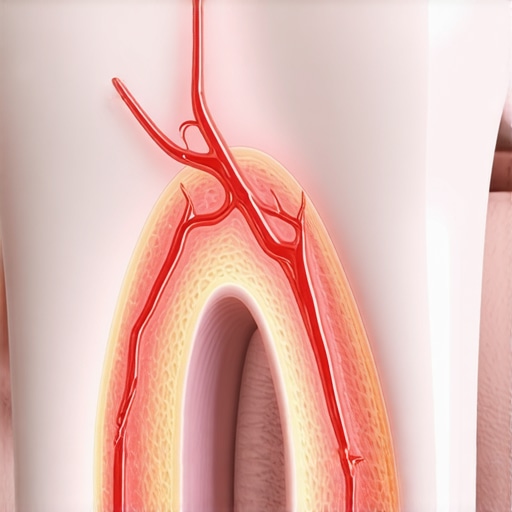
Practical Steps for Immediate Relief
Before you can get into a chair for family dentistry care, you have to manage the ‘now.’ First, stop the thermal cycling. This means no more alternating between hot coffee and ice water. This constant expansion and contraction can actually worsen a crack if you have one. Second, check your existing dental work. A common culprit for sudden heat sensitivity is when you need to tell if your crown is leaking and trapping bacteria. If bacteria get under an old restoration, they produce gas that reacts violently to heat. I found out the hard way that a crown I’d had for ten years was no longer sealed, turning my tooth into a literal pressure cooker. If you are away from home, knowing how to handle a dental emergency when you are out of town can save your tooth; often, an over-the-counter anti-inflammatory is better than a standard painkiller because it specifically targets the swelling inside that pulp chamber.
Decide Between Repair and Reinvention
Once the dentist sees the X-rays, you usually face a choice. If the nerve is still healthy enough, you might just need to swap out an old filling. However, if the structure is compromised, you’ll be looking at understanding dental crowns when and why they are needed to provide a new, insulated shield for that sensitive nerve. This isn’t just about stopping the pain; it’s about structural integrity. When comparing dental crowns vs other restorations, remember that a crown acts like a helmet for your tooth, blocking the thermal transfer that causes the zinger in the first place. I used to think of crowns as a ‘last resort’ for the elderly, but after seeing how they completely blocked the heat from reaching my sensitive spots, I realized they are a primary tool in cosmetic dentistry to keep you looking and eating normally. Don’t wait for the ‘steam engine’ to explode; address the pressure while the tooth is still salvageable.Most people think a crown is like a bulletproof vest. Once it is on, the tooth is “done.” But in my years of obsessing over family dentistry, I’ve learned that a crown is only as good as its seal. A common myth is that crowns protect a tooth from decay forever. In reality, the margin—the tiny line where the crown meets your natural tooth—is the most vulnerable spot in your mouth. If your hygiene isn’t perfect, bacteria can sneak under there. This is exactly why you might notice the hidden reason your gums look dark around an old dental crown; it is often not just a cosmetic issue, but a sign of a failing seal.  Let’s talk about the “Oops” factor. The biggest mistake I see is people choosing cosmetic dentistry solutions like veneers when the tooth’s internal structure is compromised. A veneer is a beautiful facade, but it doesn’t provide the 360-degree ring of protection that holds a weak tooth together. If you have that sharp heat sensitivity we discussed, a veneer won’t save you; you likely need the full coverage of a crown. When weighing dental crowns vs other restorations, do not let vanity dictate the choice. A study published in the Journal of the American Dental Association (JADA) highlights that the longevity of a restoration is directly tied to the remaining healthy tooth structure and the precision of the fit, not just the material of the crown itself.
Can You Actually Avoid a Root Canal After Heat Sensitivity Hits?
This is the million-dollar question. Everyone assumes heat sensitivity is a one-way ticket to a root canal. Here is the contrarian truth: sometimes it is just “reversible pulpitis.” If the irritation is caused by a leaking filling or a small crack, replacing the restoration quickly can sometimes calm the nerve down and allow it to heal. However, the window of opportunity is narrow. If you wait until the pain becomes a constant throb or begins to wake you up at night, the nerve has likely crossed the point of no return. This is why I always tell friends that “watching and waiting” is the most expensive strategy in dentistry. Whether you’re looking at cosmetic dentistry innovations to watch or just standard maintenance, speed is your best friend. One more advanced nuance: the “tightness” factor. If you ever wondered the real reason your crown feels loose when you chew gum, it is often because the cement has washed out, even if the crown hasn’t fallen off yet. This creates a vacuum that pulls liquid and heat toward the nerve every time you bite. Don’t just push it back down and forget about it. Have you ever fallen into this trap of ignoring a “minor” loose feeling? Let me know in the comments.Once you have invested in your smile, the game shifts from repair to preservation. I used to be a standard string-floss devotee until I realized I was nearly popping my own restorations off by pulling too hard. Now, I exclusively use a water flosser with a specialized tip. Why? Because it is designed specifically to navigate the junction where a crown meets the gumline without the mechanical tugging that can weaken cement over time. If you are managing caring for your childs teeth essential family dentistry tips at the same time, you know that teaching kids to clean around appliances is a nightmare. This tool makes it effortless. It is about more than just avoiding cavities; it is about protecting the structural integrity of your dental work. 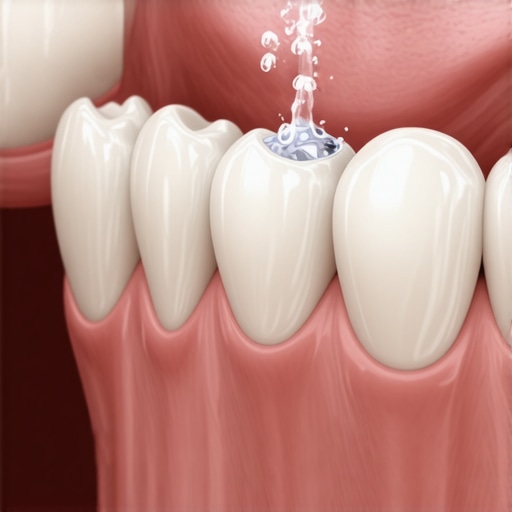
How do I make my dental work last a decade or more?
Maintenance is not a one-size-fits-all approach. For example, if you have a bridge, you need to know how to clean your dental bridge to prevent chronic gum disease because bacteria love to hide under that pontic. I also keep a close eye on my stress levels. I realized my crowns were wearing down prematurely because I was grinding at night. Learning how to stop clenching your jaw when you feel stressed saved me thousands in potential replacement costs. According to a systematic review by the Cochrane Library, power toothbrushes—specifically those with oscillating-rotating technology—show a 21% reduction in plaque over three months compared to manual brushing. This level of precision is exactly what prevents that tiny margin of your crown from becoming a breeding ground for decay.
The Future of Your Smile is Faster and Smarter
Looking ahead, I predict that ‘watching and waiting’ will become a relic of the past. As we look at the revamp your smile top cosmetic dentistry trends for 2025, we are seeing the rise of AI-driven diagnostic tools that can catch microscopic leaks in a crown before you ever feel that heat-sensitive ‘zinger.’ We are moving toward a world where 3D-printed permanent crowns are fabricated in-office in under an hour, eliminating the need for temporary ones that always seem to pop off at the worst times. For now, the most advanced tip I can give you is this: Tonight, swap your traditional floss for a water flosser on a low-pressure setting and focus specifically on the ‘seams’ of your dental work. You will be shocked at what your manual brush has been leaving behind.
Hard Truths I Wish I’d Heard Before My First ‘Zinger’
Looking back at my dental journey, there are a few things that changed how I view my oral health forever. First, heat pain is a biological countdown. Unlike cold sensitivity, which can sometimes linger for years without escalating, lingering heat pain usually means you have weeks, not months, to save the tooth from an infection. Second, I realized that getting dental crowns explained as an ultimate solution isn’t an admission of defeat; it’s actually a strategic upgrade that provides a high-tech armor suit for a vulnerable nerve. Finally, don’t let insurance cycles dictate your pain levels. Often, waiting for a new year of coverage costs more in emergency fees than the procedure itself. #IMAGE_PLACEHOLDER_E#
My Non-Negotiables for a Sensitive Smile
I have narrowed down my daily routine to three specific tools that keep me out of the emergency chair. I swear by a water flosser on the lowest pressure setting; it clears out the bacteria that cause internal gas pressure without tugging at the delicate seals of my dental work. I also prioritize the role of family dentistry in ensuring oral health by scheduling proactive checkups every six months rather than waiting for a crisis. For my kids, I use these child-friendly dental care strategies to help them identify when a sensation is just a passing cold shock versus a deep heat ache—a skill I wish I had learned decades ago.
Your Morning Coffee Shouldn’t Be a Gamble
Taking the first step toward fixing heat sensitivity is honestly the hardest part. The fear of the procedure is almost always much worse than the actual appointment. Whether you need a simple adjustment or you are looking at cosmetic dentistry trends for 2025 to restore your confidence, the peace of mind that comes with a pain-free meal is priceless. You deserve to enjoy your favorite roast without bracing for impact. Trust your instincts and let family dentistry experts take the pressure off your nerves and your mind. Have you ever experienced that weird sense of relief when cold water hits a ‘hot’ toothache? Let me know your story in the comments below!