I remember it vividly. I was three days into a long-awaited vacation, and there it was—a tiny, white crater on the inside of my lip that felt like a literal hot coal. Every sip of refreshing orange juice was a gamble I lost. Every word I spoke felt like a needle prick against my gums. I tried everything: salt water (ouch!), numbing gels that wore off in minutes, and even that weird honey trick my aunt suggested. Nothing worked. It stayed for two weeks, mocking every attempt I made to enjoy my trip. If you’re here, you’re probably in that same boat, staring in the mirror and wondering why your body is betraying you over a 2mm spot. [IMAGE_PLACEHOLDER]
Stop Sucking on Salt and Start Healing Instead
Most of us treat canker sores like a rite of passage, a minor annoyance that we just have to “tough out.” But when they won’t go away, the frustration turns into genuine anxiety. I’ll be honest: I used to think I could just “brush it off.” In my early twenties, I actually tried to scrub a sore with my toothbrush thinking it was just a localized infection I could clean away. That was a massive mistake. Not only did it bleed, but the irritation spread, leading to the kind of pain that keeps you up at night and makes you dread breakfast. The “why” matters here. Sometimes, these sores aren’t just random bad luck; they can be caused by constant mechanical irritation. I found out the hard way that a slightly jagged edge on an old filling or even understanding dental crowns and how they fit is crucial, as a poorly fitted one can rub your tissue raw.
Are these home remedies actually worth the hype?
Skepticism is healthy when your mouth feels like a war zone. We’ve all seen the internet “hacks,” but when you’re dealing with a persistent ulcer, you need science, not just anecdotes. According to the American Academy of Oral Medicine, while most minor aphthous ulcers resolve within 7 to 10 days, any lesion that lasts longer than two weeks is a red flag. It could be a vitamin deficiency, a reaction to the Sodium Lauryl Sulfate in your toothpaste, or even a sign that your family dentistry provider needs to investigate for signs of a leaking crown or other irritants. Today, we are going to fix this. I’m going to walk you through the protocol I use now—the one that actually shortens the healing time and keeps the pain at bay. We’ll look at everything from why you might feel like your tongue is burning even without spice, to the specific products that actually work. Have you ever had a sore that stayed for more than three weeks? Drop a comment below; I’d love to hear what you tried.
Swap Out Your Toothpaste Immediately
If you are currently battling a sore that won’t quit, the first thing you need to do is look at your toothpaste label. Many commercial brands contain Sodium Lauryl Sulfate (SLS), a foaming agent that can actually microscopically dry out and irritate your oral tissues, making them more susceptible to ulcers. I remember a particularly brutal month where I had three sores back-to-back. I was brushing religiously, yet my teeth felt sticky and my gums were on fire. The moment I switched to an SLS-free formula, the frequency of my breakouts plummeted. It’s like switching from a harsh detergent to a gentle soap; your mouth needs that extra layer of protection when it’s already compromised.
Identify if Your Dental Hardware is the Enemy
Sometimes the source of the pain isn’t biological—it’s mechanical. A jagged edge on a tooth or a restoration that has seen better days can act like sandpaper against your cheek. I once ignored a tiny chip in a molar for weeks, only to find myself with a massive ulcer that made eating impossible. It turns out, learning how to fix a sharp edge on a tooth is often a job for a professional, as DIY filing can lead to permanent enamel damage. Similarly, if you have a restoration that doesn’t quite fit, you might notice why your gums look dark around a dental crown or feel constant friction. If that crown is old, it could be leaking bacteria and causing localized inflammation that invites ulcers to move in. 
Stop the Throb with a Targeted Barrier
When the pain hits in the middle of the night, you don’t need a lecture on vitamins; you need a shield. Generic numbing gels are okay, but they wash away with saliva almost instantly. Instead, look for ‘canker covers’ or mucoadhesive patches. These work like a localized bandage, sealing the nerve endings away from the air and your tongue. I once had a presentation to give while a sore was at its peak. I applied a patch an hour before, and for the first time in days, I could actually speak without a lisp. This is a vital part of managing tooth pain when you can’t see a dentist immediately, especially when the irritation is preventing you from sleeping or working.
Know When to Call for Professional Reinforcement
If your sore is larger than 1 centimeter or if you have multiple sores merging together, home care isn’t going to cut it. This is where a family dentistry guide becomes your best friend. A dentist can provide a prescription-strength steroid rinse or even use a soft-tissue laser to ‘cauterize’ the nerve endings, which effectively kills the pain instantly and speeds up healing by days. Don’t wait until you’re dehydrated because you can’t swallow water. If you’ve been dealing with a high restoration, they can also show you how to fix a temporary crown that feels too high to prevent future flare-ups. A quick adjustment can be the difference between a two-day healing process and a two-week ordeal.We need to talk about the ‘pretty crown’ trap. Most people assume that if a restoration looks white and matches the surrounding teeth, the job is done. But here is the contrarian truth: a beautiful tooth can be a biological disaster if the margins aren’t perfect. I’ve seen patients spend thousands on cosmetic dentistry trends only to end up with chronic gum irritation or recurring sores because the restoration was ‘over-contoured.’ When a crown is too bulky, it doesn’t just look off—it traps bacteria at the gumline, leading to localized inflammation that looks and feels exactly like a stubborn ulcer. This is why veneers might look bulky or unnatural and actually hurt your long-term oral health.
Stop Ignoring the Smallest Bite Discrepancies
The biggest ‘oops’ factor I encounter is the belief that you should just ‘get used to’ a new restoration that feels slightly high. If your crown feels tight when you wake up or if you find yourself biting your cheek more often, your brain isn’t the problem—the mechanics are. A crown that is off by even a fraction of a millimeter can change your entire bite force distribution. This leads to what we call ‘occlusal trauma,’ which can manifest as a persistent ulcer because your cheek is constantly getting pinched in the same spot during speech or mastication. 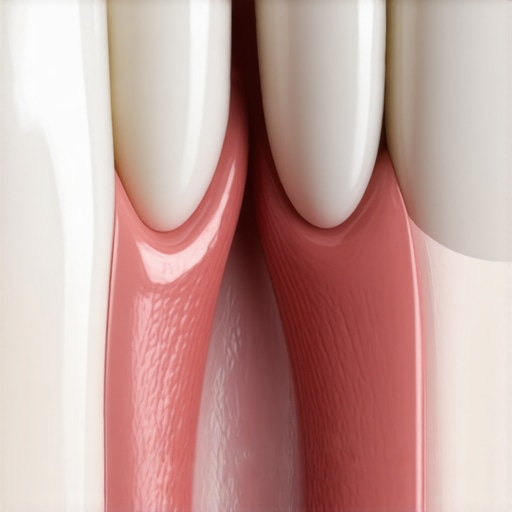
Why do some restorations cause issues while others last decades?
The secret lies in the ‘marginal integrity.’ According to a study published in Clinical Oral Investigations, marginal gaps as small as 100 micrometers can significantly increase the risk of plaque accumulation and subsequent soft tissue inflammation. If your dentist didn’t use high-tech scans or took a shortcut on the prep, that gap becomes a breeding ground for pathogens. This is exactly how to tell if your dental crown is leaking bacteria; it often starts with a weird taste or a sore that just won’t stay away despite perfect hygiene. When you look at dental crowns as a solution for damaged teeth, you have to prioritize the fit over the shade of white. Choosing the right material is another layer of expertise people often ignore. While many want zirconia for its strength, it’s incredibly abrasive if not polished correctly. If the opposing tooth is natural enamel, a poorly finished crown will grind it down like a diamond file. This is the ‘hidden nuance’ of expert cosmetic dentistry solutions—it’s about protecting the entire mouth, not just one tooth. Beyond the fit, the biocompatibility of the material itself is a major factor. Some older alloys contain nickel or base metals that can cause a localized allergic reaction, mimicking a recurring ulcer or a ‘burning’ sensation. When we discuss dental crowns vs other restorations, we aren’t just talking about durability; we’re talking about how your immune system reacts to the foreign object in your mouth. Have you ever fallen into the ‘it’s just a cosmetic fix’ trap, only to realize later it was affecting your comfort? Let me know in the comments. We should also consider how family dentistry needs to evolve to catch these nuances before they become major expenses. If you’re unsure about your current dental work, you can always contact us for a second opinion. Remember, your mouth is a finely tuned instrument; don’t let a bad ‘tuning’ lead to a lifetime of sores.To keep these high-end restorations in peak condition, you have to move beyond the basic ‘brush and pray’ method. I’ve learned that a standard toothbrush, no matter how expensive, can’t always navigate the complex topography of a new bridge or crown. This is where I personally advocate for specialized tools. I use an interdental brush with a plastic-coated wire—never bare metal—to sweep away the invisible plaque that congregates right at the porcelain-to-gum interface. If you let that sit, you’ll eventually be searching for how to tell if your dental crown is leaking bacteria. I also integrated a water flosser into my routine, but I had to learn how to stop your gums from hurting when you use a water flosser by starting on the lowest pressure setting. It’s not about blasting your gums; it’s about a gentle irrigation that keeps the tissue resilient and tight around your new hardware. 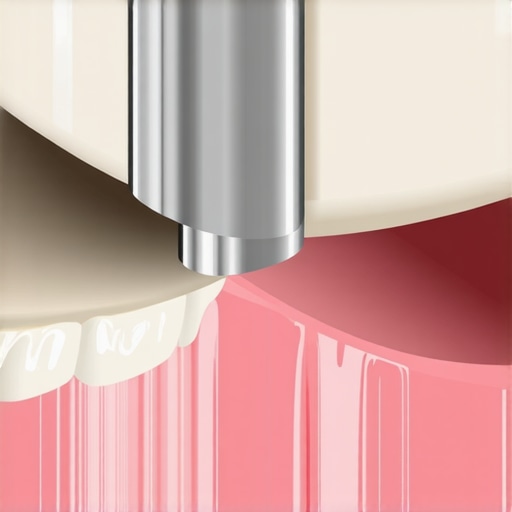
How can I keep my cosmetic work looking brand new for years?
Long-term success is 20% what happens in the chair and 80% what happens at your bathroom sink. You need to be militant about the small details, like how often you should replace your toothbrush head. A frayed bristle is basically a useless piece of plastic that won’t polish your porcelain. Furthermore, you cannot skip professional maintenance. I used to think a cleaning was just a cleaning, but I’ve since realized why a prophy treatment is much more than just a simple tooth cleaning. It’s an opportunity for a professional to check the ‘marginal integrity’ I mentioned earlier under high magnification. This proactive approach is the core of any solid family dentistry guide. I predict that in the next few years, we will see AI-integrated cameras in our home toothbrushes that will alert us to early signs of crown failure before we even feel a twinge.
The Future belongs to 3D Printing and AI Diagnosis
We are rapidly moving toward a world where ‘waiting’ for a restoration is a thing of the past. Technical documentation in the Journal of Prosthetic Dentistry confirms that digital workflows and intraoral scanning now achieve marginal fits of 60 microns or less—far more precise than the old putty impressions. This is one of the most exciting cosmetic dentistry innovations to watch because it eliminates the human error that leads to chronic sores and irritation. If you are looking to revamp your smile, ask your provider about their digital diagnostic tools. My challenge to you: Tonight, instead of your usual floss, try an interdental brush around your most complex dental work. You might be surprised at the difference it makes in how your gums feel by morning. If things still feel ‘off,’ don’t hesitate to contact us to ensure your bite is perfectly aligned.
The Hard Truth About My Decade-Long Battle with Mouth Sores
After years of trial and error, I’ve realized that a canker sore is rarely just a random event; it’s your body’s way of screaming for attention. First, never underestimate the impact of stress—it can manifest as physical inflammation in your mouth before you even feel the mental weight. Second, I learned that while dental crowns are the ultimate solution for damaged teeth, a bad fit is worse than no fit at all. If it feels like something is ‘off’ in your bite, it probably is. Finally, your diet matters more than you think. Vitamin B12 and iron levels are often the hidden culprits behind recurring ulcers that keep coming back no matter how many gels you apply.
The Non-Negotiables in My Oral Care Cabinet
[IMAGE_PLACEHOLDER] If you are ready to stop the cycle of pain, you need more than just a toothbrush. I personally swear by a specific ‘toolkit’ that has saved me from dozens of sleepless nights. One, SLS-Free Toothpaste: This was the single biggest game-changer for me; it stops the unnecessary drying of the mucosa. Two, Mucoadhesive Patches: These are miles ahead of liquid gels because they create a physical wall against your teeth and tongue. Three, Soft Interdental Brushes: These are essential for keeping the areas around your dental work clean without the trauma of metal wires. If you are struggling with a sudden flare-up, knowing how to manage tooth pain when you can’t see a dentist immediately can be a literal lifesaver.
Reclaim Your Smile Without the Constant Sting
Living with chronic mouth irritation is exhausting, but it doesn’t have to be your permanent reality. By staying informed on cosmetic dentistry trends for 2025 and choosing a provider who understands the role of family dentistry in ensuring oral health for all ages, you can ensure your dental work serves your comfort as much as your aesthetic. You deserve a mouth that feels as good as it looks. Have you ever noticed a specific food or habit that triggers your canker sores? Let me know in the comments below!