I was sitting at a dinner party, laughing at a joke, when I caught a whiff of something… funky. It wasn’t the cheese platter. It was coming from my own mouth. Specifically, from right under the dental bridge I’d been so proud of. I felt my face flush. I’d spent good money on that bridge, thinking I’d finally revamped my smile, only to end up more self-conscious than before. It’s a common story in family dentistry, but no one really warns you about the ‘bridge breath’ until you’re living it. Today, we’re going to dive into the nitty-gritty of cleaning those hard-to-reach gaps. I’m going to share the tools that actually work and the ones that are a total waste of time. We’re going to stop that smell at the source so you can talk to people without doing the ‘hand-over-the-mouth’ shield. Have you ever caught a weird scent when flossing around your bridge and wondered if everyone else could smell it too? Let me know in the comments—I promise you aren’t alone in this.
The Day I Realized My Bridge Was Trapping More Than Just Food
For months, I thought I was doing everything right. I brushed. I used mouthwash. I even tried to shove regular floss into the gaps, which, let’s be honest, is about as effective as trying to thread a needle with a rope. I eventually learned that the real reason you have a persistent bad taste in your mouth is often the tiny particles of food and bacteria—specifically anaerobic bacteria—hiding under that pontic. According to the American Academy of Periodontology, biofilm can begin to harden into tartar in as little as 24 to 48 hours, and once it’s trapped under a bridge, it becomes a literal breeding ground for sulfur-producing microbes. I made the classic mistake of treating my bridge like natural teeth for far too long, not realizing that restorations require their own unique toolkit.
Is it actually possible to keep a bridge smelling fresh?
You might be skeptical. I certainly was. I wondered if my dental crown was causing my bad breath or if the bridge was just failing. I even worried that the reason my dental bridge felt loose was because of the decay happening underneath. But here’s the truth: most of us just weren’t taught the right technique. Once I ditched the standard floss and started using tools designed for the job, the odor vanished in days. It’s not about brushing harder; it’s about getting to the spaces that haven’t seen the light of day since your dentist cemented that bridge in place. In the next section, I’ll show you exactly which tools changed the game for me.
Grab the Tools That Get Under the Pontic
To stop that funk, you need to reach the ‘pontic’—the fake tooth that sits just above your gums. Standard floss just glides over the top and misses the debris entirely. I found that why your breath smells like sulfur despite regular flossing is often because you aren’t physically scrubbing the underside of that restoration. You need something with a stiff end to lead the way and a bulky texture to grab the plaque. 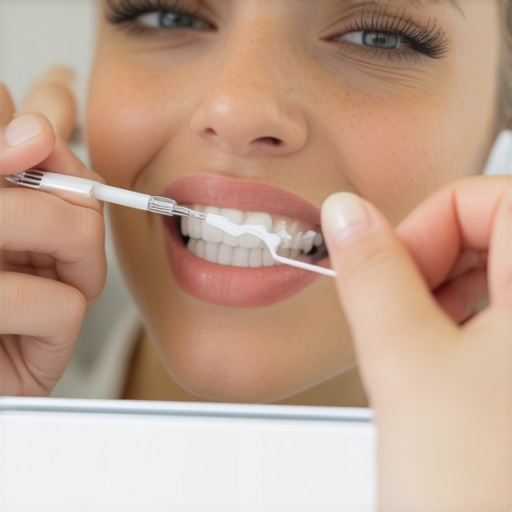
Thread the Needle with Super Floss
This was my first ‘aha’ moment. Super floss has a stiff plastic tip, a spongy middle, and a regular floss end. You poke the stiff end through the gap between your natural tooth (the abutment) and the fake one. Once it’s through, you pull the spongy part under the bridge. I’ll never forget the first time I did this; the gunk that came out was grey and smelled like a swamp. It was gross, but it proved that my how to tell if your dental crown is leaking bacteria check was actually just a hygiene failure on my part. You want to use a back-and-forth ‘sawing’ motion with the spongy part to really scrub the gum line.
Blast Away Debris with a Water Flosser
If threading feels like a chore, a water flosser is your best friend. I used to be terrified of these because I thought they’d be painful, but the secret to painless dental cleanings for sensitive teeth often applies to at-home care too: use lukewarm water. My first attempt was a comedy of errors. I leaned over the sink, turned the pressure to ‘max,’ and immediately sprayed my bathroom mirror and the ceiling. I hadn’t realized you have to keep your lips slightly closed. Once I figured out the ‘lean and aim’ technique, the water flosser became my go-to for daily maintenance. It reaches areas that even the best the role of family dentistry in ensuring oral health for all ages professional would struggle to reach with manual tools alone.
Check for the Dreaded Dark Line
While you’re cleaning, keep an eye on the aesthetics. If you notice why your porcelain crown has a dark line at the gum line, it might not be dirt; it could be the metal substructure showing or gum recession. However, most ‘dark lines’ for bridge-wearers are actually just trapped biofilm. If you clean it and the ‘line’ disappears, you’ve saved yourself an unnecessary worry. For parents, teaching these habits early is vital, so check out caring for your child’s teeth essential family dentistry tips to ensure the next generation doesn’t struggle with these tricky restorations. The goal is to make the space under the bridge as clean as the surface of your natural teeth.
Stop Believing Your Bridge is a ‘Set It and Forget It’ Solution
Common wisdom in cosmetic dentistry often suggests that once a bridge is cemented, your worries are over. People assume that because the prosthetic is made of porcelain or zirconia, it is somehow ‘immune’ to the problems of natural teeth. In my experience, this is the biggest lie in family dentistry. Your bridge isn’t a shield; it’s a structural addition that actually creates new, complex hiding spots for pathogens. While cosmetic dentistry innovations to watch have made restorations look more natural than ever, they haven’t changed the biology of your mouth. If anything, a bridge requires twice the vigilance of a natural tooth because you are managing an artificial margin where bacteria love to congregate.
Why does it still smell if my dentist said the seal was perfect?
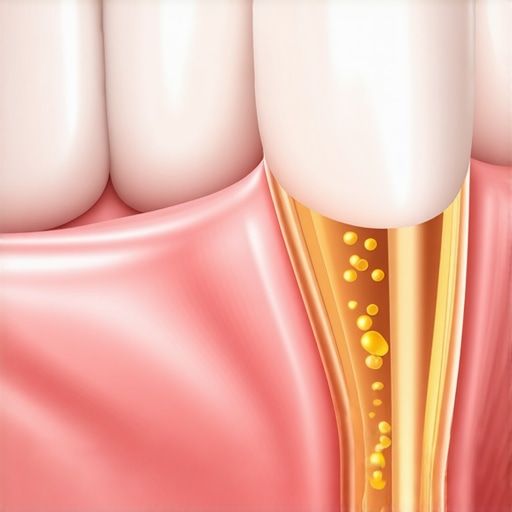
This is the question that haunts most patients. You’ve been told the fit is precise, yet that lingering sulfur scent remains. The nuance most people miss is the ‘micro-gap.’ No matter how skilled the lab, there is a microscopic junction where the dental crowns meet your natural gum tissue. A study published in the Journal of Clinical Periodontology highlights that prosthetic margins, even those that appear ‘sealed’ to the naked eye, show significantly higher levels of subgingival plaque accumulation compared to natural enamel. This isn’t necessarily a failure of the dentist; it’s the nature of placing a foreign object in a wet, bacteria-rich environment. If you aren’t chemically and mechanically disrupting that biofilm daily, you aren’t just risking bad breath—you’re risking leaking bacteria that can lead to bone loss under the abutment teeth.
Avoid the Dangerous Temptation of Metal Picks
When you feel something stuck under that bridge, the ‘oops’ factor usually kicks in when you reach for a toothpick or, worse, a metal scaler you bought online. This is a massive trap. Aggressively digging at the margin of your bridge can create ‘micro-scratches’ in the porcelain or the cement line. These scratches act like Velcro for bacteria, making it even harder to clean in the future. Furthermore, you risk causing gum recession. Once the gum recedes, you might start asking how to tell if your dental crown has a hidden crack or why it looks ‘off’ aesthetically. Instead of force, use chemistry. An antimicrobial mouthwash used in conjunction with your water flosser can neutralize the sulfur-producing microbes without physical trauma to the delicate tissue.
The Real Cost of Cutting Corners on Hygiene
I’ve seen patients who ignored the ‘bridge breath’ for years, only to find out that the teeth supporting the bridge had completely decayed underneath. At that point, the real cost of delaying a necessary dental crown replacement or a new bridge becomes a financial and physical burden. You have to treat the space under your pontic with more respect than you treat your front teeth. It’s the foundation of your smile’s longevity. Have you ever fallen into this trap of thinking your bridge was ‘maintenance-free’? Let me know in the comments—I’d love to hear how you adjusted your routine once you realized the truth. Remember, the role of family dentistry isn’t just to fix teeth, but to provide the education needed to keep those fixes for a lifetime.
The Small Brushes That Reach Where Floss Can’t
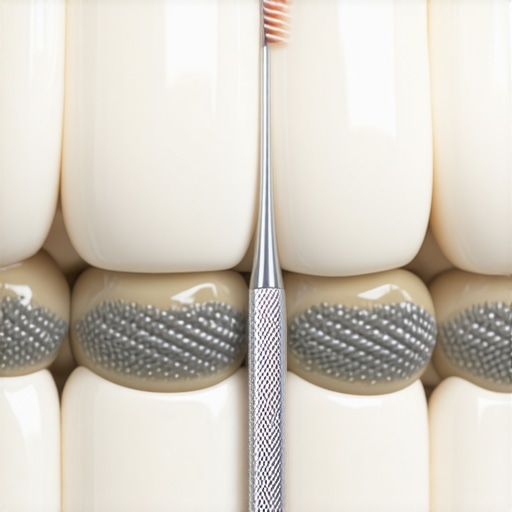
While Super Floss is a great starting point, the real secret weapon in my kit is the interdental brush. I specifically use the ones with a plastic-coated wire because metal-on-metal contact with a bridge can be jarring. If you’ve had dental crowns explained to you by a pro, you know the margin—where the crown meets the tooth—is the most vulnerable spot. I use a ‘scent test’ every night. I run the interdental brush through the gap, and if it comes out smelling like anything other than my toothpaste, I know I haven’t finished the job. It sounds gross, but it’s the most honest feedback loop you’ll ever have. This level of detail is what separates a bridge that lasts 5 years from one that lasts 20.
How do I keep my bridge from failing in five years?
Consistency is the boring answer, but the technical answer involves pH management. Bacteria thrive in acidic environments. After I eat, I don’t just brush; I rinse with water to neutralize the acids immediately. This protects the cement line. According to research in the International Journal of Prosthodontics, biological complications—like recurrent decay—are actually more common than technical failures like porcelain chipping. This means your hygiene routine is more important than the material of the bridge itself. When you are understanding dental crowns when and why they are needed, you have to factor in that your daily habits are the ultimate warranty.
Digital Scans Are Killing the Guesswork
I’m incredibly excited about where cosmetic dentistry innovations to watch are heading. We are moving away from those goopy ‘alginate’ impressions that everyone hates. Modern offices use intraoral scanners that create a 3D map of your mouth with sub-micron accuracy. In the near future, AI will likely analyze these scans to predict exactly where biofilm will accumulate on your specific bridge design. This allows for transform-your-look-with-expert-cosmetic-dentistry-solutions that aren’t just pretty but are bio-engineered to be easier to clean. We are entering an era where ‘bridge breath’ might actually become a thing of the past because the fits are becoming so tight that bacteria simply can’t find a foothold.
If you’re still struggling with a stubborn scent or feel like your current tools aren’t cutting it, my biggest piece of advice is this: Don’t wait for your next six-month checkup. Reach out to a professional who understands the intersection of aesthetics and health. You can contact us to discuss a customized hygiene plan or to see if your current restoration needs a high-tech tune-up. Try the ‘scent test’ with an interdental brush tonight—it’s the fastest way to find out if your bridge is truly clean.
Everything I Learned the Hard Way About Living With Porcelain
I used to think that once my bridge was in place, the hard part was over. I was wrong. The biggest lightbulb moment for me was realizing that the real reason you have a persistent bad taste in your mouth isn’t a lack of brushing, but a lack of mechanical disruption under the bridge. Another lesson? Your gums are dynamic; they move and shift over time, which means the gap you’re cleaning today might be different next year. Finally, I learned that ‘smell checks’ aren’t gross—they are the only objective way to know if your family dentistry investment is actually being maintained correctly.
The Bare Minimum Kit for a Fresh Smile
You don’t need a suitcase full of gadgets, but you do need the right ones. First, a water flosser is non-negotiable for flushing out loose debris, and learning how to stop your gums from hurting when you use a water flosser makes the habit stick. Second, I recommend interdental brushes with plastic coating to avoid scratching the restoration. Third, don’t overlook your basic tools; knowing the truth about how often you should replace your toothbrush head ensures you aren’t just spreading old bacteria around every morning.
Stop Hiding Your Laugh Behind Your Hand
There is a specific kind of freedom that comes with knowing your breath is fresh, even with complex dental work. You shouldn’t have to worry about close-up conversations or dinner party odors. When you commit to a specialized routine, you don’t just protect your health; you revamp your smile from the inside out. If you feel like your bridge is becoming a burden instead of a benefit, it might be time for a professional assessment. Feel free to contact us to schedule a cleaning or a consultation to ensure your restoration is as healthy as it is beautiful. Have you found a specific tool that finally cleared up your ‘bridge breath’ issues? Let me know in the comments below!