The sound of a tooth hitting the pavement is something you never forget. It’s a sharp, hollow click followed by a rush of metallic-tasting panic. I remember my oldest kid, Leo, tripping over his own shoelaces a few years back and coming up with a bloody gap in his smile. In that moment, even with all my knowledge, I froze. Most people do. But here’s the thing: a knocked-out tooth isn’t a death sentence for your smile if you act like you’re on a high-stakes timer. Today, I’m walking you through exactly how to handle this nightmare scenario so you don’t end up needing expensive cosmetic dentistry way before your time.
Grab the Tooth and Move Like Your Smile Depends On It
I once made the massive mistake of scrubbing a knocked-out tooth with soap. I thought I was being ‘clean.’ I was actually destroying the delicate periodontal ligament fibers that are vital for reattachment. If you do that, your dentist is going to have a much harder time saving it. The goal is to keep those cells alive. You have about 30 to 60 minutes to get that tooth back in its socket or into a glass of milk before the chances of success plummet. This is the cornerstone of family dentistry—knowing what to do in those first chaotic sixty seconds. Have you ever had a dental emergency that made your heart drop into your stomach?
Is a lost tooth really gone forever?
According to the American Association of Endodontists, more than 5 million teeth are knocked out every year, yet many can be saved with the right immediate care. It’s not just about aesthetics; losing a tooth can cause your other teeth to shift, which is why child-friendly dental care focuses so heavily on trauma prevention. Whether it’s a tumble in the playground or a knocked-out tooth in a sports injury, the steps remain the same: find the tooth, hold it by the crown (never the root!), and keep it moist. We’re going to dive into why milk is your best friend and why your own saliva might just be the backup plan you never knew you needed.Once you’ve found the tooth, you need to treat it like a transplant organ. I remember when my cousin Sarah took an elbow to the face during a high school soccer game. The tooth was sitting right there on the grass. We didn’t have a medical kit, but we knew one crucial rule: don’t touch the ‘tail.’ That ‘tail’ is the root, and it is covered in living cells that act like microscopic velcro. If you rub them or use chemicals, you’re killing the chance of it ever sticking back into the jaw.
The Sixty-Second Survival Guide for Your Tooth
Hold the Crown and Never Touch the Root
The crown is the hard, white part you use to chew. The root is the fleshy, yellowish bit that usually sits below the gumline. When you pick it up, treat the root like it’s radioactive. In family dentistry, we see far too many cases where a panicked parent tried to ‘clean’ the root with a towel, accidentally wiping away the vital fibers needed for reattachment. If there is dirt on it, run it under cold water for no more than ten seconds. Do not use soap, do not scrub, and definitely do not wrap it in a dry tissue.
Put the Tooth Back in the Socket Immediately
If the person is conscious and old enough not to swallow the tooth, the absolute best thing you can do is try to put it back in the hole. This is the gold standard for handling a knocked-out tooth in a sports injury. Face the tooth the right way, push it in gently with your thumb, and have the person bite down on a piece of gauze or a clean cloth to keep it steady. With my cousin Sarah, she was too shaken to let us try, so we had to move to the storage phase. 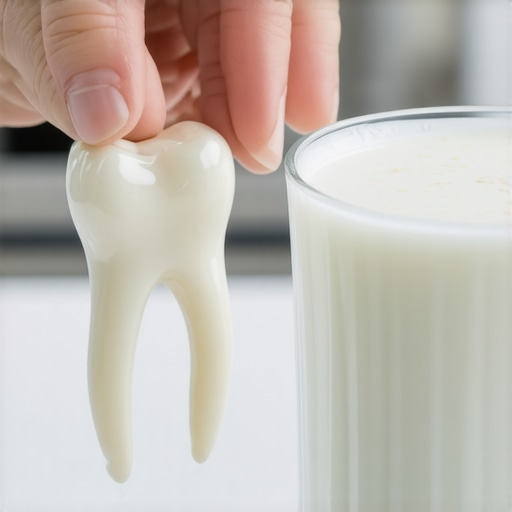
Keeping the Cells Alive Until You Reach the Clinic
Why Cold Milk is Your Best Friend
If you cannot get the tooth back into the socket, you must keep it moist. Water is actually a poor choice for long-term storage because it causes the cells on the root to swell and eventually burst. Milk is the hero of caring for your child’s teeth during an emergency because its pH balance and proteins mimic the natural environment of the mouth. If milk isn’t available, the person’s own saliva is the next best thing—just have them spit into a cup or, if it’s an adult, keep the tooth tucked safely in their cheek.
Don’t Wait for an Appointment
Once the tooth is secure in milk, you need to find a dentist immediately. This isn’t a ‘call for an appointment tomorrow’ situation; it is a race against a biological clock. The longer the tooth is out, the more likely the root will start to resorb, meaning your body treats it like a foreign object and tries to dissolve it. Even if the reattachment is successful, the trauma might mean you eventually need dental crowns to stabilize the area or protect a tooth that has become brittle. While knowing how to keep your child’s mouth safe with a mouthguard is the best prevention, these steps are your only lifeline when the accident has already happened.But here’s the controversial truth that most emergency guides skip: even if you get that tooth back in perfectly, the battle is usually just beginning. We often treat a replanted tooth as a ‘forever’ victory, but statistically, the pulp (the nerve and blood supply) almost never survives the trauma of being detached. This leads to a massive ‘oops’ factor I see in family dentistry: parents assume that because the tooth looks stable after a week, they can skip the follow-up. In reality, that tooth is now a ticking biological clock.
The Survival Myth You Probably Believe
Most people think the goal of emergency dental care is just to get the tooth to ‘stick.’ However, a study published in the Journal of Endodontics highlights that inflammatory resorption—where the body literally eats the root of the tooth from the inside out—is a high risk if a root canal isn’t performed within 7 to 10 days of replanting. This is the nuance of the role of family dentistry; it is not just about the immediate fix, but the long-term preservation. If you ignore the internal health of that tooth, it will eventually darken and fail, leading you straight toward needing dental crowns or even implants much sooner than expected.
Why does a replanted tooth sometimes turn gray or pink years later?
This discoloration is often a sign of ‘replacement resorption’ or internal staining from dead tissue. When the nerve dies, it releases pigments into the porous dentin, much like a bruise under a fingernail. This is where cosmetic dentistry intersects with emergency care. You might need internal bleaching or dental crowns to restore the look and strength of a tooth that has become brittle and prone to fracturing.
The Hidden Trap of Success
The biggest mistake? Thinking a successful replant means the tooth is as strong as it was before. It isn’t. A traumatized tooth is like a repaired vase—it looks fine, but it remains structurally vulnerable. Many patients opt for cosmetic dentistry solutions later because they didn’t realize that choosing the right restoration early on could have saved the tooth’s underlying integrity. If you ever find yourself in this spot, ask your dentist specifically about the ‘long-term resorption risk’ rather than just asking if the tooth is ‘tight’ in the socket. Have you ever fallen into this trap of thinking a quick fix was a permanent one? Let me know in the comments.
Stop Babying Your Smile and Start Protecting It
Once the initial shock wears off and you’ve potentially had a root canal to save the internal structure of the replanted tooth, you are in the maintenance phase. I’ve seen too many people spend thousands on cosmetic dentistry solutions only to let it all go to waste because they didn’t change their habits. A tooth that has been knocked out and put back in is structurally ‘brittle.’ It no longer has the same shock-absorption capacity as a healthy tooth. This is why I tell my patients that understanding dental crowns is vital; often, crowning the tooth is the only way to provide a 360-degree ‘helmet’ that prevents the tooth from splitting under normal chewing pressure.
The One Tool I Refuse to Live Without
If you have crowns, bridges, or a replanted tooth, your standard flossing routine usually isn’t enough. I personally use and recommend a high-pressure water flosser. Why? Because manual floss can sometimes snag on the margins of a restoration, whereas water can flush out the microscopic bacteria that lead to a leaking crown. However, you have to be careful—if you’ve ever wondered how to stop your gums from hurting when you use a water flosser, the secret is starting on the lowest pressure setting and using lukewarm water. This tool is a game-changer for family dentistry because kids find it much easier (and more fun) than the ‘string’ method, which means they actually do it.
How do I maintain dental restorations over time?
Maintaining your dental work involves a three-prong approach: professional monitoring, nightly protection, and specialized cleaning. According to a landmark study in the Journal of Prosthetic Dentistry, the cumulative survival rate of dental crowns drops significantly if the margin integrity is compromised by poor hygiene or bruxism (teeth grinding). I strongly advocate for a custom-fit occlusal guard if you’ve had a major dental trauma. This prevents you from literally grinding away your investment while you sleep. If you have kids in sports, how to keep your child’s mouth safe should be your top priority—a $20 mouthguard can save you a $3,000 emergency bill.
The Future of Smart Teeth Is Almost Here
We are moving toward an era where cosmetic dentistry innovations aren’t just about looks, but about data. I predict that within the next decade, we will see ‘smart crowns’ embedded with sensors that can detect early signs of resorption or bacterial acid before you ever feel a twinge of pain. Until then, you are the first line of defense. If you notice a slight change in color or a dull ache, contact us immediately. Don’t wait for the tooth to turn gray. My advanced tip for today? Switch to a toothpaste with hydroxyapatite. It’s a biocompatible material that actually helps remineralize the tiny scratches on your enamel and restorations, keeping them smoother and harder for bacteria to cling to. Go check your toothpaste label right now—it’s the easiest upgrade you can make for your oral health.
The Brutal Reality of the Replanted Tooth
One of the hardest lessons I have learned in my years of practice is that replanting a tooth is only the first step in a long-term marathon. Many people celebrate the moment the tooth is back in the socket, but the real work starts in the days that follow. If you do not monitor the tooth closely, you might face the real cost of delaying a root canal for a month, which is often the silent killer of a successful replant. My biggest ‘lightbulb moment’ was realizing that these teeth require a specialized maintenance plan that goes beyond standard checkups to prevent the body from rejecting the root. It is also vital to keep an eye on aesthetics; a saved tooth can eventually darken, but you can always look into how to revamp your smile top cosmetic dentistry trends for 2025 to ensure your confidence stays high.
The Survival Gear Every Family Should Own
I do not believe in leaving oral health to chance, especially when an emergency kit can save you thousands in restorative costs. First, every athlete in the house needs a custom-fit mouthguard; knowing how to keep your child’s mouth safe during contact sports is the best insurance policy you can buy. Second, I highly recommend keeping a ‘Save-A-Tooth’ kit in your car or gym bag; these kits contain Hank’s Balanced Salt Solution, which preserves cells better than milk ever could. Finally, once you have any dental restoration or a sensitive replanted tooth, a high-quality water flosser is non-negotiable. If you find it uncomfortable, learn how to stop your gums from hurting when you use a water flosser by adjusting the temperature and pressure settings to keep your gums healthy and your restorations intact.
Your Smile Deserves a Second Chance
A dental accident is terrifying, but it does not have to be the end of your natural smile. With quick action, the right storage methods, and proactive follow-up care with your dentist, you can often keep your natural teeth for a lifetime. Whether you are dealing with a recent trauma or looking for ways to strengthen a previous repair through understanding dental crowns, the most important thing is to never ignore the signs of change. Modern dentistry has more tools than ever to fix even the most chaotic injuries. If you are worried about a tooth that was previously injured or need an emergency evaluation, please contact us today to protect your dental future. Have you ever had to handle a dental emergency in the middle of a game or a family outing? Let me know your story in the comments below.