I sat there at my kitchen table, staring at a bowl of lukewarm soup, and I actually cried. Not because of the soup—I love tomato basil—but because my tongue felt like it had been rubbed with coarse sandpaper. I’d just invested in expert cosmetic dentistry solutions to restore my smile, but instead of feeling confident, I felt like I had a mouthful of sharp plastic shards. I was convinced I’d made a massive mistake and that my mouth simply wasn’t built for this. If you’re sitting there right now, trying to figure out how to maneuver your tongue without it hitting a sore spot, let me tell you: I have been exactly where you are. It’s frustrating, it’s painful, and it’s totally normal. Today, we’re going to dive into why this happens and what you can do to stop the irritation so you can actually enjoy your new teeth.
Your Tongue is Adjusting to a New Roommate
The biggest mistake I made early on was assuming that dentures would feel like my natural teeth from the very first second. They don’t. Your tongue is essentially the busiest muscle in your mouth, and it’s used to having a very specific amount of space to move. When you get new dentures, that space changes. Suddenly, there’s a new acrylic base and a different set of teeth taking up residence. It’s like someone moved all the furniture in your house overnight and told you to walk through the living room in the dark. You’re going to stub your toe—or in this case, scrape your tongue. I spent days trying to stop my teeth from clacking when I spoke, which only made my tongue more fatigued and sore because I was overcompensating.
Is this much pain actually normal for new dentures?
It’s easy to feel skeptical when your dentist tells you it just takes time. You might wonder if the lab messed up the fit or if your mouth is uniquely incompatible with prosthetics. However, a study published in the Journal of Prosthetic Dentistry highlights that the oral mucosa and the tongue require a significant adaptation period to recalibrate speech and swallowing mechanics around a new appliance. My own turning point came when I realized I was fighting the dentures instead of letting them settle. I was constantly tensed up. Have you found yourself bracing your jaw or clenching because you’re afraid of the edges rubbing? This tension is often the silent culprit behind that raw feeling. Choosing the right path in building a lifetime of healthy smiles means acknowledging that the first week is a marathon, not a sprint. We need to look at the mechanics of why those edges feel so sharp and how the role of family dentistry extends far beyond the initial fitting to ensure your comfort during this transition.
Shield Your Tongue with a Temporary Barrier
Think of dental wax as a band-aid for the inside of your mouth. When I first got my dentures, I had one specific spot near the back molar that felt like a tiny razor blade. I spent forty minutes trying to figure out how to fix a jagged tooth edge before I realized it wasn’t the tooth—it was the acrylic base rubbing a raw spot. I took a small pea-sized amount of orthodontic wax, warmed it between my fingers, and pressed it right over the sharp border. It didn’t solve the fit permanently, but it gave my tongue a twenty-four-hour break to heal. If you don’t have wax, a warm saltwater rinse—one teaspoon of salt in a glass of water—works wonders to reduce inflammation by drawing fluid out of the swollen tissues. It’s the same logic we use in essential family dentistry tips for soothing any oral irritation: keep the area clean and minimize friction.
Retrain Your Mouth by Talking to Yourself
Your tongue is currently confused because its ‘map’ of your mouth is outdated. To fix this, you need to force it to learn the new layout. I started reading the morning news out loud to my cat every single day for fifteen minutes. At first, I sounded like I had a mouthful of marbles, but this ‘speech therapy’ at home helps your tongue find its new resting position without making constant mistakes. If you notice a whistling sound or feel like the porcelain crown feels too high when you bite down, pay attention to which specific sounds trigger the discomfort. Words with ‘S’ and ‘Th’ are usually the hardest for new denture wearers. By practicing these sounds deliberately, you reduce the random ‘searching’ movements your tongue does, which is usually when it gets scraped against the denture base.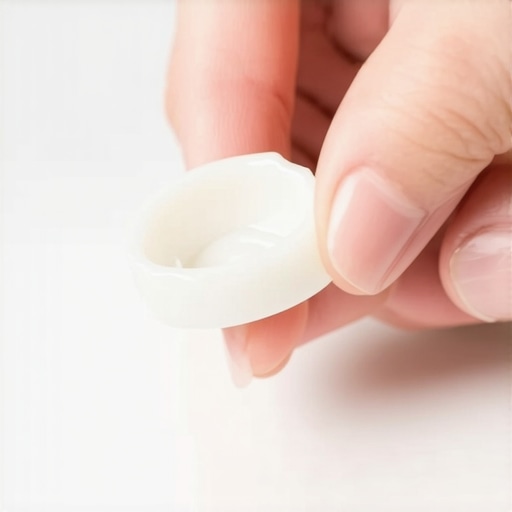
Balance the Load to Prevent Tilting
One of the most common reasons for a sore tongue is the denture shifting during a meal. If you chew only on your left side, the right side of the denture can tip up, pressing the sharp edge into your tongue or the floor of your mouth. I learned this the hard way while trying to eat a piece of steamed fish. I was being ‘careful’ by using just one side, but the denture flipped like a seesaw and pinched the side of my tongue. The trick is to distribute food on both sides of your mouth and chew straight up and down. This even pressure keeps the base stable and prevents those micro-movements that cause friction burns. This mechanical balance is just as vital as understanding the lifespan of composite tooth-colored fillings; you have to protect the integrity of the restoration through proper use.
Warm Compresses for Muscle Fatigue
Your tongue is a muscle, and just like your legs after a long hike, it gets cramped and tired from the effort of adjusting. When the irritation felt like it was radiating into my jaw, I started using a warm, damp washcloth against my cheek and jawline. It sounds too simple to work, but the heat increases blood flow to the area, speeding up the recovery of those tiny scrapes and relaxing the muscles that hold the tongue in place. This is a common recommendation when you’re learning how to manage sharp pain at home. If the soreness feels more like a deep bruise than a surface scrape, the heat helps the underlying tissue adapt to the pressure of the new acrylic more quickly than cold water ever would.Everyone tells you to just use more adhesive if your dentures are sliding and scraping your tongue. In my experience, that’s the biggest trap you can fall into. While a dab of paste helps, over-relying on it actually prevents your mouth from learning the natural muscle control needed for long-term stability. The hidden nuance that most beginners miss is something called oral proprioception. This is your brain’s ability to sense the position and movement of your mouth parts without looking in a mirror. When you get new restorations, your neural pathways are literally firing ‘error’ signals because the ‘map’ in your brain doesn’t match the new acrylic borders.
Stop Relying on Adhesives to Fix a Bad Bite
A common myth is that if the dentures look perfect, they should feel perfect. However, I’ve seen people choose expert cosmetic dentistry solutions based solely on a shade guide, only to realize the bite feels completely alien. If you are constantly adjusting your tongue to avoid a sharp edge, you might be dealing with an incorrect Vertical Dimension of Occlusion (VDO). This is the distance between your upper and lower jaws when your teeth meet. If this measurement is off by even a millimeter, your tongue loses its ‘parking space,’ leading to chronic sores that no amount of wax will fix. Research from the American College of Prosthodontists suggests that successful adaptation is as much a neurological process as it is a physical one; your brain must ‘re-map’ the oral cavity to accept the prosthetic as a part of the body rather than a foreign object. #IMAGE_PLACE_HOLDER_C#
The High-Spot Trap That Ruins Your Recovery
One specific ‘oops’ factor to watch for is the ‘High Spot.’ You might feel like you just need to ‘break in’ the new teeth, but if one side of your molar hits before the other, it creates a seesaw effect. This micro-tilting is usually what sends the edge of the denture slicing into the side of your tongue. It’s similar to why your porcelain crown feels too high when you bite down—it’s not a matter of toughness, but a matter of physics. If you don’t address this with a professional adjustment, you risk developing chronic inflammation or even fungal issues under the base. Before deciding on dental crowns vs other restorations which is right for you, always ask your provider how they calibrate the bite force, especially if you have a history of grinding.
Why Does My Jaw Feel Tight Even If the Fit is Good?
This is the advanced question most patients don’t think to ask until they are three weeks into the process. The tightness is often muscle fatigue from your ‘buccinator’ muscles (your cheeks) and your tongue trying to hold the denture in place because they don’t trust the fit yet. If you ignore this fatigue, you might start noticing the hidden cost of ignoring a clicking jaw joint. When the tongue is overworked, it becomes more susceptible to those painful scrapes we discussed earlier. You must distinguish between ‘adjustment period’ soreness and ‘mechanical failure’ pain. If the pain is sharp and localized, it’s mechanical; if it’s a dull ache across the whole jaw, it’s muscle adaptation.
Ditch the ‘One and Done’ Mentality
In the world of the role of family dentistry, the most successful patients are those who view their restorations as a living project. Your gums will shrink and your bone structure will change over time, meaning the fit you have today won’t be the fit you have in two years. I once waited too long to report a small ‘clicking’ sound, only to find out that how to tell if your crown is leaking and trapping bacteria was a skill I should have learned much sooner. Don’t be afraid to be the ‘annoying’ patient who asks for a third adjustment. Your tongue will thank you. Have you ever fallen into the trap of thinking a little discomfort was just ‘part of the process’ only to find out it was a simple fix? Let me know in the comments—I’d love to hear your story.I learned the hard way that just getting the work done is only half the battle. If you want to keep those results, you need a maintenance kit that goes beyond a standard toothbrush. For me, the game-changer was investing in an ultrasonic cleaner. Instead of scrubbing at the acrylic or porcelain—which can create micro-scratches that trap bacteria—I now drop my appliance into a high-frequency bath for five minutes. This tech isn’t just for jewelry; it uses cavitation bubbles to blast away biofilm in crevices that a brush can’t even see. This is especially vital when you look at revamp your smile top cosmetic dentistry trends for 2025, where precision and material longevity are everything. I also switched to a pH-neutral cleaning tablet because many off-the-shelf brands are surprisingly acidic, which can dull the finish of dental crowns explained the ultimate solution for damaged teeth over several years.
Stop the Scrubbing and Start Vibrating
When I first started my journey, I thought ‘clean’ meant ‘elbow grease.’ I was wrong. Manual brushing can actually strip away the luster of high-end restorations. I now use a soft-bristle brush only for the visible surfaces and let the ultrasonic waves do the heavy lifting for hygiene. If you’re worried about staining, especially after investing in professional work, knowing the secret to making professional teeth whitening results last longer is about preventing that initial porous damage. A study in the International Journal of Oral Science notes that surface roughness is the primary predictor of how quickly plaque will colonize a prosthetic. By using non-abrasive methods, you’re literally making it harder for ‘gunk’ to stick to your teeth. This philosophy also applies if you’re using other oral appliances; for instance, learning how to clean a night guard without using harsh chemicals or bleach can save the material from becoming brittle and snapping. 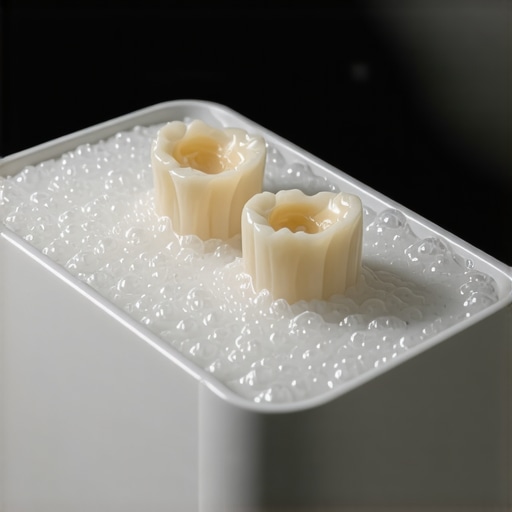
How do I maintain my dental investment over time?
Long-term success isn’t about one-off visits; it’s about the ‘soft touch’ at home and consistent professional monitoring. I recommend a water flosser on the lowest setting to clear out the gaps under bridges or around the base of a crown. It’s far more effective than string floss for those who have complex understanding dental crowns when and why they are needed. Beyond the tools, you have to watch your chemistry. I’ve started using a xylitol-based mouth spray to keep my saliva flow high, as a dry mouth is the fastest way to ruin even the best dental work. This is a core part of family dentistry guide building a lifetime of healthy smiles—it’s about the environment of the mouth as much as the teeth themselves.
The Coming Wave of Digital Smile Maintenance
Looking ahead, I predict we are moving toward ‘Digital Twins’ in dentistry. Soon, your dentist will have a 3D digital file of your perfect smile on the day of the procedure. If a crown chips or a denture breaks five years from now, AI-driven 3D printing will allow them to recreate the exact match without you ever needing a new mold. We are already seeing this in enhance your confidence cosmetic dentistry innovations to watch. This level of precision means ‘adjustment periods’ will eventually become a relic of the past. For now, take one proactive step: go buy a pH-balanced soak and ditch the hard-bristle brush today. Your future self—and your tongue—will thank you for the gentler approach.
Lessons My Tongue Taught Me the Hard Way
Looking back on my journey, there are a few things I wish someone had whispered to me while I was sitting in that dental chair. First, saliva is your secret weapon. If your mouth gets dry, the friction between the acrylic and your tongue increases tenfold. I started carrying a water bottle everywhere because a hydrated mouth is a protected mouth. Second, don’t ignore the ‘S’ sound. If you find yourself whistling or struggling with ‘Sixty-Six,’ it’s a sign your denture might be slightly too thick in the palate. This is where the role of family dentistry becomes so important—your dentist can thin out those bulky areas to give you more room to breathe. Finally, remember that your brain is literally rewiring itself. You aren’t just ‘getting used to it’; you are building new neural pathways to accommodate your new smile.
The Toolkit Every New Denture Wearer Needs
If you want to speed up the transition from ‘ouch’ to ‘awesome,’ you need more than just hope. I’ve narrowed down my success to these three pillars:
- High-Quality Orthodontic Wax: Don’t settle for the cheap stuff that falls off. A medical-grade wax provides a reliable buffer for those first few weeks when edges feel sharp.
- Aloe Vera Rinses: While saltwater is great, a professional-grade aloe vera mouthwash can coat the tongue and provide a soothing film that lasts longer than salt alone.
- A Dedicated Provider: Having a team that understands child friendly dental care often means they have the patience and gentle touch needed for adults too. Trusting the hands that work on your mouth makes the mental adjustment much easier.
The Smile You Deserve is Within Reach
Transitioning to dentures or complex expert cosmetic dentistry solutions is a major life event. It’s okay to feel frustrated, and it’s okay to ask for help. The pain you feel today is temporary, but the confidence of a full, functional smile is something you will carry for decades. We are living in an era where revamp your smile top cosmetic dentistry trends for 2025 are making these transitions smoother and more aesthetic than ever before. Stick with the process, keep up your hygiene, and don’t settle for ‘good enough’ when it comes to your comfort. You’ve invested in yourself—now it’s time to enjoy the results. Have you found a specific word or sound that still makes your tongue trip up? Let me know in the comments below!