I remember standing at the podium during my best friend’s wedding, clear-headed and ready to deliver a heartfelt toast. I opened my mouth to speak, and instead of a sentimental tribute, the room heard a rhythmic click-clack-click. It sounded like I was trying to communicate in Morse code using only my molars. I was mortified. For months, I tried to convince myself I was just nervous, but the truth was much more mechanical. That moment was my wake-up call that my mouth wasn’t just ‘acting up’—it was out of sync. If you’ve ever felt that sudden, jarring contact between your upper and lower teeth while simply trying to say ‘hello,’ you know exactly how frustrating and embarrassing it can be. Today, I am going to show you exactly how to quiet those runaway teeth by addressing the root causes, from muscle tension to poorly fitted dental work.
Your Restorations Might Be Standing Too Tall
One of the biggest mistakes I made early on was assuming this clacking was a psychological tick. I spent weeks practicing ‘relaxed speech’ in front of a mirror, only to find my teeth still colliding. It turns out, I had a restoration that was just a fraction of a millimeter too high. When I finally visited a professional, I realized that fixing a crown that feels too high is often the silver bullet for speech issues. If your bite isn’t perfectly aligned, your jaw doesn’t know where to ‘park’ itself during rapid speech, leading to those accidental collisions. This is especially common if you’ve recently had work done and your dental crowns aren’t quite sitting in their sweet spot. According to the American Dental Association, even a slight malocclusion can trigger muscle spasms or speech impediments that manifest as teeth clacking.
Is this clacking actually a permanent part of my voice now?
I hear this fear all the time from neighbors and friends: ‘Am I just getting old, or is my jaw broken?’ The answer is almost always a resounding no. Most clacking stems from either structural issues or muscle fatigue. For instance, if you notice that your jaw aches every time you wake up, you might be dealing with nighttime grinding that leaves your muscles too tired to control your speech properly the next day. It’s a fixable problem, not a life sentence. Have you ever felt your teeth ‘misfire’ during a conversation and wondered if anyone else noticed the sound? You aren’t alone, and you don’t have to just live with it. We need to look at whether your teeth are physically in the way or if your muscles are simply overcompensating for stress. Setting the stage for a quieter, more confident voice starts with understanding that your teeth shouldn’t be a percussion instrument.
Eliminate High Spots on Your Dental Work
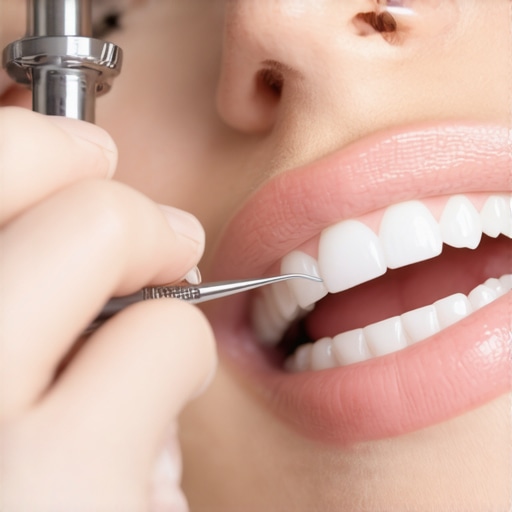
Think of your bite like a high-performance engine; if one gear is even slightly out of alignment, the whole machine rattles. When a crown or filling is too high, it hits its counterpart before the rest of your teeth do. This ‘premature contact’ sends a shockwave through your jaw, often resulting in that audible clack during speech. I learned this the hard way after a minor filling. I thought I could just ‘break it in’ by chewing extra gum on that side. Instead, I spent three days sounding like a castanet player every time I said a word starting with ‘S.’ If you’ve recently had work done, why your jaw is sore after a filling replacement might be the clue you need to realize the bite is off. A simple adjustment by your dentist can shave down those micro-obstacles, restoring your silent speech.
Check for Hidden Cracks or Leaks
Sometimes the issue isn’t the height but the integrity of the restoration. If a crown has lost its seal, it can shift slightly under the pressure of your tongue or cheeks during conversation. Learning how to tell if your dental crown is leaking bacteria can save you from more than just embarrassing noises; it can prevent a total failure of the tooth. In the world of cosmetic dentistry, precision is everything. If your ‘gear’ is loose, it’s going to make noise. If you are currently wearing a temporary, knowing how to stop a temporary crown from popping off is vital, as a loose temporary is a prime candidate for unwanted clacking.
Reset Your Muscle Memory
Your jaw muscles are incredibly strong, but they are also stubborn. If you’ve been compensating for a missing tooth or a gap, your muscles might have ‘reprogrammed’ a wider-than-necessary swing for your jaw. This leads to teeth overshooting their mark and colliding. If you are currently in the waiting period for a permanent solution, knowing the best way to hide a missing tooth while managing your speech can keep your confidence intact. I suggest practicing ‘the whisper test.’ Try to speak your normal daily phrases in a heavy whisper. If your teeth still clack without the force of full vocalization, the problem is mechanical. If they don’t, you’re likely over-extending your jaw due to muscle tension. This is where family dentistry becomes a partnership; a professional can evaluate if your jaw is tracking straight or if you’re pulling to one side. Sometimes, why your jaw aches every time you wake up indicates a night grinding habit that is sabotaging your daytime speech control.
Give Your Tongue More Room to Breathe
We often forget that the tongue is the conductor of the speech orchestra. If your dental crowns are too bulky, they crowd the ‘stage.’ Your tongue ends up pushing against your teeth just to make room for air, which inadvertently snaps the jaw shut. This is a common complaint for those exploring expert cosmetic dentistry solutions. The goal is always a natural profile that mimics your original teeth. If you feel like your tongue is a stranger in its own home, your restorations might need a slimmer profile to stop the percussion. This is especially true with newer materials; comparing dental crowns vs other restorations can help you choose a material that offers the necessary strength without the excessive thickness that causes speech interference. Even children aren’t immune to these sounds; why your child needs a professional cleaning often involves checking that their growing bite isn’t creating these same mechanical hurdles.
Stronger Materials Aren’t Always the Answer
Most people assume that when a tooth clacks, the solution is to find the hardest, most durable material possible to withstand the impact. I fell into this trap too. I thought if I got the toughest zirconia available, I’d be set for life. But here is the contrarian truth: sometimes ‘stronger’ is actually the enemy of ‘silent.’ If a material is too dense or lacks the slight natural ‘give’ of enamel, it doesn’t just sit there; it telegraphs every vibration through your skull. In my experience, and as highlighted in many cosmetic dentistry trends, the goal is biocompatibility and precision over brute force. When comparing dental crowns vs other restorations, it’s the shape and the Occlusal Vertical Dimension (OVD) that matter most. If the OVD is off by even half a millimeter, your muscles lose their reference point and default to a ‘searching’ pattern that results in that annoying percussion. Have you ever fallen into this trap of choosing durability over comfort? Let me know in the comments.
Why does the clicking sound intensify after a long day?
If you find that your speech is quiet in the morning but sounds like a tap-dancing class by 6:00 PM, you are likely dealing with muscle fatigue rather than a static dental error. A study published in the Journal of Oral Rehabilitation notes that mechanoreceptors in the periodontal ligament provide constant feedback to the brain about tooth position. When you are tired, this feedback loop lags. Your jaw muscles lose their fine motor control, causing the teeth to ‘bottom out’ and collide. This is a common nuance in family dentistry that often gets overlooked. It’s not just about the teeth; it’s about the neurological connection between your brain and your bite. If your bite is even slightly misaligned, your brain has to work overtime to avoid collisions. Once your brain gets tired, it stops ‘protecting’ the strike zone, and the clacking begins.
The Danger of Ignoring Micro-Cracks and Loose Seals
The real ‘oops’ factor comes when you ignore a subtle noise because you think it’s just ‘breaking in.’ In reality, that clack is a warning. If you ignore it, you might find your porcelain crown keeps chipping because it’s absorbing 100% of the force on a single point instead of distributing it across the entire dental arch. This mechanical stress can also lead to structural failure. Knowing how to tell if your dental crown has a hidden crack is vital here; if the restoration is vibrating or moving even a fraction, it will create an audible sound. Don’t wait for the tooth to break to realize the alignment was the issue. A quick visit to your dentist for a ‘bite recalibration’ can save you thousands in replacement costs and restore your peace of mind.
Maintaining that perfect, quiet bite isn’t just about what happens in the dentist’s chair; it is about the technology you use at home and the precision of the diagnostic tools your professional employs. I used to think the little blue ‘bite paper’ was the gold standard for alignment. However, if you truly want to ensure your restorations don’t clack or fail, you need to ask about T-Scan technology. According to Dr. Robert Kerstein, a pioneer in computer-guided occlusal analysis and Disocclusion Time Reduction (DTR) therapy, traditional articulating paper only shows where the teeth touch, not the timing or the force of that contact. When I switched to a provider who utilized digital bite mapping, we discovered that my rear crown was hitting 0.2 seconds before the others. That tiny lag was the mechanical ‘clack’ I was hearing.
Stop Relying on Luck and Start Using a Digital Bite Map
At home, I have moved beyond standard floss to preserve the integrity of my dental work. If you have a bridge or multiple crowns, you should learn the best way to clean under a dental bridge to prevent smells and use a high-quality water flosser. But be careful; you need to know how to stop your gums from hurting when you use a water flosser by adjusting the pressure settings to suit your restorations. I personally use a low-pressure setting around my crowns to avoid dislodging the margin seal while still flushing out debris that can lead to inflammation and bite shifts.
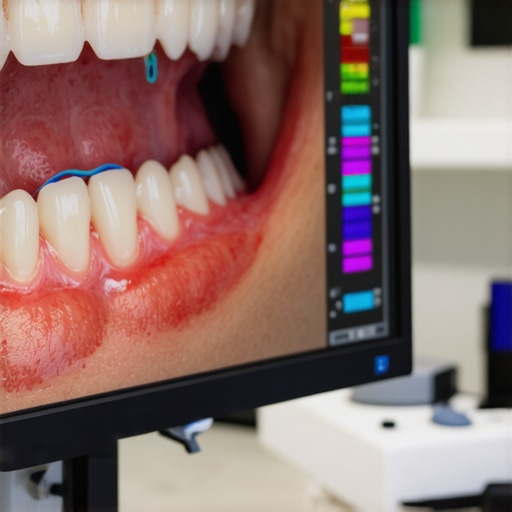
Looking ahead, I predict that by 2030, we won’t even need ‘bite paper’ or occasional office visits for minor adjustments. We are moving toward wearable, smart mouthguards that sync to an app on your phone, alerting you the moment your bite shifts due to stress or material wear. This real-time feedback will be the next frontier in cosmetic dentistry trends, turning reactive repairs into proactive maintenance.
How do I maintain my dental restorations over the long haul?
The secret is consistency and the right ‘support’ gear. First, never skip the night guard if you are a grinder. If you realize why your jaw aches every time you wake up in the morning, you are already behind the curve and putting your porcelain at risk. A custom-fitted guard protects your dental crowns vs other restorations from the immense nocturnal forces that lead to that ‘standing too tall’ feeling. Second, treat your family dentistry guide to building a lifetime of healthy smiles as a strict maintenance schedule, not an emergency backup. Professional cleanings ensure that those hard-to-reach margins stay bacteria-free, preventing the silent decay that can loosen a crown and cause it to rattle during speech. If you’re noticing a clicking sound today, film yourself speaking for 30 seconds and listen for the specific syllables where the teeth collide. Take that video to your next appointment; it is the most effective way to show your dentist exactly where the ‘clack’ happens in real-world scenarios.
What I Learned While Sounding Like a Typewriter
After years of navigating the world of cosmetic dentistry innovations, I’ve realized that clicking isn’t just a noise; it’s a language your body uses to tell you something is misaligned. Here are the lightbulb moments that changed everything for me:
- Stress acts like a volume knob. When you are anxious, your jaw muscles shorten, making collisions almost inevitable.
- The ‘high spot’ doesn’t have to be big to be loud. A micron is the difference between a silent ‘S’ and a sharp clack.
- Maintenance is non-negotiable. Whether it is caring for your childs teeth or your own complex restorations, a slight shift in hygiene can change your bite’s trajectory.
- Digital tools beat subjective feelings. Your brain can trick you into thinking a bite is ‘fine’ when it is actually 10% off.
#IMAGE_PLACEHOLDER_E#
The Gear That Kept My Smile Silent
If you want to move beyond the percussion, these are the resources I swear by. First, find a provider who understands the role of family dentistry in ensuring oral health through digital occlusal analysis. Traditional paper just isn’t enough anymore. Second, I highly recommend investing in a high-quality water flosser, but make sure you learn how to stop your gums from hurting when you use a water flosser to keep the gum line around your crowns healthy. Finally, don’t underestimate the power of a custom-fit night guard; it’s the most important piece of ‘insurance’ you can buy for your dental work.
Your Path to a Quiet and Confident Voice
Reclaiming your speech doesn’t happen overnight, but it is entirely possible with the right approach. Whether you are dealing with new dental crowns or age-old muscle tension, the solution lies in precision and patience. You deserve to speak without the fear of an accidental ‘click-clack’ interrupting your story. Take that first step toward a quieter smile today. Have you noticed your teeth clicking more when you’re tired or right after a specific dental procedure? Let me know in the comments below!