I remember sitting down for a quiet dinner with a piece of crusty sourdough bread when I felt it: a distinct, high-frequency hum right in my jaw. It wasn’t exactly pain, but more like a tiny tuning fork had been struck inside my gums. My heart dropped. I had spent months and a good chunk of my savings on this restoration, and now it felt like a vibrating pager. I immediately spiraled, wondering if I was one of the unlucky ones and if my dental implant was being rejected by my body. I froze mid-bite, convinced that the next chew would result in my crown falling into my soup. It’s a visceral, unsettling feeling that makes you want to stop eating altogether. Today, I’m going to break down exactly why this happens and why, most of the time, it’s a simple fix rather than a dental disaster. [image_placeholder_1]
The Bizarre Buzzy Feeling in Your Jaw
When I finally got into my dentist’s chair to complain about the ‘buzzing,’ I felt a bit foolish. I had been poking at the crown for days, which was actually my first big mistake. Constant wiggling with your tongue or finger can actually irritate the area and prevent you from getting an accurate sense of what’s wrong. It turns out that this sensation is often related to how the bite is aligned. If your new crown is even a fraction of a millimeter too high, it hits the opposing tooth first, sending a shockwave through the titanium post. This is similar to how a temporary crown that feels too high can cause localized discomfort, but with an implant, that energy has nowhere to go but into your bone. In my case, I needed a simple bite adjustment to ensure my teeth were meeting evenly. It is vital to involve your provider early on, as the role of family dentistry in ensuring oral health includes monitoring these high-tech restorations long after the initial surgery.
Why Metal and Bone Sometimes Act Like a Tuning Fork
The science behind this is actually pretty fascinating, even if it feels annoying in practice. Natural teeth are suspended by a tiny cushion called the periodontal ligament. This ligament acts like a shock absorber, dampening the vibrations when you crunch on something hard. Dental implants, however, are different. They undergo a process called osseointegration, where the bone grows directly against the metal. Because of this, according to the American Academy of Implant Dentistry, implants lack that natural cushion and translate 100% of the force directly to the jawbone. If the crown is loose or the screw inside has backed out slightly, that tiny gap creates a ‘rattle’ that you perceive as a vibration. This is why it is so important to confirm how to know if your dental implant has successfully fused to the bone before putting it under heavy pressure. If the connection isn’t solid, that vibration is your body’s way of screaming for help. Have you ever felt that strange, buzzy sensation while chewing on something as simple as a piece of toast or a handful of nuts?
Could This Mean the Whole Implant is Falling Out?
This is the fear that kept me up at night. I assumed that a vibration meant the entire post was spinning in my jaw like a loose screw in drywall. While it’s true that you should watch out for why your dental implant feels loose after a few years, a vibration is usually a mechanical issue with the crown or the abutment rather than the post itself. Early in my journey, I ignored a slight clicking sound because I was too busy to go back to the clinic. That was a mistake. That clicking turned into the vibration because the tiny screw holding the crown on had loosened. If I had waited longer, I could have damaged the internal threads of the implant. Sometimes, your provider might even need a 3D scan to find hidden tooth pain or mechanical issues that aren’t visible to the naked eye. The good news is that once the hardware is tightened and the bite is balanced, that ‘tuning fork’ feeling usually vanishes instantly, leaving you free to enjoy your sourdough in peace.
Identify the Source of the Rattle
Before you panic about implant failure, you need to determine if the vibration is coming from the post itself or the hardware sitting on top of it. Think of your dental implant like a heavy-duty bolt anchored into a wall. If the picture frame attached to that bolt is loose, it will rattle every time the wind blows, but the bolt is perfectly fine. To test this, wash your hands and use two fingers to very gently try and wiggle the crown. If you feel even the slightest ‘give,’ the culprit is likely a loose abutment screw. This is common because, over time, the micro-movements of chewing can back out the tiny screw that connects the crown to the post. It is a much better scenario than the post itself being unstable, but it still requires immediate attention to avoid the real cost of delaying a necessary dental crown repair.
Tighten the Hardware Before the Bone Takes a Hit
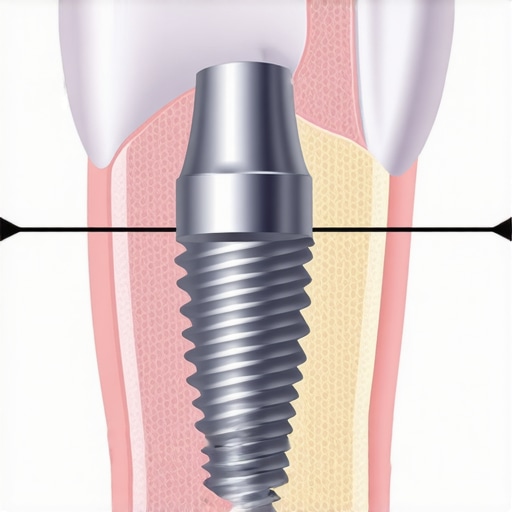
When you feel that high-frequency vibration, it is often ‘metal fatigue’ or ‘occlusal trauma’ in action. If your bite is off, even by the thickness of a piece of paper, your jaw muscles will slam those teeth together with immense force. I once ignored a tiny ‘click’ in my back molar for three weeks, thinking it was just part of the ‘breaking-in’ process for my new restoration. One morning, the click turned into a sharp buzz that vibrated all the way up to my ear canal. My dentist explained that because dental crowns are the ultimate solution for damaged teeth, they are incredibly strong—sometimes too strong. Without the natural ligament cushion, that excess force was vibrating the screw inside the implant like a jackhammer. If I had waited another week, that vibration could have stripped the internal threads of the titanium post, turning a five-minute tightening appointment into a multi-thousand-dollar replacement surgery.
Check for Gaps and Seal Integrity
Another common cause for a ‘buzzy’ feeling is a compromise in the seal between the crown and the implant. If there is a microscopic gap, saliva and air can be forced in and out of the space while you chew, creating a pneumatic vibration that feels like a hum. You should look in the mirror for any dark lines or shadows at the gum line, as these can be signs of how to tell if your dental crown is leaking bacteria or has shifted slightly. In my case, a quick bit of ‘carbon paper’ testing at the clinic revealed that my crown was hitting ‘high’ on the inside edge. The dentist used a small bur to buff down the porcelain, perfectly balancing the bite. The relief was instantaneous; the vibrating stopped the second I bit down. This kind of precise maintenance is why the role of family dentistry in ensuring oral health is so critical. They don’t just look for cavities; they look for the mechanical harmony of your entire mouth.
The Bite Test and Professional Calibration
If the vibration only happens when you chew specific foods—like crusty bread or chewy steak—your dentist may need to perform a deeper calibration. Sometimes a restoration can feel fine when you are biting straight down, but as soon as your jaw moves side-to-side (like when grinding food), it catches on a ‘cusp’ of the crown. This lateral force is what creates the resonance you feel in your jawbone. This is a common issue even with standard fillings, which is why your new filling feels sensitive to pressure weeks later if the height isn’t perfect. For an implant, this vibration is a warning signal. You should also revisit your initial consultation notes or ask your provider for a refresher on understanding dental crowns and why they are needed in the first place, as knowing the specific materials used (zirconia vs. porcelain-fused-to-metal) can help the dentist determine the best way to adjust the bite without cracking the restoration.
Why Your Indestructible Crown Might Be Part of the Problem
Most people think that when they invest in a high-end restoration, the strongest material is automatically the best choice for longevity. We often see patients asking specifically for full-contour zirconia because it’s marketed as being virtually indestructible. However, there is a contrarian truth here: a material that is too rigid is often exactly what triggers that unsettling buzzy sensation. Because zirconia doesn’t wear down naturally or compress like your organic enamel, it acts like a metal hammer hitting a stone wall every time you chew. As you look into the top cosmetic dentistry trends for 2025, you’ll notice a massive shift toward ‘biomimetic’ restorations. These are designed to mimic the natural flex of a tooth, reducing the mechanical ‘shudder’ that occurs when two extremely hard surfaces collide. If your crown is too rigid, every bite sends a micro-concussion directly into the implant post and the surrounding bone.
The Danger of Proprioceptive Bypass
One of the biggest ‘oops’ factors I’ve encountered involves patients who assume that if a crown looks aesthetically perfect in the mirror, it must be healthy. This is a common trap. You can transform your look with expert cosmetic dentistry solutions that look stunning, yet harbor a microscopic misalignment that is slowly taxing your jaw’s bone density. Another layer of this mystery is a phenomenon I call ‘proprioceptive bypass.’ Natural teeth have nerves in the periodontal ligament that tell your brain when you are biting too hard. Implants don’t have this. You can bite down with hundreds of pounds of force and not realize it until you feel that buzzy rattle in your skull. This is why having a provider who understands the role of family dentistry in ensuring oral health for high-stress patients is vital. A seminal study published in the Journal of Prosthetic Dentistry emphasizes that restorative materials with an excessively high modulus of elasticity can lead to significantly increased stress at the implant-bone interface. This mechanical overload is a primary driver of the vibration you feel, yet it’s a nuance often glossed over in standard comparisons of dental crowns vs. other restorations.
Is Your Crown’s Material Actually Overloading Your Implant?
This is where we have to look at the advanced biomechanics of your mouth. If you have a history of grinding your teeth, an ultra-hard crown might actually be your worst enemy. While many patients lose sleep worrying about the real reason your porcelain crown keeps chipping, a crown that is too strong can be far more dangerous for the underlying structure. Without any natural ‘give’ or shock absorption, the tiny screw inside your implant becomes the sacrificial lamb, loosening or even snapping under the pressure. 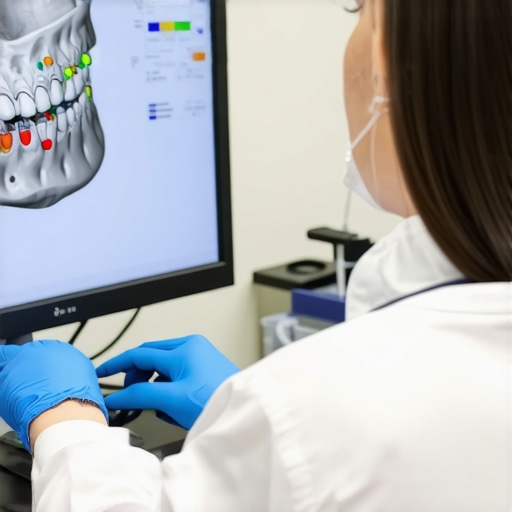 It is also vital to investigate how to tell if your dental crown has a hidden crack, as internal stresses can create a resonance or ‘hum’ long before a visual break appears. Have you ever felt that your new restoration felt ‘clunky’ or louder than your natural teeth? Let me know in the comments if you have ever prioritized material strength over the comfort of your bite.
That question hits home for me because I used to think stronger is better until my jaw started humming like a refrigerator. Once I got my bite adjusted, I realized that maintenance for high-tech teeth requires a completely different toolkit than natural ones. You can’t just scrub and hope for the best. I personally switched to an interproximal brush with a plastic-coated wire—specifically the 0.5mm size—because traditional metal-core brushes can actually scratch the titanium surface of your implant. Those microscopic scratches become breeding grounds for the very pathogens you’re trying to avoid. If you want to transform your look with expert cosmetic dentistry solutions, you have to be willing to upgrade your bathroom cabinet too. I also swear by a high-torque electric toothbrush with a pressure sensor; it’s the only way to ensure you aren’t accidentally hammering away at the gum line.
Tools that actually save your titanium investment
The most important tool I’ve integrated isn’t even a brush; it’s a high-quality water flosser with a dedicated Plaque Seeker tip. This tip has three thin tufts of bristles that can navigate the dead zones where the crown meets the abutment. Standard flossing often shreds against the sharp undercuts of a restoration, leaving behind debris that triggers inflammation. According to the International Journal of Oral & Maxillofacial Implants (JOMI), the long-term success of an implant is directly correlated to the stability of the soft-tissue seal. If that seal fails, you’ll quickly need to learn how to tell if your dental crown is leaking bacteria before the infection reaches the bone. 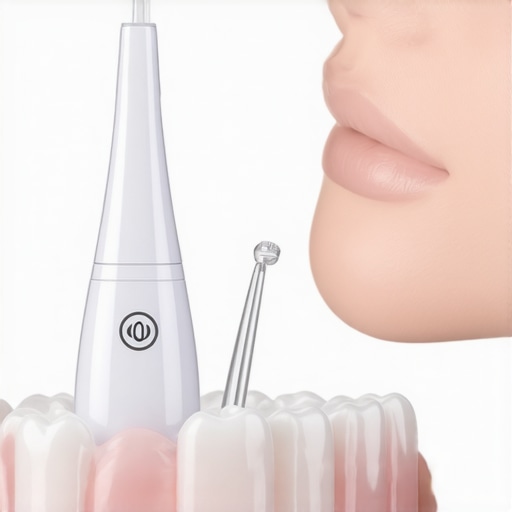
How can I keep my dental crown from vibrating for the next decade?
Maintenance is a marathon, not a sprint. The vibration I felt was a wake-up call to start wearing a custom-fitted occlusal guard every single night. Even if you don’t think you grind your teeth, the stress of modern life often manifests as micro-clenching during REM sleep. Over years, this micro-stress loosens the internal screws of the implant. You should also make sure your provider uses T-Scan technology—a digital bite sensor—rather than just old-fashioned carbon paper. T-Scan shows exactly when and where your teeth hit, with millisecond precision. This level of detail is exactly what you should look for when you revamp your smile with top cosmetic dentistry trends for 2025. A perfectly balanced bite is the only way to ensure your restoration doesn’t become a tuning fork in your jaw.
Why smart sensors are the next big thing in jaw health
Looking ahead, I predict we are going to see a massive move toward smart restorations. Imagine a crown with an embedded micro-sensor that alerts your smartphone the moment it detects an uneven pressure spike or a slight loosening of the internal screw. We are already seeing the role of family dentistry in ensuring oral health shift toward this kind of preventative data. Instead of waiting for a vibration to wake you up mid-dinner, your dentist will get a notification that your bite needs a 0.1mm tweak. If you’re currently feeling any extra sensation in your crown, don’t wait for it to resolve itself. Contact us or your local specialist today to request a digital occlusal analysis—it’s the fastest way to turn that buzz back into a comfortable, silent smile.
I remember sitting down for a quiet dinner with a piece of crusty sourdough bread when I felt it: a distinct, high-frequency hum right in my jaw. It wasn’t exactly pain, but more like a tiny tuning fork had been struck inside my gums. My heart dropped. I had spent months and a good chunk of my savings on this restoration, and now it felt like a vibrating pager. I immediately spiraled, wondering if I was one of the unlucky ones and if my dental implant was being rejected by my body. I froze mid-bite, convinced that the next chew would result in my crown falling into my soup. It’s a visceral, unsettling feeling that makes you want to stop eating altogether. Today, I’m going to break down exactly why this happens and why, most of the time, it’s a simple fix rather than a dental disaster. [image_placeholder_1]
The Bizarre Buzzy Feeling in Your Jaw
When I finally got into my dentist’s chair to complain about the ‘buzzing,’ I felt a bit foolish. I had been poking at the crown for days, which was actually my first big mistake. Constant wiggling with your tongue or finger can actually irritate the area and prevent you from getting an accurate sense of what’s wrong. It turns out that this sensation is often related to how the bite is aligned. If your new crown is even a fraction of a millimeter too high, it hits the opposing tooth first, sending a shockwave through the titanium post. This is similar to how a temporary crown that feels too high can cause localized discomfort, but with an implant, that energy has nowhere to go but into your bone. In my case, I needed a simple bite adjustment to ensure my teeth were meeting evenly. It is vital to involve your provider early on, as the role of family dentistry in ensuring oral health includes monitoring these high-tech restorations long after the initial surgery.
Why Metal and Bone Sometimes Act Like a Tuning Fork
The science behind this is actually pretty fascinating, even if it feels annoying in practice. Natural teeth are suspended by a tiny cushion called the periodontal ligament. This ligament acts like a shock absorber, dampening the vibrations when you crunch on something hard. Dental implants, however, are different. They undergo a process called osseointegration, where the bone grows directly against the metal. Because of this, according to the American Academy of Implant Dentistry, implants lack that natural cushion and translate 100% of the force directly to the jawbone. If the crown is loose or the screw inside has backed out slightly, that tiny gap creates a ‘rattle’ that you perceive as a vibration. This is why it is so important to confirm how to know if your dental implant has successfully fused to the bone before putting it under heavy pressure. If the connection isn’t solid, that vibration is your body’s way of screaming for help. Have you ever felt that strange, buzzy sensation while chewing on something as simple as a piece of toast or a handful of nuts?
Could This Mean the Whole Implant is Falling Out?
This is the fear that kept me up at night. I assumed that a vibration meant the entire post was spinning in my jaw like a loose screw in drywall. While it’s true that you should watch out for why your dental implant feels loose after a few years, a vibration is usually a mechanical issue with the crown or the abutment rather than the post itself. Early in my journey, I ignored a slight clicking sound because I was too busy to go back to the clinic. That was a mistake. That clicking turned into the vibration because the tiny screw holding the crown on had loosened. If I had waited longer, I could have damaged the internal threads of the implant. Sometimes, your provider might even need a 3D scan to find hidden tooth pain or mechanical issues that aren’t visible to the naked eye. The good news is that once the hardware is tightened and the bite is balanced, that ‘tuning fork’ feeling usually vanishes instantly, leaving you free to enjoy your sourdough in peace.
Identify the Source of the Rattle
Before you panic about implant failure, you need to determine if the vibration is coming from the post itself or the hardware sitting on top of it. Think of your dental implant like a heavy-duty bolt anchored into a wall. If the picture frame attached to that bolt is loose, it will rattle every time the wind blows, but the bolt is perfectly fine. To test this, wash your hands and use two fingers to very gently try and wiggle the crown. If you feel even the slightest ‘give,’ the culprit is likely a loose abutment screw. This is common because, over time, the micro-movements of chewing can back out the tiny screw that connects the crown to the post. It is a much better scenario than the post itself being unstable, but it still requires immediate attention to avoid the real cost of delaying a necessary dental crown repair.
Tighten the Hardware Before the Bone Takes a Hit
When you feel that high-frequency vibration, it is often ‘metal fatigue’ or ‘occlusal trauma’ in action. If your bite is off, even by the thickness of a piece of paper, your jaw muscles will slam those teeth together with immense force. I once ignored a tiny ‘click’ in my back molar for three weeks, thinking it was just part of the ‘breaking-in’ process for my new restoration. One morning, the click turned into a sharp buzz that vibrated all the way up to my ear canal. My dentist explained that because dental crowns are the ultimate solution for damaged teeth, they are incredibly strong—sometimes too strong. Without the natural ligament cushion, that excess force was vibrating the screw inside the implant like a jackhammer. If I had waited another week, that vibration could have stripped the internal threads of the titanium post, turning a five-minute tightening appointment into a multi-thousand-dollar replacement surgery.
Check for Gaps and Seal Integrity
Another common cause for a ‘buzzy’ feeling is a compromise in the seal between the crown and the implant. If there is a microscopic gap, saliva and air can be forced in and out of the space while you chew, creating a pneumatic vibration that feels like a hum. You should look in the mirror for any dark lines or shadows at the gum line, as these can be signs of how to tell if your dental crown is leaking bacteria or has shifted slightly. In my case, a quick bit of ‘carbon paper’ testing at the clinic revealed that my crown was hitting ‘high’ on the inside edge. The dentist used a small bur to buff down the porcelain, perfectly balancing the bite. The relief was instantaneous; the vibrating stopped the second I bit down. This kind of precise maintenance is why the role of family dentistry in ensuring oral health is so critical. They don’t just look for cavities; they look for the mechanical harmony of your entire mouth.
The Bite Test and Professional Calibration
If the vibration only happens when you chew specific foods—like crusty bread or chewy steak—your dentist may need to perform a deeper calibration. Sometimes a restoration can feel fine when you are biting straight down, but as soon as your jaw moves side-to-side (like when grinding food), it catches on a ‘cusp’ of the crown. This lateral force is what creates the resonance you feel in your jawbone. This is a common issue even with standard fillings, which is why your new filling feels sensitive to pressure weeks later if the height isn’t perfect. For an implant, this vibration is a warning signal. You should also revisit your initial consultation notes or ask your provider for a refresher on understanding dental crowns and why they are needed in the first place, as knowing the specific materials used (zirconia vs. porcelain-fused-to-metal) can help the dentist determine the best way to adjust the bite without cracking the restoration.
Why Your Indestructible Crown Might Be Part of the Problem
Most people think that when they invest in a high-end restoration, the strongest material is automatically the best choice for longevity. We often see patients asking specifically for full-contour zirconia because it’s marketed as being virtually indestructible. However, there is a contrarian truth here: a material that is too rigid is often exactly what triggers that unsettling buzzy sensation. Because zirconia doesn’t wear down naturally or compress like your organic enamel, it acts like a metal hammer hitting a stone wall every time you chew. As you look into the top cosmetic dentistry trends for 2025, you’ll notice a massive shift toward ‘biomimetic’ restorations. These are designed to mimic the natural flex of a tooth, reducing the mechanical ‘shudder’ that occurs when two extremely hard surfaces collide. If your crown is too rigid, every bite sends a micro-concussion directly into the implant post and the surrounding bone.
The Danger of Proprioceptive Bypass
One of the biggest ‘oops’ factors I’ve encountered involves patients who assume that if a crown looks aesthetically perfect in the mirror, it must be healthy. This is a common trap. You can transform your look with expert cosmetic dentistry solutions that look stunning, yet harbor a microscopic misalignment that is slowly taxing your jaw’s bone density. Another layer of this mystery is a phenomenon I call ‘proprioceptive bypass.’ Natural teeth have nerves in the periodontal ligament that tell your brain when you are biting too hard. Implants don’t have this. You can bite down with hundreds of pounds of force and not realize it until you feel that buzzy rattle in your skull. This is why having a provider who understands the role of family dentistry in ensuring oral health for high-stress patients is vital. A seminal study published in the Journal of Prosthetic Dentistry emphasizes that restorative materials with an excessively high modulus of elasticity can lead to significantly increased stress at the implant-bone interface. This mechanical overload is a primary driver of the vibration you feel, yet it’s a nuance often glossed over in standard comparisons of dental crowns vs. other restorations.
Is Your Crown’s Material Actually Overloading Your Implant?
This is where we have to look at the advanced biomechanics of your mouth. If you have a history of grinding your teeth, an ultra-hard crown might actually be your worst enemy. While many patients lose sleep worrying about the real reason your porcelain crown keeps chipping, a crown that is too strong can be far more dangerous for the underlying structure. Without any natural ‘give’ or shock absorption, the tiny screw inside your implant becomes the sacrificial lamb, loosening or even snapping under the pressure. It is also vital to investigate how to tell if your dental crown has a hidden crack, as internal stresses can create a resonance or ‘hum’ long before a visual break appears. Have you ever felt that your new restoration felt ‘clunky’ or louder than your natural teeth? Let me know in the comments if you have ever prioritized material strength over the comfort of your bite.
That question hits home for me because I used to think stronger is better until my jaw started humming like a refrigerator. Once I got my bite adjusted, I realized that maintenance for high-tech teeth requires a completely different toolkit than natural ones. You can’t just scrub and hope for the best. I personally switched to an interproximal brush with a plastic-coated wire—specifically the 0.5mm size—because traditional metal-core brushes can actually scratch the titanium surface of your implant. Those microscopic scratches become breeding grounds for the very pathogens you’re trying to avoid. If you want to transform your look with expert cosmetic dentistry solutions, you have to be willing to upgrade your bathroom cabinet too. I also swear by a high-torque electric toothbrush with a pressure sensor; it’s the only way to ensure you aren’t accidentally hammering away at the gum line.
Tools that actually save your titanium investment
The most important tool I’ve integrated isn’t even a brush; it’s a high-quality water flosser with a dedicated Plaque Seeker tip. This tip has three thin tufts of bristles that can navigate the dead zones where the crown meets the abutment. Standard flossing often shreds against the sharp undercuts of a restoration, leaving behind debris that triggers inflammation. According to the International Journal of Oral & Maxillofacial Implants (JOMI), the long-term success of an implant is directly correlated to the stability of the soft-tissue seal. If that seal fails, you’ll quickly need to learn how to tell if your dental crown is leaking bacteria before the infection reaches the bone.
How can I keep my dental crown from vibrating for the next decade?
Maintenance is a marathon, not a sprint. The vibration I felt was a wake-up call to start wearing a custom-fitted occlusal guard every single night. Even if you don’t think you grind your teeth, the stress of modern life often manifests as micro-clenching during REM sleep. Over years, this micro-stress loosens the internal screws of the implant. You should also make sure your provider uses T-Scan technology—a digital bite sensor—rather than just old-fashioned carbon paper. T-Scan shows exactly when and where your teeth hit, with millisecond precision. This level of detail is exactly what you should look for when you revamp your smile with top cosmetic dentistry trends for 2025. A perfectly balanced bite is the only way to ensure your restoration doesn’t become a tuning fork in your jaw.
Why smart sensors are the next big thing in jaw health
Looking ahead, I predict we are going to see a massive move toward smart restorations. Imagine a crown with an embedded micro-sensor that alerts your smartphone the moment it detects an uneven pressure spike or a slight loosening of the internal screw. We are already seeing the role of family dentistry in ensuring oral health shift toward this kind of preventative data. Instead of waiting for a vibration to wake you up mid-dinner, your dentist will get a notification that your bite needs a 0.1mm tweak. If you’re currently feeling any extra sensation in your crown, don’t wait for it to resolve itself. Contact us or your local specialist today to request a digital occlusal analysis—it’s the fastest way to turn that buzz back into a comfortable, silent smile.
Three Hard Truths About the Life of a Dental Implant Patient
Reflecting on my journey, I’ve realized that the ‘hum’ was actually a gift—it forced me to pay attention to details I previously ignored. First, understand that understanding dental crowns and why they are needed is only the first step; the real work is in the calibration. Second, don’t assume strength equals success. Choosing between dental crowns vs other restorations requires looking at how they interact with your natural bite, not just how hard the material is. Finally, your body’s lack of nerves in the implant site means your brain relies entirely on mechanical feedback. If it feels ‘off,’ it probably is.
Gear That Keeps My Smile From Sounding Like a Tuning Fork
I’ve curated a specific toolkit that has kept my jaw silent for years. My first recommendation is a water flosser with specialized tips to maintain the seal between the crown and gum. You also need to ask your dentist about T-Scan technology to see if you need an adjustment, especially if you think your dental crown needs to be replaced immediately. Lastly, a professional-grade night guard is non-negotiable for protecting the titanium-to-bone bond. [image_placeholder_2]
Your Path Back to Worry-Free Meals
Investing in your smile is a life-changing decision, but it requires an active partnership with your dental team. When you stay ahead of these micro-vibrations, you ensure the longevity of your dental crowns and your overall peace of mind. If you ever feel that strange buzzing again, don’t panic—just reach out and contact us to get your alignment checked. Have you ever felt a strange sensation or ‘hum’ in your jaw after getting a restoration? Let me know in the comments below!