I remember sitting down to a quiet dinner of roast chicken and potatoes, finally ready to enjoy a meal after getting my new dental work done. I took one bite, and—clack. It felt like I had bitten down on a small pebble, but it wasn’t a pebble at all. It was my brand-new porcelain crown. That single tooth was hitting long before the others, sending a jarring vibration straight into my jawbone. I spent the rest of the night obsessively tapping my teeth together, convinced I had just made a very expensive mistake. If you are currently sitting there with a jaw that feels ‘off’ or a bite that seems lopsided, I want you to know I’ve been exactly where you are. We often assume that because we’ve had dental crowns explained as a solution, the result should be instant perfection. But the reality of family dentistry and restorative care is that even a micron of extra porcelain can feel like a mountain in your mouth. Today, we are going to dive into why your bite feels hijacked and exactly what you can do to get back to chewing comfortably.
That Jarring Click That Ruins Your Dinner
When I got my first crown, I made the classic rookie mistake: I didn’t speak up enough during the ‘bite paper’ test at the clinic. I was numb, tired, and just wanted to get home. I figured my jaw would eventually just ‘settle’ into the new shape. That was a huge error. Within forty-eight hours, I was searching for why your jaw is sore after a filling replacement because the constant pressure on that one high spot was causing a localized inflammation that felt like a dull, throbbing toothache. It wasn’t just the crown; it was the way my entire jaw was compensating for it. Have you ever left the dentist’s office feeling like your teeth just don’t fit together anymore?
Is it just in my head or will this actually break my tooth?
It is totally normal to feel a bit skeptical or even fearful when a permanent restoration feels wrong. You might worry that the crown is too big or that your crown needs to be replaced immediately. The good news is that the fix is usually much simpler than you think. However, ignoring it is not an option. According to the American Dental Association, an imbalanced bite—often called occlusal trauma—can lead to fractured teeth, loose restorations, and even long-term TMJ issues if left unaddressed. It is a physical problem, not a mental one.
Why Your Bite Feels Like It has Been Hijacked
The physics of your mouth are incredibly precise. Your teeth are designed to distribute the pressure of your bite evenly across your entire jaw. When one crown is slightly too high, it absorbs 100% of the force every time you close your mouth. This doesn’t just hurt the tooth; it stresses the ligament holding the tooth in place. It’s a similar sensation to how to fix a temporary crown that feels too high, except this time it’s permanent and won’t wear down on its own. Whether you are seeing a dentist for a functional fix or cosmetic dentistry, the goal is always the same: harmony. If that harmony is gone, your body will let you know very quickly through muscle fatigue and sensitivity to pressure.To get your bite back on track, you first need to differentiate between ‘new tooth jitters’ and a legitimate mechanical misalignment. Grab a handheld mirror and pay close attention to how your jaw travels as you close your mouth slowly. If you feel your jaw shifting slightly to the left or right just to make your molars meet, that crown is officially a ‘high spot.’ This creates a pivot point that stresses the entire joint. I once tried to ‘wait out’ a high crown for two weeks, thinking my body would eventually adapt. By day ten, I wasn’t just dealing with tooth pain; I was experiencing why your jaw aches every time you wake up in the morning because my muscles were fighting the porcelain all night long. The fix took exactly five minutes in the dentist’s chair, but the inflammation from waiting took weeks to subside.
The Three-Step Check to Confirm Your Bite Is Off
Before you call the clinic, perform a quick self-assessment. First, the ‘Tap Test’: click your teeth together rapidly. It should sound like a solid thud. If it sounds like a hollow ‘clack’ or you feel the vibration specifically in the new crown, it is too high. Second, check for cold sensitivity. While why your new filling feels sensitive to pressure weeks later is common, a crown that is constantly being pounded will become hyper-sensitive to temperature because the nerve is being bruised. Third, check for any odd smells. If the fit is so poor that food is trapping, you might wonder how to tell if your dental crown is causing your bad breath.
Why Waiting for It to Wear Down Is a Losing Game
Modern expert cosmetic dentistry solutions utilize materials like zirconia and lithium disilicate (E-Max). These materials are incredibly strong—much stronger than your natural tooth enamel. If your crown is too high, it will not wear down. Instead, it will act like a hammer against the opposing tooth. This is often the real reason your porcelain crown keeps chipping or, worse, why the natural tooth underneath or opposite it develops a fracture. You cannot ‘break in’ a porcelain crown like a pair of leather boots; it requires a professional touch.
What Your Dentist Does to Smooth Things Over
When you return to the family dentistry practice, the process is painless and fast. Your dentist will use articulating paper—essentially a thin strip of colored carbon paper. They will have you bite down and grind side-to-side. 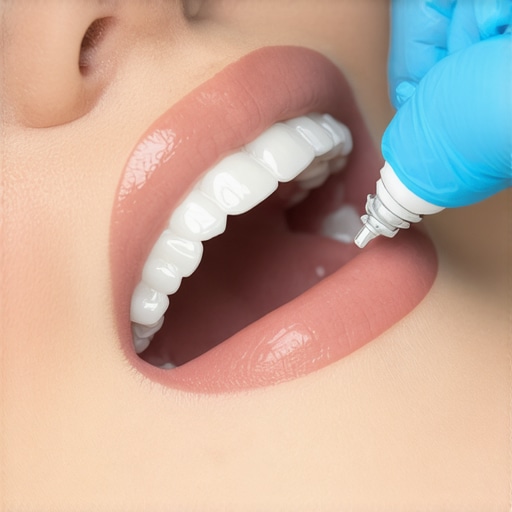 The paper leaves a dark mark on the high spots of the crown. Using a fine-grit diamond bur, the dentist will shave off microns of the material until the marks on the crown match the intensity of the marks on your other teeth. This ensures the dental crowns vs other restorations debate doesn’t end with you in pain. During this visit, it is also a good time to check the structural integrity to see how to tell if your dental crown has a hidden crack from the initial period of trauma. Once that high spot is gone, the relief is almost instantaneous.Wait! Before you let your dentist go to town on that expensive new porcelain, there is a nuance most patients—and even some practitioners—overlook. We are often told that the crown is the intruder and therefore the only thing that should be ground down. But here is the contrarian truth: sometimes the best way to achieve a perfect bite is to slightly adjust the opposing natural tooth. This sounds scary—who wants to shave off healthy enamel?—but research in the Journal of Prosthetic Dentistry highlights that occlusal equilibration often requires subtle changes to the entire biting surface to prevent focal stress points. If your dentist only focuses on the crown, they might thin the porcelain so much that you end up discovering the real reason your porcelain crown keeps chipping is actually the lack of material thickness.
Stop Waiting for Your Jaw to Magically Fix Itself
One of the biggest traps in family dentistry is the advice to just give it a week and see how it feels. While your brain does undergo a process called neuroadaptation, your ligaments do not. If you are constantly hitting one spot, you are bruising the periodontal ligament. This creates a vicious cycle: the ligament swells, which pushes the tooth up even higher, which makes you hit it even harder. It is a biological feedback loop that only ends with a professional adjustment. In the world of expert cosmetic dentistry solutions, we call this the high spot headache.
Should my dentist actually be shaving down my natural teeth instead?
This is the sophisticated question that separates a standard fix from a master-level restoration. If a crown is already at its minimum required thickness for strength, further grinding will cause it to fail. In these cases, a tiny, painless adjustment to the opposing tooth—known as an enameloplasty—is the gold standard. It preserves the integrity of your new investment while achieving that elusive harmonic bite.
The Hidden Danger of Over-Adjusting a New Restoration
There is a delicate balance here. If a dentist over-corrects and grinds the crown down too far, you lose contact with the opposing tooth entirely. This might stop the pain, but it creates a new problem: ‘supra-eruption.’ Your teeth want to touch something. If they don’t, the tooth will slowly move out of the bone until it finds a neighbor to hit. This is why understanding dental crowns involves more than just looking at the tooth in isolation; it’s about the whole system.  This is also why you might eventually see why your porcelain crown has a dark line at the gum line if the forces aren’t distributed correctly, causing the gum to recede from the stress. We are seeing a shift in top cosmetic dentistry trends for 2025 toward digital bite mapping to avoid these manual errors entirely. If your bite feels even 1% off, do not be the polite patient who suffers in silence. Your jaw muscles will thank you for being ‘difficult.’ Have you ever fallen into the trap of waiting for a high filling or crown to settle only to have it hurt more? Let me know in the comments below, and let’s talk about how you got it fixed.Once you have successfully navigated the hurdle of a misaligned bite, your focus shifts to the long game. You have spent the time and money on dental crowns explained as the final word in protection, but even the best porcelain is not invincible. I personally found that the transition from restorative care to long-term maintenance required a total overhaul of my bathroom counter.
Protect Your Investment from Nighttime Sabotage
If you have ever wondered why your-jaw aches every time you wake up in the morning, the culprit is often bruxism—unconscious grinding. This is the primary enemy of a new crown. I do not just suggest a night guard; I insist on it for anyone who has invested in expert cosmetic dentistry solutions. A hard-acrylic custom guard acts as a shock absorber. When I started wearing mine, the micro-fractures in my other teeth stopped appearing. If you use one, remember the best way to clean a night guard to prevent odors is with a non-abrasive soak, not toothpaste, which can create tiny scratches where bacteria hide.
The Gadget That Changed My Flossing Routine
I used to be a string-floss purist until a hygienist pointed out that I was accidentally ‘hooking’ the edge of my crown. This snagging can eventually compromise the cement seal. I switched to a high-pressure water flosser specifically to clear the margins where the crown meets the gum line. This is vital because it prevents the inflammation that makes people think their crown needs to be replaced immediately. 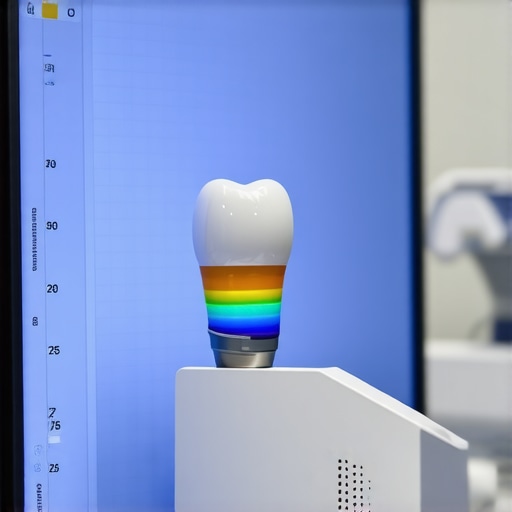 It is about precision, not just force.
How do I maintain my dental crowns over time?
The secret is not just brushing; it is proactive monitoring. Every six months, I ask my dentist to check my “occlusal mapping.” While carbon paper is the traditional method, I look for clinics that use the T-Scan Novus system. According to technical documentation from Dr. Robert Kerstein, a pioneer in computerized occlusal analysis, digital sensors can measure the force and timing of your bite with a granularity that the human eye simply cannot detect. This ensures that even as your jaw bone naturally changes over the decades, your crown stays in perfect harmony. Looking ahead, I expect to see cosmetic dentistry innovations to watch including AI-integrated sensors built directly into temporary crowns to ‘learn’ your bite before the final porcelain is even made. For now, do yourself a favor: during your next cleaning, specifically ask your dentist if they have digital bite mapping available. It is a total game-changer for the longevity of your smile.
The Hardest Lesson I Learned While Living with New Porcelain
Through my own journey with crowns, I realized that your intuition is often more accurate than a standard visual check. Don’t let the ‘numbness’ of the appointment mask the fact that you know your mouth better than anyone else.
- The 24-Hour Myth: If a crown feels like a mountain immediately after the anesthesia wears off, it won’t magically become a molehill by Tuesday. Your ligaments might swell to compensate, making the problem worse.
- Muscle Fatigue is Real: Even after a perfect adjustment, your jaw muscles might stay tense for a few days as they ‘unlearn’ the defensive chewing patterns they developed to avoid the high spot.
- Speak Up Early: In the world of family dentistry, practitioners actually prefer you to be ‘picky’ early on rather than returning with a fractured restoration later.
Gear That Keeps My Restoration Secure
I’ve curated a few essential habits and tools that transformed my experience from ‘hoping it lasts’ to ‘knowing it will.’ These are the specific items I trust to keep my bite in balance and my gums healthy.
- Digital Bite Mapping (T-Scan): If your clinic offers this, take it. It removes the guesswork that comes with old-fashioned carbon paper and ensures your cosmetic dentistry innovations to watch actually deliver the comfort they promise.
- High-Pressure Water Flossers: I was worried about the pressure, but learning how to stop your gums from hurting when you use a water flosser allowed me to clean the crown margins without the ‘snagging’ risk of traditional string.
- Custom Night Guards: This is non-negotiable for protection. Just make sure you know the best way to clean a night guard to prevent odors so you actually stay consistent with wearing it.
Trusting Your Body for Long-Term Oral Health
Getting a dental crown is supposed to be the end of a dental problem, not the start of a new one. By staying proactive and refusing to settle for a bite that feels ‘almost right,’ you are protecting your investment and your overall well-being. Modern family dentistry has evolved so much that discomfort is no longer a requirement of restorative care. Take a deep breath, trust your instincts, and don’t be afraid to ask for that final micrometer of adjustment. Your perfect, painless smile is worth the extra five minutes in the chair. Have you ever felt like a pest asking for a second adjustment on a crown or filling? Let me know your story in the comments below!