I still remember sitting on my bathroom floor at 3:00 AM, clutching my jaw and wondering if I had somehow grown a literal lightning bolt inside my mouth. It was three days after my wisdom tooth extraction, and I thought I was in the clear. Then, the throbbing started—a deep, hollow, soul-crushing ache that radiated all the way to my ear. I made the classic rookie mistake of thinking I could just ‘tough it out’ with a few extra ibuprofen, but when the water I sipped felt like a frozen needle hitting my jawbone, I knew I was dealing with a dry socket. It’s a visceral, sharp experience that makes you realize just how precious a healthy blood clot really is. If you are currently pacing your living room with that same agonizing pulse, I want you to take a breath. We are going to get that pain under control right now. Today, I’m sharing the exact steps I took to survive the weekend before I could get back into the chair, from clove oil secrets to the right way to rinse without making things worse. Have you ever felt a pain so specific that even your ears started to throb? You aren’t alone, and you don’t have to suffer in silence until Monday morning.
That Moment the Numbness Fades and the Real Pain Starts
Many people assume that once the dentist finishes the extraction, the hard part is over. I certainly did! I was so focused on how to deal with the pain of a wisdom tooth coming in that I totally neglected the recovery phase. The mistake I made was using a straw for a milkshake only 48 hours after surgery. That tiny bit of suction was enough to dislodge the clot, leaving my nerves exposed to the air. According to the Mayo Clinic, dry socket (or alveolar osteitis) occurs when the blood clot fails to develop or dislodges before the wound has healed. It is surprisingly common in lower jaw extractions, but that doesn’t make the ’empty’ feeling in your gums any less terrifying. If you suspect your clot is gone, you might even notice a foul taste or smell, similar to why your breath smells like sulfur despite regular flossing. It is a sign that the area is irritated and needs immediate, gentle intervention.
Is Home Care Actually Safe for Something This Intense?
I know what you’re thinking: ‘If the bone is exposed, shouldn’t I be in an ER?’ While a dry socket isn’t usually a life-threatening emergency, the pain sure feels like one. Many patients worry that trying to manage tooth pain when you cant see a dentist immediately will cause an infection, but as long as you aren’t poking the socket with dirty tools, home management is about comfort, not surgery. The goal is to create a temporary barrier for those exposed nerves. If you’ve ever had to learn how to handle a throbbing toothache in the middle of the night, you know that the right salt-water ratio and a bit of clove oil can be the difference between an hour of sleep and a night of agony. We aren’t trying to ‘fix’ the hole—we are just trying to calm the fire until your dentist can pack it with medicated gauze.
Stop the Throb with These Kitchen Staples
When the pain is radiating up your face, you don’t want to go on a scavenger hunt. You need relief that is already in your pantry. The first thing I did—after I stopped crying, of course—was reach for the clove oil (Eugenol). It has been a staple in dentistry for ages because it acts as a natural anesthetic. However, you have to be careful; putting it directly on the tissue can burn. I learned that the hard way! You want to dilute it slightly and apply it to a tiny piece of sterile gauze, then gently place it *near* the area, not shoved inside. If the pain is making your whole head hurt, it might feel similar to why your wisdom teeth are causing ear pain you cant explain, and a warm compress on the outside of your jaw can help settle those spasming muscles. We’re going to dive into the specific rinsing techniques next, because how you move your mouth right now matters more than you think.
The Salt Water Swish That Wont Backfire
Stop what you are doing and mix half a teaspoon of salt into eight ounces of lukewarm water. This isn’t just an old wives’ tale; it’s about osmotic pressure and basic hygiene. When you have an exposed socket, food debris is the enemy. However, most people mess this up by gargling like they’re in a mouthwash commercial. If you swish too hard, you’ll blow out any tiny bit of healing tissue trying to form. I learned this the hard way when I tried to power clean my extraction site after a wisdom tooth surgery and ended up crying on the floor again because I dislodged the only bit of protection I had left. Instead, take a small sip, tilt your head toward the side with the pain, and let the water sit there for 30 seconds. Then, lean over the sink and let the water literally fall out of your mouth. No spitting. Suction and spitting are exactly what caused this mess, and avoiding them is the first step in how to manage tooth pain when you cant see a dentist immediately.
Dilute Your Clove Oil or Pay the Price
If you’ve been searching for immediate relief, you’ve likely seen clove oil mentioned everywhere. It contains eugenol, which is basically nature’s Novocaine. But here’s the instructional part: never apply it pure. My first attempt resulted in a chemical burn on my cheek that hurt worse than the tooth itself. Mix two drops with a carrier oil like olive or coconut oil. Soak a tiny corner of a sterile gauze pad and place it gently against the gum tissue next to the hole. Within five minutes, that lightning bolt sensation should start to dull. This is a temporary bridge, similar to how we use temporary fixes in the role of family dentistry in ensuring oral health for all ages to keep patients comfortable before a big procedure.
Keeping the Socket Clean Without the Suction
The biggest threat to your recovery right now is your next meal. You need to eat to keep your strength up, but you have to avoid anything with small seeds or sharp edges. Think mashed potatoes, lukewarm soup, or yogurt. Most importantly, do not use a straw. The vacuum created by a straw is the top way patients end up back in the chair for a repacking. If you’re already struggling with how to handle a throbbing toothache in the middle of the night, adding a piece of stray rice into that exposed bone area will feel like a literal explosion. Use the opposite side of your mouth exclusively. If you feel like your bite is off or you’re clenching from the stress, it might remind you of why your porcelain crown feels too high when you bite down—it’s all about nerve sensitivity and inflammation. Keep your jaw relaxed, stay hydrated, and drink straight from the glass without using any suction.
Once you survive the immediate crisis of a dry socket, it is tempting to think your dental journey is on autopilot. I’ve seen so many people treat their restorations like they are made of vibranium. There is a common belief that once a tooth is capped, it’s invincible. In my experience, and according to many restorative experts, the opposite is true: a crowned tooth actually requires more precision care than a natural one. People often assume that because the surface is porcelain or gold, it can’t decay. While the crown itself won’t get a cavity, the tiny sliver of natural tooth at the gum line is a literal magnet for plaque. If you aren’t careful, you might find yourself wondering how to tell if your dental crown is leaking bacteria before you even realize there is a problem. This is where the foundation of the role of family dentistry in ensuring oral health for all ages becomes so critical; it’s about catching those microscopic marginal failures before they turn into a full-blown root canal.
Why Your Crown Is Not an Invisible Suit of Armor
The biggest mistake I see is the ‘set it and forget it’ mentality. A study published in the Journal of Prosthetic Dentistry highlights that marginal fit—the seal where the crown meets your tooth—is the primary predictor of how long a restoration lasts. If that seal is even slightly compromised by aggressive brushing or poor hygiene, bacteria will tunnel underneath. This is why understanding dental crowns when and why they are needed is only half the battle; the other half is maintenance. You have to treat the margin like a high-security zone. If you’ve noticed a weird scent or a slight ‘twinge’ when eating sweets, don’t ignore it. It’s not just ‘sensitivity’—it could be the beginning of a sub-marginal cavity.
Can a Cavity Actually Form Under a Porcelain Cap?
The short answer is a resounding yes. Since you can’t see through the porcelain, the decay often stays hidden until it hits the nerve. This is why a regular prophy treatment is much more than just a simple tooth cleaning; it’s a tactical inspection of your dental investments. I once skipped a cleaning because ‘nothing hurt,’ only to find out my crown was essentially sitting on a hollowed-out shell. It’s a costly trap that is easily avoided with the right diagnostic tools and a proactive mindset.
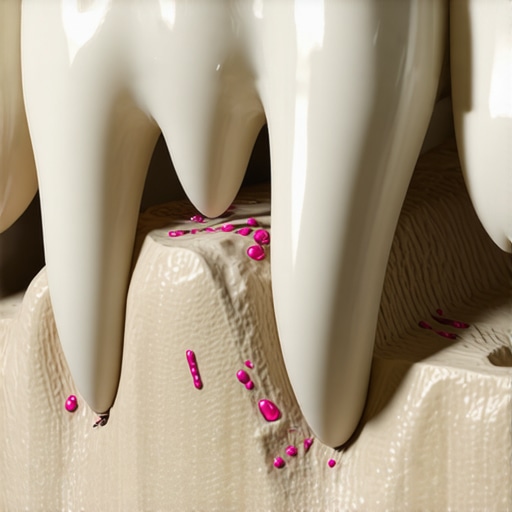
The Danger of the High Bite Trap
Another nuance that most people miss is the ‘settling’ period. If your bite feels even a fraction of a millimeter off, your jaw muscles will eventually revolt. I’ve talked to patients who thought they were developing migraines, but the real culprit was why your porcelain crown feels too high when you bite down. A high restoration causes ‘primary occlusal trauma,’ which can actually loosen the tooth over time. It’s not something that will ‘wear down’ on its own with enough chewing—you need a professional adjustment to prevent long-term joint damage. Whether you are looking into cosmetic dentistry innovations to watch or just getting a standard filling, the physics of your bite matters more than the shade of the porcelain. Have you ever fallen into the trap of thinking a dental fix was ‘permanent’ and didn’t need a follow-up? Let me know in the comments, and let’s talk about how to protect those smiles for the long haul.
When you invest in your smile, the maintenance phase isn’t just a suggestion; it’s the only way to protect that financial and emotional commitment. I’ve found that the biggest hurdle isn’t the surgery or the fitting—it’s the daily habits that follow. Most people think their job is done once the anesthesia wears off, but that is exactly when the clock starts ticking on the lifespan of your restoration. If you want to avoid the common pitfalls like the real reason your porcelain crown keeps chipping, you have to upgrade your toolkit beyond the basic plastic toothbrush. This is about precision maintenance that mirrors the precision of the dentistry itself.
Stop Relying on Just String Floss
I personally stopped recommending standard string floss as the primary tool for anyone with multiple crowns or bridges. Why? Because string often glides right over the ‘margin’—that critical junction where the crown meets your gum. Instead, I use and swear by interproximal brushes, specifically those with a plastic-coated wire core to avoid scratching the porcelain. These tiny brushes physically scrub the concave areas of the tooth that floss simply cannot reach. If you are following a family dentistry guide building a lifetime of healthy smiles, you’ll know that mechanical plaque removal is the only way to prevent the bacteria buildup that leads to gum recession. For my patients with wider gaps or dental bridges, a high-quality water flosser is a non-negotiable addition. It flushes out debris from under the pontic (the fake tooth) where a toothbrush can’t venture.
How do I maintain my dental restorations over time?
Maintenance is a game of consistency and material science. According to Dr. Gordon Christensen of Clinicians Report, the choice of cement and the patient’s home care are the two most significant factors in crown longevity. He notes that resin-modified glass ionomers (RMGIs) are excellent for preventing secondary decay, but they still require a neutral pH environment to thrive. This means you need to watch your acid intake. If you are constantly sipping lemon water or soda, you are microscopicly etching the seal of your crown. To keep everything stable, I suggest using a pH-neutralizing mouthrinse after meals. It’s a small step, but it’s more effective than a dozen ‘whitening’ treatments. This proactive approach is a cornerstone of the role of family dentistry in ensuring oral health for all ages, ensuring that today’s fix doesn’t become tomorrow’s failure.
Why 3D Printing is Changing Everything for Your Mouth
Looking toward the future, the way we maintain and replace these units is shifting toward total digitization. We are moving away from messy impressions and toward permanent digital files of your mouth. In the next few years, I predict that ‘point-of-care’ 3D printing will allow us to replace a chipped crown in a single thirty-minute visit. This trend is already appearing in revamp your smile top cosmetic dentistry trends for 2025. We won’t just be understanding dental crowns when and why they are needed; we will be bio-printing them with materials that actually release fluoride into the surrounding tooth structure. This ‘smart’ dentistry is the future of oral health.
Switch to a Night Guard Before You Regret It
My final ‘insider’ tip is simple: if you have cosmetic work, you must wear a night guard. Even if you don’t think you grind your teeth, the micro-movements of your jaw at night exert thousands of pounds of pressure on your porcelain. It’s much cheaper to replace a piece of plastic than it is to compare dental crowns vs other restorations which is right for you because your original one snapped in half. Try this tonight: pay attention to where your teeth are when you’re stressed. If they’re touching, you’re clenching. Make the conscious effort to keep ‘lips together, teeth apart.’ Your crowns—and your wallet—will thank you.
The Hardest Lesson I Learned While Sitting in the Dental Chair
If there is one thing that years of managing my own dental health has taught me, it is that pain is a terrible messenger. By the time you feel a throb or a sharp zing, the issue is often already well-developed. I used to think that as long as I was not hurting, my dental crowns explained as permanent fixes were doing their job perfectly. The reality? Microscopic changes happen long before the nerves start firing off warnings. Another lightbulb moment was realizing that ‘soft’ brushes are actually superior; I used to scrub my gums raw, only to realize I was causing the very recession I was trying to prevent.
The Exact Tools I Trust for My Own Teeth
I do not just buy whatever is on sale at the drugstore. My personal arsenal is built on science and what I have seen work in the long run. First, I never skip using interproximal brushes, such as the GUM Proxabrush; floss is great, but these tiny brushes are the only things that truly scrub the hidden curves of a tooth. Second, I have switched to pH-neutralizing mouthwashes to keep my mouth environment stable, especially after acidic coffee. Finally, I have embraced the custom-fit night guard. It is the single best insurance policy for anyone who has invested in revamp your smile top cosmetic dentistry trends for 2025 or standard restorations alike. Protecting your teeth from the sheer force of nighttime grinding is non-negotiable if you want them to last decades rather than years.
Your Smile Deserves More Than a Quick Fix
At the end of the day, your mouth is the gateway to your overall health. Taking care of it is not just about avoiding a bill; it is about the confidence to laugh without covering your face and the ability to enjoy a meal without fear. Whether you are dealing with a porcelain crown has a dark line at the gum line or just want to stay ahead of the curve, proactive care is your greatest ally. Embrace the power of the role of family dentistry in ensuring oral health for all ages and treat your teeth like the lifelong companions they are. Have you ever found yourself panicking over a weird dental sensation in the middle of the night? Let me know in the comments below!