I remember the first time I woke up after my bridge was finally set in place. Instead of feeling like a brand-new person with a perfect smile, I felt like my mouth was caught in a vice grip. It was that bizarre, localized pressure that makes you wonder if your teeth are actually moving while you sleep. You try to yawn, and the sensation is so intense you almost want to reach in and pull the thing out yourself. If you are staring at the bathroom mirror right now, wondering why your restoration feels like a shoe that is two sizes too small, I have been exactly where you are. We are going to figure out why this happens and, more importantly, how to get that comfortable fit back so you can actually enjoy your coffee without a side of jaw pain.
Stop Waking Up to a Squeezed Jaw
One of the biggest mistakes I made early on was assuming that a tight bridge meant the dentist had simply botched the measurements. I spent weeks worrying about the basics of how restorations fit instead of looking at my own habits. The truth is, that morning tightness usually is not about the bridge changing shape—it is about your mouth changing around it. Overnight, our gums can slightly swell due to blood flow changes, or more likely, you are putting your teeth through a nightly marathon of clenching. When I finally stopped ignoring the signs, I realized that managing stress-induced jaw tension was the secret to waking up without that ‘shrink-wrapped’ feeling. It is a subtle difference, but knowing whether you need a minor adjustment or a lifestyle shift is the first step to relief.
Is my bridge actually going to snap in half?
It is the fear that keeps us up at night, right? We worry that the constant pressure will cause the porcelain to crack or the underlying teeth to fail. While modern dental materials are incredibly durable, they aren’t invincible. However, that morning tightness is rarely a sign of imminent breakage. According to the American Academy of Sleep Medicine, nearly 10 percent of adults suffer from nocturnal bruxism, which can exert up to 250 pounds of force on your dental work. That pressure makes the ligaments around your teeth sensitive, creating that ‘tight’ sensation when you wake up. Before you panic and start looking up how to manage a failing bridge, take a breath. Most of the time, the solution is much simpler than a total replacement. Have you noticed if the tightness fades away after you’ve been awake for an hour or two? If so, you’re likely dealing with a pressure issue rather than a structural one.
Why your bite feels like a pebble in a shoe
If you find yourself constantly shifting your jaw to find a comfortable resting spot, the culprit is likely your occlusion—the way your teeth meet. A dental bridge is a rigid structure, and if even one corner is a fraction of a millimeter too high, it throws off the entire mechanics of your mouth. Think of it like walking with a tiny pebble in your shoe; it doesn’t seem like a big deal for the first ten steps, but by mile three, your whole leg aches. When I first got my bridge, I noticed that why your porcelain crown feels too high when you bite down is often the same reason a bridge feels tight. The high spot creates a pivot point that forces the surrounding teeth to absorb all the pressure. If you feel that localized ‘squeeze’ specifically when you chew, you need a dentist to perform a simple bite adjustment using articulating paper to identify and buff down those microscopic high points.
Scrub away the hidden swelling
Sometimes the tightness isn’t coming from the porcelain at all, but from the gum tissue screaming for room. Food particles and bacteria love to hide in the tiny gap between your gums and the pontic (the fake tooth). When these areas aren’t cleaned properly, the gums become inflamed and swollen, effectively ‘tightening’ the fit of the bridge from the bottom up. I learned the hard way that a standard toothbrush isn’t enough. You have to master the best way to clean under a dental bridge to prevent smells and inflammation. I started using a bridge needle threader and interdental brushes religiously every night. Within three days, the puffy, red tissue subsided, and that claustrophobic feeling in my jaw miraculously disappeared. It turns out my bridge wasn’t too small; my gums were just too angry.
The night guard test
If you wake up with a tight bridge but the feeling vanishes by lunchtime, you are almost certainly clenching your teeth. This is where family dentistry guide building a lifetime of healthy smiles becomes practical; it’s about protecting your investment. I resisted wearing a night guard for years because I thought they were bulky and uncomfortable. However, after I cracked a temporary crown from sheer grinding force, I finally committed to a custom-fitted guard. The result was immediate. By preventing my jaw muscles from engaging in a full-force workout while I slept, the ligaments around my bridge were allowed to rest. If you go this route, remember to learn how to clean a night guard without using harsh chemicals or bleach to keep your oral environment healthy. A night guard doesn’t change the bridge, but it changes how your body reacts to it.
When to call for a professional adjustment
There is a fine line between ‘settling in’ and a mechanical error. If the tightness is accompanied by a sharp, shooting pain when you tap on the bridge, or if you notice a leaking crown trapping bacteria, you cannot fix this at home. I once tried to ‘tough it out’ for a month, only to find out that a small piece of cement had been left under the gumline, causing constant irritation. A quick five-minute visit to the office for a professional cleaning and a slight adjustment of the bridge’s margins can save you months of nagging discomfort. Don’t wait until the pressure causes a secondary issue like a tension headache; your dentist has tools specifically designed to refine these fits in ways that feel like instant magic.
People often tell you to ‘just give it time’ when a new bridge feels tight, but I am going to go against the grain here: if your restoration still feels like a physical intrusion after the first 72 hours, ‘time’ is rarely the cure. There is a common misconception in both expert cosmetic dentistry solutions and general care that the mouth is a static environment. It is not. It is a dynamic system of ligaments and nerves. When we talk about dental crowns vs other restorations, we focus on the material, but the real nuance lies in ‘proprioception’—your brain’s ability to sense exactly where your teeth are. If the bridge is off by even 20 microns (the width of a human hair), your brain interprets that as a massive blockage rather than a ‘tight fit.’ Waiting weeks for it to ‘settle’ often just means you are forcing your jaw muscles to compensate, which can lead to chronic TMD or unnecessary discomfort.
Does the material of your bridge actually dictate the ‘squeeze’ you feel?
Many patients believe that choosing Zirconia over porcelain-fused-to-metal (PFM) will solve all their comfort issues. However, the rigidity of high-end materials is a double-edged sword. A study published in the Journal of Prosthetic Dentistry highlights that while high-strength ceramics are incredibly durable, they lack the natural ‘give’ of human enamel, meaning any occlusal discrepancy is felt much more acutely by the periodontal ligament. This is the ‘Oops’ factor most people miss: you might be chasing top cosmetic dentistry trends for a prettier smile, but if the lab technician did not perfectly account for your lateral excursions—the way your jaw moves side-to-side—that bridge will always feel like a foreign object regardless of how much it cost.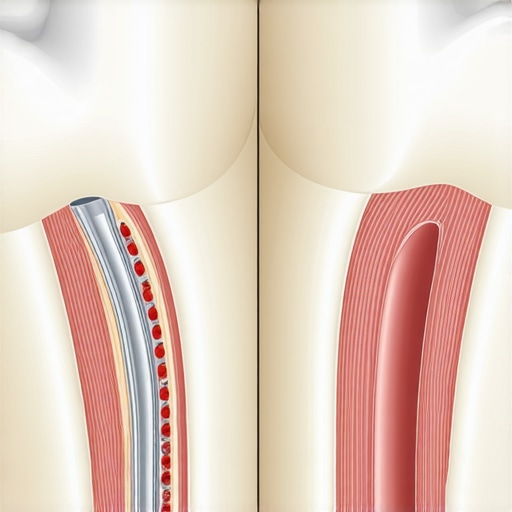
Don’t ignore the warning signs in your foundation
One major trap to avoid is assuming a tight bridge is always a ‘fit’ issue when it might actually be an ‘abutment’ issue. If the teeth holding the bridge are under too much stress, they can develop micro-fractures. You might wonder why your molar cracks when you are only eating something soft, and the answer is often long-term fatigue from a bridge that was slightly too tight for years. It is not just about the porcelain; it is about the living tissue underneath. Within the scope of ensuring oral health for all ages, we have to look at the long-term biological cost of ‘toughing it out.’ If you feel a sensation similar to why your dental implant crown feels like it is spinning in place, or if there is a rhythmic ‘throb,’ your pulp might be inflamed from the mechanical pressure. Have you ever fallen into the trap of waiting ‘one more week’ for a dental problem to fix itself, only for it to get worse? Let me know in the comments.The ‘tightness’ we have been discussing is not just an annoyance; it is a signal that your maintenance routine needs an upgrade. If you are still using basic string floss and hoping for the best, you are playing a dangerous game with your investment. Personally, I switched to the Waterpik with the Plaque Seeker tip specifically because the three thin bristle tufts can access the microscopic junction where the bridge meets the gumline. According to a study in the Journal of Clinical Periodontology, oral irrigators are significantly more effective at reducing gingival bleeding around fixed prosthetics than traditional flossing. This isn’t just about ‘cleaning’; it is about preventing the sub-gingival inflammation that makes your bridge feel like it is shrinking.
Why the ‘Plaque Seeker’ tip changed my routine
I used to think my gums were just naturally sensitive, but the reality was that my bridge was acting as a shelf for debris. By using a specialized tip on a high-pressure setting, I was able to flush out the bacteria that causes the tissue to swell and press against the porcelain. Dr. Pascal Magne, a leading voice in biomimetic dentistry, emphasizes that the longevity of any restoration depends on the health of the biological seal. If that seal is compromised by plaque, the structural integrity of your abutment teeth is next in line for trouble. This is why expert cosmetic dentistry solutions are only half the battle; the other half is what you do in your bathroom every night.
How do I maintain my dental bridge over the years?
The secret to long-term success is data over guesswork. I have started asking my dentist for a digital ‘occlusal map’ during my checkups. Using a tool like the T-Scan, which measures the timing and force of your bite digitally, provides a much more accurate picture than the old-school blue carbon paper. This is where top cosmetic dentistry trends for 2025 are heading—away from manual estimation and toward precision diagnostics. By catching a ‘heavy’ contact point early, you prevent the bridge from eventually cracking under the pressure of your own jaw. It is also vital to integrate this into your broader family dentistry guide building a lifetime of healthy smiles routine. Whether it is caring for your childs teeth or maintaining your own ultimate solution for damaged teeth, consistency is the only way to avoid the dreaded ‘re-do.’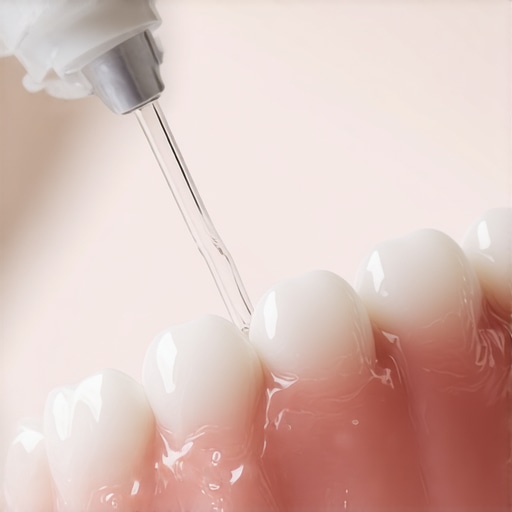
AI and the end of the ‘tight’ bridge
I predict that within the next five years, we will not even be using traditional impressions for replacements. AI-driven software will monitor the wear patterns on your crowns and restorations and alert your dentist before a failure occurs. This proactive approach is the core of modern oral health. If you want to stay ahead of the curve, stop treating your bridge like a ‘set it and forget it’ appliance. Even knowing how often you really need to replace your toothbrush can impact the health of the abutment teeth. If your bridge currently feels tight, I want you to try this one specific trick tonight: use a plaque-disclosing tablet after you think you have finished cleaning. You will likely be shocked to see a bright purple ring right at the base of your bridge. That purple stain is the invisible enemy causing the swelling and the ‘squeezed’ sensation. Once you see it, you can’t unsee it, and it will change the way you brush forever. Don’t wait until you are searching for how to tell if your crown is leaking to take your hygiene seriously.
Three Revelations That Changed How I View My Restorations
The biggest ‘lightbulb moment’ for me was realizing that a tight bridge isn’t always a mechanical failure; often, it is a communication breakdown between your brain and your nerves. I learned that ignoring even ‘minor’ discomfort is never a winning strategy. In fact, the real cost of delaying professional care can lead to much more complex procedures down the road. Another lesson? Your bite is as unique as your fingerprint, and what works for someone else might not work for you. I also discovered that ensuring oral health for all ages requires a proactive mindset rather than a reactive one.
#IMAGE_PLACEHOLDER_E#
The Gear That Rescued My Smile From Constant Pressure
I trust a custom-fitted night guard over store-bought versions because the precision fit prevents the very shifting that makes a dental bridge feel tight. I also swear by plaque-disclosing tablets; they turn an invisible problem into a visible roadmap for your cleaning routine. Beyond that, I have kept a close eye on cosmetic dentistry innovations to watch, particularly digital bite mapping tools like T-Scan. This technology takes the guesswork out of manual adjustments. Finally, if you ever suspect that your discomfort is spreading, remember that learning how to tell if a headache is caused by a bad tooth can save you from months of unnecessary stress.
Empower Your Smile by Taking the First Step
You deserve to have a smile that feels like a natural part of you, not an external weight you have to carry. If you have been ‘toughing it out,’ I encourage you to contact us or your local specialist to get that fit checked. A simple adjustment can be the difference between constant irritation and total comfort. Have you ever had a dental bridge or restoration that took way longer than expected to feel normal? Let me know about your experience in the comments below!