I was sitting at a local bistro, midway through a perfectly seared steak, when I felt it: a tiny, nauseating shift. It wasn’t a crunch, and it wasn’t the sharp sting of a cavity. It was something far more surreal. My front tooth—the expensive, high-tech dental implant I’d bragged about—was spinning. Just a fraction of a millimeter, but enough to make my stomach drop to my shoes. I remember thinking, “Can I literally unscrew my own tooth with my tongue?” It’s a terrifying sensation that makes you want to stop talking, stop eating, and definitely stop smiling.
The Day My Expensive Tooth Started Doing Donuts
If you’re reading this, you’re probably in that same boat of silent panic. You nudged your crown with your tongue and it didn’t just wiggle; it rotated. I’ve spent years navigating the world of expert cosmetic dentistry solutions, and let me tell you, that spinning feeling is usually a sign that the mechanical connection between your crown and the implant post has hit a snag. Early on in my journey, I made a massive mistake: I assumed that because there was no pain, there was no problem. I figured it was just “settling.” Don’t do what I did. Ignoring a rotating crown can lead to the abutment screw snapping or, worse, damage to the internal threads of the implant itself. Whether you’re dealing with a molar that feels like it’s vibrating or a crown that’s acting like a loose doorknob, you need to know why it’s happening before you try to “fix” it yourself.
Is this spinning sensation actually a sign of failure?
Here is the good news: a spinning crown rarely means the actual implant—the titanium screw in your bone—has failed. Most of the time, it’s just the “abutment screw” (the tiny screw holding the visible tooth to the post) that has wiggled loose. According to the American Academy of Implant Dentistry, dental implants have a 98 percent success rate, but mechanical components like screws can occasionally loosen under the heavy pressure of chewing. When you first get your restoration, everything feels rock solid. But over time, if the bite isn’t perfectly aligned or if you’ve been grinding your teeth at night, that screw can back out. It’s a lot like a lug nut on a car tire—if it isn’t torqued down perfectly, things start to wobble. Have you ever felt that weird, dizzying sensation of a tooth moving in a way it definitely shouldn’t? Drop a comment or reach out; I’d love to hear how you’re handling the “spinning tooth” blues. Understanding dental crowns and why they are needed is only half the battle; knowing how to maintain them is where the real work begins. If your crown has been loose for several years, the fix might be simpler than you think, but you have to act before the hardware gets damaged beyond repair.
Stop Fiddling Before You Snap the Hardware
The absolute first thing you must do—and I say this from the painful memory of doing the exact opposite—is stop testing the rotation with your tongue. It is incredibly tempting to ‘check’ if it is still loose every five minutes, but every spin is potentially stripping the tiny internal threads of the implant. Think of your implant like a wall anchor for a heavy shelf; if you keep wiggling the screw, the hole in the drywall eventually gets too big to hold anything. In the world of family dentistry, we treat these components as precision instruments. When my crown started spinning at that bistro, I made the mistake of trying to ‘push’ it back into place with my thumb. All I did was create a tiny gap where bacteria could seep in. If you feel that movement, switch to a soft-food diet immediately. No crusty bread, no steak, and definitely no sticky candy. You are trying to minimize the lateral forces that turn a simple loose screw into a broken abutment.
Check for Vertical Movement vs. Simple Rotation
You need to determine if the crown is just spinning like a carousel or if it is lifting up. If the crown moves vertically, you are at risk of food particles getting trapped underneath, which is exactly how to tell if your crown is leaking and trapping bacteria. I once ignored a slight vertical lift for three days, thinking it was just ‘settling.’ By the time I got to the chair, the area smelled like a locker room because of trapped debris. Take a clean finger and gently see if you can lift the crown. If it stays flush but spins, it’s likely just the screw. If it lifts, stop eating entirely on that side. You should also check if you’re experiencing any gum changes; sometimes gums are receding in only one area because of the constant irritation from a moving crown. 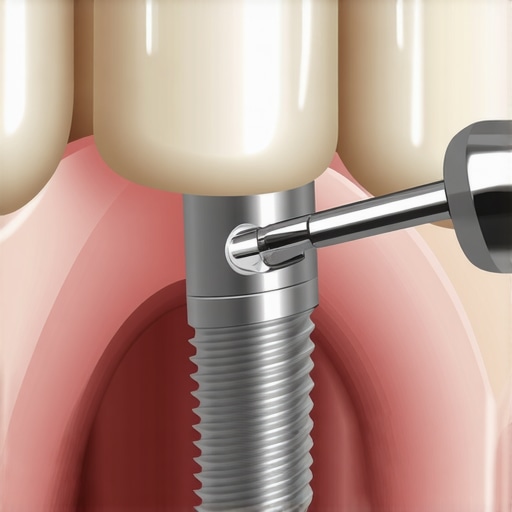
The Torque Wrench Solution
When you finally get to a specialist, the ‘fix’ is surprisingly mechanical. Most modern implant crowns have an access hole—often hidden under a tooth-colored filling—that leads directly to the abutment screw. The dentist will remove that filling and use a tiny, medical-grade torque wrench to tighten the screw to a specific Newton-centimeter (Ncm) value. This isn’t a ‘tighten it until it feels good’ situation; it’s a calibrated engineering task. I remember watching my dentist use a tool that looked like a miniature version of what a mechanic uses on a cylinder head. If the screw itself is damaged, they will simply replace it with a new one. This is why your dental implant specialist needs a high-tech scan before they start—they need to see the exact brand and size of the internal hardware to ensure they have the right driver.
Why the Bite Matters More Than the Tightness
The real reason my crown loosened in the first place wasn’t a manufacturing error; it was my bite. If the crown is even a fraction of a millimeter too high, it takes the brunt of every chew, acting like a hammer hitting a nail over and over. This constant vibration eventually ‘un-torques’ the screw. This is why your porcelain crown feels too high when you bite down sometimes even after a successful tightening. After my screw was torqued back down, the dentist spent twenty minutes using carbon paper to check my occlusion (how my teeth meet). We ended up shaving down a tiny ‘high spot’ on the crown. It felt weirdly short for a day, but that adjustment is the only reason that crown is still in my mouth five years later. Without addressing the bite, you’re just waiting for the screw to loosen again. If you’ve had your crown for a long time, you might wonder about why your dental implant crown feels loose after several years, and often, it’s just the natural shifting of your other teeth that has changed the pressure points on the implant.Most people assume that because an implant is ‘artificial,’ it is impervious to the laws of physics or the need for routine maintenance. That is the first big mistake. While expert cosmetic dentistry solutions provide incredible aesthetics, they are still subject to mechanical fatigue. In my experience, patients often treat their implants like a indestructible hammer, when they should treat them like a precision Swiss watch. The contrarian truth is that the crown sitting on your implant is a ‘serviceable part.’ Just like you have to change the brake pads on a luxury car, you may occasionally need to service the mechanical components of your smile.
Stop Assuming Your ‘Permanent’ Tooth Never Needs Maintenance
In the world of family dentistry, we see a recurring theme: patients believe that once the porcelain is in place, the journey is over. However, a study published in the Journal of Oral Implantology notes that screw loosening is actually the most common prosthetic complication, occurring in a significant percentage of cases within the first few years. This doesn’t mean your dental crowns are failing; it means the system is performing as designed by absorbing stress through the screw rather than the bone. If the screw didn’t loosen, the force of a heavy bite might instead fracture your jawbone or the implant post itself. Have you ever fallen into the trap of thinking your implant was invincible? Let me know in the comments.
The Glue Trap That Could Destroy Your Screw Channel
Here is the absolute ‘oops’ factor you must avoid at all costs: the pharmacy-aisle fix. When a crown starts spinning, the temptation to buy over-the-counter dental cement is overwhelming. I’ve seen patients try to ‘glue’ a spinning implant crown back down, and it is a nightmare. Implant crowns are not like natural teeth; they often have a tiny ‘chimney’ or access hole hidden under a composite plug. If you flood that area with DIY glue, you seal off the screw head. When you finally get to the clinic, the dentist won’t be able to fit their driver into the screw. Instead of a simple tightening, they might have to shatter the porcelain to get the hardware out. If you’re looking for dental crowns vs. other restorations, you’ll learn that the ‘retrievability’ of an implant crown is its greatest feature—don’t ruin it with superglue. 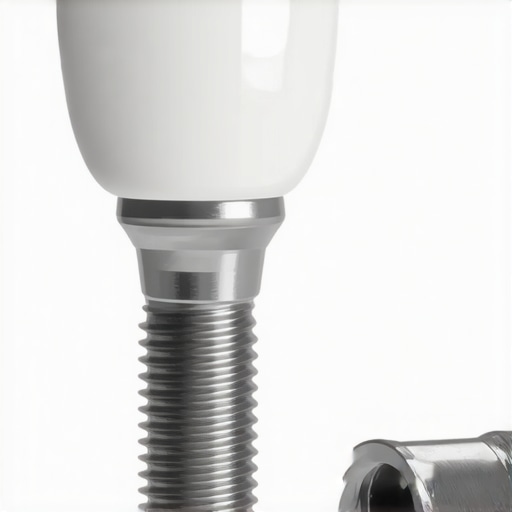
Why Does the Wiggle Seem to Come and Go?
You might notice the crown spins during lunch but feels strangely solid by dinner. This isn’t your imagination; it’s a phenomenon called ‘micro-movement’ caused by the ‘pumping action’ of oral fluids. When the screw is slightly loose, a microscopic gap opens. Saliva and tiny food particles can create a hydraulic cushion that makes the crown feel ‘stuck’ in place temporarily, only to have it spin again once that pressure shifts. This is also why a loose crown often leads to a foul scent, similar to chronic bad breath. Bacteria thrive in that airless gap between the crown and the post. If you notice a metallic or ‘off’ taste when you nudge the crown, the seal has been compromised, and you are likely trapping bacteria that can lead to peri-implantitis—the implant version of gum disease.
The Advanced Nuance of Passive Fit
The most sophisticated reason for a spinning crown is a lack of ‘passive fit.’ In high-end cosmetic dentistry, the crown must sit on the abutment with zero internal tension. If the crown was slightly ‘tight’ against the neighboring teeth when it was first installed, it may have been putting constant lateral pressure on the screw. Over months or years, that tension acts like a slow-motion wrench, gradually backing the screw out of its socket. This is why your dental implant crown feels loose after several years even if you haven’t had any recent trauma. It’s a slow mechanical unravelling that only a specialist with a torque wrench and a fine-tuned eye for occlusion can truly resolve. If you want to dive deeper into the hardware, contact us to see how we recalibrate these systems for a lifetime of stability.
Buy the right tools before the wiggle returns
I learned the hard way that you cannot treat a dental implant crown like a regular tooth. Standard floss is great for natural enamel, but it often glides right over the titanium-to-porcelain junction without catching the microscopic biofilm that causes inflammation. I personally switched to using TePe interdental brushes—specifically the extra-soft variety—because they physically scrub the ‘chimney’ area where the crown meets the abutment. A study published in the International Journal of Implant Dentistry (IJID) emphasizes that mechanical cleaning with interdental brushes is significantly more effective at reducing peri-implant inflammation than traditional flossing alone. If you are investing in dental crowns explained as a long-term solution, you need to invest $10 in the right brushes. I also swear by a high-quality water flosser, but you have to be careful; I’ve written before about how to stop your gums from hurting when you use a water flosser by keeping the pressure on the lowest setting around your implants to avoid breaking the delicate ‘biological seal’ of the gum tissue.
How do I keep my implant crown stable for the next decade?
The answer isn’t just about cleaning; it is about protecting the hardware from your own jaw. After my spinning crown incident, I realized I was a ‘night clencher.’ Every night, I was essentially trying to unscrew my expensive tooth with my own muscles. Now, I never go to sleep without a custom-molded night guard. This simple piece of plastic acts as a shock absorber, ensuring that if I do grind, the force is distributed across the guard rather than focused on that one abutment screw. In the context of family dentistry guide building a lifetime of healthy smiles, this is the single most important habit for anyone with restorative work. It’s the same logic behind the secret to making your dental bonding last more than five years—prevention of mechanical stress is everything. If you notice why your jaw aches every time you wake up in the morning, you are likely putting your implant at risk every single night. 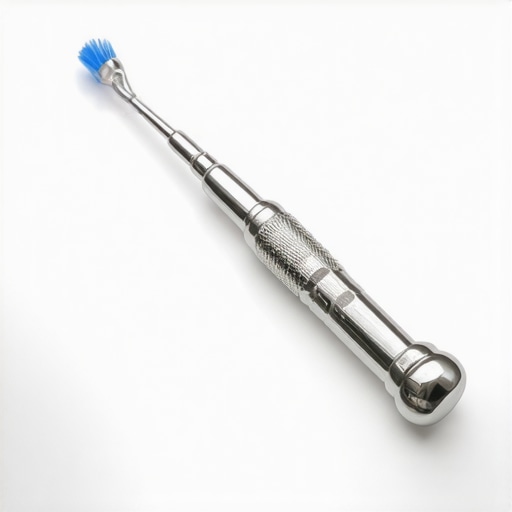
Why your next crown might talk to your smartphone
Looking ahead, I predict we are moving toward a ‘Smart Crown’ era. We are already seeing cosmetic dentistry innovations to watch that involve embedded sensors within the porcelain. Imagine a crown that can detect a drop in screw torque before you even feel a wiggle, sending a notification to your dentist’s office automatically. This is the future of the role of family dentistry: shifting from reactive repairs to proactive monitoring. Until then, we rely on the manual feel of a torque wrench and our own vigilance. My best advice? Stop by your local pharmacy and pick up a pack of size-appropriate interproximal brushes today. It is the one ‘pro’ tip that changed my maintenance game completely and kept my smile from doing donuts.
The Hard Lessons I Learned From My Spinning Smile
Reflecting on my own dental journey, I’ve realized that a spinning crown isn’t the end of the world—it’s just a mechanical nudge to pay closer attention. First, I had to accept that even the most expert cosmetic dentistry solutions require a bit of tune-up now and then. It’s not a failure of the surgery; it’s often just the physics of a heavy bite meeting a tiny screw. Second, I learned that silence is the enemy. Waiting to ‘see if it gets better’ only risks stripping the internal hardware. Finally, I discovered that understanding dental crowns and why they are needed also means understanding how to protect them from the sheer force of nocturnal teeth grinding.
My Essential Toolkit for Keeping Implants Tight
To keep my restoration in place for the long haul, I’ve curated a few must-have items that differ from a standard routine. I swear by extra-soft interdental brushes to reach the ‘chimney’ area without scratching the titanium post. I also learned how to stop your gums from hurting when you use a water flosser by using luke-warm water on a low setting, which flushes out bacteria around the implant base perfectly without compromising the seal. Most importantly, a custom night guard is my secret weapon. It’s very similar to the secret to making your dental bonding last more than five years—reducing constant mechanical stress is the only way to ensure absolute longevity. #IMAGE_PLACEHOLDER_E#
Reclaim the Confidence in Your Smile
If you are feeling that nauseating wiggle right now, take a deep breath and step away from the mirror. With the guidance provided by the role of family dentistry and a simple, professional torque adjustment, you’ll be back to eating steak and smiling for photos in no time. Don’t let a tiny screw steal your peace of mind or your confidence. Your smile is a high-tech investment, and like any great machine, it just needs the right care at the right time. Have you ever felt your crown move while eating, and did you wait to call the dentist? Let me know your experience in the comments below!