I was staring at a blurry gray blob on a screen while my dentist squinted, trying to figure out exactly where my jawbone ended and my sinus cavity began. It was a traditional 2D X-ray, the kind we’ve all had dozens of times. At that moment, a cold realization hit me: I was about to let someone drill a titanium post into my face based on a flat shadow. It felt like trying to navigate a mountain range using a paper placemat from a diner. I’ve learned the hard way that in the world of modern dentistry, “good enough” usually leads to “oh no.” Years ago, I rushed into a procedure without asking about the technology being used, and I spent weeks wondering how to tell if your dental implant is being rejected by your body because the fit just felt… off. Today, I want to make sure you don’t make that same mistake. We are diving into why a high-tech CBCT scan is the only way to go for a successful smile.
Your Jaw is Three-Dimensional and Your Imaging Should Be Too
The biggest thing I wish I’d understood earlier is that a standard X-ray is basically a photograph of a shadow. It’s flat. But your jaw is a complex landscape of nerves, blood vessels, and varying bone density. When I finally saw my first 3D Cone Beam Computed Tomography (CBCT) scan, it was like someone turned the lights on in a dark room. My specialist could rotate the image, look behind the teeth, and see exactly how much bone was available for the implant. This level of precision is exactly what defines the top cosmetic dentistry trends for 2025. Without this view, even the most skilled surgeon is essentially operating with one eye closed. If you are already dealing with damaged teeth, you might be debating between dental crowns vs other restorations, but for implants, the bone is the foundation. You wouldn’t build a house without a soil report, right?
Is a high-tech 3D scan actually worth the extra cost?
I get it—the bill for a specialized scan can feel like a punch to the gut when you’re already looking at the price of an implant. I remember asking my specialist if we could just skip it and use the old charts. He looked at me and said, “I can guess, or I can know.” That hit home. According to the American Academy of Implant Dentistry, CBCT scans provide a 1:1 scale image, which is vital for avoiding the mandibular nerve and the maxillary sinus. One small measurement error can be the difference between a lifetime of comfort and a failed surgery. I’ve seen friends ignore this and end up needing to understand if their crown needs replacing prematurely because the underlying implant wasn’t stable. Have you ever felt like your dentist was just ‘eyeballing’ a major decision? It’s a terrifying feeling, and honestly, you deserve the peace of mind that comes with seeing the plan in 3D. When you can visually confirm how to tell if your dental implant has successfully fused to the bone later on, you’ll be glad you started with a perfect map. It sets the stage for a restoration that looks and feels like it grew there naturally.
Watch the Machine Build a 3D Replica of Your Face
When you step into the scanning room, the experience is surprisingly quick but incredibly detailed. Unlike the old-school bite-wings that make you gag, the CBCT machine features a rotating arm that circles your head. Think of it like a satellite orbiting a planet, capturing every mountain and valley. This process isn’t just for the sake of cool tech; it’s essential for anyone navigating a family dentistry guide to ensure everyone from teens to seniors gets the most accurate care possible. During my own scan, I was shocked that it took less than twenty seconds. The result was a high-resolution, three-dimensional digital model of my entire oral cavity, including the hidden pathways of my nerves.
The 14-Second Circle That Changes Everything
The precision here is what matters. In family dentistry, we often talk about preventative care, but when you’re at the surgical stage, prevention means avoiding the ‘oops’ moment of hitting a nerve. The scan gathers hundreds of individual images and stitches them together. I remember my dentist pointing at a specific spot on the screen where my bone was slightly thinner—a detail a 2D X-ray completely missed. This is why expert cosmetic dentistry solutions now rely almost exclusively on this data. It’s the difference between a guess and a guarantee.
Trusting the Virtual Blueprint for a Flawless Fit
Once the data is in the computer, the ‘meat’ of the process begins. Your dentist uses specialized software to virtually place the implant into your 3D jawbone. It’s like a flight simulator for your mouth. They can test different sizes and angles without ever touching a drill. If the bone looks weak, they might suggest dental crowns explained as part of a larger restorative plan, or perhaps a bone graft. I watched my specialist move a digital tooth around until it sat perfectly centered, ensuring the final result wouldn’t just look good but would actually function when I chewed.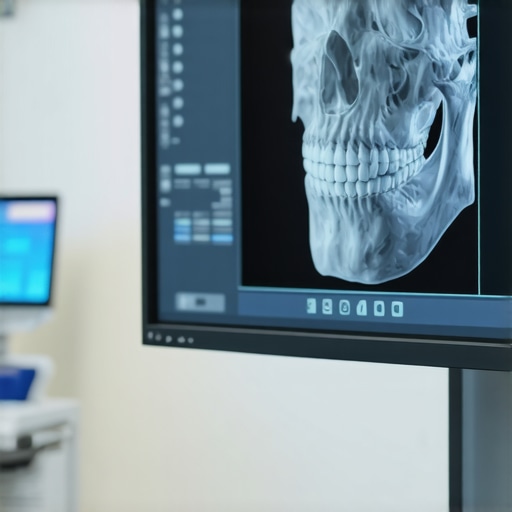
Using a Surgical Stencil to Eliminate Human Error
The final, and perhaps most critical, step is the creation of a surgical guide. This is a custom-made, 3D-printed acrylic piece that fits over your teeth during the actual procedure. It has a small hole that acts as a physical ‘track’ for the dentist’s tools. When I saw mine, I realized it was basically a high-tech stencil. It ensures the implant goes exactly where the virtual plan dictated—down to the fraction of a millimeter. This level of planning is why patients rarely have to worry about how to tell if your dental implant has successfully fused to the bone later on, because the initial placement was anatomically perfect. Even when I was just looking for essential family dentistry tips for my kids, the precision of 3D tech stood out as the gold standard for any major intervention. It removes the ‘hand-eye coordination’ variable and replaces it with mathematical certainty.
People often get fixated on the material of their new teeth—debating zirconia versus porcelain like they’re picking out kitchen countertops. But here is the hard truth: the most expensive crown in the world will fail if the underlying biology isn’t respected. A common trap I see is the ‘over-contoured’ restoration. When a lab makes a crown too bulbous to look ‘perfect,’ it actually creates a shelf that traps plaque. This is often how to tell if your dental crown is leaking bacteria or why you see that dreaded dark line at the gum line. It’s not just a cosmetic flaw; it’s a failure of integration.
Stop Obsessing Over Material and Start Looking at the Bone
Most patients assume that ‘digital dentistry’ is a binary—either your dentist has it or they don’t. In reality, the nuance lies in how they use that data. I’ve spoken to specialists who argue that a 3D scan is only as good as the clinician’s understanding of ‘biological width.’ A study in the Journal of Oral Implantology highlights that while guided surgery significantly reduces placement errors, the long-term health of the tissue depends on leaving enough room for the gums to attach naturally. If your dentist pushes the crown too deep, your body will literally try to ‘recede’ away from the intrusion. This is why expert cosmetic dentistry solutions focus on the foundation as much as the finish.
Does a 3D scan guarantee my body won’t reject the implant?
The short answer is no, but it’s the best insurance policy you can buy. Rejection often isn’t an ‘allergy’ to titanium; it’s frequently a reaction to poor positioning or lack of bone support. This is a huge part of top cosmetic dentistry trends for 2025: moving away from ‘just making it look white’ toward ‘making it biologically sound.’ If you don’t start with a CBCT scan, you might end up wondering why your porcelain veneers might look bulky or unnatural because the foundation wasn’t mapped correctly. Accurate mapping ensures the crown sits flush with the gumline rather than sitting on top of it like a clumsy cap.
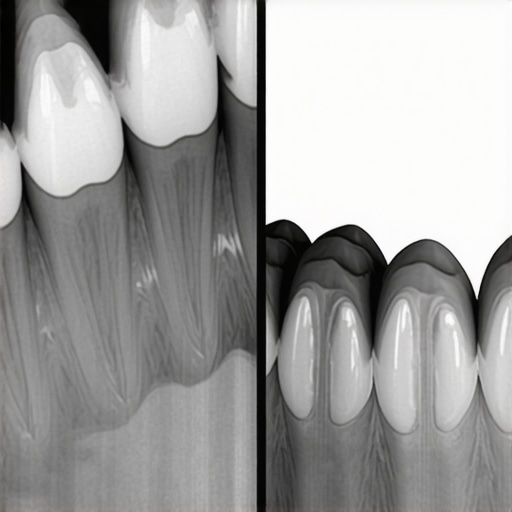
One advanced mistake to avoid is assuming that understanding dental crowns when and why they are needed is only for the elderly. Even in the role of family dentistry, 3D imaging is becoming vital for catching developmental issues before they become surgical nightmares. Have you ever fallen into the trap of choosing a dentist based on the lowest price rather than the technology they use? Let me know in the comments.
Clean Your High-Tech Hardware Like a Pro
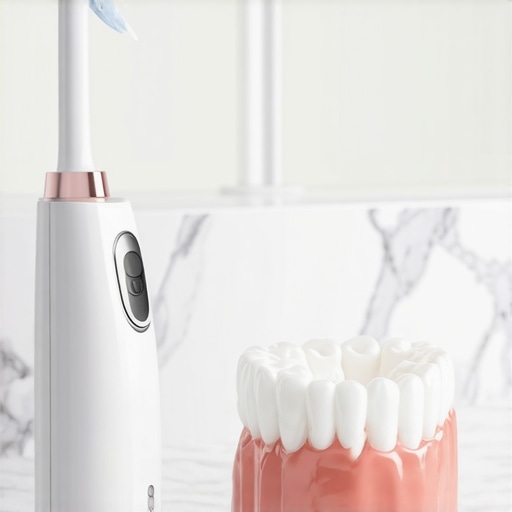
Once you’ve invested in a 3D-planned implant, the work doesn’t stop. You can’t just treat it like a regular tooth and hope for the best. I personally rely on a high-quality water flosser, but I had to learn how to stop your gums from hurting when you use a water flosser because the pressure was too high initially. It’s about precision cleaning without trauma. The International Team for Implantology (ITI) emphasizes in their clinical guidelines that mechanical plaque control is the single most important factor in preventing peri-implantitis. If you aren’t using interdental brushes that are plastic-coated to avoid scratching the titanium, you are essentially inviting trouble. I also follow the best routine for cleaning under a dental bridge even for my single implants, because the junction where the crown meets the gum is the most vulnerable spot for bacterial buildup.
How do I keep my new implant healthy for the long haul?
The secret isn’t just brushing; it’s protecting the mechanical integrity of the screw and the porcelain. I wear a custom night guard religiously. If you grind your teeth, you’re putting thousands of pounds of pressure on a rigid post that has no give like a natural tooth root does. This is often why your crown feels tight when you wake up—it’s a sign of nocturnal stress that can lead to bone loss over time. Learning the best way to clean a night guard to prevent odors made the habit much easier for me to stick to. Looking ahead, I predict we will see smart-implants with built-in pH sensors that alert your phone if bacteria levels spike before you ever feel pain. We are moving toward a world where your mouth literally talks to your doctor to prevent failure.
Don’t Settle for Yesterday’s Technology in Your Mouth
If your current provider is still using 20-year-old film and feeling their way through a surgery, it might be time to rethink your family dentistry guide building a lifetime of healthy smiles. Whether it’s for you or your kids, starting with child-friendly dental care the foundation of good oral health means ensuring the practice values modern diagnostics. I’ve seen how much smoother things go when a doctor uses transform-your-look-with-expert-cosmetic-dentistry-solutions like 3D imaging. It’s not just about the surgery; it’s about understanding dental crowns when and why they are needed in the context of your whole facial structure. My advice? Go to your next appointment and specifically ask to see their CBCT machine. If they don’t have one, ask how they ensure accuracy without it. Your jaw—and your wallet—will thank you later.
Lessons I Learned the Hard Way About Dental Precision
Reflecting on my own journey, the ‘lightbulb moment’ happened when I realized that bone density isn’t uniform. You can have thick bone in one spot and a ‘hollow’ patch just millimeters away. A 2D X-ray can’t tell that story, but a 3D scan can. I also learned that the angle of the implant dictates how the light hits your final tooth. If the angle is slightly off, the porcelain looks ‘dead’ or opaque because it isn’t reflecting light like a natural tooth. This is why staying ahead of top cosmetic dentistry trends for 2025 is so important—it’s about using data to mimic nature perfectly. Finally, I discovered that ‘painless’ isn’t just about numbing; it’s about the confidence of the surgeon. When they have a 3D map, they move with a speed and certainty that reduces your time in the chair and your overall healing period.
My Personal Checklist for a Healthy Restoration
If you are moving forward with a restoration, I highly recommend curating a toolkit that supports your high-tech investment. I rely on three specific things: First, a high-quality water flosser. It’s a game-changer, provided you know how to stop your gums from hurting when you use a water flosser by starting on the lowest setting. Second, I recommend the official ITI (International Team for Implantology) patient portal. It’s where I go to find peer-reviewed data on implant longevity. Third, if you are a grinder like me, a custom-fitted night guard is non-negotiable. It protects your investment from the sheer force of your jaw. Just make sure you learn the best way to clean a night guard to prevent odors so you actually stay consistent with wearing it every single night.
Your Journey to a Flawless New Smile Starts Now
You have the power to decide the quality of your care. Don’t be afraid to be the ‘difficult’ patient who asks about 3D imaging or computer-guided surgical templates. The peace of mind that comes from knowing your dentist isn’t guessing with your health is worth every extra penny. By choosing expert cosmetic dentistry solutions that utilize this technology, you aren’t just getting a new tooth; you are getting a foundation that can last a lifetime. You deserve a smile that looks as good on a scan as it does in a mirror. Have you ever asked your dentist about the specific technology they use for planning your procedures? Let me know in the comments below!