I’ll never forget the morning I noticed that weird, dusky shadow creeping along the edge of my front tooth. I had this porcelain-fused-to-metal crown put in nearly a decade ago, and honestly, I thought I was doing everything right. I brushed, I flossed, and I even went to my family dentistry appointments like clockwork. But there it was—a thin, dark line that made my smile look ‘off’ and, frankly, much older than I felt. My first instinct? I panicked and started over-brushing that specific spot, thinking it was a stain or plaque. I even made the mistake of trying to use whitening strips, totally forgetting that dental crowns don’t respond to bleach. It turns out, I wasn’t dirty; I was just dealing with the physics of old-school dental tech. Today, I want to pull back the curtain on why this happens and show you that you aren’t stuck with that gray shadow forever. [placeholder]
That Dark Line Isn’t Usually a Hygiene Problem
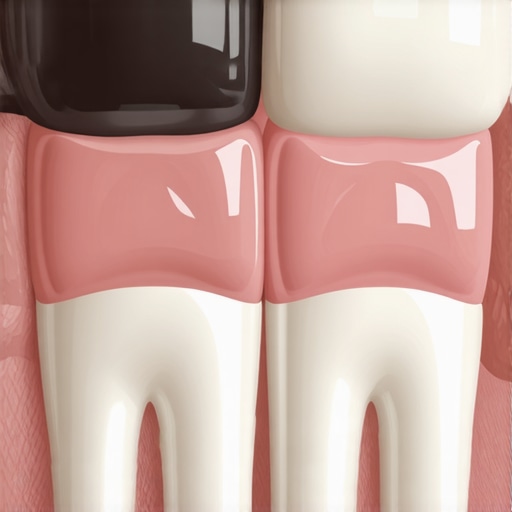
Many of us assume that a dark margin at the gumline means a cavity is eating away at the tooth. While leaking bacteria can cause issues, the most common culprit for that ‘black line’ is actually the metal framework of the crown itself showing through. According to the American Academy of Cosmetic Dentistry (AACD), as our gums naturally recede over time, the metal edge of a porcelain-fused-to-metal (PFM) crown becomes exposed. This is exactly why your gums look dark around an old metal fused crown. It’s essentially a shadow effect or the metal oxide leaching slightly into the tissue.
Is a dark gumline actually a dental emergency?
For most people, it is a cosmetic nuisance rather than a medical crisis. However, if that dark area is accompanied by a foul smell or a weird taste, you might be looking at a different issue altogether. Have you ever caught yourself hiding your smile in photos because of a dark spot you just couldn’t explain? I certainly have, and I know how much it can eat at your confidence. The good news is that cosmetic dentistry innovations have moved far beyond the metal-backed crowns of the 90s and early 2000s. We’re going to dive into the modern solutions that can restore that bright, healthy pink gumline and get your confidence back on track.
The first step toward fixing that shadowy margin is to determine exactly what you are looking at. Think of your crown like a vintage car; the exterior might look great, but if the frame is rusting, the paint will eventually bubble. In dental terms, we need to distinguish between a structural metal shadow and actual decay. You should start by learning how to tell if your crown is leaking and trapping bacteria, as this determines if you need a cosmetic fix or an urgent health intervention.
Identify Whether It is Metal or a Medical Issue
I remember sitting in the chair, clutching the armrests, while my dentist used a tiny explorer tool to feel around the edge of my old crown. He explained that if the tool ‘catches’ on a soft spot, we are dealing with a cavity. If it is smooth, we are just seeing the ‘collar’ of the metal. If your issue is purely cosmetic, you can take a breath—you have time to plan. However, if the area is tender, you might be facing the real cost of delaying a root canal if bacteria has reached the pulp. Once you know your gums are healthy, you can move into the fun part: picking a material that actually looks like a tooth instead of a dental appliance.
Upgrade to Metal-Free Materials for a Seamless Look
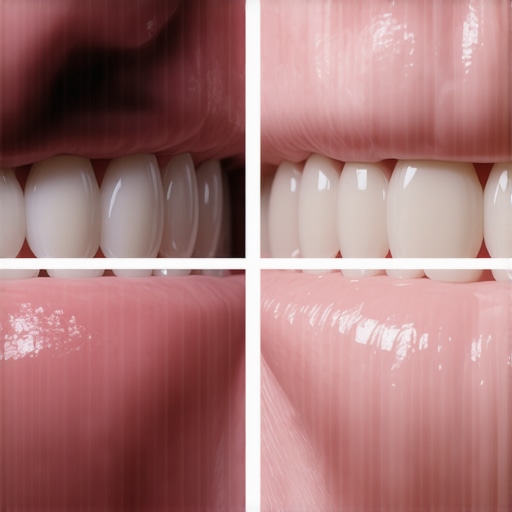
The biggest game-changer in expert cosmetic dentistry solutions is the shift away from metal-backed ceramics. Modern crowns are often made of solid Zirconia or E-max (lithium disilicate). These materials are translucent, meaning light travels through them just like it does through your natural enamel. When I finally swapped my front PFM crown for a Zirconia one, the difference was night and day. It was like switching from a heavy, matte theatrical makeup to a light, glowing skin tint. If you are debating between types, it helps to review dental crowns vs other restorations to see which material fits your bite strength and aesthetic goals.
The Process of Swapping Your Crown
Replacing a crown is more straightforward than most people think, but it requires precision. First, the old crown is carefully ‘sectioned’ or cut to pop it off without damaging the underlying tooth. I was worried this would be painful, but it felt more like a weird vibration than anything else. After cleaning the ‘stump’ of the tooth, your dentist will take a digital scan—no more of that goopy purple putty—to create a new masterpiece. While you wait for the permanent one, you will wear a temporary. Just be careful, because temporary crowns can keep falling off if you eat sticky candies. The goal of this phase is to ensure the new crown sits slightly below the gumline to prevent that dark line from ever returning. In the world of cosmetic dentistry trends for 2025, ‘biomimetic’ dentistry is the gold standard, where the restoration mimics the natural tooth structure so perfectly that even a dentist would have to look twice to see it.
One mistake I see people make constantly is thinking that a dental crown is a ‘set it and forget it’ shield. They treat it like a suit of armor for the tooth, assuming that once the porcelain is on, the work is done. But here is the contrarian truth: your crown is only as good as the tissue that holds it. Everyone says you just need better hygiene to fix a dark gumline, but in my experience, the most advanced mistake is actually over-cleaning with the wrong technique. If you are using a hard-bristled brush or a highly abrasive ‘whitening’ toothpaste on your restorations, you are likely accelerating gum recession. This is exactly how to tell if your gum recession is caused by brushing too hard rather than a lack of hygiene. You are essentially scouring the gums away from the crown margin, exposing the very metal or root structure you were trying to hide.
Is your gum biotype sabotaging your cosmetic results?
This is a question many patients don’t even know to ask, yet it is a frequent topic in high-level family dentistry. In the dental world, we talk about ‘biotypes’—essentially the thickness of your gum tissue. If you have a ‘thin’ biotype, even the most expensive all-ceramic crown can sometimes look slightly dark because the underlying tooth root (which might have darkened after a root canal) shows through the translucent tissue. A study published in the Journal of Prosthetic Dentistry highlights that the biological width and the thickness of the gingiva play a massive role in how light reflects off a restoration. If your dentist doesn’t account for your specific tissue type, you might find that why your porcelain veneers look opaque and unnatural in sunlight is due to the lack of light depth, not the material itself.
Another common ‘trap’ is ignoring the bite mechanics before swapping out an old crown. I’ve seen patients spend thousands on a new E-max crown to fix a gray line, only to have the new one chip or cause gum inflammation within a year because their jaw alignment was off. This is where the role of family dentistry in ensuring oral health for all ages becomes vital; it’s about looking at the whole mouth, not just one dark spot. If you are clenching your teeth at night, you are putting ‘lateral’ pressure on that crown, which causes the gum to pull away in defense. Before you rush into a cosmetic fix, make sure you aren’t dealing with the real reason your dental insurance won’t cover a replacement crown, which is often because the clinical necessity hasn’t been documented alongside the cosmetic desire. Have you ever fallen into this trap of fixing the look without fixing the cause? Let me know in the comments. We need to move beyond the surface-level fixes and look at the ’emergence profile’—how the tooth grows out of the gum—to ensure that once that dark line is gone, it stays gone for good. If you’re ready to look at a permanent solution that blends science with aesthetics, you can always contact us to discuss your specific case.
Once you have invested in expert cosmetic dentistry solutions to replace that old, gray-margined crown, the game shifts entirely to defense. I have learned the hard way that you cannot treat a high-end porcelain restoration the same way you treat a natural tooth. You are no longer just cleaning enamel; you are managing a biological-mechanical interface. To keep my smile looking fresh, I moved away from standard string floss and invested in a water flosser equipped with a specific ‘Plaque Seeker’ tip. This isn’t just about convenience; the tapered bristles are designed to reach into the microscopic crevices where the crown meets the tooth, areas where traditional floss can sometimes snag or fray.
The One Device That Saved My Gumline
I swear by electric toothbrushes with built-in pressure sensors. In my early days with crowns, I thought scrubbing harder meant cleaner teeth, but I was actually inviting recession. If you are unsure if your technique is destructive, look at the truth about how often you really need to replace your toothbrush; if your bristles are splaying out within a month, you are pressing too hard. Modern family dentistry experts now emphasize that ‘massage’ is better than ‘scrubbing’ for maintaining the seal of your restoration. According to research published in the Journal of Esthetic and Restorative Dentistry, the marginal integrity of monolithic zirconia is incredibly high, but its longevity is often compromised by ‘mechanical fatigue’ caused by aggressive hygiene habits and unchecked bite forces.
How do I maintain my dental crowns over time?
The secret isn’t just in the bathroom cabinet; it’s in how you sleep. If you have spent money on dental crowns explained as a solution for cracked teeth, you likely have a history of clenching. I never sleep without a custom night guard. If you have one, make sure you know the best way to clean your night guard so it doesn’t smell, because a bacteria-laden guard sitting against your new crowns all night is a recipe for disaster. Think of the guard as an insurance policy for your cosmetic investment. It prevents the ‘lateral shearing’ forces that cause the gums to recede and expose the very margins we worked so hard to hide.
What the Future Holds for Dental Restorations
Looking ahead, I predict we are moving toward a ‘smart’ era of cosmetic dentistry innovations. We are already seeing the rise of AI-driven intraoral monitoring, where you can take a photo of your crown with your smartphone and an app detects early signs of recession or margin leakage before they become visible to the naked eye. In the next few years, I expect 3D-printed bio-active crowns that actually release minerals to strengthen the underlying tooth to become the standard in the role of family dentistry in ensuring oral health for all ages. For now, your best bet is to be meticulous with your current tools. I highly recommend doing the ‘fingernail test’ tonight: gently run your nail from your gum down toward the crown. If you feel a sharp ‘catch’ or a ledge, that is your signal to contact us for a professional evaluation before a small cosmetic issue turns into a structural failure.
It took me years to realize that the ‘dark line’ wasn’t just a physical mark; it was a psychological weight. I spent far too much time covering my mouth while laughing, thinking I was just being ‘vain’ for caring about a millimeter of gray. The biggest lesson? Your smile is a vital part of your identity, and modern family dentistry recognizes that aesthetic comfort is just as important as structural health.
What I Discovered After Swapping My Old Metal Crowns
Reflecting on my journey from metal-fused porcelain to all-ceramic restorations, I realized that the ‘black line’ is often a confidence killer more than a health threat, but it acts as a permanent red flag for outdated tech. I also learned that not all gums are created equal; if you have a ‘thin biotype,’ you have to be even more selective about your material to avoid a grayish tint reflecting through the tissue. Finally, I realized that ‘preventative’ care for crowns looks different than care for natural teeth—it is about protecting that delicate gum-to-porcelain seal at all costs rather than just scrubbing away plaque.
My Daily Toolkit for a Shadow-Free Smile
#IMAGE_PLACEHOLDER_E#
If you want to keep your margins clean and your gums high, these are the tools I personally stand by: First, a high-quality water flosser is non-negotiable for flushing out the ‘sulcus’ around the crown where traditional floss might snag. Second, I only use extra-soft brush heads with pressure sensors; anything harder is just a recipe for recession. You should also check the truth about how often you really need to replace your toothbrush because a worn-out head can actually scratch the finish of your restorations. Lastly, a professional-grade night guard is the best way to prevent the micro-trauma that pushes gums away from the crown edge. Make sure you know the best way to clean your night guard so it doesn’t smell so you actually stay consistent with wearing it every night.
Reclaim the Joy of an Unfiltered Smile
The gray shadow that once plagued my smile is now a distant memory, and it can be yours too. Taking the leap to transform your look with expert cosmetic dentistry solutions isn’t just about vanity—it is about the radical confidence that comes with knowing your teeth look healthy and natural in any light. You deserve to speak, laugh, and eat without that nagging feeling of self-consciousness. If you are tired of that dark margin, don’t hesitate to contact us and start the journey toward a brighter, more seamless smile today. Have you noticed a dark line starting to form around your older dental work? Let me know your experience in the comments below!