I still remember the Tuesday morning I looked in the mirror and saw something that definitely wasn’t there when I went to bed. A thin, dark line of metal was peeking out from the base of my front tooth implant. My heart sank. I’d spent thousands on my smile, and suddenly it looked like I had a piece of lead stuck in my gums. I made the classic mistake of thinking I could just ignore it or that maybe I was just brushing too hard. Spoiler alert: ignoring it just made the anxiety worse. If you’re staring at a gray shadow or a visible post right now, take a deep breath. You aren’t alone, and it doesn’t always mean the whole thing is failing. Today, I’m going to walk you through exactly why your gum line is pulling back and how we can get your confidence back.
The Panic of Seeing Metal in Your Smile
When I first started my journey with top cosmetic dentistry trends, I expected perfection to last forever. But the reality of dental work is that our bodies are constantly changing. That visible metal isn’t just a cosmetic annoyance; it’s a signal. Maybe it’s gum recession, or perhaps the bone underneath is thinning. Early on, I didn’t realize that why your gums are receding in only one area could be specifically linked to how the implant was placed years ago. Have you noticed your gums shifting lately, or is this a brand-new surprise for you? I’ve been through the mirror-check obsession too, so let’s get to the bottom of it.
Is a visible implant actually a sign of total failure?
This is the big fear, right? We assume that if we can see the metal, the implant is headed for the trash bin. According to the American Academy of Periodontology, while gum recession around an implant is a serious concern, it often stems from peri-implant mucositis—an inflammation that is often reversible if caught early. You might be wondering how to tell if your dental implant is failing or if you’re just dealing with a minor setback. In my case, I waited way too long to ask my dentist about it, which meant more expensive fixes later. Don’t make that same mistake.
Why Your Gums Decided to Retreat
There are a few main culprits when it comes to disappearing gums. Sometimes the tissue is just naturally thin and can’t support the weight of the crown over time. In other cases, it’s about the angle of the post itself. If you’ve ever noticed the reason gums look dark around an old dental crown, the mechanics are actually quite similar. The gum tissue loses its grip, and suddenly the “secret” part of your dentistry is out in the open. It’s frustrating, but identifying the cause is the first step toward a solution that actually lasts.
Take These Immediate Steps Before You Panic
The moment you see that gray line, your first job is ‘triage.’ Think of your implant like a deck post in the ground; if the soil (your gums) washes away, the post is still solid, but it looks terrible. First, check for mobility. Gently—and I mean gently—use a clean finger to see if the crown moves. If it does, you might be dealing with why your dental implant crown feels loose after several years, which is often just a screw that needs tightening. Second, look for ‘bleeding on probing.’ If your gums bleed every time you brush that specific spot, you’ve got inflammation that needs a professional deep cleaning rather than a surgical overhaul. I remember sitting in the waiting room, heart hammering, clutching a printout of every worst-case scenario. I was convinced my entire jawbone was melting away. When I finally got in the chair, my dentist didn’t reach for the drill; he reached for a mirror and explained that my ‘metal line’ was actually just the result of my aggressive brushing habits—I was essentially using my toothbrush like a piece of sandpaper on a fine furniture finish.
The Quick Fix With a New Crown
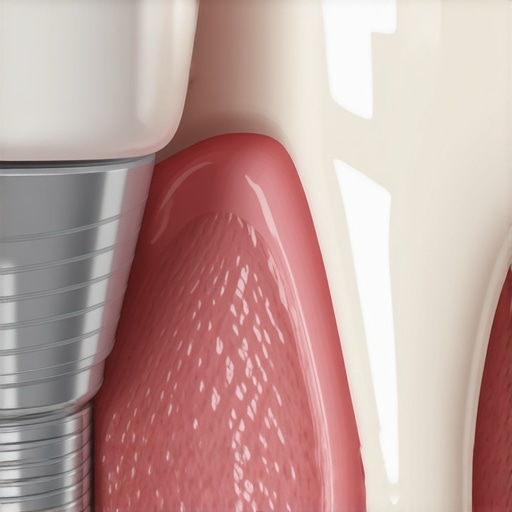
Sometimes the solution isn’t surgery; it’s better engineering. When my own metal line appeared, it turned out the original crown was too narrow for the space. We used expert cosmetic dentistry solutions to design a custom porcelain crown with a ‘pink porcelain’ base. This clever trick adds a tiny bit of gum-colored ceramic to the bottom of the tooth to hide the metal without needing a graft. If you’re confused about how these pieces fit together, check out dental crowns explained for a breakdown of the materials. Often, the dark shadow you see is simply a reflection issue, much like why your gums look dark around an old metal fused crown. By switching to an all-ceramic or zirconia abutment, the metal is replaced with a material that mimics the natural white of a tooth root.
How to Stop the Recession from Getting Worse
Once you’ve addressed the visible metal, you have to protect the remaining tissue. Think of your gums like a delicate silk scarf; once they start to fray, you have to handle them with extreme care. Switch to an extra-soft toothbrush immediately and stop the horizontal ‘sawing’ motion that many of us were taught as kids. Use soft, circular movements that massage the tissue toward the tooth. This is where the role of family dentistry becomes vital—it’s about those regular checkups where a pro can spot a millimeter of movement before it becomes a visible gap in your smile. If you can catch the recession early, a simple change in your hygiene routine can halt the progress of the metal exposure entirely.
Consider Non-Surgical Gum Contouring
If the recession is minor, your dentist might suggest laser therapy or even dermal fillers to plump the tissue back up. This is a great way how to fix a gummy smile without surgery or, in this case, to build up a receding area. My dentist used a small amount of filler to ‘re-bulk’ the area around my front tooth, and it effectively acted as a dam to keep the metal post hidden for another three years. While it’s not a permanent structural fix, it’s a brilliant way to regain your confidence while you decide on a more long-term restorative plan. Every tooth and every mouth is different, but the goal is always the same: keep that titanium hidden and that smile looking natural.
Let’s dig deeper into why that metal line is actually appearing, because it’s rarely as simple as ‘brushing too hard.’ Most people—and even some general dentists—assume that if you see metal, you just need a gum graft. But in my experience, throwing surgery at a problem without addressing the underlying mechanics is a recipe for a very expensive failure. We need to talk about your ‘gingival biotype.’ This is a fancy way of saying some of us are born with thick, resilient gum tissue, while others have tissue as thin as tissue paper. If you have a thin biotype, the shadow of the metal post can show through even if the gums haven’t moved a millimeter. It’s similar to why your porcelain veneers look opaque and unnatural in sunlight; the way light interacts with the materials beneath the surface changes everything.
Why Thin Gums Are Often Misdiagnosed as Poor Hygiene
Everyone says that gum recession is always the patient’s fault for not flossing, but that’s a myth I want to bust right now. A study published in the Journal of Clinical Periodontology highlights that ‘biological width’—the specific amount of space nature requires between the bone and the gum line—is often violated during the initial implant placement. If the implant was placed too shallow, your body will naturally move the gums back to create that necessary gap. This isn’t a hygiene failure; it’s a biological response. When you are understanding dental crowns when and why they are needed, you have to look at the foundation first. If the foundation was built in a way that ignores these biological rules, the metal will eventually win the tug-of-war with your gums.
Can the material of your abutment cause that dark shadow?
This is the question most patients don’t know to ask. The abutment is the connector piece between your implant and your crown. Most are made of titanium, which is great for strength but terrible for aesthetics in the ‘smile zone.’ If your dentist used a standard metal abutment, that gray hue is likely reflecting through the gum tissue like a bruise. The advanced fix is switching to a zirconia abutment. Zirconia is tooth-colored, so even if your gums are thin or recede slightly, the ‘show-through’ is white or ivory instead of industrial gray. It’s a nuance that separates standard care from high-end cosmetic results. Have you ever fallen into this trap of focusing only on the crown and ignoring the metal underneath? Let me know in the comments.
Don’t Ignore the Leaking Crown Trap
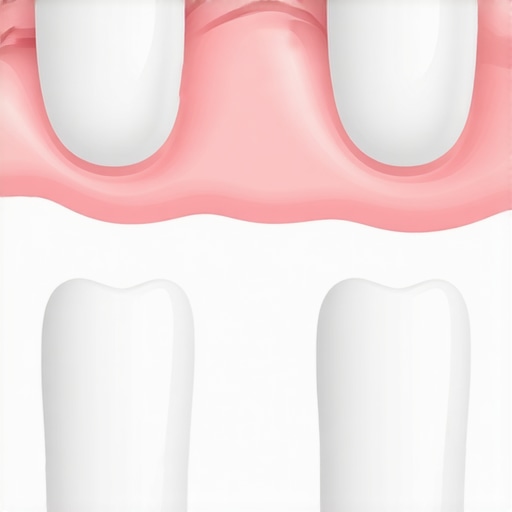
Here is the ‘oops’ factor that many people miss: sometimes that dark line isn’t the implant post at all, but rather bacteria and debris trapped under a poorly fitted crown. You need to know how to tell if your crown is leaking and trapping bacteria because this can cause localized inflammation that literally eats away at the gum tissue. If you notice a foul taste or a specific smell when you floss that area, you aren’t just dealing with a cosmetic metal line; you’re dealing with a slow-motion infection. This is where family dentistry guide building a lifetime of healthy smiles becomes practical—it’s about catching these micro-leaks before they compromise the bone. Also, be wary of aggressive treatments if you have other sensitivities; for instance, the truth about fluoride treatments for adults with thin enamel suggests that we need to be gentle with all our dental surfaces. Treat your implant site like a high-performance engine: it needs precision parts and a very specific environment to run without rattling.
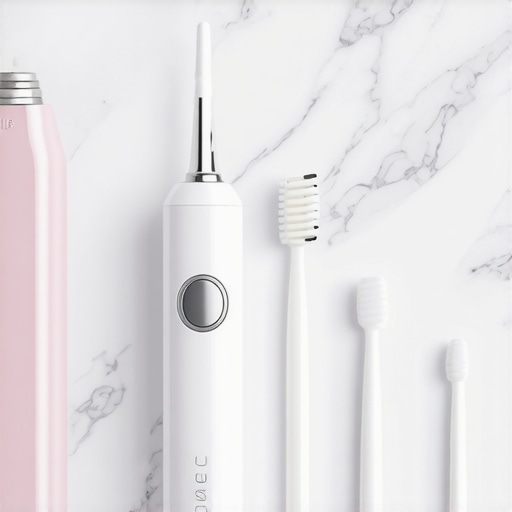
I switched to a Waterpik Aquarius with the ‘Plaque Seeker’ tip specifically because standard floss just doesn’t hug the neck of a titanium post the way it should. If you are dealing with a visible metal line, your tool kit is your first line of defense. I personally keep my water flosser on the ‘massage’ setting at a level 4; it’s enough to clear the biofilm without blasting the delicate tissue away from the crown. According to the Misch International Implant Institute, maintaining the health of the crestal bone is the absolute foundation of long-term success. If you aren’t using interdental brushes—those tiny ‘tree’ brushes—you are leaving behind the very bacteria that causes the gums to retreat in the first place. This is where family dentistry guide building a lifetime of healthy smiles becomes a daily reality rather than just a slogan.
Stop using standard floss for your implants
The problem with traditional string floss is that it can actually shred and leave tiny fibers behind, which then act as a wick for bacteria right at the gum line. I learned this the hard way when my dentist found a ‘floss trap’ during a deep cleaning. Now, I only use specialized implant-safe floss or my water flosser. You also need to be religious about the truth about how often you really need to replace your toothbrush because a frayed bristle is basically a jagged edge that irritates the gums. I replace my sonic head every eight weeks without fail. This level of detail might seem obsessive, but when you have thousands of dollars invested in dental crowns explained as permanent solutions, those eighty days matter.
How do I keep my dental work from aging faster than I do?
Maintenance is about more than just brushing; it’s about managing the forces in your mouth. If you clench your teeth at night, you are putting immense pressure on that implant, which can cause the bone to resorb and the gums to follow. I use a custom-fitted night guard every single night, and I make sure to follow the best practices on the best way to clean your night guard so it doesnt smell to avoid introducing new bacteria to my mouth. Long-term results come from a partnership between you and your provider. This is why the role of family dentistry is so vital; they see the subtle shifts in your bite before they lead to a visible gray line at your gum. I’ve found that even a minor adjustment to my bite every two years has kept my front-tooth implant stable and hidden for over a decade.
The high-tech future of the smart smile
Looking ahead, we are moving toward a world where your dentistry talks back to you. When looking at top cosmetic dentistry trends for 2025, I expect to see ‘smart’ crowns equipped with tiny biosensors that can detect changes in acidity or bacterial load before you ever see a physical change in the mirror. This will take the guesswork out of maintenance. Until then, the best thing you can do is be proactive. If you see even a hint of gray, don’t wait for your next cleaning. Call your dentist and ask about a zirconia abutment swap. It was the single best decision I made for my confidence. My challenge to you: tonight, swap your manual floss for an interdental brush and see how much more ‘stuff’ you’ve been leaving behind. Your gums will thank you within 48 hours.
The Hard Truths About Long-Term Implant Success I Learned the Hard Way
Reflecting on my decade-long journey with a front-tooth implant, there are a few things I wish I had known before that first gray shadow appeared. First, your gum health isn’t a static destination; it is a daily negotiation between your body and the materials in your jaw. I realized that cosmetic dentistry innovations to watch aren’t just for new patients; they are upgrades we can apply to our existing work to improve both look and feel. Second, the type of material used for the connector matters just as much as the tooth itself. Finally, don’t assume your insurance will jump to help if the issue is purely aesthetic; knowing the real reason your dental insurance wont cover a replacement crown helps you budget for those elective aesthetic tweaks before they become emergencies.
My Daily Survival Kit for a Flawless Implant Gum Line
I have tested dozens of products, but these are the three that actually kept my recession from progressing. I swear by the Waterpik Aquarius with the Plaque Seeker tip because it flushes out the biofilm that manual flossing often misses. If you are debating your options for a repair, check out dental crowns vs other restorations to see how different materials like zirconia can be game-changers for long-term maintenance. Finally, a dedicated night guard is non-negotiable; reducing the sheer force on your gums from clenching is the only way to keep that tissue from pulling back over time.
You Deserve to Smile Without Checking the Mirror Every Ten Minutes
Seeing metal where a tooth should be can feel like a blow to your self-esteem, but remember that modern expert cosmetic dentistry solutions are more capable than ever of hiding these imperfections. You have done the hard work of investing in your health; now it is just about fine-tuning the results. Take that first step and talk to a specialist about your abutment material or a potential gum-grafting consult. Your confidence is worth the conversation. Have you noticed a change in your gum line since your implant was first placed? Let me know in the comments below!