I was thirty-two, sitting in a dimly lit Italian restaurant, when I felt my stomach drop faster than the piece of crusty bread I’d just bitten into. It wasn’t the bread that was the problem; it was the sickening shift I felt in my jaw. My dental bridge, the one I thought was a genius way to save money, was wobbling. It felt like a loose floorboard in a house I’d just bought. In that moment, I realized my mistake. I had sacrificed two perfectly healthy teeth—shaved them down to nubs—to support a bridge that was now failing me. I didn’t just need a fix; I needed to understand why I hadn’t chosen an implant from the start.
Stop Trading Healthy Teeth for a Temporary Fix
Choosing between a bridge and an implant isn’t just about filling a gap; it’s about the future of your entire face structure. When I first looked into dental crowns vs other restorations which is right for you, I was blinded by the lower upfront cost of a bridge. I didn’t realize that a bridge is essentially a faked tooth suspended between two crowned teeth. According to the American Academy of Implant Dentistry, dental implants are the only restoration option that actually preserves natural bone by stimulating it. Without that root-like structure, your jawbone slowly begins to deteriorate. I’m here to help you avoid the same expensive lesson I learned. We’re going to dive into why the implant is the superior choice for your long-term health and how expert cosmetic dentistry solutions can actually save you money over the next decade. Have you ever felt like you were just putting a band-aid on a bigger dental problem?
Is the surgical process really as scary as it sounds?
The biggest thing that held me back was the fear of the screw. I imagined a construction site in my mouth. But here is the truth: the discomfort I felt when I had to handle a loose dental bridge before my next appointment was far worse than the controlled, professional placement of an implant. If you learn the secret to keeping your dental implants healthy for life, you realize it’s a one-and-done deal, unlike bridges which often need replacement every few years. My mistake was thinking about the now instead of the forever. I was so worried about the real reason your crown feels loose when you chew gum that I ignored the only solution that stays put. Setting the stage for a lifetime of healthy smiles starts with choosing the right foundation.The first step I took wasn’t just getting a replacement; it was getting a high-tech map of my mouth. You can’t build a skyscraper on sand, and you can’t put an implant in a jaw that’s already thinned out. When I went to my family dentistry specialist, they used a 3D CBCT scan to see the exact density of my bone. I was shocked to see that the gap where my bridge sat was already losing volume. This is why you must act fast. If you wait, you might need a bone graft, which sounds intense but is really just adding ‘soil’ back to the site so the ‘anchor’ can hold. #IMAGE_PLACE_HOLDER_B#
Map Out Your Jawbone Like a Construction Site
Check for Hidden Bone Loss Before You Start
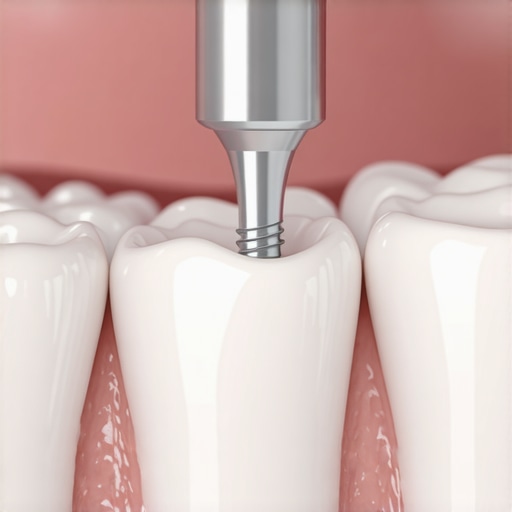
If you’ve ever wondered the hidden reason your gums look dark around an old dental crown, it’s often because the metal base is showing through thinning tissue. An implant stops this. It acts as a fake root, telling your body ‘hey, there’s still a tooth here, don’t reabsorb this bone.’ I remember looking at my scan and seeing a literal dip in the ridge where my bridge had been. The ‘meat’ of the procedure involves placing a titanium post directly into that bone. It’s not like driving a screw into wood; it’s more like a biocompatible anchor that your body eventually grows into.
Stop Sacrificing Healthy Neighbors
This was the hardest pill for me to swallow. To get a bridge, my dentist had to grind down two perfectly good teeth on either side. It felt like burning down two houses just to build a porch between them. With an implant, your neighboring teeth stay untouched. They remain strong and independent. This is a core tenet of expert cosmetic dentistry solutions—preserving as much natural tooth structure as possible. When you look at dental crowns explained the ultimate solution for damaged teeth, you realize that while a crown is great for a broken tooth, using them to support a bridge is asking for trouble down the road. You’re essentially overloading two teeth to do the work of three, which leads to fractures and more dental visits.
Keep Your Restoration from Spinning or Shifting
One of the most annoying things about my bridge was how food got trapped underneath. It felt like a constant maintenance project. An implant-supported crown behaves just like a real tooth. You can floss it normally. No special threaders, no weird maneuvers. I learned the secret to keeping your dental implants healthy for life is remarkably simple: treat it like a natural tooth, but with even better hygiene. You also need to know how to tell if your dental implant is actually healing correctly. The ‘meat’ of the recovery isn’t sharp pain—it’s patience. The bone needs to fuse to the metal, a process called osseointegration. If you rush it, you’re back to square one with a wobbly piece of metal. Once it’s fused, it’s part of you. It’s the difference between a temporary fix and a permanent upgrade that restores 100% of your biting force, something no bridge can ever claim.
I used to think a crown was like a suit of armor—once it was on, the tooth inside was invincible. That’s the biggest lie in family dentistry. In reality, a crown is only as good as the seal at the gum line. If that seal isn’t perfect, you’re just trapping a slow-motion disaster. Most people assume that if the porcelain looks white and pretty, the job is done. But I’ve learned that revamp your smile top cosmetic dentistry trends for 2025 focus more on the ‘biomimetic’ approach—mimicking nature—rather than just slapping on a cap. The ‘Oops’ factor here is huge: many patients ignore a tiny bit of sensitivity, not realizing they need to how to tell if your crown is leaking and trapping bacteria. By the time you feel real pain, the tooth underneath could be mush.
The Porcelain Trap Nobody Warns You About
Common wisdom says ‘if it’s broken, crown it.’ But here’s my contrarian take: sometimes a crown is the worst thing you can do for a stressed tooth. Every time a dentist drills, they’re removing ‘dentin’—the flexible part of the tooth that absorbs shock. If they take too much, the tooth becomes brittle. This is why understanding dental crowns when and why they are needed is a conversation you must have with your provider. Don’t let someone drill just because insurance covers it. I’ve seen people lose teeth because they opted for a full crown when a simple onlay would have preserved the structural integrity.
Can a crown actually hide a fracture until it’s too late?
This is the nightmare scenario for many. According to a study published by the American Association of Endodontists, cracked tooth syndrome is one of the most difficult things to diagnose because the symptoms are so inconsistent. A crown might stop the tooth from flexing and hurting in the short term, but if there’s a vertical fracture heading toward the root, you’re just burying the problem. You need to know how to tell if your tooth sensitivity is actually a hidden fracture before committing to expensive cosmetic dentistry. If the root is split, that fancy porcelain is money down the drain. Have you ever fallen into this trap of fixing the surface while the foundation was crumbling? Let me know in the comments.
Look Past the Pretty Margins
Another nuance is the ‘dark line’ mystery. If you’ve noticed your smile looks aged, it might be why your gums look dark around an old metal fused crown. Modern expert cosmetic dentistry solutions have moved away from metal-fused porcelain for a reason. All-ceramic options allow light to pass through, making the tooth look alive. But the ‘trap’ isn’t just the metal; it’s the recession. If your family dentistry team isn’t checking your bite alignment, that crown will eventually ‘push’ against the gum, causing it to retreat. It’s a chain reaction that starts with a poorly fitted restoration. Don’t just settle for ‘looks good’; demand ‘fits right.’
After you’ve invested thousands into your smile, the last thing you want is for a piece of porcelain to fail because of a simple maintenance oversight. I used to think that once the dentist glued everything in, my job was over. I was wrong. The real work happens in your bathroom every morning. I’ve found that traditional waxed floss often isn’t enough for complex dental work. It can shred or, worse, fail to reach the microscopic ‘biofilm’ that gathers around the base of an implant. This is why I swear by the Waterpik with the ‘Pik Pocket’ tip. Unlike the standard tip, this one is designed to deliver water or antimicrobial rinses deep into the periodontal pockets where bacteria love to hide. If you don’t stay on top of this, you’ll find yourself searching for how to clean your dental bridge to prevent chronic gum disease much sooner than you think.
Stop Shoving String into Gaps That Don’t Exist
One of the hardest parts of my journey was realizing that my new restorations required a different strategy than my natural teeth. With expert cosmetic dentistry solutions, the fit is so precise that standard flossing can sometimes feel like you’re trying to force a rope through a needle. I switched to interdental brushes—specifically the ones with a soft rubber coating. They slide between the teeth without traumatizing the gums. Dr. Gordon Christensen, a world-renowned expert in clinical dentistry, has highlighted in his Clinicians Report that the longevity of a restoration is almost entirely dependent on the ‘biological seal’ maintained by the patient. If that seal breaks, bacteria enter, and the foundation rots. This is especially true for implants. You must learn the secret to keeping your dental implants healthy for life: it’s about consistent, gentle irrigation, not aggressive scrubbing.
How do I keep my smile working for the long haul?
Maintenance isn’t just about cleaning; it’s about protection. If you’re a ‘grinder’ like me, your beautiful new crowns are at constant risk of fracturing. I never go to sleep without my custom-fitted night guard. It’s the best insurance policy you can buy for your mouth. However, you can’t just throw it in a drawer during the day. You have to know how to clean a night guard without using harsh chemicals or bleach to ensure you aren’t introducing new bacteria to your mouth every night. Over time, even the best the secret to making your dental bonding last more than five years comes down to how much force you’re putting on those materials while you sleep.
The Future of Teeth Is Digital and Data-Driven
Looking ahead, the way we maintain our dental health is shifting toward real-time monitoring. I predict that within the next few years, we will see ‘smart’ toothbrushes that use AI to detect the early chemical signals of a leaking crown before a human eye can even see it. We are already seeing revamp your smile top cosmetic dentistry trends for 2025 move toward 3D-printed biocompatible scaffolds that actually encourage your own cells to repair minor defects. For now, my advanced tip for you is this: stop using whitening toothpastes on your restorations. They contain abrasive silicas that can micro-scratch the glaze on your porcelain, making it lose its luster and pick up stains faster. Switch to a non-abrasive gel to keep that high-gloss finish for decades. Give it a try for one week and notice the difference in how ‘slick’ your teeth feel.
Lessons From the Dentist’s Chair I Won’t Forget
Reflecting on my dental journey, I realized that the cheapest option is often the most expensive in the long run. When I was deciding on dental crowns vs other restorations which is right for you, I ignored the value of my own jawbone. One lightbulb moment for me was realizing that every time you replace a bridge, you risk losing more of those anchor teeth. It’s a cycle of repair rather than a solution of restoration. Another truth? The confidence of a tooth that doesn’t ‘wiggle’ when you eat a steak is worth every penny of the initial investment. I wish I had known that family dentistry isn’t just about cleaning; it’s about structural engineering for your face.
The Tools I Use to Protect My Investment
Maintaining high-end dental work requires more than just a manual toothbrush. I’ve curated a small but mighty toolkit that keeps my smile intact. First, I never skip my custom night guard. Learning how to clean a night guard without using harsh chemicals or bleach ensured I wasn’t damaging the material or my gums. Second, interdental brushes are non-negotiable for anyone with crowns or implants; they reach the ‘blind spots’ that floss often misses. Finally, I trust my regular check-ups at a clinic that understands the nuances of family dentistry guide building a lifetime of healthy smiles to catch tiny leaks before they become disasters.
Take the Leap Toward a Lifetime of Confidence
Choosing to fix your smile is an act of self-care that ripples through every part of your life. Whether you are looking into expert cosmetic dentistry solutions for the first time or replacing an old bridge, remember that you deserve a foundation that lasts. Don’t let the fear of the chair stop you from the joy of a healthy mouth. If you’re ready to start your journey, feel free to contact us and see what’s possible for your unique smile. Are you leaning more toward an implant or a bridge after hearing my story? Let me know in the comments below!