There I was, halfway through a medium-rare ribeye, when I felt a sickening “clink” against my fork. It wasn’t a bone. It was my brand-new temporary crown, looking back at me from the edge of my plate. I’ll be honest: I panicked. My tongue immediately went to the jagged stump of a tooth, and I felt exposed, vulnerable, and a little bit grossed out. If you’re reading this, you’re probably sitting there with a gap in your smile and a piece of plastic in your hand, wondering if your whole dental plan just went up in smoke. Don’t worry; I’ve been in that chair more times than I’d like to admit. Whether you were enjoying a steak or just a piece of bread, knowing what to do when your temporary crown pops off during dinner is the difference between a minor inconvenience and a weekend-ruining emergency. Today, I’m going to walk you through exactly why this happens and how to keep your tooth safe until you can see your dentist. Have you ever felt that sudden, sinking feeling of a dental restoration failing in the middle of a meal?
The Panic of the Mid-Meal Pop
Temps are the ultimate bridge between discomfort and a beautiful smile, but they are notoriously finicky. When my first one fell out, I made the classic rookie mistake: I tried to ignore it for two days. Big mistake. Your tooth underneath is like a raw nerve exposed to the world. It’s sensitive to cold, heat, and even the air you breathe. This happens because, as understanding dental crowns teaches us, the prep work involves removing enamel, leaving the dentin vulnerable. According to the American Dental Association (ADA), temporary crowns are specifically designed with “temporary” cement meant to be weak enough for the dentist to pop the crown off easily later. Unfortunately, that also means a particularly sticky piece of gum or a tough crust of bread can do the job prematurely.
Is it really an emergency if it doesn’t hurt?
You might be tempted to just wait until your next scheduled appointment, especially if you aren’t in pain. I thought the same thing. But without that cap, your other teeth can actually start to shift. Even a millimeter of movement can mean your permanent crown won’t fit when it finally arrives from the lab. This is where the role of family dentistry becomes so vital; your dentist isn’t just fixing a hole, they are maintaining the architecture of your entire mouth.
Stop! Don’t reach for the superglue
In my moment of desperation, I actually considered using a tiny drop of superglue to fix the problem myself. I am so glad I didn’t. You need to understand the real danger of using superglue on a broken denture or crown—the chemicals are toxic and you can cause permanent damage to your living tooth tissue. Instead, we’re going to look at safe, temporary fixes that will hold you over for 24 hours. We are going to solve this together, step by step, so you can stop worrying about your tooth and get back to your life.
Retrieve and inspect your lost tooth
The very first thing you need to do—after you’ve stopped the internal screaming—is find the crown. If it’s still in your mouth, spit it out gently. If you accidentally swallowed it, don’t panic, but you will need to call your dentist immediately as you’ll need a new one fabricated. Once you have it, look at it closely. Is it hollow? It should look like a little hat for your tooth. If there’s a piece of your actual tooth stuck inside it, that changes things; that’s a structural break, and you need an emergency appointment. Most of the time, it’s just the dental crowns explained as simple shells that lost their grip. Think of it like a hubcap falling off a car; the car still runs, but the axle is exposed to the elements.
Clean the crown like your smile depends on it
Before you even think about putting it back, you need to sanitize. I remember one time I was at a wedding, and my temp popped off during the salad course. I rushed to the bathroom and realized I couldn’t just shove it back in with vinaigrette still on the prep. You need to gently brush the inside of the crown with a toothbrush to remove old cement. Use a little bit of water or even a tiny drop of soap, but rinse it thoroughly. Do the same for the tooth stump in your mouth. If the area is sensitive, use lukewarm water—ice-cold water on an exposed nerve feels like a lightning bolt to the brain. This is a crucial part of the role of family dentistry in your daily life: maintaining hygiene even in a crisis.
The 60-second fix using temporary cement
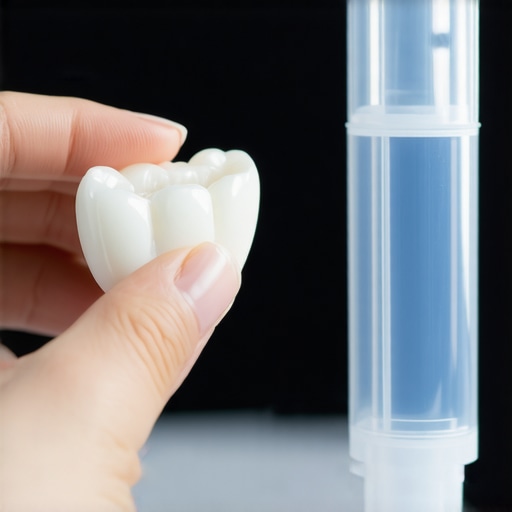
Now for the technical part. You can find “temporary tooth repair kits” at almost any 24-hour pharmacy. These kits contain a zinc oxide cement that is remarkably similar to what your dentist uses. If the pharmacy is closed, a tiny dab of toothpaste or even denture adhesive can work as a “friction fit” in a pinch. When I was stuck in a hotel in Chicago, I used a tiny smear of toothpaste just to keep the crown in place so the air wouldn’t hit the nerve. It wasn’t perfect, and I had to be careful not to chew on that side, but it bought me twelve hours of peace. Put a small amount of the cement inside the crown, line it up, and bite down gently. If it feels “high” or your bite is off, take it out and try again. You don’t want to force it and end up with a small chip in your front tooth from uneven pressure.
Why you can’t just leave it in your pocket
The temptation to just leave the crown in a tissue until Monday is real. Resist it. Your teeth are constantly in a slow-motion race; without the crown acting as a spacer, the teeth on either side will start to lean into that open gap. Even the real reason your crown feels loose often comes down to the fact that the underlying structure is under constant pressure from your bite. If the teeth shift even a fraction of a millimeter, your permanent crown—which was built for your mouth’s exact current dimensions—won’t fit. Then you’re looking at more drilling and more impressions. If you’re traveling, knowing how to handle a dental emergency when you are out of town becomes your most valuable skill. Keep that space held open, keep the nerve covered, and keep your dentist’s number on speed dial.
The Hidden Architecture Behind Your Smile
Most people view their local clinic as a place for simple checkups, but when a crown fails, you quickly realize that family dentistry is actually an exercise in high-stakes structural engineering. There is a common myth that ‘cosmetic’ work is just for vanity, while ‘restorative’ work is for function. In my experience, the two are inseparable. When exploring expert cosmetic dentistry solutions, the real magic isn’t in the color of the porcelain, but in the margin where the tooth meets the gum. If that margin isn’t perfect, you end up with the hidden reason your gums look dark around an old dental crown—which is often a sign of bacterial seepage or oxidized metal rather than just a cosmetic flaw.
The DIY Cement Trap to Avoid
Here is the ‘oops’ factor most people encounter: the ‘more is better’ approach to temporary glue. When you are re-seating your own crown at home, the natural instinct is to fill the entire cap with cement. Don’t do it. Excess cement can prevent the crown from seating fully against the prep. This creates a ‘high’ spot that puts immense pressure on the periodontal ligament. A study published in the Journal of Prosthetic Dentistry highlights that even minor occlusal discrepancies—a bite that is off by less than a millimeter—can lead to significant temporomandibular joint (TMJ) strain within just 48 hours. This is why your jaw clicks more when you are chewing gum or even just talking when a restoration is slightly out of alignment.
Can a Misaligned Temporary Cause Permanent Nerve Damage?
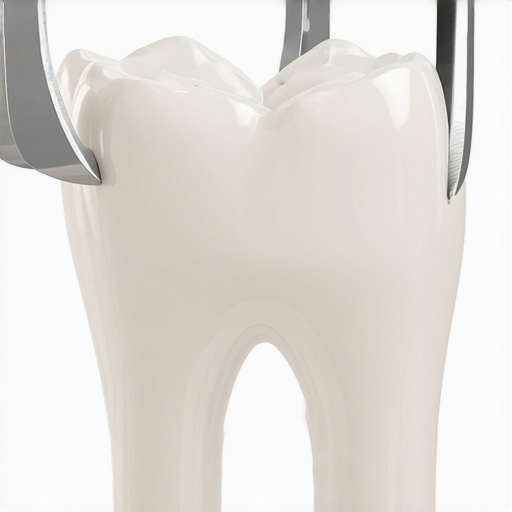
It sounds dramatic, but it is a legitimate concern for advanced dental health. When you force a crown back on and your bite feels ‘weird,’ you aren’t just uncomfortable; you are traumatizing the nerve at the base of the tooth. This trauma can lead to pulpitis, which might turn a simple crown procedure into a mandatory root canal. This is why comparing dental crowns vs other restorations is so important; sometimes, a more conservative onlay or inlay is safer if the tooth structure is compromised. You need to stay ahead of the curve by looking at cosmetic dentistry innovations to watch, as modern materials allow for much thinner, more forgiving temporaries that protect the nerve better than the old-school acrylics.
The nuance that most people miss is that a temporary crown isn’t just a placeholder; it’s a diagnostic tool. If you can’t keep a temp on, it tells the dentist that the preparation might need to be modified for the permanent one to have enough mechanical retention. Have you ever fallen into this trap where a ‘simple’ fix turned into a week-long jaw ache? Let me know in the comments.
Once you’ve successfully navigated the panic of a lost temporary and finally had your permanent crown seated, the real work begins. I used to think a crown was like a ‘reset’ button for a tooth—once it’s capped, it’s invincible, right? Wrong. The reality is that the margin where the porcelain meets your gum is the most critical real estate in your mouth. If you don’t maintain that seal, you’re looking at recurrent decay underneath the very thing you just paid thousands to install. This is where family dentistry guide transitions from repair mode into lifelong preservation.
The toolkit that actually saves your enamel
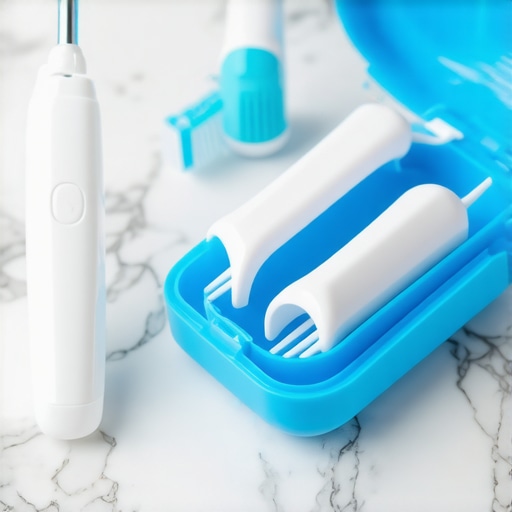
I don’t just use standard floss anymore; it catches on the margins and can eventually weaken the cement. Instead, I’ve switched to a Waterpik Cordless Advanced on the ‘low’ setting combined with interdental brushes. Why? Because the pulsed water clears out the microscopic debris that a string simply skips over. If you have a bridge, this isn’t optional. Knowing how to clean your dental bridge to prevent chronic gum disease is the difference between a restoration that lasts five years and one that lasts twenty. I also recommend a high-alkaline cleaning solution if you wear a night guard to protect your new porcelain from grinding.
Professional scaling isn’t just a cleaning
When you go in for your six-month checkup, ensure your hygienist is using plastic or resin-tipped scalers around your crowns or implants. Metal scalers can create micro-scratches on the porcelain surface, which then act as a magnet for plaque. This attention to detail is why the role of family dentistry is so paramount; they understand the specific materials used in your mouth. If you experience discomfort afterward, don’t ignore it, but do learn how to manage tooth sensitivity after a deep cleaning to stay comfortable during the recovery phase.
How do I keep my dental work from failing prematurely?
The secret is managing ‘occlusal load’—basically, how hard you bite. Even the strongest ceramic can fail if you are a night-time grinder. According to Dr. Gordon Christensen of Clinicians Report, porcelain fracture is the leading cause of restoration failure, often due to undetected bruxism. I personally use a custom-fitted occlusal guard every single night. It’s a small price to pay to protect a full set of dental crowns explained as long-term investments. Also, make sure you know the best way to clean your night guard so it doesn’t smell, because a dirty guard will just introduce bacteria back into your gums.
The 2025 shift toward chairside milling
The trend is moving away from the ‘two-visit’ crown model entirely. We are entering an era of high-precision chairside milling where AI-driven software like the CEREC Primemill can fabricate a permanent restoration with a marginal fit of less than 25 microns in under ten minutes. This means fewer temporaries to lose at dinner parties. As you look into top cosmetic dentistry trends for 2025, you’ll see that convenience and precision are finally merging. If you’re currently dealing with a sensitive tooth, I urge you to try this: swap your whitening toothpaste for a nano-hydroxyapatite paste for two weeks. It literally plugs the tubules in your dentin and provides a much more stable foundation for any future expert cosmetic dentistry solutions you might choose.
The Hard Truths About Temporary Teeth I Learned the Hard Way
Through my own trials and errors with various restorations, I’ve realized that temporary crowns are far more delicate than most people assume. One thing I wish I’d known earlier is that these caps are highly porous; they can absorb pigments from coffee or red wine much faster than your natural enamel or a permanent porcelain unit. This means a quick rinse isn’t just about hygiene; it’s about protecting the look of your smile while you wait.
Furthermore, I learned that a simple saltwater rinse is your secret weapon for calming the gum tissue around the prep site. Most importantly, don’t play with the gap. Your tongue will be naturally curious, but messing with the exposed tooth can increase sensitivity and potentially introduce bacteria into the dentin tubules. It’s better to keep the area quiet and follow a family dentistry guide for gentle care until the permanent tooth is ready.
My Go-To Kit for Protecting Your Dental Investment
I’ve curated a small survival kit that I keep in my travel bag ever since that steak dinner disaster. First, always carry a tube of zinc-oxide based temporary cement; it is the most reliable over-the-counter fix for those “middle of the night” emergencies. Second, I highly recommend switching to a nano-hydroxyapatite toothpaste, which helps remineralize the area and reduces the zap of sensitivity if the crown is off. Lastly, I trust a cordless water flosser over traditional string when dealing with new work, as it won’t snag on the edges. If you’re curious about why your teeth might feel different during this process, I suggest reading up on dental crowns explained to better understand the materials used in modern restorations.
#IMAGE_PLACEHOLDER_E#
Ditch the Anxiety Over Your Future Smile
A dental mishap at the dinner table can feel like a disaster, but it is really just a minor detour on your journey toward a better smile. By staying calm and knowing what to do when your temporary crown pops off during dinner, you are protecting both your comfort and your long-term results. Modern expert cosmetic dentistry solutions are more resilient than ever, and this temporary phase is only a few weeks of your life. Don’t let a loose cap steal your confidence—you’ve got the tools to handle it like a pro. Have you ever had a crown come loose at the most inconvenient moment possible? Let me know your survival stories below.