I’ll never forget the morning I sat down with a cup of coffee and an old photo album from a decade ago. In those pictures, my smile looked vibrant—my front teeth had these distinct, youthful edges that caught the light. But when I looked in the bathroom mirror ten minutes later, I saw a different person. My teeth looked flat, almost like they’d been sanded down. I felt a pit in my stomach. Was I just getting old? It turns out, I’d been quite literally eating away at my own confidence without realizing it. If you’ve ever looked at a selfie and wondered why your smile seems ‘smaller’ or more recessed, you aren’t imagining things. This is the real reason your smile looks aged, and today, we are going to talk about why it happens and how you can actually reclaim that lost height.
Stop Blaming Your Birthday for Your Shortening Teeth
It’s easy to shrug and say, ‘Well, I’m not twenty anymore,’ but age isn’t the primary culprit here. For me, the biggest mistake was ignoring that dull tightness in my jaw every morning. I thought it was just stress from the day before, but waking up with a sore jaw was actually the sound of my teeth grinding against each other all night long. This process, known as bruxism, can shave millimeters off your enamel over a decade. According to the Sleep Foundation, nearly 8% of adults suffer from sleep bruxism, and the force exerted can be up to 250 pounds per square inch. That is enough to cause frequent chipping even if you maintain a perfect diet. I didn’t take it seriously until I realized my teeth were becoming transparent at the edges, a classic sign that the protective enamel was thinning out. Once that enamel is gone, your teeth lose their structural integrity and their length.
Is this really reversible or just a marketing gimmick?
I get it. You’re worried that the only solution is a mouthful of expensive hardware or that it’s far too late to save what’s left. You might be wondering if a dentist can actually make your teeth longer again without it looking fake. The answer is a resounding yes, and it doesn’t always involve a total overhaul. Whether it is through custom dental crowns or subtle cosmetic dentistry solutions, we can restore the vertical dimension of your face and protect your bite. But before we get to the specific procedures, I have to ask: Have you noticed your teeth looking smaller in photos lately? Is it just one or two, or does your whole bite feel slightly off when you chew?
Diagnose the damage before you fix it
Think of your teeth as the support beams of a house. When those beams wear down, the roof—in this case, your lips and cheeks—begins to sag. This loss of vertical height is why people with shortened teeth often notice deeper lines around their mouths and a more recessed profile. Your first step isn’t just picking a shade of white; it is a comprehensive bite analysis. A skilled dentist must measure your “vertical dimension,” which is the distance between your nose and chin when your teeth are together. If we simply add length to the front teeth without adjusting how the back teeth meet, the physics of your jaw will destroy the work. You would likely end up asking why your porcelain crown keeps chipping within weeks because your jaw muscles are incredibly strong and will try to find their old, worn-down resting point.
Build back the lost length with durable materials
Once the blueprint of your bite is set, the restoration phase begins. For most of us who have ground our teeth down significantly, dental crowns are the ultimate solution because they don’t just sit on the front; they encase the entire tooth like a protective helmet. I learned this the hard way when I tried a simple bonding fix on a molar I kept grinding. It lasted about three days before it snapped off during a dinner party. When evaluating dental crowns vs other restorations, porcelain or zirconia are usually the gold standard because they mimic the light-reflecting properties of youthful enamel while providing the structural integrity to withstand chewing forces. 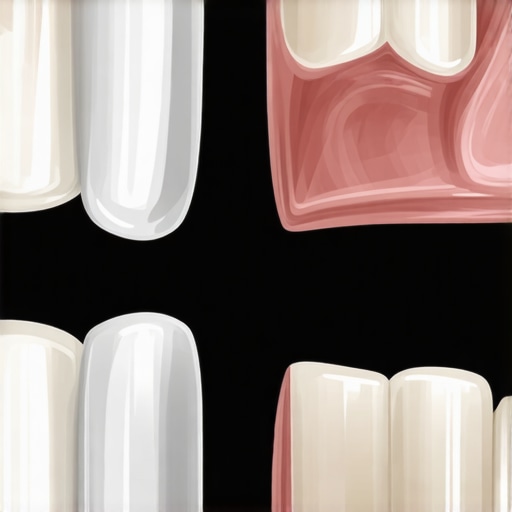
Protect your investment from your own jaw
Restoring your teeth is only half the battle; the other half is a defensive strategy. I remember the panic I felt after investing in my smile, only to wake up and hear that familiar dull ache in my jaw. It was a sign that I was still trying to grind away my new teeth. The secret isn’t just the material of the crown; it’s a custom-fitted night guard. Think of it as a shock absorber for your face. Even the most advanced cosmetic dentistry trends cannot override the laws of physics if you are a heavy nocturnal grinder. Beyond protection, you must monitor the health of the seal. I once ignored a slight metallic taste, but learning how to tell if your dental crown is leaking bacteria early on can save you from a root canal later. Consistent checkups within a family dentistry framework ensure that your new height has a healthy, infection-free foundation.
Adjust the fit until it feels invisible
The most critical moment of the entire process happens in the dental chair when you are asked, “How does that feel?” Never settle for “good enough.” I once stayed silent about a temporary crown that felt slightly high because I was in a rush. By dinner, it felt like I was biting down on a marble every time I chewed. Knowing how to fix a temporary crown that feels too high is a routine adjustment for a professional, but they rely on your feedback. If your bite is even slightly lopsided, your brain will subconsciously trigger more grinding as it tries to “level out” the high spot. Reclaiming your smile is a game of extreme precision where even a hair’s width of difference matters for your long-term comfort.
We often talk about cosmetic dentistry as if it’s just a high-end paint job for your mouth, but that is a dangerous misconception that leads to thousands of failed procedures every year. While many believe that getting a new set of teeth is purely about aesthetics, the reality is that true expertise lies in the biomechanics. If you focus only on how to transform your look with expert cosmetic dentistry solutions without considering the structural integrity of the remaining tooth, you are setting yourself up for a costly disaster. I’ve seen patients choose the whitest shade available only to return months later wondering the real reason your porcelain crown keeps chipping, and the answer is almost always a failure to respect the laws of physics.
Look Past the Mirror to Find True Dental Value
In my years of researching dental outcomes, I’ve found that the biggest “trap” is ignoring what specialists call the ferrule effect. This refers to the amount of healthy tooth structure that sits above the gum line to support a crown. A common mistake is trying to save a tooth that is too far gone by simply gluing a crown on top. According to a study published in the Journal of Prosthetic Dentistry, a crown requires at least 1.5 to 2 millimeters of vertical tooth height to ensure long-term stability. Without this, the crown acts like a lever, eventually snapping the root of your tooth. Before you commit to any restoration, ask your dentist about your ferrule—it’s the difference between a fix that lasts twenty years and one that lasts twenty months.
How can I tell if my crown was designed for longevity or just for the ‘after’ photo?
An expert restoration should feel like it was never there. If you look at your smile and notice that your new teeth look “bulky” or if you can feel a tiny ledge where the crown meets your gum, that is a red flag. When evaluating dental crowns vs other restorations, you have to consider how the material interacts with your natural teeth. For example, some high-strength porcelains are actually harder than natural enamel. If the bite isn’t perfectly calibrated, that beautiful new crown will act like a hammer, slowly destroying the natural tooth it hits every time you chew. This is why a family dentistry guide isn’t just for kids; it’s about having a provider who understands your bite’s history over decades.
Spotting the Red Flags of an Aging Restoration
One of the most common myths is that once a crown is in place, that tooth is “safe” forever. In fact, the margin—the tiny seam where the crown meets your natural tooth—is the most vulnerable spot in your mouth. Many people ignore why your gum line looks dark around an old crown, assuming it’s just a cosmetic quirk of older materials. While often it is the metal framework showing through, it can also be a sign of gum recession exposing the root or, worse, a sign that you need to know how to tell if your dental crown is leaking bacteria. Once bacteria get under that seal, they can rot the tooth from the inside out without you feeling a single thing until the tooth is unsalvageable.
Balance the Bite Before You Beauty the Smile
The secret nuance that most people get wrong is the order of operations. You cannot simply “lengthen” teeth to look younger if your jaw muscles are conditioned to grind at a lower height. A sophisticated clinician will often use a diagnostic wax-up or temporary overlays to “test drive” your new bite before ever touching a drill. This ensures your muscles and joints are happy with the new position. If you skip this step, you aren’t just buying a new smile; you’re buying a chronic headache. Have you ever fallen into the trap of choosing the fastest, cheapest fix only to have it fail later? Let me know in the comments—I’d love to hear your experiences and help you navigate the next steps toward a truly durable smile.
The gear I actually use to stop my crowns from failing
Once you’ve invested in a restored smile, the worst thing you can do is treat it like your old, natural teeth. I learned the hard way that manual brushing simply doesn’t cut it when you have margins to protect. I switched to a high-frequency sonic toothbrush—specifically one that hits 31,000 brush strokes per minute—because the fluid dynamics created by the vibration help reach bacteria tucked under the edges of custom dental crowns. This isn’t just about ‘cleaning’; it’s about preventing the micro-leakage that leads to recurrent decay. If you are still scrubbing back and forth with a plastic handle, you are likely wearing down your gums and missing the very spots where porcelain crowns keep chipping due to weakened underlying support.
How do I maintain my dental restorations over time?
The secret weapon in my daily routine isn’t just a brush; it is a water flosser used on the ‘pulsate’ setting. Most people give up on these because they blast their gums on the highest pressure and quit when it bleeds. I recommend starting on the lowest setting to gently flush the sulcus—the tiny pocket between the crown and the gum. Learning how to stop your gums from hurting when you use a water flosser is the first step toward a lifelong habit. This tool is essential for clearing out the sticky biofilm that regular floss often skips, especially around bridges or implants. If you don’t clear that debris, you’re essentially leaving a slow-burning fuse under your expensive cosmetic work.
The future of your bite is digital and predictive
I’m predicting that within the next five years, we won’t just be ‘guessing’ if a bite is balanced. We are moving toward a standard where every patient has a digital twin of their jaw mechanics. As Dr. Robert Kerstein, a pioneer in digital occlusal analysis, often emphasizes, the timing of how your teeth touch—measured in milliseconds—is what ultimately dictates the lifespan of any restoration. This is why your dental implant specialist needs a high-tech scan rather than just a physical mold. These scans allow us to see ‘hidden’ heavy spots that would eventually cause a fracture. Watching these top cosmetic dentistry trends for 2025 shows a clear shift toward this biomechanical precision over pure aesthetics.
Cleaning the invisible enemies off your hardware
If you use a night guard—and you absolutely should if you have crowns—you need to treat it like a surgical tool. Bacteria thrive in the porous material of a guard, and if you just rinse it with water, you’re reintroducing those pathogens to your teeth every night. I use an ultrasonic cleaner with a specialized tablet to break down calcified deposits. This is the best way to clean a night guard to prevent odors and ensure you aren’t accidentally culturing a colony of bacteria against your gums while you sleep. Without this level of maintenance, even the best family dentistry guide can’t protect you from the localized inflammation that causes gum recession around your new teeth.
Maintaining a high-end smile is about moving from a reactive mindset to a proactive one. It’s the difference between ‘fixing a problem’ and ‘preserving an asset.’ Tonight, I want you to take a close look at your night guard or retainer—if you see white, chalky buildup or smell a faint odor, try the ultrasonic cleaning method I mentioned and see if your gums feel less inflamed by morning. Taking care of the foundations is what ensures your smile remains as vibrant as the day it was finished.
Hard Truths I Discovered While Restoring My Own Smile
The journey back to a full, vibrant smile taught me more than any textbook could. First, I realized that ignoring small changes, like those transparent edges on your teeth, is essentially borrowing time from your future self. Secondly, the most expensive restoration is the one you have to do twice; precision in the initial bite alignment is everything. Finally, I learned that a great dentist acts more like an architect than a painter. They aren’t just making things white; they are rebuilding the foundation of your face. Understanding when and why dental crowns are needed can save you years of discomfort and prevent the collapse of your facial profile.
The Daily Toolkit to Keep Your New Smile Bulletproof
Maintaining the height of your teeth requires the right gear. I personally trust a high-quality water flosser because it reaches the margins where bacteria love to hide, and learning how to stop your gums from hurting when you use a water flosser makes the habit stick. I also recommend an ultrasonic cleaner for your night guard; it is the only way to ensure you aren’t putting a layer of plaque back onto your custom dental crowns every night. Lastly, always keep a record of your digital scans. Having a baseline of your bite is the most valuable data you can own for long-term health.
Your Smile Deserves a Second Act
It is incredibly easy to feel like your teeth are a lost cause once they’ve started to shorten, but modern technology has made the impossible possible. You don’t have to settle for a recessed profile or a smile that makes you feel older than you are. By choosing expert cosmetic dentistry solutions that prioritize biomechanics over just ‘looks,’ you are investing in a version of yourself that can eat, speak, and laugh with total confidence for decades to come. When you take that first step to address the wear, you aren’t just fixing a tooth; you’re reclaiming your presence. Have you noticed your front teeth looking a little shorter or thinner lately when you look in the mirror? Let me know your experience in the comments below!