I remember sitting at the kitchen table, watching my seven-year-old struggle with a slice of apple, when I noticed it—that tiny, jagged adult tooth erupting right behind his baby tooth like a little shark. I laughed it off at first. I told myself he was way too young for the orthodontist. My own braces didn’t come along until middle school, after all. But that “wait and see” approach was my first big mistake as a dental-conscious parent. I assumed nature would just sort it out, but by the time I finally made the call, we were already playing catch-up with his jaw alignment. I want to help you avoid that stress and the extra bills that come with it. Today, we are going to dive into the subtle signs that your child is ready for a professional look-over and why being proactive is the best gift you can give their future smile.
Why age seven is the magic number for a checkup
The common myth is that you should wait until every baby tooth has fallen out before visiting a specialist. I fell for it hook, line, and sinker. However, the American Association of Orthodontists actually recommends an initial evaluation by age seven. Why? Because by this age, enough permanent teeth have arrived for a pro to see how the jaw is growing. It’s not necessarily about putting braces on a first-grader; it’s about mapping out a plan. In our house, we were focused on child-friendly dental care, but I didn’t realize that how to tell if your child needs braces before age seven is actually more about the bone structure than the straightness of the teeth themselves. If you notice adult molars coming in with ridges or significant crowding, it’s time. Have you ever caught yourself staring at your kid’s smile and wondering if that narrow palate or slight overbite is just a phase or a problem waiting to happen?
Won’t they just grow out of it?
This is the biggest fear I hear from my neighbors. We don’t want to over-medicalize our kids’ childhoods. But here is the hard truth: jaw issues don’t just “fix themselves” as a child grows; they often get more complex once the jawbone hardens. Early intervention, or Phase 1 treatment, can sometimes prevent the need for permanent tooth extractions or even jaw surgery later in life. Think of it as part of your larger family dentistry guide for a lifetime of health. I learned the hard way that knowing the best way to handle a loose baby tooth is great, but it doesn’t replace a specialized orthodontic scan. I wasted months worrying about a gap that was normal, while completely missing a crossbite that was actually shifting his jaw to one side.Once you commit to a proactive approach, the first step happens right at your own kitchen table. You don’t need a medical degree to spot the basics of caring for your child’s teeth. I started by simply watching how my son, Leo, chewed his food. I noticed he shifted everything to the right side of his mouth. It looked like he was favoriting a tooth, which made me wonder how to tell if your child has a cavity before they complain, but the real culprit was a crossbite that made left-side chewing uncomfortable. Check if their lips are constantly parted while they are distracted. We often overlook it, but learning how to tell if your child is mouth breathing during sleep or even while awake is vital because it can literally reshape the developing jaw. If their tongue isn’t resting on the roof of the mouth, the palate doesn’t expand naturally, leading to future crowding issues. 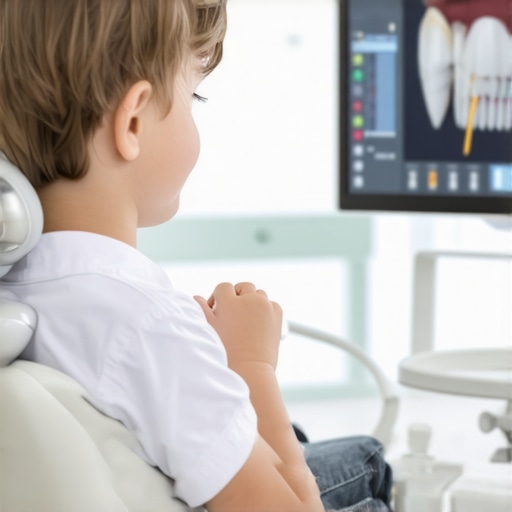
Spotting the subtle signs at the dinner table
Watch for the ‘shark teeth’ and early crowding. When those adult molars start pushing through, they should have plenty of room. If you see adult molars coming in with ridges that seem trapped behind baby teeth, that’s your cue. In Leo’s case, we also noticed a weird sound at night. I found out that why your baby is grinding their teeth during sleep is often linked to airway issues or jaw misalignment rather than just stress. It’s not just a ‘habit’ they’ll drop; it’s a physical response to discomfort that needs a professional eye.
Check the bite alignment during meals
Have your child bite down and smile. Do the top teeth cover the bottom ones too much? Does the midline of the top teeth align with the bottom? These are the foundational elements of family dentistry guide principles. If something looks asymmetrical, it likely is.
What happens when you finally sit in the chair
When you walk into the clinic for that age-seven visit, the goal isn’t immediate braces. It’s about data collection. A modern specialist in family dentistry will likely use advanced imaging to see what’s happening under the gumline. You might wonder why your dentist might need a 3D scan for a seven-year-old. It’s because 2D X-rays are like looking at a flat map of a mountain range; a 3D scan lets them see the ‘elevation’—the roots of the teeth that haven’t even erupted yet.
Don’t fear the restoration talk
Sometimes, the plan involves more than just moving teeth. If a tooth is badly decayed or damaged early on, you might need to learn when and why dental crowns are needed even for younger patients. Think of a crown like a helmet for a vulnerable tooth. It protects the integrity of the space so the adult teeth can move into the right neighborhood later. In our journey, we had to discuss dental crowns vs other restorations because Leo had a weak molar that was essential for holding his bite in place while we waited for his jaw to grow. Treating the tooth as a structural pillar rather than a temporary placeholder saved us from expensive corrective surgery later.Many parents believe that cosmetic dentistry is strictly about vanity, a luxury to be deferred until the teenage years or later. I used to think the same until I realized that cosmetic dentistry trends for 2025 are shifting toward ‘functional aesthetics.’ In reality, fixing a crooked smile or a chipped tooth isn’t just for the photo; it often resolves the hidden reason your front teeth are wearing down. If teeth aren’t hitting each other at the right angles, they are essentially self-destructing. By choosing expert cosmetic dentistry solutions early on, you are actually protecting the structural integrity of the jaw for decades to come. Don’t fall for the ‘wait and see’ trap; proactive care is the only way to avoid the real cost of delaying a necessary dental crown.
Why pretty teeth are actually stronger teeth
A common myth is that ‘drilling into a tooth’ for a restoration always weakens it. However, when a tooth is compromised by a deep fissure or a large cavity, dental crowns are the ultimate solution because they distribute the biting force across the entire tooth rather than letting it concentrate on a weak spot. Think of it like a protective helmet. In my own experience with Leo, we learned that understanding when and why dental crowns are needed in pediatric cases is crucial. If you ignore a crumbling molar because it’s ‘just a baby tooth,’ you risk an abscess or the loss of space required for adult teeth. Have you ever fallen into this trap? Let me know in the comments.
Does that tight sensation mean the crown was fitted wrong?
Many patients panic when they feel pressure after a procedure. While you might wonder why your crown feels tight when you wake up, it isn’t always the crown’s fault. Often, this is a sign of nocturnal bruxism (teeth grinding) that becomes more noticeable once you have a new restoration. The ‘oops’ factor here is assuming the dentist made a mistake, when the real issue is an underlying stress response or alignment problem. A study published in the *Journal of Oral Rehabilitation* highlights that nearly 20% of the population suffers from sleep-related bruxism, which can compromise even the most expensive dental work if a night guard isn’t used.
The hidden danger of the set and forget mindset
The biggest mistake you can make is assuming a crown or a filling is a permanent shield that requires no maintenance. If you notice why your gum line looks dark around an old crown, that is a red flag. It’s not just an aging restoration; it’s often a sign of gingival recession or a marginal leak where bacteria can seep in. This is why the role of family dentistry is so vital—it’s about those biannual check-ups that catch a failing margin before it turns into a root canal. If you ever find yourself in a situation where a restoration feels off, knowing how to tell if a chipped tooth is a true emergency can save you a frantic weekend trip to the ER. Always remember that caring for your child’s teeth—and your own—requires a keen eye for these subtle structural shifts.
Stop scrubbing your gums into oblivion
Once you have invested in restorations, the ‘maintenance’ phase is where most people drop the ball. I used to think that a vigorous scrub with a manual brush was the hallmark of cleanliness. I was wrong. In fact, I was contributing to the very problem I was trying to avoid. One of the most critical expert cosmetic dentistry solutions isn’t a procedure at all; it is switching to an electric toothbrush with a built-in pressure sensor. Why? Because the pressure sensor is the only way to ensure you aren’t literally sawing away at your enamel or pushing your gums back. I personally use a brush that vibrates when I press too hard, and it was a revelation to realize I had been over-brushing for years. This is often why your gums are receding despite using a soft toothbrush. If you want to keep your smile intact, you have to stop treating your mouth like a kitchen floor that needs scouring.
How do I keep my dental work lasting for decades?
The secret isn’t just brushing; it’s about the tools you use for the gaps. I’m a huge advocate for the water flosser, especially for those with bridges or crowns. If you’ve ever wondered about the best routine for cleaning under a dental bridge, a water flosser is non-negotiable. It reaches the microscopic debris that traditional floss often pushes further into the gum pocket. For those of us who have invested in crowns, we need to be vigilant. You might not notice it, but the real reason your porcelain crown keeps chipping is often related to nightly grinding you aren’t even aware of. This is where a custom night guard comes in. It’s a small price to pay to protect thousands of dollars in dental work. Just make sure you know the best way to clean a night guard to prevent odors, or you’ll find yourself dreading the very thing that’s saving your teeth. 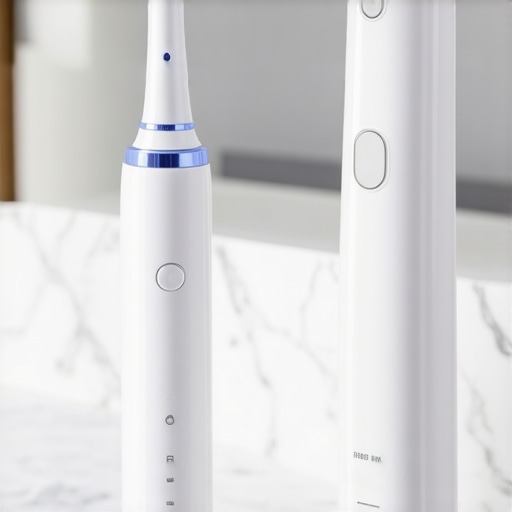
What the future holds for your bathroom counter
We are entering an era of ‘Smart Dentistry.’ I predict that within the next five years, your toothbrush won’t just tell you if you’re pressing too hard; it will sync with an app to show you a heat map of where plaque is still sitting. This kind of data-driven family dentistry guide approach will take the guesswork out of oral hygiene. A 2021 systematic review by the Cochrane Library found that powered toothbrushes, particularly those with oscillating-rotating technology, show a statistically significant reduction in plaque and gingivitis compared to manual brushing over both the short and long term. This isn’t just a trend; it’s a fundamental shift in how we manage our health. If you are serious about caring for your child’s teeth or your own, you need to lean into these technological assists. Don’t forget that even the best tools need upkeep—understanding the truth about how often you should replace your toothbrush head is vital because frayed bristles are about as effective as a wet noodle. My challenge to you? Swap your manual brush for a pressure-sensing electric model this week. Your gums will thank you.
What I Didn’t Expect to Learn in the Waiting Room
After years of navigating dental appointments with my kids, I’ve realized that the biggest mistakes are usually the ones we make out of caution—waiting too long because we don’t want to be ‘that’ parent who overreacts. My first big lesson was that a crown on a baby tooth isn’t a failure of parenting; it’s a strategic move to save the alignment of the adult teeth waiting underneath. If you’ve ever wondered how to tell if your crown needs to be replaced immediately, you’re already practicing the kind of vigilance that saves your wallet later. I also learned that the role of family dentistry is as much about education as it is about the actual procedures. We shouldn’t just be ‘fixing’ problems; we should be forecasting them. Finally, I realized that modern cosmetic dentistry trends for 2025 are moving toward preserving natural tooth structure for as long as possible, which matches exactly what we want for our children.
My Favorite Tools for a Smile-Friendly Home
To keep our family on track between visits, I’ve curated a small toolkit that has made a massive difference. First, a pressure-sensing electric toothbrush is non-negotiable—it’s the only way to ensure my kids aren’t scrubbing their gums away. Second, a water flosser has been a lifesaver for cleaning those tricky areas if your child eventually ends up with braces or a bridge. Third, a direct line to a trusted professional is essential. Don’t be afraid to contact us if you notice a weird shift in your child’s bite or a ‘shark tooth’ appearing behind a baby tooth. These tools, combined with a solid family dentistry guide, take the anxiety out of the equation.
Your Child’s Future Smile Starts with Today’s Choice
At the end of the day, proactive dental care is one of the most underrated gifts you can give your child. It isn’t just about the aesthetics; it’s about the comfort, the ability to eat without pain, and the confidence that comes with a healthy mouth. By staying ahead of issues like jaw alignment and tooth decay now, you are ensuring they won’t have to deal with the ‘real cost’ of delayed care as adults. Your journey toward a lifetime of healthy smiles is a marathon, not a sprint, and every small checkup counts. Have you ever been surprised by a dental recommendation for your child that ended up being a game-changer? Let me know in the comments below!