I remember staring into the bathroom mirror three years ago, pulling my lip back, and feeling a cold pit in my stomach. There it was: a tiny, yellowed ledge at the base of my front tooth. I was certain my teeth were literally dissolving. As someone who took pride in a ‘squeaky clean’ mouth, I’d been using a firm-bristled brush like a power sander for years. I thought the harder I pressed, the whiter they’d get. I was wrong. If you’ve noticed a sudden ‘zing’ when you drink cold water or your teeth look a bit longer than they used to, you aren’t alone—and it might not be the scary gum disease you’re fearing. Today, I’m going to help you figure out if your morning routine is actually your gums’ worst enemy and how to fix it before you need invasive help.
Your Gums Aren’t Just Retiring Early
When I first saw that recession, I went down a rabbit hole of panic. I assumed I needed dental crowns or surgery immediately. However, after a humbling talk with my dentist, I learned that why your gums are receding in only one area of your mouth often comes down to simple ‘toothbrush abrasion.’ It’s a classic case of too much of a good thing. We’re taught that brushing is the holy grail of health, but if you’re using the wrong technique, you’re essentially sanding down your gingival tissue. This matters right now because once that gum tissue is gone, it doesn’t just grow back like a fingernail; protecting what you have left is the only way to avoid the chair at a family dentistry clinic later on.
Wait, is it actually possible to brush too well?
It sounds like a bad joke, doesn’t it? How can being ‘too clean’ be a problem? The reality is that gum tissue is incredibly delicate, and your enamel isn’t invincible. According to the American Dental Association, using a hard-bristled brush or applying excessive pressure—often called ‘scrubbing’—can lead to permanent recession and significant wear on your tooth roots. My big mistake was thinking ‘firm’ bristles meant a ‘deeper’ clean. I was treating my mouth like a garage floor. Have you ever noticed your toothbrush bristles splaying out like a dead dandelion after just a few weeks? If so, you are likely the culprit behind your own receding gums. Understanding the role of family dentistry in your life means recognizing that sometimes, less is actually more when it comes to physical force. We need to look for specific signs—like the location of the recession and the shape of the wear—to be sure your brush is the villain.
Stop the Scrub and Save Your Smile
Fixing gum recession caused by over-brushing isn’t about working harder; it’s about working smarter. Think of your gums like a silk scarf rather than a rugged carpet. If you scrub silk with a wire brush, it frays and disappears. Your first step to recovery is a fundamental shift in how you physically interact with your mouth. I had to learn this the hard way. I used to grip my toothbrush in a full fist, knuckles white, as if I were scrubbing a grease stain out of a garage floor. One Tuesday morning, I looked down and saw pink in the sink—not from disease, but because I’d literally shredded my own tissue. I had to consciously switch to the ‘pen grip.’ By holding the brush between your fingertips like a pencil, you physically cannot apply the same destructive force as you can with a fist. It’s a simple mechanical limit that saves your smile.
Hold Your Brush Like a Delicate Instrument
When you use the pen grip, you transition from ‘scrubbing’ to ‘massaging.’ You want to angle the bristles at a 45-degree angle toward the gum line and move in tiny, circular motions. If you’re wondering how to tell if your gums are healing after a deep cleaning or a period of aggressive brushing, look for a change in texture; healthy gums look like the skin of an orange—stippled and firm—rather than smooth, shiny, and swollen. This technique ensures you are removing plaque from the ‘sulcus’ (the pocket between the tooth and gum) without turning the bristles into a blade.
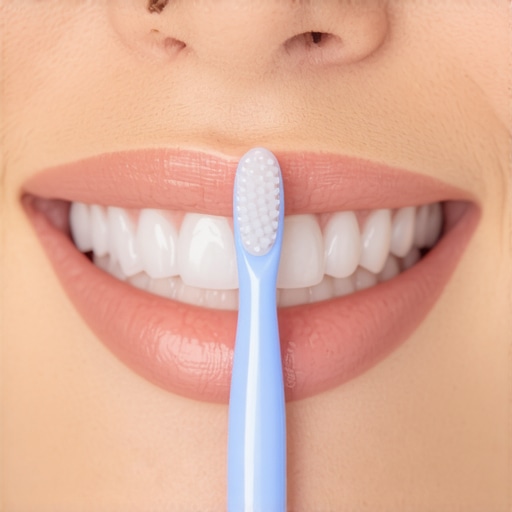
Upgrade Your Gear to Protect Your Gingiva
If you can’t trust your own hand to stay gentle, let technology take over. High-end electric toothbrushes now come with pressure sensors that flash red or even slow down the motor when you press too hard. It’s like having a tiny dentist standing over your shoulder whispering ‘easy there.’ Interestingly, some people find that why your gums bleed only when you use an electric toothbrush is actually a sign they were previously missing the gum line entirely, and the new vibration is finally stimulating the area. However, the goal is always a soft-bristle head. Hard bristles have no place in a modern bathroom; they are relics of a time before we understood gingival architecture.
Repair the Damage You Already Did
Sometimes, the ‘zing’ of sensitivity doesn’t go away just by changing your technique. If you’ve worn through the enamel, you might need professional intervention to cover those exposed roots. This is where enhance your confidence cosmetic dentistry innovations to watch come into play, offering solutions like gum grafting or composite bonding that act as a shield. If the wear is significant enough that the structural integrity of the tooth is at risk, you might need to look into dental crowns vs. other restorations which is right for you. I personally had to have a small amount of bonding applied to that ‘yellow ledge’ I mentioned earlier. It wasn’t just for looks; it was to stop the cold-water shocks that made my morning coffee a nightmare. For those with significant wear, the safest way to whiten teeth if you have thin enamel is to avoid over-the-counter strips and consult a professional who can protect those recessed areas first.
But here’s the thing most people—and even some general practitioners—miss: the ‘fix’ can sometimes mask a deeper problem. We often treat dental restorations as if they are permanent, invincible shields. This is a dangerous trap. I’ve seen patients who, after receiving dental crowns explained as a solution for their wear, assume they never have to worry about that tooth again. In reality, the junction where the crown meets your natural tooth is the most vulnerable square millimeter in your entire mouth. If your hygiene routine stays aggressive, you aren’t just receding your gums; you’re inviting bacterial invasion at the margin.
Your crown isn’t a suit of armor for your tooth
The most common myth I encounter is that a crowned tooth cannot decay. While the porcelain itself won’t get a cavity, the tooth structure underneath absolutely can. A study published in the Journal of Dentistry highlights that marginal integrity—the seal between the restoration and the tooth—is the primary predictor of failure. When you scrub too hard, you risk creating microscopic gaps. This is precisely how to tell if your dental crown is leaking bacteria; it often starts with a faint, persistent sensitivity or a subtle change in taste that most people ignore until the internal damage is significant. Treat your restorations with more care than your natural teeth, not less.
Why does my dental crown have a dark line near the gum?
Many patients panic when they see a shadow appearing at the base of a restoration. While it can sometimes be a sign of recession, you should also investigate why your porcelain crown has a dark line at the gum line before assuming the worst. Often, this is simply the metal framework of an older style of crown showing through as the tissue shifts. However, if you’re keeping up with top cosmetic dentistry trends for 2025, you’ll see that modern all-ceramic materials have largely eliminated this ‘graying’ effect, offering a much more biocompatible fit for those of us with sensitive gingiva.
Stop ignoring that ‘high’ feeling after a filling
The biggest ‘oops’ factor I see involves the bite. If you’ve recently had work done and it feels just a tiny bit ‘off’ when you chew, do not wait for it to ‘wear down.’ Whether it’s a new composite or you’re wondering why your porcelain crown feels too high when you bite down, that extra pressure acts like a jackhammer on your periodontal ligament every time you swallow. This can actually accelerate gum recession and lead to bone loss. It’s not just a minor annoyance; it’s a mechanical failure in progress. Remember, even the truth about the lifespan of composite tooth-colored fillings is dictated by how evenly they distribute force. Have you ever fallen into the trap of ‘toughing it out’ with a high filling or a stiff toothbrush? Let me know in the comments below.
Why You Should Trade Your Floss for Interdental Brushes
I used to think flossing was the gold standard, but for those of us with recession or dental crowns, standard string floss often misses the mark. My own transition happened after a particularly frustrating check-up where my dentist pointed out plaque buildup exactly where I thought I was cleaning. I switched to TePe interdental brushes, and the difference was night and day. Unlike flat floss, these tiny, flexible ‘bottlebrushes’ expand to fill the natural concavities of your tooth roots. If you’ve ever wondered the best way to clean under a dental bridge to prevent smells, these brushes are your most important tool. A 2019 meta-analysis by the Cochrane Oral Health Group found that interdental brushes are significantly more effective at removing plaque than floss alone, especially in patients who have already experienced gingival recession or have restorative work.
#IMAGE_PLACE_HOLDER_D#
How do I maintain my dental work over time?
The secret isn’t a miracle chemical; it’s mechanical consistency and pH management. For those who have invested in expert cosmetic dentistry solutions, maintenance is about preventing the ‘acid bath’ effect. I personally use a pH-neutralizing mouthwash after every meal to combat acidity. We often overlook the basics of essential family dentistry tips, which apply just as much to adults: minimize snacking to give your saliva time to remineralize your enamel naturally. In the near future, I predict we will see ‘smart’ bio-active ceramic coatings integrated into restorations that can actually release calcium and phosphate ions to ‘self-heal’ microscopic leaks around the margins of your crowns and fillings. Understanding the role of family dentistry in your long-term plan means moving beyond reactive repairs to proactive bio-maintenance.
Protect Your Investment with a Custom Night Guard
If you have crowns or veneers, you are wearing high-end ceramics in a high-impact environment. My dentist warned me that nocturnal grinding—bruxism—is the number one cause of premature crown failure. I now wear a custom-fitted night guard every single night without exception. It’s not just about protecting the porcelain; it’s about the periodontal ligament. If you already use one, make sure you know the best way to clean a night guard to prevent odors, because bacteria buildup on your appliance can lead to localized gum inflammation. I challenge you to try this: for one week, swap your standard floss for an interdental brush sized specifically for your gaps by your hygienist. You will be shocked at the debris your traditional string was leaving behind, and your gums will thank you within days.
The Brutal Truth About Perfect Brushing Habits
Looking back, the hardest pill to swallow was realizing that my “extra effort” was actually a form of self-sabotage. High pressure doesn’t equal high hygiene; it equals tissue loss. Here are the three lightbulb moments that changed how I approach my oral health:
- Softness is a vital strength: I used to view soft brushes as “weak,” but they are actually the only tools that respect your gingival architecture while removing plaque effectively.
- Crowns are a fresh start, not a finish line: When I got my first restoration, I thought I was finally “safe” from my own scrubbing. However, having dental crowns explained as a solution only works if you stop the aggressive habits that necessitated them in the first place.
- Listen to the “Zing”: That sharp sensitivity to cold is your body’s early warning system that your roots are exposed. Don’t mask it with sensitivity toothpaste forever; use it as a cue to adjust your physical pressure immediately.
Tools That Saved My Smile From Myself
I don’t believe in cluttering the bathroom cabinet with every gadget on the market, but these specific changes were non-negotiable for my recovery. First, a pressure-sensing electric toothbrush acts like a digital coach that vibrates or flashes when my “power-sander” tendencies kick in. Second, interdental brushes are far superior to standard string for many adults. If you have any gaps or restorative work, knowing the best way to clean under a dental bridge to prevent smells is a game-changer that prevents deep-seated plaque traps. Finally, a custom night guard is essential for those of us who carry stress in our jaws. Protecting your investment in expert cosmetic dentistry solutions from the sheer mechanical force of nighttime grinding is the single best way to ensure your smile lasts decades. If you already use one, make sure you’ve mastered the best way to clean a night guard to prevent odors to keep your gums inflammation-free and your breath fresh.
#IMAGE_PLACEHOLDER_E#
Your Gums Deserve a Second Chance
It’s easy to feel defeated when you see your gum line shifting, but the mouth is incredibly resilient once you remove the source of irritation. By shifting your mindset from “scrubbing” to “massaging,” you’re not just saving your teeth—you’re preserving your confidence. Whether you are currently navigating the role of family dentistry in your life or seeking out advanced aesthetic repairs, the power to stop the damage is literally in your hands. Take it slow, be gentle, and watch how quickly your mouth begins to feel like a healthy, pain-free environment again. What’s one change you’re making to your morning routine today to be kinder to your gums? Let me know in the comments below!