I was sitting at dinner last Friday, enjoying a piece of crusty sourdough, when I felt it. A tiny, sickening click. My dental implant, the one I’d bragged about for three years, felt like a loose floorboard. I froze. My first thought? There goes my bank account. I spent the next hour in front of the mirror, poking at it with my tongue, which is exactly the kind of rookie mistake I’m here to help you avoid. If you’ve felt that slight shift when you chew, you know the panic. But here’s the good news: a loose-feeling crown after a few years is actually a pretty common chapter in the life of an implant, and it doesn’t always mean the whole thing is headed for the trash. You might be wondering why your dental implant feels loose after a few years, especially when you were told these things last forever. Today, we’re going to dive into the mechanics of your smile to figure out exactly what’s shifting and how to fix it without losing your mind.
That Wobbly Feeling Isn’t Just in Your Head
When I first started my journey with dental crowns and implants, I assumed once they were in, they were basically part of my skull. I made the mistake of ignoring a tiny bit of “play” in my molar for three months, thinking it would settle down. It didn’t. In fact, ignoring it can lead to bigger issues, like bacteria leaking into the restoration. Whether you are dealing with a crown on a natural tooth or one sitting atop a titanium post, movement is a signal you can’t ignore. Have you ever felt that terrifying “thud” when you bite down on something as simple as a sandwich? It’s a gut-punch, but usually, the fix is simpler than you think.
Is your implant actually failing or is it just a loose screw?
This is the big fear, right? We all worry that the body is rejecting the metal. However, research shows that a significant number of “loose” implants are actually just mechanical issues with the abutment screw. According to a study in the Journal of Oral Rehabilitation, screw loosening is one of the most frequent prosthetic complications, affecting up to 10% of patients within the first few years. You need to know how to tell if your dental implant is failing versus when a simple tightening at the office will solve the problem. If you’ve invested in expert cosmetic dentistry solutions, you want that investment to stay put. We’re going to break down the “Why” behind the wiggle so you can walk into your next appointment with confidence.
Figure Out Exactly Where the Movement is Coming From
First, you need to perform a little self-diagnostic before you call your provider. Take two clean fingers and very gently try to rock the restoration back and forth. If the crown moves but you don’t feel any sharp pain deep in the jawbone, you’re likely looking at a loose abutment screw. Think of your implant like a high-end piece of furniture; the post is the leg bolted into the floor, and the crown is the tabletop. If the bolt connecting them gets slightly stripped or unscrews a fraction of a millimeter, the tabletop wobbles even though the leg is perfectly solid. You need to verify how to know if your dental implant has successfully fused to the bone to distinguish this from a true failure. When my implant started clicking during that sourdough dinner, I noticed that the gums around it looked perfectly pink and healthy, which was my first clue that the titanium post in my bone wasn’t the problem. If you see swelling or a purple hue, that’s a different story altogether.
Use the Two-Finger Test to Check for Gum Distress
Check the area around the base of the tooth in a mirror. If you press on the gum line and see any pus or feel significant tenderness, you might be dealing with peri-implantitis. This is essentially the implant version of gum disease. If the seal between your crown and the gum is compromised, you might notice a persistent bad taste in your mouth, which usually indicates that trapped bacteria are having a field day under the restoration. In my case, I didn’t have the bad taste, just the mechanical wiggle. This distinction is vital because a loose screw takes ten minutes to tighten, while an infection requires a deep dive into the role of family dentistry in ensuring oral health for all ages to save the bone. 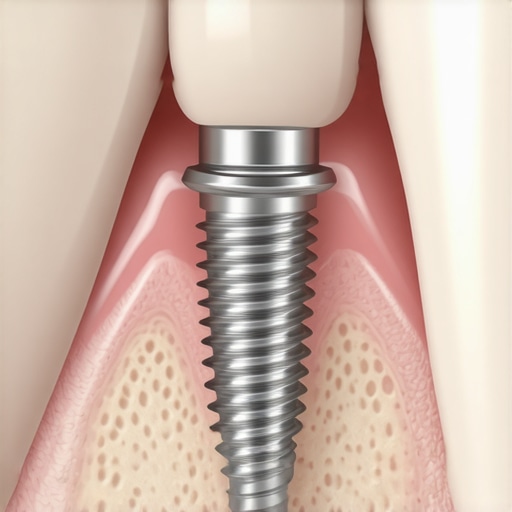
Why This is Often Just a Loose Bolt in the Machine
Most people don’t realize that dental crowns explained as part of an implant system are actually multi-part assemblies. Over a few years, the constant micro-vibrations of chewing—roughly 600 to 800 bites per meal—can naturally back a screw out of its housing. It’s the same reason the screws on your glasses or a door hinge eventually need a turn of a screwdriver. If you are a heavy clencher, especially at night, you are accelerating this process. I actually found out I was a nighttime grinder when my dentist saw the wear patterns on my other teeth. If you’ve been wondering why your jaw aches every time you wake up in the morning, that extra pressure is the most likely culprit behind your loose implant.
Keep Your Restoration Safe Until You Reach the Chair
While you wait for your appointment, you must stop testing the wiggle with your tongue. I know it’s tempting, but every time you rock that crown, you risk damaging the delicate internal threads of the titanium post. If those threads get stripped, a simple tightening job turns into a full replacement. Switch your diet to soft foods—think yogurt, mashed potatoes, and smoothies—and avoid anything sticky like caramel that could pull the loose crown entirely off. If you start feeling a dull throb, you can look into how to manage tooth pain when you can’t see a dentist immediately, but remember that a loose implant is a mechanical emergency that requires a professional hand to recalibrate the torque.A lot of people treat expert cosmetic dentistry solutions like they are buying a piece of jewelry—once you’ve got it, you just wear it. But the biggest mistake I see (and one I almost made) is forgetting that a crown is a functional tool, not a static ornament. Everyone says the goal is a perfect match in shade, but in my experience, the ’emergence profile’—how the tooth grows out of the gum—is ten times more important for long-term success than the color. If that shape is even slightly off, you’re creating a shelf for plaque, no matter how much you brush.
Don’t Fall for the ‘One-and-Done’ Restoration Trap
Here is the ‘oops’ factor most patients ignore: thinking that the hardest material is always the best. You might think a solid zirconia crown is the ultimate choice because it’s nearly indestructible, but if it is too hard, it can actually act like sandpaper against your natural teeth. I’ve seen people save an implant only to realize they’ve worn down the healthy molars on the opposite jaw. This is why understanding dental crowns and when they are needed requires looking at the whole mouth as a mechanical system, not just a gap to be filled.
Can the material of your crown actually wear down your natural teeth over time?
Yes, and this is where the science gets gritty. A study published in the Journal of Prosthetic Dentistry highlights that the wear potential of certain dental ceramics can be significantly higher than natural enamel if the bite isn’t perfectly calibrated. If you choose a high-strength ceramic without considering your ‘occlusion’ (how your teeth meet), you might be trading one problem for another. This is where the role of family dentistry in ensuring oral health becomes critical; you need a provider who monitors your bite over years, not just someone who installs a pretty tooth and sends you on your way. 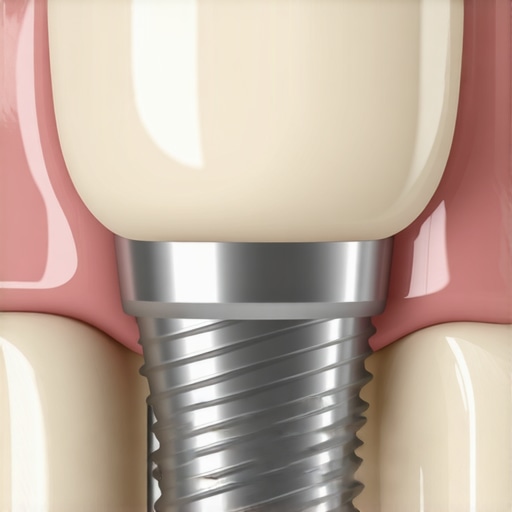
Your Bite Force is the Secret Villain in This Story
The nuance that most people miss is that a ‘loose’ feeling can sometimes be caused by the real reason your porcelain crown keeps chipping: a misaligned bite. If your crown is just a fraction of a millimeter too high, every time you chew, you are hammered-drilling that implant into the bone. That constant micro-trauma can make the abutment screw back out as a self-defense mechanism. It’s not necessarily a failure of the implant; it’s often a failure of the calibration. Before you commit to a specific type, check out dental crowns vs. other restorations to see which material balance works for your specific bite strength. Have you ever felt like your ‘new’ tooth was just a bit too tall? Let me know in the comments if you’ve fallen into the trap of ignoring a high spot until it started to wiggle!If you want to keep that crown sitting pretty, you have to move beyond the manual toothbrush. I’ve personally found that a water flosser with a rubberized ‘Pik Pocket’ tip is non-negotiable for my implant. It’s not just about blasting food away; it’s about oxygenating the pocket where the crown meets the gum. You have to learn how to stop your gums from hurting when you use a water flosser by starting on the lowest setting and working up. If you don’t, you’re just pushing debris deeper. I also swear by a custom-molded night guard. When I ignore mine for even a weekend, I can feel that familiar tightness in my masseter muscles. If you’ve been wondering why your jaw aches every time you wake up in the morning, that’s your sign that you’re literally trying to grind your expensive dentistry into dust while you sleep.
Your Bathroom Counter Needs an Upgrade
To really scale your oral health, you need to think like a professional. I recommend using an oral irrigator combined with a diluted, non-alcohol antimicrobial rinse. This keeps the ‘peri-implant’ area sterile without drying out your tissues. When my dentist first showed me the microscopic views of the bacteria that live around loose crowns, I realized that brushing is only 50% of the battle.
How do I maintain my dental restorations over the long haul?
The secret isn’t just brushing; it’s mechanical management. According to the International Journal of Implant Dentistry, the primary cause of late-stage mechanical failure is ‘occlusal overload’—basically, hitting the tooth too hard during daily use. This is why I suggest a prophy appointment every four months instead of six. You need a hygienist to use an ultrasonic scaler to clear the specific biofilm that likes to cling to the interface of the restoration. Also, you need to master the best way to clean under a dental bridge to prevent smells, as that same technique applies to the tiny gap under an implant crown.
The Future of Digital Smiles is Already Here
Looking forward, the way we handle these issues is shifting rapidly. We are moving toward ‘Digital Occlusion’ where your dentist uses a T-Scan to measure exactly how many microns of pressure you apply to your crown. If you’re curious about what’s next, look into top cosmetic dentistry trends for 2025. I predict that within five years, we’ll all have smart-sensors in our night guards that alert our phones if we’re putting too much stress on an implant. For now, the most advanced thing you can do is ensure your provider uses 3D imaging; there’s a massive reason why your dental implant specialist needs a high-tech scan to map your bone density before even touching a drill. 
Protect Your Investment and Your Family
If you’re a parent, this isn’t just about you. You’re setting the blueprint for your kids. Whether it’s caring for your child’s teeth or following a family dentistry guide, the habits you build now prevent them from needing these expensive ‘fixes’ later. My best advice? Go buy a high-quality electric toothbrush with a pressure sensor today. It’s the single cheapest way to protect a five-thousand-dollar investment. If you haven’t had your bite checked in the last twelve months, call your office and ask for an ‘occlusal adjustment’—it might just save your screw from backing out again.
The Hardest Lesson I Learned About Titanium and Torque
After my own scare with a clicking molar, I realized that we often treat our implants like permanent fixtures when we should treat them like precision machinery. The biggest lightbulb moment for me was discovering that most loose sensations aren’t biological failures, but simple mechanical drift. If you’ve been stressing about why your dental implant feels loose after a few years, remember that the screw inside your abutment is a tiny piece of hardware subject to physics. I learned the hard way that ignoring the wiggle is what leads to the expensive fix, not the wiggle itself. Another revelation? Sometimes the implant is fine, but your porcelain crown feels too high when you bite down, which creates a lever effect that slowly unscrews the base. The secret is early intervention; a quick torque adjustment can save you a five-figure replacement bill.
The Tools That Saved My Smile (And My Bank Account)
Maintenance is where most patients fall off the wagon. I’ve refined my routine to three non-negotiables that have kept my restoration rock-solid for years. First, I use a water flosser with a specialized tip meant for implants—it reaches the areas traditional floss simply misses. Second, I never sleep without my custom night guard. If you’re a grinder, you’re essentially hammer-drilling your implant into the bone every night. I also make sure to research the best way to clean a night guard to prevent odors, because if your gear is gross, you won’t wear it. Finally, I only trust clinics that use 3D digital occlusion scans. This technology ensures your bite is balanced to the micron, preventing the uneven pressure that causes loosening in the first place.
Your Second Chance at a Permanent Smile
Don’t let a tiny bit of movement make you lose hope in your investment. Dental technology is moving at a breakneck pace, and there are more ways than ever to secure your smile for the long haul. From better screw designs to top cosmetic dentistry trends for 2025, we are entering an era where restorations can be monitored and adjusted with incredible precision. If you feel that shift, don’t wait for it to get worse. Reach out and contact us or your local specialist to get a torque check. Your smile deserves the same maintenance you’d give a luxury car, and acting now ensures you’ll be enjoying that sourdough bread for decades to come. Have you ever felt a ‘click’ or ‘shift’ in your dental work that turned out to be a simple fix? Let me know in the comments below!