I’ll never forget the first time I bit into a crusty piece of sourdough and felt my back molar literally hum. It wasn’t the sharp, stabbing pain you expect from a cavity; it was a weird, electric vibration that traveled right up into my jawbone. I froze, mid-chew, wondering if I had somehow swallowed a piece of electronics. It sounds ridiculous, I know, but when your body starts making buzzing noises, your brain goes to some strange places. For weeks, I convinced myself I was just imagining things or that I’d perhaps brushed a little too hard that morning. I was playing a dangerous game with my oral health.
That Strange Buzz in Your Jaw Needs Your Attention
I’m going to be real with you: ignoring that vibrating sensation was the worst thing I could have done. I spent way too much time searching for how to treat a throbbing toothache in the middle of the night once the buzzing finally turned into a full-blown ache. My goal today is to save you from that 2 AM panic. We’re going to break down why your tooth is acting like a tiny pager and what you can do to stop it before you’re looking into understanding dental crowns like I eventually had to. This isn’t just about comfort; it’s about saving the tooth itself.
Is this just a weird fluke or should I actually worry?
You might be thinking, “Maybe I just bit it at a weird angle?” or “It only happens with certain foods, so it’s probably fine.” I thought the same thing. I even tried to adjust my bite to avoid that side, which is a classic rookie mistake. By shifting my jaw, I actually started causing other issues in my jaw joint. Have you ever caught yourself chewing exclusively on one side of your mouth just to avoid a weird sensation? Let me know in the comments, because I felt like I was the only one playing tooth Tetris with my dinner.
The Real Reason Your Tooth Acts Like a Tuning Fork
That vibrating feeling usually happens because of a specific physical reaction within the tooth’s structure or the ligament holding it in place. It often boils down to a high spot on a restoration or a microscopic crack. According to the American Association of Endodontists, Cracked Tooth Syndrome is a notorious culprit for these sensations because the two halves of the tooth move slightly when you bite, irritating the nerve and creating that buzz. If you’ve recently had work done, it could also be why your porcelain crown feels too high when you bite down, causing the tooth to hit first and vibrate under the pressure. I learned the hard way that a tooth shouldn’t have a beat to it. Fixing this early can be the difference between a simple adjustment and a complex procedure.
Pinpoint the exact moment the buzzing starts
To fix a vibrating tooth, you first have to become a detective in your own mouth. It’s not enough to know it buzzes; you need to know exactly what movement triggers the ‘tuning fork’ effect. Start by gently tapping your teeth together in a straight up-and-down motion, then try sliding your jaw from side to side. I remember sitting in my car for twenty minutes, repeatedly tapping like a woodpecker. I realized the buzz only happened when I shifted my lower jaw slightly to the left while chewing. By isolating this, I could tell my dentist exactly where the interference was. If you’ve recently had work done and it feels like an electric shock when you close your mouth, it’s a major sign why your porcelain crown feels too high when you bite down.
Test your bite at home safely
You can simulate a professional bite test by using a thin piece of paper. Place it over the tooth that feels ‘buzzy’ and bite down gently. If the paper pulls out easily, that tooth isn’t hitting first. If it’s stuck tight while other teeth aren’t even touching, you’ve found your culprit. This uneven pressure causes the periodontal ligament—the shock absorber for your tooth—to become inflamed. When that ligament is bruised, every bite sends a vibration through the nerve. This is a common issue addressed in any comprehensive family dentistry guide, as catching these alignment issues early prevents the need for more invasive cosmetic dentistry later. 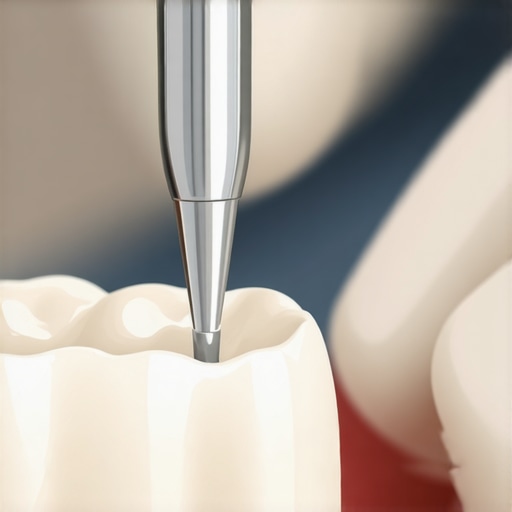
Why your old dental work might be failing
If the buzzing isn’t from a new filling, it might be coming from an older restoration that has shifted or cracked. Teeth aren’t static; they move over time, and a crown that fit perfectly five years ago might now be taking too much force. You should also check how to tell if your crown is leaking and trapping bacteria, as internal decay can weaken the tooth structure and cause it to flex under pressure. Even high-tech replacements aren’t immune to this; some patients report why your dental implant feels like its vibrating when you chew, which often points to a minor adjustment needed in how the crown sits on the implant post.
The simple adjustment that stops the hum
Most of the time, the solution is incredibly simple: an occlusal adjustment. Your dentist uses a tiny, high-speed polishing tool to shave off a fraction of a millimeter from the ‘high’ spot. It’s painless and takes about five minutes. I was shocked that such a tiny change could stop the vibration instantly. If the tooth is buzzing because of a hairline fracture, you might need to look into dental crowns vs other restorations to find a solution that binds the tooth back together. Understanding why your molar cracks when you are only eating something soft helps highlight that these vibrations are often the final warning sign before a total structural failure.Most people think that if a tooth looks good and doesn’t throb, it’s healthy. I’m here to tell you that is a dangerous oversimplification. In my experience, the ‘perfect-looking’ restoration is often the one hiding a mechanical failure. We get so caught up in expert cosmetic dentistry solutions that we forget a tooth isn’t just a white block; it’s a living sensory organ. Everyone says you should just ‘give it time’ to settle, but if you’re feeling that electric hum, time is your enemy. The real nuance here is proprioception—your brain’s ability to sense the position of your teeth. If a crown is even a few microns off, your nervous system will treat it like a foreign invader, even if your eyes see a Hollywood smile.
Stop Chasing Aesthetics When Your Bite Is Broken
A common trap I see is patients opting for veneers or crowns because they want to fix a ‘crooked’ look without addressing the underlying occlusion. If you put a beautiful piece of porcelain on a tooth that is already taking too much force, you aren’t just wasting money; you’re risking a catastrophic fracture. You might end up wondering why your porcelain veneers look bulky or unnatural when the real issue is that the dentist had to overcompensate for a misaligned bite. True family dentistry focuses on the architecture of the mouth first, then the paint job. Have you ever fallen into this trap where you prioritized a pretty smile over how it actually felt to eat? Let me know in the comments. 
Why Does My Tooth Buzz When Nothing Touches It?
This is the question that separates the beginners from the experts. If your tooth vibrates even when you aren’t chewing, you aren’t crazy—you’re likely experiencing a hyper-sensitized periodontal ligament (PDL). According to a study published in the Journal of Oral Rehabilitation, the mechanoreceptors in your PDL are so sensitive they can detect interference as thin as 10 to 30 microns. When a tooth is chronically ‘high,’ the ligament becomes so inflamed that even the vibration of your own voice or the air passing through your mouth can trigger a sensation. This is often the precursor to needing dental crowns for damaged teeth because the internal nerve is essentially being shaken to death.
Don’t Fall For The ‘New Tooth’ Illusion
Another ‘oops’ factor to avoid is assuming that a new restoration should feel like a ‘new tooth’ that you have to get used to. While there is a brief adjustment period, any vibration, clicking, or ‘thumping’ is a signal of mechanical disharmony. If you ignore it, you’re looking at long-term issues like bone loss around the root or even TMD (temporomandibular disorder). When weighing dental crowns vs other restorations, the material matters as much as the shape. Zirconia is incredibly strong, but if it’s not polished to a mirror finish, it can act like sandpaper on your opposing teeth. To ensure your investment lasts, you need to master the secret to making dental bonding last and restorations survive: harmony over hardware. Don’t let a ‘pretty’ tooth buzz its way into an early extraction.
Stop the Grind Before It Wrecks Your Investment
I used to think a night guard was just a piece of plastic designed to make me look like a boxer while I slept. I was wrong. If you’ve invested in any kind of restorative work, an occlusal guard is your insurance policy. The International Journal of Prosthodontics notes that the longevity of ceramic restorations is directly tied to managing parafunctional habits like bruxism. When you grind, you aren’t just wearing down enamel; you are fatigue-testing the bond between your crown and your tooth. If you find yourself wondering why your jaw aches every time you wake up in the morning, you’re likely vibrating those expensive crowns right off their foundations.
How do I maintain my dental crowns over the long haul?
Maintenance isn’t just about brushing; it’s about the tools you use to reach the places a standard brush can’t touch. I personally swear by a water flosser on a medium-low setting. High pressure can actually irritate the gum attachment, but a gentle pulse is essential for cleaning under a dental bridge to prevent smells and bacteria buildup. You should also be looking at the specific ingredients in your toothpaste. Avoid anything with high RDA (Relative Dentin Abrasivity) values, like some whitening or charcoal pastes, because they can microscopically scratch the surface of your porcelain, making it more prone to staining over time. This level of care is the real secret to making your dental bonding last and ensuring your dental crowns for damaged teeth remain functional for twenty years instead of five. 
Digital Twins and the Future of Your Smile
We are moving away from the era of ‘wait and see’ dentistry. The future of family dentistry involves AI-driven bite analysis and digital ‘twins’ of your mouth. In a few years, your dentist won’t just look at a static X-ray; they’ll compare a current 3D scan to one from five years ago to detect shifts in your bite down to the micron. These cosmetic dentistry innovations to watch mean we can catch that ‘buzzy’ tooth before you even feel the first vibration. We’re heading toward a world where ‘precision fit’ isn’t just a marketing term but a digital guarantee. Try this advanced tip: At your next cleaning, ask your dentist to check your bite with digital pressure-sensing film (like T-Scan) instead of just the traditional articulating paper. This tool identifies exactly which tooth is hitting first with millisecond precision. Catching a ‘high’ spot early is the single best way to protect your nervous system and your wallet from future repairs.
What I Discovered While Tuning My Own Smile
After months of trial and error, I realized that a buzzing tooth is rarely a wait-and-see situation. My biggest lightbulb moment was realizing that micro-movements matter more than macro-pain. If you can feel a vibration, your nervous system is already under siege from uneven pressure. Secondly, I learned that a high crown doesn’t just affect the tooth; it can throw off your entire postural balance and jaw alignment. Thirdly, never underestimate the power of your own feedback—if your bite feels off, it is off, regardless of what traditional X-rays might show. Finally, investing in the role of family dentistry means finding a practitioner who listens to these subtle sensory cues before they lead to structural failures.
The Toolkit Every Finicky Tooth Needs
To keep my bite in check and my restorations silent, I have narrowed down the tools that actually make a difference. First, I highly recommend finding a clinic that uses T-Scan Digital Bite Analysis; it is the only way to see the timing and force of your bite in real-time. Next, if you are currently deciding between dental crowns vs other restorations, prioritize materials like high-strength zirconia which can be polished to a mirror-like finish to prevent wear on opposing teeth. I also stopped using abrasive trends; reading up on the truth about charcoal toothpaste changed my perspective on how I treat my precious enamel. Lastly, a custom-fitted occlusal guard is a non-negotiable insurance policy for anyone with new dental work.
Step Into a Future of Pain-Free Chewing
You are not being overly sensitive or difficult by asking for a second or third adjustment. Your mouth is designed for extreme precision, and maintaining that harmony is the core of top cosmetic dentistry trends for 2025—moving from looking good to functioning perfectly. Don’t let a tiny hum turn into a major headache or a cracked tooth. Take that first step, talk to your dentist, and get your bite back in sync so you can enjoy your favorite foods without the electric shocks. Have you ever felt a weird electric vibration or a tuning fork sensation when chewing? Let me know your experience in the comments below!