I was sitting in a tiny bistro in Florence, the kind with red-checkered tablecloths and a waiter who didn’t speak a lick of English, when it happened. One bite into a piece of crusty bread and—tink. That tiny, sickening sound of ceramic hitting a plate. I didn’t even have to look in the mirror. My tongue found the jagged edge instantly. My heart sank faster than a lead weight in the Mediterranean. I had spent thousands on these porcelain beauties to feel confident, and now, three days into a dream trip, I looked like I’d been in a playground scuffle. It’s the ultimate travel nightmare, right? You’re miles from your trusted dentist, and suddenly your smile feels like a liability.
The First Rule of Chipped Veneer Club is Don’t Panic
Trust me, I know the immediate urge is to cancel your dinner reservations and hide in the hotel room. I did exactly that for four hours during my Florence fiasco. I even considered buying superglue at a local pharmacy—a massive mistake that almost ruined the underlying tooth structure. Don’t do that. Whether your porcelain veneers look opaque or perfectly natural, they are still susceptible to the occasional “life happens” moment. We are going to walk through how to stabilize the situation without losing your mind or your vacation budget. You need to know when a chip is a “wait until home” problem and when you need to find a local pro who understands expert cosmetic dentistry solutions. Most people think a chip means the whole thing is ruined, but often, it’s a manageable hiccup.
Is this actually going to ruin my whole trip?
I get it. You’re thinking, “Great, now every photo will be from the left side only.” But here’s the reality: unless there’s throbbing pain, your vacation is still alive. A chip is usually a cosmetic emergency, not a medical one. According to the American Academy of Cosmetic Dentistry (AACD), porcelain is significantly stronger than natural enamel in some respects, yet it remains brittle under specific types of pressure. But your tooth isn’t going to rot out of your head in the next seven days. If you’re worried about how the underlying tooth feels, remember that dental crowns vs other restorations is a conversation for later. Right now, we focus on protection. Have you ever had that sinking feeling where a tiny dental mishap felt like it was casting a shadow over your entire holiday? Let me know, because I suspect I’m not the only one who has let a tooth dictate their travel mood!
Keep Your Tongue Away From That Jagged Edge
The worst part isn’t even the look; it’s the constant “tongue-checking.” Your tongue is like a heat-seeking missile for sharp edges. If you don’t cover that jagged spot, you’ll have a painful sore on your tongue by tomorrow morning. I used to think I could just “be careful,” but we swallow thousands of times a day. You need a barrier. This is where your travel kit comes in handy. If you didn’t pack dental wax, find a local pharmacy. It’s a lifesaver. It’s much safer than trying to fix a jagged tooth edge with a nail file—yes, I actually saw someone suggest that on a forum once, and it makes my skin crawl! We are aiming for temporary comfort so you can get back to your gelato or your hiking trail without wincing every time you speak.
Bag that Broken Porcelain Immediately
If you can find the fragment of porcelain that snapped off, treat it like gold. While a dentist usually cannot simply superglue a chip back onto the existing structure with long-term success, having the piece allows them to inspect the type of fracture. It helps them determine if the bond failed or if the porcelain itself was too thin. Put the piece in a small, clean container. Contrary to what you might hear about knocked-out teeth, you don’t necessarily need to submerge a porcelain shard in milk, but the best way to store a broken tooth fragment or veneer piece is to keep it in a secure spot where it won’t be crushed. I once carried a porcelain chip in a contact lens case for four days across Italy; it wasn’t pretty, but it gave my dentist back home the context he needed to fix me up.
Clean the Site with a Gentle Salt Water Rinse
Before you try to cover the area, you need to make sure it is clean. Use warm water with a teaspoon of salt. Don’t scrub the tooth with a brush, as the exposed area might be sensitive. Swish gently. This helps clear away any debris and can soothe any minor gum irritation that happened during the accident. If you notice a lingering grit, it might be the reason your teeth feel gritty, but don’t over-clean it. Just a simple rinse is enough to prep the surface for a temporary barrier.
Cushion the Sharp Edge Using Dental Wax
This is the most critical step for your comfort. A chipped veneer is often razor-sharp, and your tongue will find it every three seconds. Go to a local pharmacy and ask for orthodontic wax. Pinch off a piece the size of a pea, warm it between your fingers until it’s pliable, and press it firmly over the jagged edge. It works like a tiny buffer, preventing your mouth from becoming a series of small cuts. 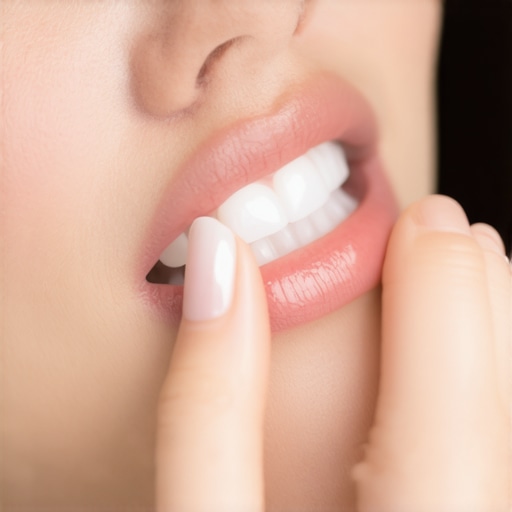 If you are traveling with kids, you might already have this in your kit if you’ve been caring for your child’s teeth through the braces phase. It’s much safer than trying to fix a jagged tooth edge yourself with any sort of tool.
Screen for Signs of Nerve Damage
You need to figure out if this is a local emergency or a situation that can wait until you return. Take a sip of room-temperature water. If you feel a sharp, shooting pain that lingers, you might have exposed the dentin or a nerve. This is how you tell if your tooth sensitivity is actually a hidden fracture or just a surface-level chip. If the pain is throbbing or constant, you need to search for local family dentistry services that handle emergencies. Think of your veneer like a shield; if the shield is gone and the underlying tooth is crying out, you need professional reinforcements immediately.
Stop Chewing on the Side of the Fracture
Even if you feel no pain, the structural integrity of that tooth is compromised. You need to treat it with extreme care. In fact, if the damage is significant enough, you might eventually need to look into dental crowns as a solution for damaged teeth rather than just a simple replacement veneer. For the rest of the trip, chew exclusively on the opposite side. Avoid crusty bread, ice, or anything sticky. I tried to eat a panini on my bad side in Florence, thinking the wax would hold. The wax stayed, but the pressure caused a second tiny crack. Stick to soft foods like pasta, yogurt, or soup to ensure the tooth remains stable until you’re back in your own dentist’s chair.Once you’ve successfully cushioned that jagged edge and survived the initial shock, it’s time to confront the deeper nuances of cosmetic repair. Most patients believe that once a veneer is bonded, it becomes an indestructible part of their anatomy. In reality, while porcelain is incredibly strong under compression, it is surprisingly vulnerable to shear stress—the kind of side-to-side force that happens when you grind your teeth or bite into something at an odd angle. A 2023 study published in the Journal of Prosthetic Dentistry highlights that the longevity of these restorations depends less on the thickness of the porcelain and more on the integrity of the adhesive bond and the underlying tooth structure. When you decide to transform your look with expert cosmetic dentistry solutions, you are entering a lifelong commitment to bio-mechanical maintenance, not just a one-time aesthetic upgrade.
Porcelain Isn’t Indestructible Armor
One of the biggest myths I hear is that cosmetic work is purely for the “after” photo. This line of thinking is a dangerous trap. When a veneer chips, the concern isn’t just the missing porcelain; it’s the potential for micro-leakage. Even a microscopic gap can allow bacteria to seep behind the restoration, leading to decay that you won’t see until it’s far too late. It is vital to learn how to tell if your crown is leaking and trapping bacteria because that same principle applies to your veneers. If the seal is compromised, the structural foundation of your smile is at risk, regardless of how white the surface looks in the mirror. 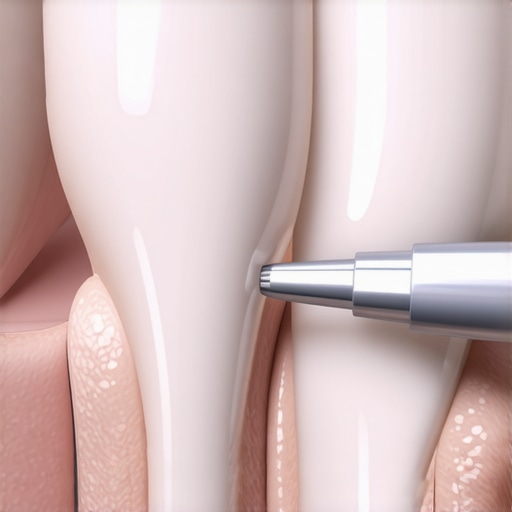
The “Hidden Leak” That Ruins Your Investment
The “Oops” factor often comes after you get home. Many people assume that if there’s no pain, there’s no problem. However, the dentin underneath your veneer is far more porous than your outer enamel. If the chip has exposed that layer, you are on a ticking clock for sensitivity and internal staining. This is where the expertise of the role of family dentistry in ensuring oral health for all ages becomes crucial; you need a professional who prioritizes the health of the pulp over the look of the porcelain. Don’t fall into the trap of delaying your appointment just because the wax is holding. Temporary fixes are for comfort, not for the preservation of your tooth’s life.
Can a tiny chip signal a bigger structural failure?
This is the question that keeps most cosmetic dentists up at night. Often, a chip isn’t just an accident; it’s a symptom. It might mean your bite has shifted, or you’ve developed a habit of clenching your jaw in your sleep. If your dentist simply slaps a new piece of porcelain on without addressing why it broke in the first place, you’ll be back in that Florence bistro scenario sooner than you think. This is why the debate over dental crowns vs other restorations is so important. Sometimes, a full crown is the more conservative choice because it protects the entire tooth from those destructive shear forces.
Why your bite feels off after a minor repair
If you do get a local fix while traveling, pay close attention to how your teeth meet. If the repair feels even a hair too high, it will act like a lightning rod for every bite you take, concentrating all the force on that one spot. Understanding why your porcelain crown feels too high when you bite down is essential for anyone with cosmetic work. A “high” spot can cause the new porcelain to fracture within hours. Always stay ahead of the curve by looking into cosmetic dentistry innovations to watch, as new bonding materials are becoming more resilient every year. Have you ever fallen into the “it’s just a small chip” trap only to find a bigger issue later? Let me know in the comments!Once the immediate panic of a chip subsides and you’ve managed the jagged edges, you have to pivot from ‘survival mode’ to ‘long-term preservation.’ If you want your investment to last fifteen years instead of five, you need more than just a toothbrush. I learned this the hard way: your biggest enemy isn’t crusty bread—it’s your own jaw while you sleep.
Wear a Night Guard or Prepare to Pay Twice
If I could go back in time, I would have worn my night guard every single night in Italy. We tend to clench more when we travel—new beds, different time zones, and the stress of navigating foreign streets. Porcelain is incredibly tough, but the repetitive grinding of bruxism will eventually cause ‘fatigue failure.’ This is why I now swear by a custom-fabricated occlusal guard. It’s not just about protection; it’s about peace of mind. However, don’t just throw it in a case and forget about it. You need to know how to clean a night guard without using harsh chemicals or bleach, because porous plastics can trap the same bacteria that threaten your gum line.
How do I maintain my porcelain smile for the next decade?
The secret lies in the ‘Three-Month Rule.’ I don’t wait six months for a check-up anymore. When you have high-end cosmetic work, you want your hygienist to check the margins of your veneers frequently. They use specialized non-abrasive polishing pastes that keep the surface smooth, preventing that ‘furry’ feeling. According to clinical data from the Clinicians Report founded by Dr. Gordon Christensen, the primary cause of ceramic failure in the anterior region is often undiagnosed or under-managed nocturnal bruxism. By visiting your practitioner for family dentistry guide building a lifetime of healthy smiles, you ensure that someone is looking at the structural integrity of the bond, not just the color. 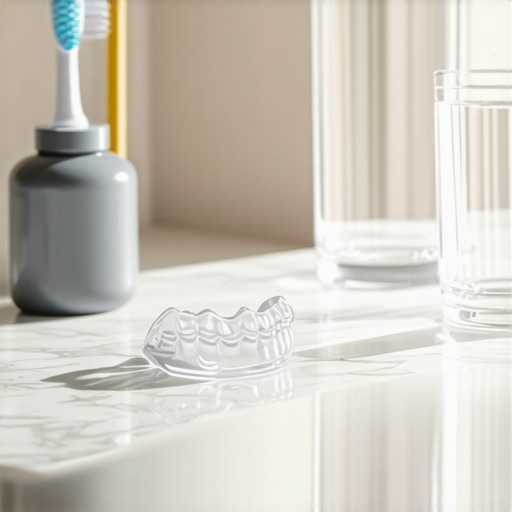
Stop Coffee Stains Before They Start
While the porcelain itself won’t stain like natural enamel, the resin cement at the edges definitely will. If you’re a heavy espresso drinker like I am, you’ll start to see a tiny dark line where the veneer meets the tooth. I’ve found that using a straw for iced coffee and rinsing with water immediately after hot coffee is the only way to stay ahead. Discovering the secret to stopping coffee from staining your new veneers changed my morning routine entirely. It’s a small price to pay to keep those margins invisible. Looking forward, the world of top cosmetic dentistry trends for 2025 suggests we are moving toward even thinner, lithium disilicate materials that mimic light-handling properties better than ever. We are seeing a shift where making your dental bonding last more than five years is becoming the standard expectation. My advanced tip? Ask your dentist for a ‘digital bite analysis’ during your next cleaning. It uses sensors to identify which teeth are taking too much pressure, allowing for micro-adjustments before a chip ever happens. Go book that bite scan today—it’s the cheapest insurance you’ll ever buy for your smile.
Realities I Learned the Hard Way About Smile Maintenance
After my Florence fiasco, I realized that a porcelain chip isn’t just a physical break; it’s a lesson in vigilance. First, I learned that professional check-ups are non-negotiable for anyone with cosmetic work. It’s not just about aesthetics; it’s about the structural health of the foundation. The role of family dentistry in ensuring oral health for all ages became clear to me—you need a dentist who knows your history before the crisis hits. Second, don’t underestimate the power of a quick salt-water rinse. Keeping the site clean prevents that nagging feeling that something is trapped behind the porcelain. I also learned to listen to my body. If a repair feels ‘high’ or weird, it’s a sign to head back to the chair immediately. Finally, I stopped viewing my veneers as bulletproof armor. They are high-precision tools that require high-precision care, even when you’re on holiday.
What I Carry to Keep My Smile Safe
My travel bag now looks a bit different. I never leave home without orthodontic wax—it’s the ultimate barrier for jagged edges and saves your tongue from painful cuts. I also keep a digital copy of my dental records on my phone. If I ever need family dentistry guide building a lifetime of healthy smiles expertise while abroad, I can provide the exact specs of my porcelain and the adhesive used. For those traveling with little ones, I recommend adding a small ‘tooth emergency kit’ to your luggage. This is a vital part of caring for your child’s teeth, as kids are even more prone to bumps and chips during active play. I personally trust the American Academy of Cosmetic Dentistry (AACD) search tool to find verified professionals when I’m in a new city and need help fast.
Your Smile is More Resilient Than You Think
A chipped veneer can feel like the end of the world when you’re looking at it in a hotel mirror, but remember that modern medicine is on your side. Whether you eventually need dental crowns vs other restorations or a simple bonding fix, the technology is evolving every day. Don’t let a temporary setback stop you from pursuing expert cosmetic dentistry solutions that give you the confidence you deserve. Look toward the future with optimism as you explore top cosmetic dentistry trends for 2025 which promise even more durable and natural-looking materials. Your dream smile is a journey, not a destination, and even a little chip is just a small detour on the road to a lifetime of healthy, beautiful teeth. Have you ever had a dental emergency ruin a vacation or a big event? Let me know in the comments below!