I remember it like it was yesterday—a sunny backyard BBQ, a stray piece of bone in a burger, and a sickening crack that echoed in my jaw. I spit into my hand and there it was: a jagged shard of my molar staring back at me. Panic is a funny thing. It makes you do irrational things. My first instinct? I wrapped it in a dry paper towel and shoved it in my pocket. Huge mistake. That tooth was functionally dead before I even reached the car. I learned the hard way that when it comes to the best way to store a broken tooth until you see a dentist, what you do in the first sixty seconds determines if you’re getting a simple repair or an expensive dental crown. Today, I’m going to share the exact steps to keep your tooth alive while you race to the ER, because nobody should lose a tooth just because they didn’t have a glass of milk handy.
How I accidentally killed my molar and why you won’t
My dentist later explained that the cells on the root of a tooth are like tiny, thirsty travelers in a desert. They need moisture, but not just any moisture. If you let them dry out, they die. Period. This is why caring for your child’s teeth after an injury requires such fast action. We’re going to walk through how to keep those cells viable while you are contacting us for an emergency slot. Have you ever felt that sudden, sharp panic of a tooth breaking during a meal? It’s a gut-wrenching feeling, but you have more power than you think. One big mistake I made was trying to ‘clean’ the tooth with hand soap. Never do that! You are scrubbing away the very ligaments that allow the tooth to reattach to your jaw. If you’ve been looking into which restoration is right for you, your best bet is always the original tooth, preserved correctly.
Is it actually possible to save a tooth that has snapped off?
It sounds like a tall tale, but the American Association of Endodontists states that a knocked-out tooth can often be saved if it is kept moist and replanted within 30 to 60 minutes. The secret isn’t magic—it’s biology. Whether you are dealing with a chipped veneer while on vacation or a deep fracture, the goal is to protect the periodontal ligament. I used to think tap water was a safe bet, but the chlorine can actually kill the delicate cells. This is especially vital in family dentistry where accidents happen on the playground daily. Knowing how to preserve a tooth can save you from needing complex cosmetic dentistry solutions later down the road. Let’s look at the best liquids you probably already have in your kitchen right now.
Grab the crown and leave the roots alone
The most critical rule of tooth survival is to touch only the white part—the crown. The root is covered in delicate periodontal ligament cells that are incredibly sensitive. Think of these cells like a school of fish; the second they are out of their environment, they start to struggle. When my nephew took a stray soccer ball to the face last summer, I had to physically stop his coach from wiping the dirt off the root with a dirty towel. By doing that, you’re essentially scrubbing away the only chance the tooth has to reattach. If the tooth is dirty, hold it by the crown and give it a quick, five-second rinse under cool water. Don’t use soap, don’t use chemicals, and for heaven’s sake, don’t scrub it. This applies whether it’s a full knockout or you’re just looking for how to fix a jagged tooth edge without a trip to the emergency room. Once it’s rinsed, your next move is all about the environment.
Stop reaching for the tap water
It’s a natural reflex to want to drop a tooth into a cup of water, but tap water is actually a cellular poison in this scenario. The chlorine and the lack of proper salt balance cause the cells on the root to swell and burst. Instead, you need a liquid that mimics the natural environment of your mouth. Cold whole milk is the gold standard because its pH level and proteins are compatible with those tiny root cells. I’ve seen cases where a tooth kept in milk for three hours was still successfully replanted, whereas a tooth in water was dead within twenty minutes. If you’re at a restaurant or a park, find a carton of milk immediately. This is one of those essential family dentistry tips that every parent should have memorized before an accident happens.
Turn your mouth into a temporary emergency room
If there is no milk in sight, the next best storage container is actually your own mouth. For adults, you can tuck the tooth into the pouch of your cheek. Your saliva is a bio-compatible fluid that will keep the root viable while you are contacting us for an emergency visit. However, I never recommend this for children. There is a very high risk that a panicked child will accidentally swallow or choke on the tooth. If you are dealing with a little one, have them spit into a small cup and keep the tooth submerged in their own saliva instead. This biological ‘holster’ buys you precious time. I remember a frantic neighbor who once kept her tooth under her tongue for forty minutes while driving to the clinic; that tooth is still in her mouth today, ten years later. Knowing the best way to save a tooth that was knocked-out in a fall depends entirely on these first few minutes of moisture management.
What happens if it is a veneer or a baby tooth
Not every dental emergency involves a living tooth. If you are handling a chipped veneer while on vacation, the urgency is different. Since a veneer is a synthetic shell, you don’t need to worry about cell death, but you do need to keep the piece safe so it can potentially be bonded back on. On the flip side, if your toddler knocks out a baby tooth, do not try to put it back in. Replanting a baby tooth can actually damage the permanent adult tooth growing underneath. In that case, you aren’t racing to save the tooth, but you are racing to ensure no fragments are left in the gum. For permanent teeth, the goal is always a quick transition to dental crowns explained by a professional or a direct replanting. If the tooth has been out for less than an hour and kept in milk or saliva, the success rate for it ‘taking’ back into the socket is remarkably high. If it’s a baby tooth, check out the best way to handle a knocked-out baby tooth to avoid future alignment issues.
Stop treating your crown like it is bulletproof
While storing a tooth in milk can save the day, most people fall into the trap of thinking that once a professional fixes the gap, the battle is over. There is a massive misconception in family dentistry that a dental crown or a veneer is a ‘set it and forget it’ solution. In my experience, the crown is actually the most vulnerable part of your smile if you don’t understand the ‘margin’—that tiny area where the porcelain meets your natural gum line. Everyone says a crown protects a tooth from further decay, but if that margin isn’t perfectly sealed, you’re essentially trapping a ticking time bomb of bacteria underneath a expensive shell. This is often the real reason your crown feels loose when you chew gum; it isn’t the gum pulling it off, it’s the structural integrity failing from the inside out.
Can you really spot a failing restoration before the pain starts?
Most patients wait for a sharp, shooting pain to call the office, but by then, the damage is often irreversible. A sophisticated way to check your own dental health is to look for a gray or dark line at the base of the tooth. Many people assume this is just a shadow or aging, but it is often a sign of ‘micro-leakage.’ According to a study published in the Journal of Oral Rehabilitation, micro-leakage at the margin of a crown is the leading cause of secondary decay, occurring in nearly 15% of restorations over a five-year period without the patient ever feeling a twinge of pain. If you’ve noticed a change in color, you need to learn how to tell if your crown is leaking and trapping bacteria before the underlying root is lost for good.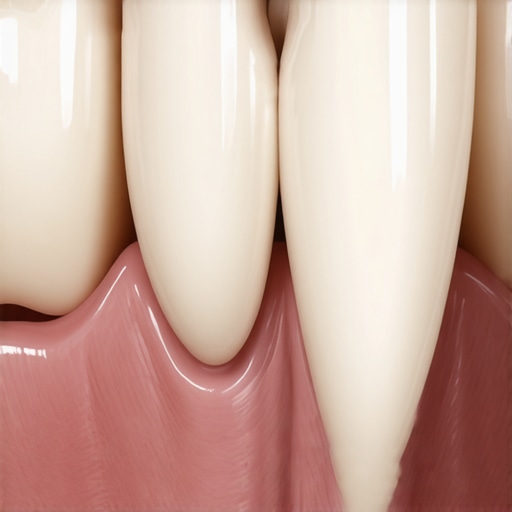
The hidden nuance of biological width
There’s a technical ‘oops’ factor that happens more often than it should in the rush of cosmetic dentistry solutions. It’s called ‘invading the biological width.’ If a restoration is placed too deep under the gum line to hide the seam, your body will actually fight back against it. This leads to chronic inflammation and is the hidden reason your gums look dark around an old dental crown. It isn’t just an aesthetic issue; it’s your immune system reacting to a foreign object that is too close to the jawbone. When you are looking at top cosmetic dentistry trends for 2025, the focus is shifting away from just ‘white teeth’ and toward the health of the gum architecture surrounding the tooth. Have you ever fallen into this trap of thinking a crown was just an aesthetic fix? Let me know in the comments. If you’re worried about a current restoration, don’t wait for the pain—reach out by contacting us today for a professional evaluation of your margins and gum health. Making an informed choice now is the difference between a lifetime smile and a repeat emergency.
Once you’ve invested in your smile, the game shifts from ‘survival’ to ‘preservation.’ I used to think that because a crown is made of porcelain or zirconia, it was basically indestructible. I was wrong. The material itself won’t decay, but the tooth underneath it is still very much alive and vulnerable. My daily routine changed the moment I realized that professional cosmetic dentistry solutions require more than just a quick brush before bed. If you want these restorations to last decades instead of years, you have to treat them like the precision-engineered hardware they are.
My non-negotiable toolkit for a high-maintenance smile
I don’t leave my oral health to chance anymore. I switched to a Waterpik Aquarius because string floss simply cannot reach the depths of the gingival sulcus around a dental restoration as effectively. Specifically, the 1,400 pulses per minute of a water flosser help disrupt the biofilm that likes to hide right where the crown meets the gumline. This is vital because that ‘margin’ is the only thing standing between your root and a bacterial invasion. When you are looking at which restoration is right for you, remember that the maintenance doesn’t get easier with more complex work—it gets more specific. I also use a pH-neutral mouthwash to avoid the acidic erosion that often comes with cheaper, alcohol-based brands.
How do I keep these crowns perfect for the next twenty years?
Longevity is the ultimate goal in family dentistry. According to Dr. Gordon Christensen, a world-renowned expert in restorative dentistry, while the average crown might last 10 to 15 years, meticulous margin care and bite management can extend that life significantly. One of my biggest secrets is using a night guard. Even if you don’t think you grind your teeth, the micro-stresses of nighttime clenching can cause ‘crazing’—tiny cracks in the porcelain that eventually lead to total failure. It’s the cheapest insurance policy you can buy for your mouth. If you already have one, make sure you know the best way to clean your night guard so you aren’t reintroducing bacteria to your mouth every single night.
Smart tech is changing how we track dental decay
The future of keeping your smile intact is looking incredibly high-tech. I’m already seeing a shift toward top cosmetic dentistry trends for 2025 that include AI-integrated intraoral cameras. These tools can spot ‘micro-leakage’ at the base of a crown long before a human eye or a traditional X-ray can. I predict that within the next five years, we will have ‘smart’ crowns embedded with sensors that can alert your phone if the pH levels under the restoration indicate a cavity is forming. Until then, we rely on the fundamentals of family dentistry and regular checkups to ensure everything is sealed tight. If you’re curious about how your existing dental work is holding up, I highly recommend contacting us for a digital scan to check the integrity of your margins. Take my advice: swap your manual floss for a high-quality water flosser this week. Your gums—and your bank account—will thank you for the preventative effort.
I remember it like it was yesterday—a sunny backyard BBQ, a stray piece of bone in a burger, and a sickening crack that echoed in my jaw. I spit into my hand and there it was: a jagged shard of my molar staring back at me. Panic is a funny thing. It makes you do irrational things. My first instinct? I wrapped it in a dry paper towel and shoved it in my pocket. Huge mistake. That tooth was functionally dead before I even reached the car. I learned the hard way that when it comes to the best way to store a broken tooth until you see a dentist, what you do in the first sixty seconds determines if you’re getting a simple repair or an expensive dental crown. Today, I’m going to share the exact steps to keep your tooth alive while you race to the ER, because nobody should lose a tooth just because they didn’t have a glass of milk handy.
How I accidentally killed my molar and why you won’t
My dentist later explained that the cells on the root of a tooth are like tiny, thirsty travelers in a desert. They need moisture, but not just any moisture. If you let them dry out, they die. Period. This is why caring for your child’s teeth after an injury requires such fast action. We’re going to walk through how to keep those cells viable while you are contacting us for an emergency slot. Have you ever felt that sudden, sharp panic of a tooth breaking during a meal? It’s a gut-wrenching feeling, but you have more power than you think. One big mistake I made was trying to ‘clean’ the tooth with hand soap. Never do that! You are scrubbing away the very ligaments that allow the tooth to reattach to your jaw. If you’ve been looking into which restoration is right for you, your best bet is always the original tooth, preserved correctly.
Is it actually possible to save a tooth that has snapped off?
It sounds like a tall tale, but the American Association of Endodontists states that a knocked-out tooth can often be saved if it is kept moist and replanted within 30 to 60 minutes. The secret isn’t magic—it’s biology. Whether you are dealing with a chipped veneer while on vacation or a deep fracture, the goal is to protect the periodontal ligament. I used to think tap water was a safe bet, but the chlorine can actually kill the delicate cells. This is especially vital in family dentistry where accidents happen on the playground daily. Knowing how to preserve a tooth can save you from needing complex cosmetic dentistry solutions later down the road. Let’s look at the best liquids you probably already have in your kitchen right now.
Grab the crown and leave the roots alone
The most critical rule of tooth survival is to touch only the white part—the crown. The root is covered in delicate periodontal ligament cells that are incredibly sensitive. Think of these cells like a school of fish; the second they are out of their environment, they start to struggle. When my nephew took a stray soccer ball to the face last summer, I had to physically stop his coach from wiping the dirt off the root with a dirty towel. By doing that, you’re essentially scrubbing away the only chance the tooth has to reattach. If the tooth is dirty, hold it by the crown and give it a quick, five-second rinse under cool water. Don’t use soap, don’t use chemicals, and for heaven’s sake, don’t scrub it. This applies whether it’s a full knockout or you’re just looking for how to fix a jagged tooth edge without a trip to the emergency room. Once it’s rinsed, your next move is all about the environment.
Stop reaching for the tap water
It’s a natural reflex to want to drop a tooth into a cup of water, but tap water is actually a cellular poison in this scenario. The chlorine and the lack of proper salt balance cause the cells on the root to swell and burst. Instead, you need a liquid that mimics the natural environment of your mouth. Cold whole milk is the gold standard because its pH level and proteins are compatible with those tiny root cells. I’ve seen cases where a tooth kept in milk for three hours was still successfully replanted, whereas a tooth in water was dead within twenty minutes. If you’re at a restaurant or a park, find a carton of milk immediately. This is one of those essential family dentistry tips that every parent should have memorized before an accident happens.
Turn your mouth into a temporary emergency room
If there is no milk in sight, the next best storage container is actually your own mouth. For adults, you can tuck the tooth into the pouch of your cheek. Your saliva is a bio-compatible fluid that will keep the root viable while you are contacting us for an emergency visit. However, I never recommend this for children. There is a very high risk that a panicked child will accidentally swallow or choke on the tooth. If you are dealing with a little one, have them spit into a small cup and keep the tooth submerged in their own saliva instead. This biological ‘holster’ buys you precious time. I remember a frantic neighbor who once kept her tooth under her tongue for forty minutes while driving to the clinic; that tooth is still in her mouth today, ten years later. Knowing the best way to save a tooth that was knocked-out in a fall depends entirely on these first few minutes of moisture management.
What happens if it is a veneer or a baby tooth
Not every dental emergency involves a living tooth. If you are handling a chipped veneer while on vacation, the urgency is different. Since a veneer is a synthetic shell, you don’t need to worry about cell death, but you do need to keep the piece safe so it can potentially be bonded back on. On the flip side, if your toddler knocks out a baby tooth, do not try to put it back in. Replanting a baby tooth can actually damage the permanent adult tooth growing underneath. In that case, you aren’t racing to save the tooth, but you are racing to ensure no fragments are left in the gum. For permanent teeth, the goal is always a quick transition to dental crowns explained by a professional or a direct replanting. If the tooth has been out for less than an hour and kept in milk or saliva, the success rate for it ‘taking’ back into the socket is remarkably high. If it’s a baby tooth, check out the best way to handle a knocked-out baby tooth to avoid future alignment issues.
Stop treating your crown like it is bulletproof
While storing a tooth in milk can save the day, most people fall into the trap of thinking that once a professional fixes the gap, the battle is over. There is a massive misconception in family dentistry that a dental crown or a veneer is a ‘set it and forget it’ solution. In my experience, the crown is actually the most vulnerable part of your smile if you don’t understand the ‘margin’—that tiny area where the porcelain meets your natural gum line. Everyone says a crown protects a tooth from further decay, but if that margin isn’t perfectly sealed, you’re essentially trapping a ticking time bomb of bacteria underneath a expensive shell. This is often the real reason your crown feels loose when you chew gum; it isn’t the gum pulling it off, it’s the structural integrity failing from the inside out.
Can you really spot a failing restoration before the pain starts?
Most patients wait for a sharp, shooting pain to call the office, but by then, the damage is often irreversible. A sophisticated way to check your own dental health is to look for a gray or dark line at the base of the tooth. Many people assume this is just a shadow or aging, but it is often a sign of ‘micro-leakage.’ According to a study published in the Journal of Oral Rehabilitation, micro-leakage at the margin of a crown is the leading cause of secondary decay, occurring in nearly 15% of restorations over a five-year period without the patient ever feeling a twinge of pain. If you’ve noticed a change in color, you need to learn how to tell if your crown is leaking and trapping bacteria before the underlying root is lost for good.
The hidden nuance of biological width
There’s a technical ‘oops’ factor that happens more often than it should in the rush of cosmetic dentistry solutions. It’s called ‘invading the biological width.’ If a restoration is placed too deep under the gum line to hide the seam, your body will actually fight back against it. This leads to chronic inflammation and is the hidden reason your gums look dark around an old dental crown. It isn’t just an aesthetic issue; it’s your immune system reacting to a foreign object that is too close to the jawbone. When you are looking at top cosmetic dentistry trends for 2025, the focus is shifting away from just ‘white teeth’ and toward the health of the gum architecture surrounding the tooth. Have you ever fallen into this trap of thinking a crown was just an aesthetic fix? Let me know in the comments. If you’re worried about a current restoration, don’t wait for the pain—reach out by contacting us today for a professional evaluation of your margins and gum health. Making an informed choice now is the difference between a lifetime smile and a repeat emergency.
Once you’ve invested in your smile, the game shifts from ‘survival’ to ‘preservation.’ I used to think that because a crown is made of porcelain or zirconia, it was basically indestructible. I was wrong. The material itself won’t decay, but the tooth underneath it is still very much alive and vulnerable. My daily routine changed the moment I realized that professional cosmetic dentistry solutions require more than just a quick brush before bed. If you want these restorations to last decades instead of years, you have to treat them like the precision-engineered hardware they are.
My non-negotiable toolkit for a high-maintenance smile
I don’t leave my oral health to chance anymore. I switched to a Waterpik Aquarius because string floss simply cannot reach the depths of the gingival sulcus around a dental restoration as effectively. Specifically, the 1,400 pulses per minute of a water flosser help disrupt the biofilm that likes to hide right where the crown meets the gumline. This is vital because that ‘margin’ is the only thing standing between your root and a bacterial invasion. When you are looking at which restoration is right for you, remember that the maintenance doesn’t get easier with more complex work—it gets more specific. I also use a pH-neutral mouthwash to avoid the acidic erosion that often comes with cheaper, alcohol-based brands.
How do I keep these crowns perfect for the next twenty years?
Longevity is the ultimate goal in family dentistry. According to Dr. Gordon Christensen, a world-renowned expert in restorative dentistry, while the average crown might last 10 to 15 years, meticulous margin care and bite management can extend that life significantly. One of my biggest secrets is using a night guard. Even if you don’t think you grind your teeth, the micro-stresses of nighttime clenching can cause ‘crazing’—tiny cracks in the porcelain that eventually lead to total failure. It’s the cheapest insurance policy you can buy for your mouth. If you already have one, make sure you know the best way to clean your night guard so you aren’t reintroducing bacteria to your mouth every single night.
Smart tech is changing how we track dental decay
The future of keeping your smile intact is looking incredibly high-tech. I’m already seeing a shift toward top cosmetic dentistry trends for 2025 that include AI-integrated intraoral cameras. These tools can spot ‘micro-leakage’ at the base of a crown long before a human eye or a traditional X-ray can. I predict that within the next five years, we will have ‘smart’ crowns embedded with sensors that can alert your phone if the pH levels under the restoration indicate a cavity is forming. Until then, we rely on the fundamentals of family dentistry and regular checkups to ensure everything is sealed tight. If you’re curious about how your existing dental work is holding up, I highly recommend contacting us for a digital scan to check the integrity of your margins. Take my advice: swap your manual floss for a high-quality water flosser this week. Your gums—and your bank account—will thank you for the preventative effort.
What Your Dentist Might Forget to Mention
After years of navigating dental emergencies and restorations, I’ve realized that most people treat their teeth like living organs rather than static objects. First, never assume a lack of pain means a lack of a problem; silent issues like micro-leakage can rot a tooth under a crown for years. Second, if you feel a weird ‘zing’ when drinking cold water, check how to tell if your tooth sensitivity is actually a hidden fracture before the integrity of the root is compromised. Finally, I’ve learned to be skeptical of ‘instant’ DIY fixes; I’ve seen far too many people regret the truth about at-home impression kits for aligners when they realize professional supervision is what actually prevents long-term bone loss.
The Tools That Actually Keep My Teeth Intact
I’ve distilled my oral care down to a few high-impact tools that go beyond the basic toothbrush. I trust a high-quality water flosser because it is the only thing that effectively cleans the ‘biological width’ around my crowns without causing chronic inflammation. I also never sleep without a custom-fit night guard to protect against micro-stresses. If you use one, follow the best way to clean your night guard so it doesnt smell to keep your oral biome healthy. Lastly, I always keep a small dental preservation kit in my bag—it is a small investment that can save a tooth when you are miles away from a kitchen with cold milk.
The Future of Your Dental Health Starts Today
Taking care of your smile doesn’t have to be a constant battle; it’s about honoring the biology of your mouth. Whether you are dealing with a sudden emergency or just improving your long-term family dentistry routine, the power is in your hands. Don’t wait for a crisis to prioritize your health. A little bit of knowledge and the right tools can keep your natural teeth—and your beautiful cosmetic dentistry solutions—shining for a lifetime. Have you ever had a dental emergency that caught you off guard? Let me know below.