I’ll never forget the morning I woke up feeling like a tiny, angry drummer was rehearsing inside the gum line of my upper left molar. It wasn’t a full-blown ache, but a persistent, localized pressure that made every sip of coffee feel like a gamble. I did what most of us do: I poked at it with my tongue, convinced myself I’d just brushed too hard, and went about my day. By dinner, that single spot was a fiery red knot. I’ve spent years learning the ins and outs of family dentistry through my own dental hurdles, and let me tell you, localized swelling is rarely ‘nothing.’ Whether you’ve got a dental crown acting up or a mysterious bump, ignoring it is the fastest way to a root canal.
That One Throbbing Spot Is Trying to Tell You Something
It’s easy to panic when your gums decide to rebel, especially when the rest of your mouth feels perfectly fine. I once made the classic mistake of thinking a swollen area around my canine was just ‘irritation’ from a new toothbrush. I waited a week, only to find out I had a localized infection that could have been handled in ten minutes if I’d just called my dentist sooner. Swelling is essentially your body’s alarm system. According to the American Academy of Periodontology, localized gum inflammation can actually be a sign of anything from a simple ‘food impaction’ to a deep-seated periodontal pocket that’s trapping bacteria.
Is this actually a dental emergency or just a piece of stuck food?
This is the question that keeps us up at night, isn’t it? Sometimes the culprit is as simple as a stuck strawberry seed or a popcorn hull wedged under the gum line. Other times, your body might be reacting to a structural issue. If you have an older restoration, you might be dealing with the hidden reason your gums look dark or swollen around an aging crown. We’re going to figure out if you can handle this with a bit of saltwater or if you need to be in the dental chair by tomorrow morning. Have you ever felt that weird, localized pressure and tried to ‘wait it out’ only for it to get worse? Let me know in the comments, because I’ve definitely been there.
Why localized swelling happens even when you brush twice a day
You can be a superstar flosser and still end up with a puffy gum around a single tooth. It feels unfair, right? But dental health isn’t always about hygiene; sometimes it’s about physics. If you have a cavity or a hidden abscess, the infection will often take the path of least resistance, causing a ‘bump’ or swelling right at the root of the affected tooth. This is why understanding dental crowns vs. other restorations is so vital; if a crown isn’t seated perfectly, it can create a tiny ledge where bacteria throw a party, leading to that localized puffiness. We need to look at the ‘why’ before we can fix the ‘what.’
Start with a Gentle Sweep to Rule Out Debris
Before you assume the worst, we need to make sure you aren’t just dealing with a trapped foreign object. I remember a frantic Tuesday where I was certain I needed an emergency extraction because my lower gum was throbbing. It turned out to be a microscopic piece of a taco shell that had wedged itself into the pocket. To handle this, grab some waxed floss—not the cheap stuff that shreds—and gently guide it into the sulcus (that little pocket between your tooth and gum). If it’s a stuck strawberry seed or popcorn hull, a few careful passes might dislodge the culprit. Don’t dig aggressively; you’re a detective, not a construction worker. If you can’t clear it with floss, try a water flosser on a low setting to flush the area. 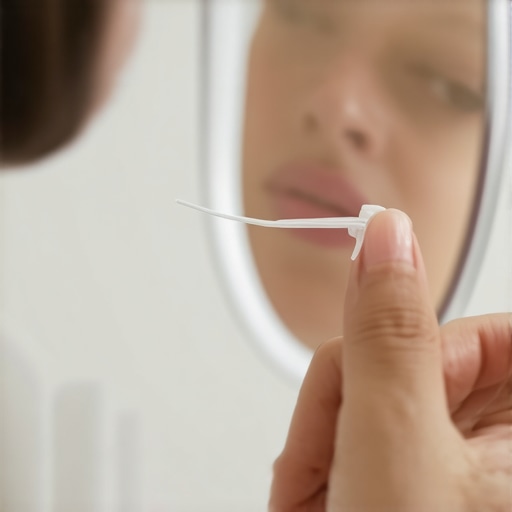
Spot the Difference Between Irritation and a Deep Abscess
If the area is visibly red and looks like a small pimple on the gum, you’ve moved past simple irritation. This is where you need to learn how to tell if your toothache is a cavity or an abscess. An abscess is essentially a pocket of infection trying to find an exit. While you wait for a professional to take a look, a warm saltwater rinse is your best friend. Mix half a teaspoon of salt in eight ounces of warm water and swish for 30 seconds. The salt acts as a natural osmotic agent, drawing out some of the excess fluid and reducing that ‘tight’ feeling. It won’t cure an infection, but it buys you comfort. If the swelling is accompanied by a foul taste or a fever, you need to know how to handle a sudden abscess before your emergency appointment to prevent the infection from spreading.
When Your Old Crown Starts Trapping Bacteria
Sometimes the problem isn’t the tooth itself, but the hardware protecting it. If the swelling is localized around a tooth that was restored years ago, you might be seeing the hidden reason your gums look dark around an old dental crown. Over time, the seal on a crown can degrade. Think of a crown like a lid on a jar; if the lid gets a tiny dent, air and moisture get in. In your mouth, that means bacteria. This is a common hurdle in family dentistry where older restorations eventually need a refresh. If your gum feels spongy or bleeds every time you brush near that specific dental crown, it’s a sign that the fit is no longer ‘biocompatible.’ The gum is reacting to the bacterial buildup under the margin of the cap.
Watch the Kids for Similar Symptoms
This isn’t just an adult problem. If you notice your little one complaining about a ‘bump’ while eating, don’t ignore it. Caring for your child’s teeth involves checking for localized redness which can often be caused by ‘eruption gingivitis’—where the gum swells as a new molar pushes through. However, if the tooth is already in and the gum is puffy, it could be a small cavity that has reached the nerve. If you’re unsure about the severity, your first move should be to contact us or your local provider to rule out a pediatric infection.
We need to dismantle a very common myth: the idea that a dental crown is a ‘forever’ suit of armor that makes your tooth invulnerable. In my experience, patients often think that once a tooth is capped, they can relax their vigilance. The truth is actually the opposite. A crown creates a 360-degree margin—a seam where the restoration meets your natural tooth—and that seam is the most vulnerable real estate in your mouth. If you’re experiencing localized swelling, it might not be a hygiene failure at all, but a mechanical one. Understanding when and why dental crowns are needed is only half the battle; the other half is acknowledging that they require more precise care than an untouched tooth.
The Expensive Mistake of Chasing Aesthetics Before Health
The biggest ‘oops’ factor I see in modern dental care is the rush toward a Hollywood smile while ignoring the foundation. It is incredibly tempting to jump into top cosmetic dentistry trends because we want that instant confidence boost. However, placing high-end veneers or crowns on gums that are already prone to inflammation is like building a skyscraper on a swamp. This is where the role of family dentistry becomes critical. You need a provider who prioritizes the ‘boring’ stuff—bone density and gum attachment—before handing you a mirror to admire your new look. If you skip the structural checkup, that localized swelling you’re seeing today could turn into a total restoration failure by next year. 
Can a perfectly placed crown still irritate your gums?
This is a question that stumps even the most diligent patients. You’re brushing, you’re flossing, and your dentist says the crown fits perfectly, yet the gum remains puffy. This often comes down to a concept called ‘biological width.’ According to a landmark study published in the Journal of Clinical Periodontology, there is a specific amount of soft tissue that must exist between the bottom of a dental restoration and the top of the jawbone. If a crown is placed even a fraction of a millimeter too deep, your body perceives it as a foreign invader. The resulting swelling isn’t an infection; it’s an inflammatory response to a space violation. This is why expert cosmetic dentistry solutions require such a high level of surgical precision.
Sometimes, the issue is purely material-based. If you notice why your gums look dark around an old metal-fused crown, you might be dealing with a minor allergic reaction or oxidation from the base metal. Switching to a biocompatible zirconia or all-porcelain option can often make that stubborn swelling vanish overnight. We have to look at the chemistry of the mouth, not just the cleanliness. Have you ever fallen into the trap of thinking a crown meant you were ‘done’ with that tooth’s problems? Let me know in the comments, because navigating the nuances of dental crowns vs. other restorations is a learning curve for all of us.
If you want your crown to last fifteen years instead of five, you have to change your mechanical approach. I personally use a high-powered water flosser every night because standard string floss often glides right over the ‘ledge’ of a crown without disrupting the biofilm underneath. According to Dr. Gordon Christensen of the Clinicians Report, one of the most respected voices in restorative dentistry, the marginal integrity of a restoration is most often compromised by acidic environments and neglected margins. This is why I suggest switching to a pH-neutralizing mouthwash rather than the harsh, alcohol-based ones that dry out your gingival tissues.
Stop treating your crown like a normal tooth
When we talk about family dentistry, we often focus on the children, but adults need a different set of tactical tools to preserve their work. I’ve found that interdental brushes—those tiny, tapered brushes that look like miniature Christmas trees—are far superior for cleaning around the base of a dental crown. They physically scrub the area where the porcelain meets your natural tooth, which is exactly where that localized swelling usually starts. If you aren’t sure which size fits your specific gap, it’s time to contact us for a quick professional measurement. 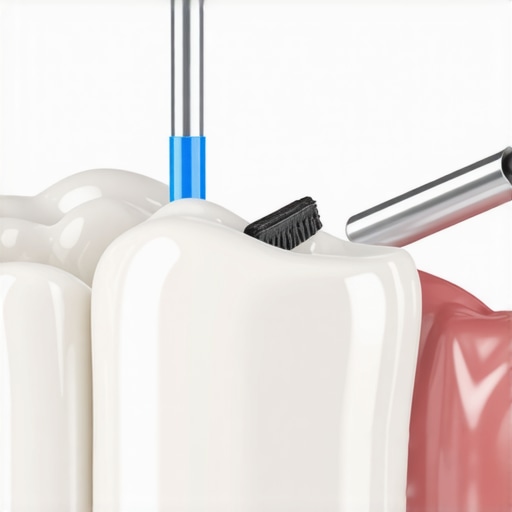
How do I keep my dental work from failing prematurely?
Consistency is boring, but it’s the only thing that works for long-term oral health. Beyond the water flosser, you need to protect the structural integrity of the porcelain. If you’re a ‘clencher’ like me, you’re essentially micro-fracturing your expensive work every single night. Investing in a custom guard and learning the best way to clean your night guard is mandatory for survival, not optional. This is the difference between a restoration that thrives and one that eventually cracks under pressure. It’s the same logic we apply when discussing the secret to keeping your dental implants healthy for life—mechanical protection is the priority.
What the future holds for your restorations
I predict that in the next few years, top cosmetic dentistry trends will shift toward bio-active crowns that actually release minerals to strengthen the tooth structure underneath. For now, we have to rely on smart habits. Try this advanced tip: dip your interdental brush in a tiny bit of non-abrasive fluoride gel before sliding it between your teeth tonight. It delivers the protection exactly where the margin is most vulnerable. This level of care ensures that your expert cosmetic dentistry solutions remain a source of confidence rather than a source of localized inflammation.
Lessons from the Chair: What I Wish I Knew Before My First Crown
After years of navigating the world of restorative dentistry, I’ve realized that the ‘silent’ phase of an issue is the most dangerous. First, localized swelling is never just a random event; it is your body’s specific way of flagging a mechanical or biological breach. Second, you have to realize that the real reason your crown feels loose when you chew gum is often because that swelling has already begun to compromise the adhesive seal. Lastly, your gums are a dynamic living tissue, not a static frame. They respond to stress, pH changes, and even how hard you clench your jaw at night. If you feel a dull pressure, don’t wait for it to become sharp pain. Knowing how to tell if your tooth sensitivity is actually a hidden fracture can save you from an emergency extraction down the road.
Tools That Stop Gums from Complaining
If you want to keep that localized inflammation at bay, you need to upgrade your home-care toolkit. I swear by interdental brushes; unlike string floss, these tiny bristles can scrub the ‘ledge’ where your crown meets your gum, removing the biofilm that causes puffiness. I also recommend a high-quality water flosser used with lukewarm water to flush out debris without irritating sensitive tissue. Finally, never underestimate the power of a custom night guard. Protecting your porcelain from the sheer force of grinding is the best way to ensure your gums don’t suffer from ‘occlusal trauma.’ If your current hardware feels off, it’s always better to contact us sooner rather than later to adjust the fit.
Take Charge of Your Oral Legacy
Maintaining a healthy mouth isn’t about perfection; it’s about persistence. By paying attention to those small signals—like a single red spot or a bit of pressure—you’re doing the hard work of family dentistry right in your own bathroom. Your smile is a long-term investment, and protecting your restorations today ensures you won’t be dealing with avoidable setbacks tomorrow. Have you ever had a crown that felt perfectly fine until you suddenly noticed a bump on the gum? Let me know your experience in the comments!