I’ll never forget the morning my youngest finally woke up without a temperature after a brutal four-day flu. I was so relieved I could have cried. But then, as he gave me a sleepy grin over his juice box, my heart sank. Right there, on his two front teeth, were these weird, chalky white spots that definitely weren’t there a week ago. My first instinct? Total guilt. I figured I’d done a terrible job brushing his teeth while he was miserable on the couch. I grabbed his toothbrush and practically scrubbed his poor gums raw, thinking it was just some stubborn plaque or that gritty, furry feeling you get when you’ve been mouth-breathing through a fever. It didn’t budge. That was my first big mistake as a ‘dental-conscious’ parent—treating a structural issue like a hygiene one. If you’re staring at your child’s smile right now wondering if you’ve somehow failed, take a deep breath. You didn’t. We are going to figure out exactly why those spots appeared and how we can keep that smile strong using a solid family dentistry guide to navigate the next steps.
When the Flu Leaves a Lasting Mark on Their Smile
The connection between a high fever and tooth enamel is one of those things they don’t tell you in the ‘welcome to parenthood’ handbook. It turns out that when a child’s body is fighting off a major infection, it has to prioritize. Their immune system is working overtime, and sometimes, the ‘lesser’ jobs—like building perfectly smooth tooth enamel—get put on the back burner. This is often called enamel hypoplasia or enamel opacity. According to the American Academy of Pediatric Dentistry, systemic stressors like a high fever can actually disrupt the ameloblasts, which are the specialized cells responsible for laying down enamel. If those cells get interrupted, the enamel doesn’t mineralize correctly, leaving behind those tell-tale white or brown patches. I spent way too much time worrying it was a cavity, but it’s actually more about the ‘skin’ of the tooth being thinner in those specific spots. This is why child-friendly dental care focuses so much on early intervention; those spots are a bit more vulnerable to decay than the rest of the tooth. Have you noticed these spots appearing suddenly after a rough winter of colds and ear infections?
Will these spots just disappear if I brush harder?
This is the question that kept me up at night, and the short answer is no. Brushing harder actually makes it worse because you’re scrubbing away at enamel that is already thinner than it should be. Because this happened while the tooth was still developing or just erupting, it’s a structural change, not a surface stain. While you can’t ‘wash’ them away, there are plenty of ways to manage them, ranging from simple fluoride treatments to more advanced cosmetic dentistry solutions once they get a bit older. The real goal right now isn’t just about looks; it’s about making sure those spots don’t turn into full-blown cavities. It’s also crucial to distinguish these marks from other issues, like knowing if your baby is teething or has a fever, because the timing of the fever matters immensely for which teeth end up affected.
Stop the Damage Before It Dives Deeper
Once you spot those chalky patches, the clock starts ticking. Because the enamel is porous, it acts like a sponge for acids and bacteria. Your first move isn’t to scrub harder, but to change the environment of the mouth. Think of these spots as a ‘pothole’ in a newly paved road; if you don’t fill it, the rain and traffic will eventually turn it into a sinkhole. To get ahead of this, you need a strategy that combines professional intervention with precise at-home caring for your childs teeth essential family dentistry tips. When I noticed the spots on my son’s teeth, we didn’t just ‘watch and wait.’ We went straight to the professional ‘seal and shield’ method, which involves remineralization therapy.
Get a Grip on High-Concentration Fluoride
The fluoride in your toothpaste is like a light drizzle, but these white spots need a heavy-duty sealant. A professional fluoride varnish is the gold standard here. It’s a highly concentrated resin that stays on the tooth for several hours, forcing minerals back into the weakened structure. The truth about fluoride varnish for kids and adults is that it’s not just about preventing new cavities; it’s about ‘freezing’ the current damage in place. I remember sitting in that tiny dental chair with my daughter, watching the dentist paint on a sticky, bubblegum-scented varnish. It looked a bit yellow for a few hours, but it acted as a temporary raincoat for her teeth while they were at their most vulnerable.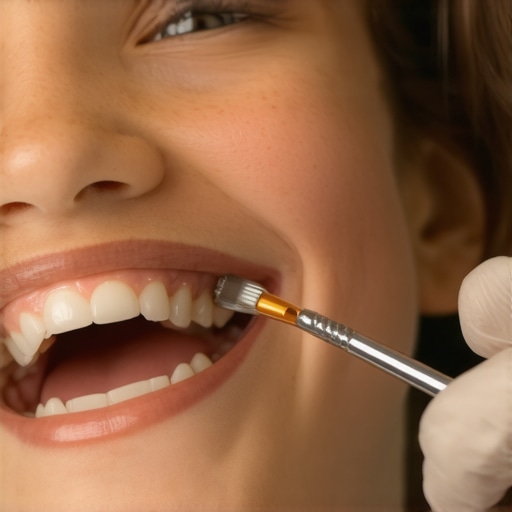
Seal the Deal on Back Molars
If the fever happened while their permanent molars were forming (usually between ages birth to three), those back teeth might emerge with deep, soft grooves. This is where why your child needs a dental sealant on their back molars becomes a non-negotiable step. Sealants act as a physical barrier, essentially ‘cladding’ the chewing surface so food particles can’t get trapped in the weak enamel. It’s a painless process that involves ‘painting’ a thin layer of plastic into the grooves. For my kids, this was the difference between a simple check-up and a tearful afternoon getting a filling.
When the Spot Needs More Than Just a Shield
Sometimes, the fever hits so hard that the enamel isn’t just thin—it’s missing or severely pitted. In these cases, a simple varnish won’t cut it. You might need to look into the truth about the lifespan of composite tooth colored fillings to patch the area. If the damage is extensive across the whole tooth, dental crowns explained the ultimate solution for damaged teeth might be necessary even for baby teeth. A crown acts like a helmet, protecting the entire tooth from crumbling under the pressure of chewing. While it sounds intense for a child, modern pediatric crowns are often tooth-colored and blend in seamlessly with the rest of the smile. For older kids, these repairs are part of the latest revamp your smile top cosmetic dentistry trends for 2025, ensuring that childhood illnesses don’t dictate their confidence as teenagers.Everyone says that a quick whitening kit is the ‘easy’ fix for any discoloration, but in my experience, that is the fastest way to turn a subtle white spot into a glowing neon sign. Most parents think they can just ‘even out’ the color of the tooth by bleaching the rest of it. This is a massive mistake. Because the white spots from enamel hypoplasia are more porous, they actually absorb the whitening agent faster and more intensely than the healthy enamel around them. Instead of blending in, the spots become even more opaque and prominent. This is where the safest way to whiten teeth if you have thin enamel involves professional supervision that focuses on remineralization rather than just bleaching. A study published in the Journal of the American Dental Association (JADA) highlights that hypomineralized enamel has a significantly lower mineral density, meaning standard abrasive treatments or high-acid whitening gels can actually erode what little protection the tooth has left. 
Can a white spot mean your dental crown is failing?
For older children or parents who might already have restorations, it is vital to distinguish between a new ‘fever spot’ and a structural failure. If you notice a white or chalky margin around the edge of an existing restoration, you aren’t looking at a mineralization issue; you are likely looking at a seal failure. Understanding how to tell if your crown is leaking and trapping bacteria is a high-level skill that saves you from a surprise root canal later. In these cases, the ‘spot’ is actually demineralization caused by trapped plaque under the prosthetic. This is the ‘Oops’ factor many people miss—treating every white mark as a cosmetic annoyance rather than a potential infection. When we look at transform your look with expert cosmetic dentistry solutions, the goal isn’t just to hide the mark, but to ensure the tooth underneath is structurally sound. Whether you are navigating caring for your childs teeth essential family dentistry tips or looking into the revamp your smile top cosmetic dentistry trends for 2025, always prioritize the foundation of the tooth over the brightness of the shade. Have you ever fallen into this trap of trying to whiten away a structural spot? Let me know in the comments.
When you are dealing with structural enamel issues, your standard drugstore toothbrush and paste just won’t cut it. I learned the hard way that maintaining a compromised smile requires a shift from ‘cleaning’ to ‘fortifying.’ For my family, that meant introducing 5,000 ppm fluoride toothpaste into our nightly routine. Unlike standard pastes, this high-concentration formula—often prescribed as 1.1% Sodium Fluoride—works through a process called ionic exchange, where fluoride ions replace the weaker hydroxyl groups in your enamel’s hydroxyapatite. It’s essentially armor in a tube. If you are an adult struggling with these same childhood remnants, the truth about fluoride treatments for adults with thin enamel is that they are not just for kids; they are the baseline for keeping your natural teeth functional as you age.
Use High-Strength Fluoride to Rebuild Your Enamel
Beyond the paste, I’ve become an advocate for the ‘no-rinse’ method. After brushing with a high-strength fluoride, do not rinse your mouth with water. Let that concentrated film sit on those porous white spots overnight. To ensure I’m reaching the tight spaces where these spots often start to decay, I’ve integrated a water flosser with a specialized orthodontic tip. This isn’t just about removing food; it’s about flushing the gingival sulcus with oxygenated water to kill anaerobic bacteria that thrive in the pits of hypoplastic enamel. If you find the pressure too intense, learning how to stop your gums from hurting when you use a water flosser can help you stay consistent with this critical tool. Consistent use of these specialized tools significantly reduces the risk of needing major restorations later in life.

Stop the Grinding Before It Shatters Your Crowns
If you have already invested in repairs, such as dental crowns explained the ultimate solution for damaged teeth, your maintenance game has to level up. One of the biggest threats to a crown is nocturnal bruxism—grinding your teeth while you sleep. Because the porcelain of a crown is harder than natural enamel, grinding can actually cause the opposing natural tooth to wear down at an accelerated rate, or worse, cause the crown itself to chip. I recommend a custom-fabricated occlusal guard. It’s a small price to pay to protect a restoration that cost ten times as much. You also need to keep that guard pristine; knowing how to clean a night guard without using harsh chemicals or bleach ensures you aren’t introducing harmful residues into your mouth every night. If you ever feel like your porcelain crown feels too high when you bite down, it could be a sign of inflammation or shifting that needs immediate professional attention.
How do I maintain my family’s dental health over time?
Maintenance is a marathon, not a sprint. It’s about the cumulative effect of small, high-tech interventions. Looking ahead, I predict we will see the rise of ‘bio-active’ materials in mainstream dentistry—think fillings and sealants that actually release calcium and phosphate over years to ‘heal’ the tooth from the inside. This is already a hot topic in the latest enhance your confidence cosmetic dentistry innovations to watch. As these technologies evolve, the focus of the role of family dentistry in ensuring oral health for all ages will shift from reactive repair to proactive regeneration. As noted by Dr. Edward Lynch, a pioneer in remineralization therapy, maintaining a neutral oral pH through diet and specialized products is the single most effective way to prevent structural failure. My challenge for you this week: ask your dentist for a high-strength fluoride prescription or a custom night guard fitting to safeguard your smile’s foundation.
Hard Lessons from the Front Lines of Pediatric Dental Scares
Reflecting on my journey with my son’s enamel, there are a few lightbulb moments I wish I had understood from the very first fever. First, guilt is a wasted emotion when dealing with systemic enamel issues; you cannot scrub away a biological response that happened months or years before the tooth even emerged. Second, the timing of the illness is the ultimate predictor. Knowing that a fever at age two affects different teeth than a fever at age five helps you anticipate where to look for those chalky spots. Finally, the ‘wait and see’ approach is often a trap. When enamel is thin, proactive fortification is the only way to avoid a cycle of fillings. By following a comprehensive family dentistry guide, you can stay ahead of these structural quirks rather than constantly playing catch-up.
The Trio of Essentials I Keep in My Medicine Cabinet Now
I’ve narrowed down my family’s defense system to three specific tools that provide far more protection than a standard toothbrush. First is the prescription-strength 5,000 ppm fluoride paste, which we use as a treatment rather than just a soap. Second, I’ve become incredibly selective about what we keep in the pantry, relying on the best snacks for kids that wont lead to sudden cavities to ensure their oral environment stays alkaline and supportive of remineralization. Lastly, I advocate for early use of custom occlusal guards if there is any sign of nocturnal grinding, as this prevents the accelerated wear that often leads to why your jaw aches every time you wake up in the morning. These tools transform a vulnerable mouth into a resilient one.
Reclaim the Confidence in Your Family’s Smile
Modern dentistry has advanced to the point where the scars of a childhood illness don’t have to define your child’s self-esteem or your own. We live in an era where the role of family dentistry in ensuring oral health for all ages is focused on long-term preservation and bio-active repairs. Whether you are currently deciding between dental crowns vs other restorations which is right for you or simply building a better home care routine, remember that every small step toward fortification is a victory. Your family’s smile is a reflection of your care and persistence, not just the health of their enamel. Have you noticed any mysterious white spots on your child’s teeth following a rough flu season? Let me know your story in the comments below.