I was standing in front of my bathroom mirror, leaning in so close my breath fogged up the glass. I’d just finished my morning coffee, but it wasn’t a stain I was looking at. One of my front teeth—the one I’d had a root canal on just six months prior—looked… off. It wasn’t yellow. It was a dull, slate gray, like a storm cloud had settled inside the enamel. I felt a pit in my stomach. Hadn’t I already paid my dues with the drilling and the appointments? I thought a root canal was supposed to be the end of the story, not the start of a cosmetic nightmare. If you’re staring at that same ghostly hue in your own reflection, I want you to take a deep breath. You aren’t imagining it, and you certainly haven’t failed at your oral hygiene. I made the mistake of thinking I could just scrub it away with whitening toothpaste, wasting nearly fifty dollars on ‘pro-grade’ kits before realizing the problem was literally deep in my bones. Today, we’re going to peel back the curtain on why this happens and, more importantly, how we can get your bright smile back.
The Real Reason Your Tooth Lost Its Glow
When a dentist performs a root canal, they remove the ‘pulp’—the living tissue and nerves inside your tooth. While this stops the pain, it also cuts off the blood supply. Think of it like a leaf that’s fallen from a tree; it loses that vibrant green and turns brittle. However, the gray color specifically often comes from tiny bits of tissue or medicinal materials left behind that break down over time. According to the American Association of Endodontists, discoloration is often caused by blood products or filling materials left inside the pulp chamber during the procedure. It’s an internal issue, which is why your standard whitening strips won’t touch it. In my early days of navigating family dentistry, I assumed any discoloration meant the tooth was a lost cause. It took a long talk with my provider to realize it was just chemistry. If you aren’t ready for a full cap, there are expert cosmetic dentistry solutions like internal bleaching that can work wonders. Sometimes, though, the grayness isn’t even from the root canal itself—it could be that silver fillings are making your teeth look gray by reflecting through the enamel.
Is my tooth actually rotting from the inside?
This is the big fear, isn’t it? I spent many sleepless nights wondering if the infection was back or if the tooth was literally decaying while I slept. Usually, the answer is no. A gray tooth isn’t necessarily a ‘rotten’ tooth, but it is a non-vital one. However, you do need to be sure the seal is holding. I’ve learned that understanding dental crowns is vital because they don’t just hide the color; they protect the tooth from cracking. If you don’t have a crown yet, you might be at risk for more than just a gray shade. Have you noticed any weird tastes or a feeling that the tooth is ‘hollow’ when you chew? I’d love to hear your experience in the comments below, because knowing the symptoms early can save you a lot of money on future restorations. We need to distinguish between a harmless color change and something like a leaking crown that might be trapping bacteria. Let’s look at the next steps to brighten that smile again.
Whiten the Core with Internal Bleaching
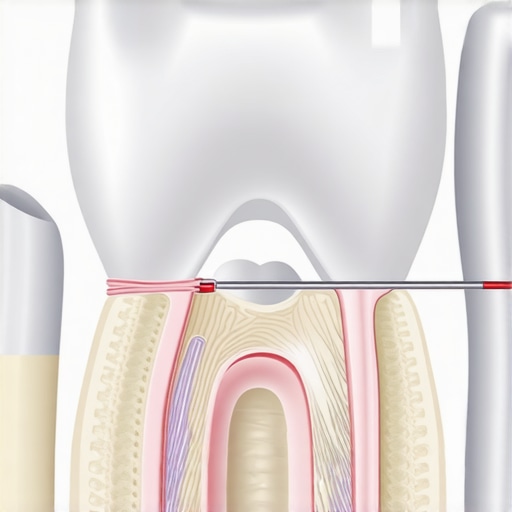
Because the gray is deep inside the tooth structure, surface-level treatments are like trying to clean a stained carpet by scrubbing the floor underneath. You need to get to the source. The gold standard here is internal bleaching, often called the ‘walking bleach’ technique. Your dentist creates a tiny access hole in the back of the tooth—the same spot where the original root canal was performed—and places a concentrated whitening agent directly into the empty pulp chamber. I remember sitting in the chair for my first session; I expected instant results, but it actually took three separate appointments of refreshing the gel before that slate-gray hue finally gave way to a natural cream. This is one of the most effective expert cosmetic dentistry solutions because it addresses the internal chemical breakdown that caused the stain in the first place. You are essentially painting the walls of a room from the inside rather than trying to shine a light through a frosted window.
The Difference Between Internal and External Gels
It is important to realize the truth about professional whitening gels vs store-bought strips: store products rely on peroxide hitting the enamel from the outside. If your tooth is gray because of old blood products or medicaments left inside the tooth, those strips are essentially useless. Internal bleaching works from the ‘dentin’ side, pushing the brightness outward. In my case, the change was gradual but profound. My dentist swapped the whitening packet every few days, and by day ten, the tooth finally matched its neighbors perfectly. However, this process can make the tooth slightly more porous, which leads to the next critical phase: structural integrity.
Shield the Tooth with a Custom Crown
A tooth that has undergone a root canal is essentially a ‘mummified’ tooth. Without a blood supply, the tooth becomes brittle over time, much like a dry branch on a tree. If you only use a filling to patch the access hole after whitening, you risk the tooth snapping under the pressure of a crunchy snack. This is where dental crowns explained as a total restoration become a necessity. A crown acts like a protective helmet, encircling the entire visible portion of the tooth to distribute the force of your bite evenly. When my own gray tooth started feeling ‘thin’ or sensitive to pressure, my provider explained that the enamel was actually full of microscopic cracks that a standard filling couldn’t fix.
Choose Bonding or Veneers for Faster Results
If the tooth structure is still very strong and the discoloration is mild, you might consider cosmetic bonding or veneers. These are faster fixes, but you must know the truth about the lifespan of composite tooth-colored fillings and resins—they do not last forever. While you can learn the secret to making your dental bonding last more than five years, eventually, the resin will stain or chip because it is a porous material. For a permanent, ‘one-and-done’ aesthetic and structural fix, a porcelain crown remains the superior choice for long-term confidence and durability.
It’s a common misconception in family dentistry that once the nerve is gone, the tooth is ‘bulletproof.’ In my experience, it’s actually the opposite. Without the internal hydration of the pulp, the tooth becomes a glass-like structure that is incredibly prone to vertical fractures. I often tell my readers that a root canal without a timely crown is like buying a luxury car and never changing the oil; you’re driving on borrowed time. A study published in the Journal of Endodontics highlights that teeth without crowns after endodontic treatment are six times more likely to be lost than those with proper restorations. This is one of those vital lessons in oral health that many people learn the hard way. If you’ve been putting off that final step, you might be facing a catastrophic break that no amount of expert cosmetic dentistry solutions can fix.
Why does my gum line look dark even with a new crown?
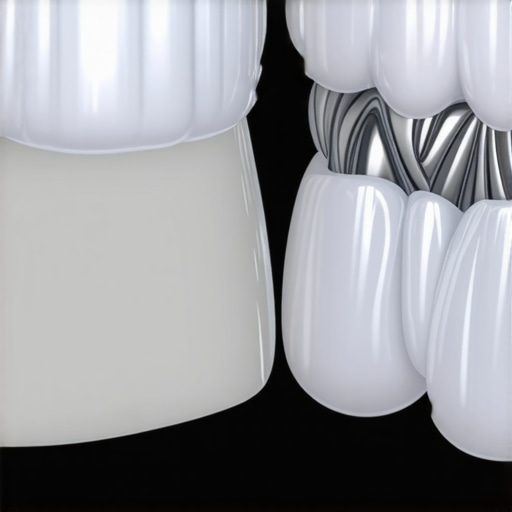
This is a sophisticated nuance that drives people crazy. You spend the money on a crown to hide the gray tooth, only to see a dark, shadowy line appear at the base of the gum a few months later. This usually isn’t the tooth ‘rotting’ again. It’s often a result of using a Porcelain-Fused-to-Metal (PFM) crown where the metal collar becomes visible as the gum naturally recedes. It’s why top cosmetic dentistry trends for 2025 are shifting heavily toward all-ceramic or zirconia options. If you notice your gums changing color, you should check if your gums are turning purple instead of a healthy pink, as this can indicate localized irritation or the ‘tattoo’ effect from old dental alloys.
Avoid the ‘discount’ restoration trap
One of the biggest mistakes I see is choosing a restoration based solely on price. A ‘cheap’ crown often lacks the proper marginal fit, which leads to a leaking crown that traps bacteria and restarts the cycle of decay. When you are comparing dental crowns vs other restorations, remember that the ‘ferrule effect’—having enough natural tooth structure for the crown to grab onto—is what determines if the tooth lasts five years or twenty. Have you ever fallen into the trap of choosing the quickest or cheapest option only to have it backfire? Let me know in the comments below, because sharing these ‘oops’ moments helps the whole community make better choices for their lifetime of healthy smiles.
My morning routine for a decade-long smile
I learned the hard way that once you invest in cosmetic dentistry, the work doesn’t stop when you leave the clinic. I treat my porcelain crown like a piece of fine jewelry that I also happen to chew steak with. The absolute MVP in my bathroom is my high-pressure water flosser. Standard floss is great, but it often misses the microscopic ‘ledge’ where the crown meets the gum line. If you don’t clear that area, bacteria will settle in, and you’ll end up with that dark line we talked about earlier. This is where building a lifetime of healthy smiles really happens—in the quiet three minutes at your sink every night. I also swapped my abrasive paste for a low-RDA (Relative Dentin Abrasivity) version because I want to keep that polish smooth. I found that the secret to making professional teeth whitening results last longer—even for my internally bleached tooth—is all about minimizing micro-scratches where stains love to hide.
How do I keep my crown from failing after five years?
The biggest threat to your new smile isn’t usually a cavity; it’s you. Specifically, it’s what you do while you’re asleep. If you’re a stress-grinder like me, learning how to stop clenching your jaw when you feel stressed is non-negotiable. I wear a custom-fitted night guard every single night without fail. A study in the Journal of Prosthetic Dentistry notes that modern CAD/CAM zirconia restorations are incredibly tough, but even they can succumb to the 250 pounds of pressure per square inch that a human jaw can generate during a bruxism episode. If you use one, make sure you know how to clean a night guard without using harsh chemicals or bleach, because you don’t want to degrade the material or irritate your gums. 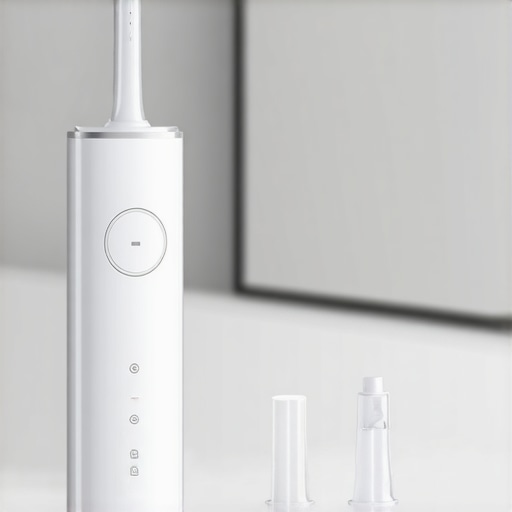
The tech-heavy future of your dental visits
Looking ahead, I’m incredibly excited about where family dentistry is going. We’re moving away from those gooey, gag-inducing impression trays and toward 3D intraoral scanners that create a perfect digital twin of your mouth in seconds. These cosmetic dentistry innovations to watch mean that the fit of your future crowns will be precise down to the micron level. I predict that within the next five years, AI-driven diagnostics will be able to predict exactly where a crown might fail before it even happens, allowing for preventative ‘tune-ups’ rather than emergency replacements. For now, my best advice is to stop using your teeth as tools—no opening plastic packages or biting thread. If you want that gray tooth to stay bright and that crown to stay seated, treat them with the respect an expensive restoration deserves. Start by switching to a water flosser this week and see if your dental hygienist notices the difference at your next cleaning—I bet they will.
What My Dentist Finally Admitted About Graying Enamel
One major realization I had during this journey was that color matching isn’t just about the tooth itself, but about how it interacts with the light in your daily environment. A ‘dead’ tooth loses its natural translucency, which is why it can look flat or slate-like compared to its neighbors. If you’re considering expert cosmetic dentistry solutions, ask your provider about how different materials—like zirconia or lithium disilicate—will mimic that natural light-bounce. It’s truly the difference between a tooth that looks like a chic restoration and one that looks like a piece of opaque plastic. Another lightbulb moment for me was understanding that even without a nerve, the periodontal ligament is still alive. If your tooth feels ‘high’ or ‘off’ when you bite, don’t ignore it just because it can’t feel temperature; this is one of the most vital lessons in oral health for anyone with a history of dental trauma.
My Personal Kit for Long-Term Tooth Care
I’ve moved far beyond just a standard toothbrush to protect my investment. My current routine relies on three specific pillars: a high-pressure oral irrigator to clean the ‘ledge’ of my crown, a low-abrasivity paste to maintain the porcelain polish, and a custom night guard to prevent structural fractures. I also swear by the ‘Prophy first’ rule. I’ve found that why a prophy treatment is much more than just a simple tooth cleaning is because it reveals the true baseline color of your surrounding teeth before you try to match a new restoration. I trust these tools because they shift the focus from reactive repairs to proactive preservation, ensuring that gray hue never returns.
#IMAGE_PLACEHOLDER_E#
Your Path Back to a Confident Smile
Seeing that ghostly gray tooth every morning used to drain my confidence, but it doesn’t have to be your permanent reality. The technology available today means you can restore not just the color, but the strength of your tooth. Don’t wait for a structural failure to force your hand; remember the real cost of delaying a root canal for a month or neglecting a protective crown can be the loss of the tooth entirely. Take the first step today toward a restoration that feels and looks like you again. You deserve to smile without checking the mirror every five minutes. Have you noticed your tooth changing color gradually over time, or did the gray hue appear suddenly after your procedure? Let me know in the comments below!