I remember staring at my bathroom mirror at 2 AM, heart sinking as my expensive clear aligner refused to snap into place. I’d only left it out for an eight-hour flight and a quick dinner. One night. That’s all it took for my teeth to decide they wanted to stage a total rebellion and head back to their old, crooked ways. It’s a specific kind of panic—one where you’re trying to force a piece of plastic onto your gums while wondering if you just flushed thousands of dollars down the drain. If you’ve ever felt that resistance, it can feel as intense as a throbbing toothache in the middle of the night. Today, I am going to show you why that happened and how we can stop the slide before you need a total mid-course correction.
Your Teeth Have a Muscle Memory and They Want to Go Home
Many people think teeth are locked into the jawbone like pillars in concrete. In reality, they are held in place by the periodontal ligament, a living, flexible tissue that is remarkably sensitive to pressure. When your aligners are in, they are applying constant force to remodel the bone around those roots. The moment that force is removed? Those ligaments want to snap back to their original position like a tired rubber band finally being released. I made the early mistake of assuming that because my teeth looked straight after three months, they were ‘set’ in place. I was wrong. Without the tray, the biological ‘bounce back’ begins almost instantly. If you have ever wondered why your bottom teeth are suddenly crowding as an adult, imagine that same process but accelerated by the active pressure of orthodontic treatment.
Wait, can my smile really shift that fast?
You might be skeptical that eight to twelve hours can ruin weeks of progress. I certainly was. However, research published in the American Journal of Orthodontics and Dentofacial Orthopedics notes that the initial phase of tooth movement is highly fluid; the bone hasn’t actually ‘hardened’ around the new position yet. This means the teeth are in a state of flux. Skipping just one night doesn’t just stall your progress—it actually allows the teeth to drift into a position where the next tray in your series might not fit at all, leading to tracking errors and expensive refinements.
The Bone Remodeling Reality Check
Orthodontics is essentially a controlled inflammatory response. Your body is busy breaking down bone on one side of the tooth and building it up on the other. This process requires 22 hours of daily consistency to stay on track. When you skip a night, you aren’t just losing sleep; you’re losing the tension required to keep that bone-building process moving forward. I’ve found that even the secret to cleaning your teeth while wearing a retainer or aligner is easier to manage than the stress of a tray that won’t seat properly. Have you ever tried to force your trays back in after a long night out and felt that terrifying, tight resistance? It is a sign that your biology is already fighting back. We need to understand how to manage this before it requires a trip back to the clinic for expert cosmetic dentistry solutions to fix the misalignment.
Go back one step to save your progress
If you try to force a tray that simply will not seat, you risk more than just discomfort; you risk root resorption or permanent damage to the periodontal ligament. I learned this the hard way during a weekend trip where I left my aligners in the hotel bathroom for fourteen hours. When I tried to snap the current tray back in, it “bounced” off my molars. Instead of forcing it, I dug through my luggage for my previous tray. Think of your old aligner as a safety net. It is a rigid mold of where your teeth were just seven days ago. By wearing the previous tray for 24 hours, you essentially “re-anchor” the teeth so they can accept the pressure of the new one again. 
The five-minute pressure test
Once you get a tray to seat—even if it feels incredibly tight—you need to ensure it is actually “tracking.” This means there is no air gap between the edge of your tooth and the plastic. I used to use the “bite and hold” method. Take a silicone “chewie” or even a clean, rolled-up washcloth, and bite down firmly for five minutes. This mechanical pressure acts like a piston, driving the tooth into the socket of the aligner. If you still see a gap after this, your teeth have drifted too far for DIY fixes. At this point, neglecting the fit can lead to uneven wear, which is when and why dental crowns are needed to restore the height of teeth that have been ground down by an improper bite.
Watch for the warning signs of structural damage
When teeth shift rapidly, they do not always move in a straight line. They often tilt or rotate, creating “high spots” where your upper and lower teeth collide with excessive force. This is how many people end up with a hidden crack in their dental crown or a chip in their natural enamel. If you feel a sharp “ping” when you bite down without your trays, your alignment has likely shifted into a traumatic occlusion.
Don’t ignore the ‘halo’ effect
Look closely in the mirror at the incisal edges (the biting edges) of your teeth while the aligner is on. If you see a “halo” or a space where the tooth should be touching the plastic, stop. You are no longer moving the tooth; you are just bending the plastic. This is a common issue we see in family dentistry, where patients think they can just “push through” the gap. If that halo is larger than a millimeter, you need to call your provider. Ignoring it might mean that instead of a simple adjustment, you end up needing the ultimate solution for damaged teeth like a crown or veneer to fix the aesthetic damage caused by the misalignment.
Treat your oral health as a long-term investment
If you have children in treatment, apply these same rules to them. Proper family dentistry tips always emphasize consistency. If a child skips a night, do not just hope for the best. Check the fit immediately. The goal is to avoid the need to revamp your smile entirely in the future because of a few missed nights today.
One of the biggest misconceptions I see in family dentistry is the belief that once a tooth is capped, it’s bulletproof. I’ve had patients come in genuinely shocked to find a cavity underneath a high-end porcelain restoration. The truth is, a crown is only as good as the seal at the margin where the porcelain meets your natural gum line. If that seal is even slightly compromised, you are essentially creating a petri dish for decay. You need to know how to tell if your dental crown is leaking bacteria before the entire internal structure of the tooth rots away silently beneath the surface.
The 2-millimeter rule that determines if your crown will fail
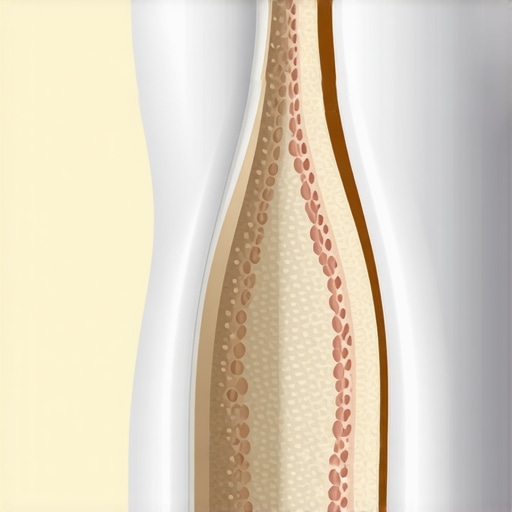
Most people focus on the material—is it Zirconia? Is it E-max? But the material is secondary to a concept we call the ferrule effect. In my experience, if your dentist doesn’t have at least 1.5mm to 2mm of healthy, vertical tooth structure to ‘grab’ onto, the crown acts like a lever, eventually snapping the root. A study published in the Journal of Prosthetic Dentistry confirms that this vertical height is the single most important factor for long-term mechanical success. If you are choosing between dental crowns vs other restorations, always ask your provider about your remaining tooth volume. Sometimes, expert cosmetic dentistry solutions like crown lengthening are necessary just to create that structural foundation.
Why does your bite feel ‘off’ even after multiple adjustments?
If you’ve had a restoration and the dentist has filed it down three times and it still feels like you’re hitting it first, you might be falling for the ‘proprioception trap.’ Your brain is so attuned to the micron-level thickness of your bite that even a tiny discrepancy can cause your jaw muscles to spasm. This is often the real reason your porcelain crown keeps chipping—not because the material is weak, but because your jaw is applying traumatic force to a ‘high spot’ you can’t quite pinpoint. Don’t let a dentist just keep grinding it down; sometimes the solution is actually adjusting the opposing natural tooth to create a harmonious occlusion.
The ‘Oops’ factor: Why your whitening habit is ruining your veneers
Here is a contrarian truth: Your ‘whitening’ toothpaste is likely the enemy of your cosmetic work. Most over-the-counter whitening pastes use high-RDA (Relative Dentin Abrasivity) particles to scrub stains. While natural enamel can handle some of this, these abrasives can create microscopic scratches on composite or even porcelain surfaces over time. This ruins the ‘glaze’ and is why many porcelain veneers start to stain at the edges or lose their luster. If you want to revamp your smile, you have to switch to a non-abrasive gel to protect the investment. Have you ever fallen into this trap of over-scrubbing your dental work? Let me know in the comments. We can’t treat our high-tech restorations with low-tech maintenance and expect them to last twenty years.
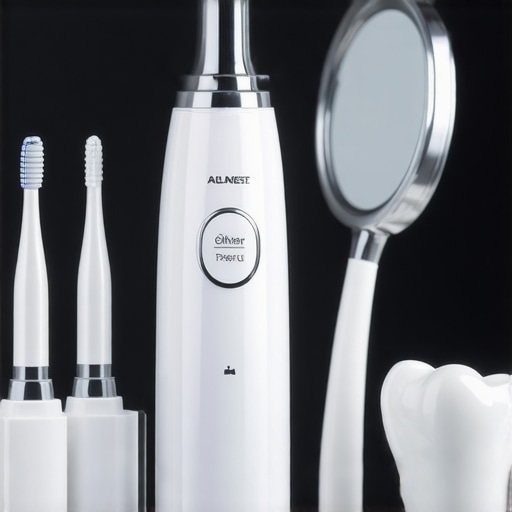
I used to think that once my dental work was done, the hard part was over. I couldn’t have been more wrong. The real work—the kind that keeps a five-thousand-dollar smile from turning into a cautionary tale—happens in your bathroom every single morning. If you treat your high-end restorations like natural teeth, you are essentially waiting for them to fail. I transitioned my routine to include a high-pressure water flosser, not because it’s a ‘gadget,’ but because it is the only way to effectively debride the microscopic gap between a crown and the gum line. If you struggle with the sensation, learning how to stop your gums from hurting when you use a water flosser is the first step to ensuring your investment doesn’t develop secondary decay. I personally use a model with a dedicated ‘orthodontic’ tip because the tapered bristles physically agitate the plaque while the water flushes it away.
The one tool that actually saves your gum line
Beyond flossing, I’ve become obsessed with the chemistry of my mouth. Most people don’t realize that the ‘sticky’ feeling on your teeth is actually a biofilm that has started to calcify. This is why I advocate for professional-grade prophy treatments. It’s important to understand why a prophy treatment is much more than just a simple tooth cleaning; it’s a mechanical reset for your oral microbiome. In my own routine, I’ve added an alkaline mouthwash to neutralize acids after meals. Why? Because according to a study in the Journal of Oral Rehabilitation, even slight acidity can accelerate the wear of the resin cements used to bond your veneers. If those cements degrade, you’re looking at a complete redo.
Why your six-month cleaning is more than just a scrub
In the world of family dentistry, we often see patients who skip the professional check-up because ‘nothing hurts.’ This is a dangerous game. By the time a crown feels weird, the damage is often irreversible. Regular visits are about more than just scraping tartar; they are about using high-tech scans to see how to tell if your crown needs to be replaced immediately before a catastrophic fracture occurs. I’ve started asking my hygienist to use an ultrasonic scaler with a plastic tip specifically designed for implants and crowns. Metal tips can leave micro-scratches on porcelain that eventually harbor stains and bacteria, which is the role of family dentistry in ensuring oral health for all ages—protecting the integrity of the materials we’ve placed in your mouth.
How do I keep my dental work looking like day one for a decade?
The secret isn’t a magic product; it’s consistency and the right protection. If you’ve invested in expert cosmetic dentistry solutions, you absolutely must wear a night guard. I’ve seen patients snap $2,000 Zirconia bridges in their sleep because of bruxism. But a night guard is also a bacteria trap. You need to master the best way to clean a night guard to prevent odors and prevent fungal growth that can transfer to your gums. Looking ahead, I predict we will soon see smart-guards that track your bite pressure in real-time, alerting your dentist via an app when your grinding levels are high enough to threaten your crowns. This shift toward bio-feedback will define the next era of cosmetic dentistry innovations to watch. If you want to level up today, try the ‘disclosing tablet test’ tonight—chew one after you think you’ve finished brushing and see exactly where you’re leaving plaque behind on your restorations. It’s a humbling but necessary reality check.
The Hardest Lesson I Learned About Protecting My Smile
Looking back on my own dental journey, I have realized that the most expensive procedures are often the ones we neglect at home. Teeth are more like sails than anchors; they are constantly responding to the forces we apply—or fail to apply—to them. The hardest lesson I learned was that consistency beats intensity every single time. You cannot ‘catch up’ on missed aligner hours, and you certainly cannot scrub away a month of neglect in one morning before a check-up. For example, knowing how to tell if your dental crown has a hidden crack early on saved me from a full replacement and taught me to listen to those tiny ‘pings’ of discomfort before they became emergencies. Your dental work is a living partnership between your dentist’s skill and your daily diligence.
#IMAGE_PLACEHOLDER_E#
My Personal Toolkit for Peak Oral Health
If you want to keep your results, you need the right tools. I do not go a single day without my high-pressure water flosser. If you are struggling with the initial discomfort, learning how to stop your gums from hurting when you use a water flosser is a complete game-changer for your long-term gum health. I also recommend switching to a non-abrasive cleaning gel to protect the delicate glaze on your porcelain work. Finally, never underestimate the power of a clean night guard. Mastering the best way to clean a night guard to prevent odors ensures you actually want to wear it every night, protecting your teeth from the silent damage of nocturnal grinding.
Start Securing Your Dental Future Right Now
Your dental health is a living investment that requires your active participation. Whether you are currently in the middle of aligner treatment or have already achieved your dream look through expert cosmetic dentistry solutions, remember that the ultimate goal is longevity. Do not be discouraged by a small setback or a single missed night; instead, use it as a reminder to refocus on the habits that protect your smile for the long haul. You have put in the time and money to get here—now let us make sure it lasts for decades to come. Have you ever felt that terrifying tightness after leaving your aligners out for too long? Let me know your experience in the comments below!