I remember sitting in my kitchen three years ago, running my tongue over that smooth, empty space where my lower left molar used to be. It was tucked away in the back, a dark little secret that didn’t show up in photos, so I figured I had saved myself a massive headache and a bigger bill by just ‘letting it be.’ I was wrong. Six months later, I noticed something weird: my floss was getting stuck in places it used to glide through, and my front teeth—the ones I actually liked—were suddenly overlapping. I’d effectively triggered a slow-motion domino effect that was wrecking my jaw alignment and my confidence. It turns out that ignoring a missing tooth is like removing a brick from the bottom of a Jenga tower; eventually, the whole thing starts to lean.
The Slow-Motion Domino Effect in Your Mouth
Look, your teeth are much more social than you think. They don’t just sit there in the bone like stones in the dirt; they are constantly pushing and pulling against each other in a state of dynamic equilibrium. When you lose a molar, that balance is shattered. The teeth behind the gap will naturally tilt forward, and the teeth above the gap might even start to ‘erupt’ further down because there is nothing to stop them. This is often why your bottom teeth are suddenly crowding in your thirties or forties, even if you had braces as a kid. I made the mistake of thinking the bone would stay put, but research from the American Academy of Implant Dentistry shows that you can lose up to 25% of your jawbone width in that area within the first year alone. That bone loss is what ultimately causes the neighboring teeth to lose their anchor and start their unwanted journey across your mouth.
Is ignoring a hidden gap actually worth the risk?
You might be thinking, ‘It’s just one tooth, and I can still chew on the other side.’ I thought the same thing until the muscle strain started. Because my bite had shifted, I was subconsciously chewing differently, leading to morning jaw aches that felt like a localized hangover. If you are currently in that ‘waiting period,’ you need to know about the best way to hide a missing tooth while waiting for an implant or a bridge. Using a simple space maintainer or a temporary partial can save you from a world of orthodontic trouble later. Trust me, it is much cheaper to hold a space open now than it is to move ten teeth back into position later. Have you noticed your bite feeling a little ‘off’ or seen new gaps opening up since you lost a tooth? [image_placeholder] Getting ahead of this movement is the only way to avoid a full-mouth reconstruction down the road. In our next section, we’ll dive into the specific tools our family dentistry guide recommends to keep your remaining teeth exactly where they belong.
Stop the Bone Melting Away Before It’s Too Late
Once that tooth is gone, your jawbone effectively decides it’s unemployed. Without the constant stimulation of chewing, the bone starts to resorb, or ‘melt away,’ which eventually changes the very shape of your face. If you aren’t ready for a full implant tomorrow, the first thing you need to do is talk to your dentist about stabilization. I learned this the hard way after waiting too long and feeling that familiar, dull throb. If you’ve ever wondered why your jaw aches every time you wake up in the morning, it’s likely because your bite is searching for a balance that no longer exists. A simple space maintainer is the cheapest insurance policy you can buy to keep your other teeth from caving in while you weigh your long-term options.
Pick a Permanent Fix That Fits Your Life
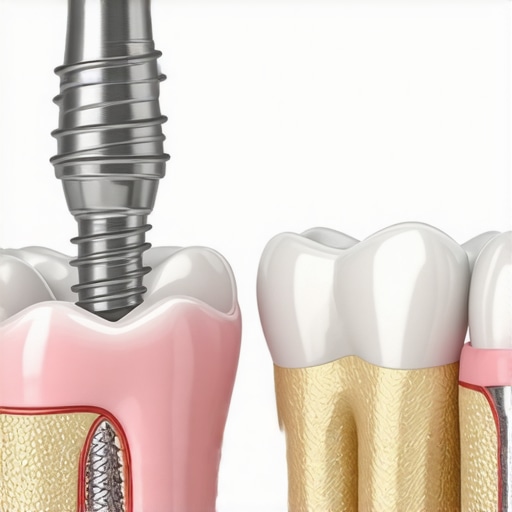
When you’re ready to fill the gap, you generally have two heavy hitters: the dental bridge and the dental implant. A bridge literally ‘bridges’ the gap by using the two healthy teeth on either side as anchors. This requires placing crowns on those adjacent teeth. It’s a faster process, but it means modifying perfectly good teeth. On the flip side, an implant is a standalone hero; it’s a titanium post that acts as a new root. Understanding dental crowns vs other restorations is vital here because your choice affects how you’ll eat and clean for the next twenty years. If you already have damaged teeth next to the gap, a bridge might kill two birds with one stone by providing needed dental crowns to those neighbors while filling the hole.
Don’t Let Your New Crown Feel Like a Mountain
During my own restoration journey, the ‘messy’ part happened during the temporary phase. My dentist placed a temporary crown that was just a fraction of a millimeter too tall. Every time I bit down, it felt like I was slamming my jaw into a speed bump. I ignored it for three days until my entire face felt like it had been in a boxing match. I had to go back in to learn how to fix a temporary crown that feels too high, which was a simple five-minute shave-down. The lesson? Your bite is incredibly sensitive. If something feels ‘off’ for more than 24 hours, it is off. Don’t ‘try to get used to it’—get it adjusted before you trigger a localized inflammatory response in the ligament.
Keep Everything Fresh Under the Hood
The final step is the one most people skip until they notice a weird scent: maintenance. If you choose a bridge, you can’t just floss ‘down’ anymore; you have to floss ‘through.’ Food particles love to hide in that tiny space between the bridge and your gums. Learning the best way to clean under a dental bridge to prevent smells is the difference between a restoration that lasts and one that fails due to decay on the anchor teeth. As we look at top cosmetic dentistry trends for 2025, we’re seeing more durable materials that resist staining better than ever, but they still require that basic, diligent mechanical cleaning to keep the supporting tissue healthy. Your goal isn’t just a tooth that looks good; it’s a foundation that won’t crumble in five years.
I often hear people say that once they get a crown, that tooth is ‘done’ and safe from future cavities. This is perhaps the most dangerous myth in restorative dentistry. In my years of navigating my own dental repairs and talking to specialists, I’ve learned that a crown doesn’t make your tooth a superhero; it actually creates a 360-degree microscopic seam that is a magnet for plaque. If your dentist doesn’t achieve a ‘passive fit,’ you’re essentially sealing a ticking time bomb of bacteria against your natural tooth structure. The Journal of Prosthetic Dentistry indicates that marginal discrepancies as small as 50 micrometers—thinner than a human hair—can lead to significant cement washout and recurrent decay. You aren’t just buying a porcelain cap; you are investing in a biomechanical seal.
How can you tell if your dental crown is leaking bacteria?
This is the question that keeps many patients up at night. You might not feel a thing until it’s too late because the crown insulates the nerve from temperature changes. However, if you notice a persistent sour taste or a specific localized smell when you floss, you need to know how to tell if your dental crown is leaking bacteria before the underlying structure softens beyond repair. This is where the ‘Oops’ factor usually kicks in: people wait for pain. In reality, a ‘leaking’ crown often presents as a subtle graying of the gum tissue or a slight ‘catch’ when you run a dental pick along the base. If you ignore these signs, you might end up needing a root canal for a tooth you thought was already ‘fixed.’
Another common trap is prioritizing the ‘Hollywood White’ look over the actual biology of your mouth. In the rush to transform your look with expert cosmetic dentistry solutions, many patients overlook the ‘biologic width.’ This is the specific amount of gum tissue that must remain unbothered above the bone. If a crown or veneer is pushed too deep into the sulcus, your body will literally try to ‘retreat’ from the porcelain, leading to chronic inflammation. This is often the real reason why your porcelain crown has a dark line at the gum line—it’s not just metal showing through; it’s often a sign of receding tissue or a poorly seated margin. 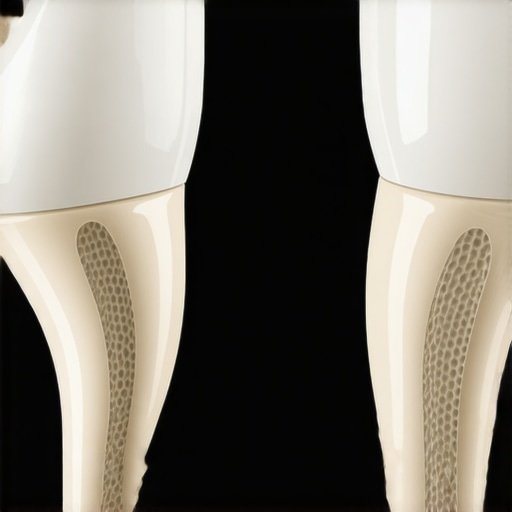
Real Longevity in Modern Family Practice
We often treat the role of family dentistry in ensuring oral health for all ages as a routine check-up service, but the nuance lies in material selection. Not every tooth needs the same type of porcelain. If you are a ‘grinder,’ a high-translucency aesthetic crown might look great in the mirror but will likely shatter within three years under the pressure of bruxism. For those of us who carry stress in our jaws, a monolithic zirconia restoration—while slightly less ‘pretty’—is practically indestructible. Understanding dental crowns vs other restorations means looking at your lifestyle and bite force, not just a shade guide.
Most people don’t realize that the ‘seal’ of your crown is actually a chemical bond that can be weakened by something as simple as high-acidity mouthwashes or even certain whitening treatments. If you’ve ever wondered the real reason your porcelain crown keeps chipping, it might not be the steak you ate; it might be the micro-stresses caused by a misaligned bite that was never corrected during the initial fitting. Have you ever had a restoration that felt ‘perfect’ at the office but started causing trouble a month later? Let me know in the comments—I’ve been there, and usually, it’s a tiny adjustment away from being fixed.
I’ve spent thousands on my teeth, and the last thing I want is to do it all over again because I got lazy with a five-minute routine. If you want your restorations to last, you have to move beyond the ‘brush and pray’ method. My personal holy grail is a combination of a high-end electric toothbrush and a dedicated water flosser. Why? Because the vibration of an electric brush is better at breaking up the biofilm that forms at the margin of your crown. If you’ve ever noticed why your gums bleed only when you use an electric toothbrush, it’s usually not the brush—it’s the inflammation that was already there, finally being disturbed.
Stop Guessing with Your Daily Cleaning Routine
Maintenance isn’t just about hygiene; it’s about monitoring. I use a high-powered vanity mirror to check the ‘seal’ of my crowns every month. I’m looking for any recession or that dreaded dark line. If you’re seeing changes, you need to know how to tell if your dental crown has a hidden crack before it turns into a full-blown fracture. For those with bridges, I cannot stress enough the importance of ‘Super Floss.’ It has a stiff end that lets you thread it under the fake tooth. This is non-negotiable if you want to avoid the best way to clean under a dental bridge to prevent smells becoming your most-searched topic.
How do I maintain my dental restorations over the long haul?
The ‘Silent Killer’ of dental work is bruxism—grinding your teeth at night. Most people don’t even know they do it until they see the real reason your porcelain crown keeps chipping. I wear a custom-molded night guard every single night. It’s an extra layer of plastic that takes the beating so my expensive porcelain doesn’t have to. If you use one, you also need to learn the best way to clean a night guard to prevent odors, or you’ll end up with a petri dish in your mouth. 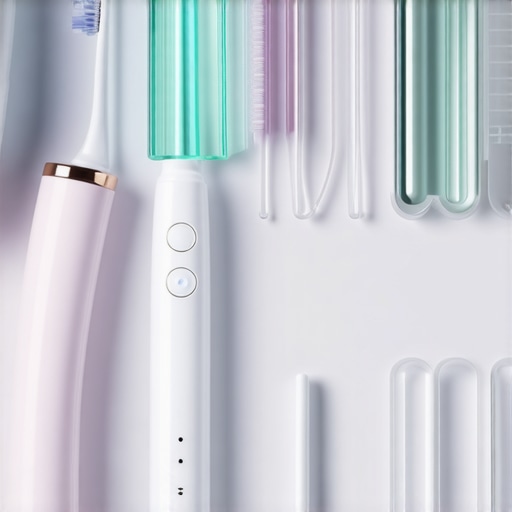
The Invisible Shield Every Crown Owner Needs
Looking ahead, the future of top cosmetic dentistry trends for 2025 is moving toward ‘smart’ restorations. By the next decade, I expect we will have AI-linked sensors built into bridges that can alert your smartphone the second a seal is compromised. Until that becomes standard, we are the ones responsible for the upkeep. According to technical data from Ivoclar Vivadent, the longevity of a lithium disilicate restoration depends heavily on the ‘bond strength’ which can be compromised by home-bleaching kits that use high concentrations of carbamide peroxide. This is why the truth about the lifespan of composite tooth colored fillings and crowns often comes down to the chemicals you put in your mouth daily. Don’t just go for a cleaning; ask for a prophy. Understanding why a prophy treatment is much more than just a simple tooth cleaning changed how I view my check-ups. It’s a deep-level maintenance session that resets your oral microbiome. My advanced tip? Switch to an interdental brush for the gaps around your crowns. It’s far more effective than floss at sweeping out the ‘pockets’ where bacteria hide. Buy a pack of size-appropriate interdental brushes this afternoon and use them before you go to bed—you’ll be shocked at what your ‘perfect’ brushing routine missed.
Lessons the Hard Way on Porcelain and Post-Op Life
Reflecting on my dental journey, there are a few lightbulb moments that changed everything for me. First, never underestimate the power of a passive fit. If a crown feels like it’s squeezing your adjacent teeth, it isn’t settling in—it is ill-fitted. Second, I learned that a dental crown is the ultimate solution but only if you treat it like a natural tooth that is extra vulnerable at the gum line. Lastly, do not be afraid to be the annoying patient; if your bite feels off, go back to your family dentistry clinic immediately. [image_placeholder] A single high spot can lead to fractures that no amount of money can easily fix.
The Daily Gear That Keeps My Smile Intact
I have curated a small but mighty toolkit that has doubled the lifespan of my restorations. I personally swear by a pressure-sensing electric toothbrush because it prevents me from scrubbing away my gums, which is a major risk for anyone with cosmetic dentistry innovations in their mouth. I also rely on interdental brushes rather than traditional floss for my bridge; they reach the nooks and crannies where bacteria thrive. Finally, I never sleep without my custom night guard—it is the single best investment I have made to prevent chipping my expensive porcelain.
Building a Future Where Your Teeth Stay Put
Taking care of your smile should not feel like a chore, but rather an investment in your future health and confidence. Whether you are following a family dentistry guide for essential care or exploring complex restorations, the key is consistency. Do not wait for pain to be your guide; be proactive so you can enjoy your smile for decades to come. Have you ever felt a high spot on a new crown or struggled to clean under a bridge? Let me know your experience in the comments below!