I’ll never forget the day my son, Leo, decided that the dental hygienist’s ultrasonic scaler was actually a tiny, high-pitched monster out for blood. The moment that whirring sound hit the air, he didn’t just cry; he levitated. He was out of that chair and halfway to the parking lot before I could even say “open wide.” I felt like a total failure as a parent. I’d spent weeks telling him it would be fine, but I made the classic mistake of lying about the sensory experience. I told him it was “quiet,” and when it wasn’t, I lost his trust instantly. It was a messy, loud realization that child-friendly dental care isn’t just about the toys in the waiting room—it’s about managing those terrifying, high-frequency sounds that echo in a child’s ears. Today, I’m going to share exactly how we turned those “scary spaceship noises” into just another boring part of the day. We’re going to look at desensitization techniques that actually work and how to prepare your little one so the “noisy tools” don’t trigger a full-blown meltdown.
The Noise Factor and Why It Triggers Panic
Kids don’t just hear a dental drill; they feel it vibrating deep in their jawbone. To a small child, the high-frequency whine of a dental tool is an invasive, alien sensation that signals danger. My biggest blunder early on was dismissing his fear. I’d say things like, “It’s just a little buzz!” but to his sensitive ears, it sounded like a jet engine in a small room. This sensory overload is one of the leading causes of dental anxiety in youngsters. In fact, research cited by the American Academy of Pediatric Dentistry (AAPD) suggests that nearly 20% of children experience significant dental fear, often exacerbated by the “noise, vibration, and sight” of clinical instruments. When we ignore that reality, we make the dentist’s office a place of mystery and fear rather than health. It wasn’t until I sat down and actually listened to the tools from his perspective that I realized how overwhelming it must be. The sharp, piercing whine of a high-speed handpiece isn’t just a sound; it’s a physical sensation that can feel threatening to a child who doesn’t understand its purpose. This is why many parents turn to comprehensive family dentistry guides to find ways to bridge the gap between fear and familiarity. [IMAGE_PLACEHOLDER]
Can a dental drill actually sound friendly to a toddler?
It sounds like a tall order, right? You’re probably thinking there’s no way a kid will ever enjoy the sound of a polisher. But the secret isn’t making them love the noise; it’s about stripping away the “newness” of it. When we started getting him excited for a filling by using a battery-powered toothbrush at home to mimic the sound, the “scary” factor dropped significantly. We stopped treating the tools like clinical secrets and started treating them like curious gadgets. Have you ever had your child refuse to even walk through the clinic doors because they heard a noise from the back room? It’s a common struggle, but you don’t have to navigate it alone. Establishing a routine early, ideally starting with their first dental visit, sets the stage for a lifetime of calm. By choosing a provider who understands the role of family dentistry, you ensure the staff knows how to explain these sounds in a way that doesn’t trigger the fight-or-flight response. We are going to dive into the exact games we played to make the “whir” feel normal.The first thing I did after the “levitation incident” was buy Leo the loudest, most aggressive electric toothbrush I could find. It sounds counterintuitive, but we needed to bridge the gap between silence and the clinical hum of a professional office. Every morning, we’d have a “buzz-off” where we pressed the back of the vibrating brush against our cheeks and chins. By making the vibration a source of giggles rather than a signal of pain, we started caring for your child’s teeth through sensory play. This simple exposure therapy meant that when the hygienist eventually brought out the motorized polisher, Leo didn’t flinch—he just asked if it would make his “cheeks wiggle” like his brush at home.
Give the scary gadgets silly new names
Words matter more than we think when it comes to clinical settings. In our house, the high-speed suction tool became “Mr. Thirsty,” a tiny elephant that just wanted to drink up all the extra water in his mouth. The air-water syringe was the “magic tooth shower.” When you frame these tools as helpful characters rather than cold, clinical instruments, the fear of the unknown evaporates. I remember one visit where Leo actually laughed out loud because Mr. Thirsty “slurped” a little too aggressively against his tongue. This shift in perspective is a cornerstone of child-friendly dental care. It turns a sterile, frightening environment into a playground of helpful gadgets that are there to help, not hurt. 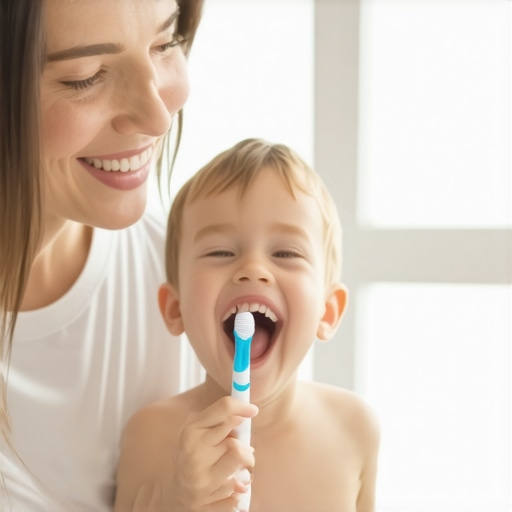
Prepare for bigger repairs without the drama
Sometimes, despite our best efforts with the best snacks for kids and diligent brushing, we end up needing more than just a routine cleaning. If your child needs a restoration, the high-frequency sound of the drill is often unavoidable. When Leo needed his first significant fix, I found that explaining understanding dental crowns as “superhero helmets” for his teeth made the process manageable. We talked about how the “helmet maker” (the drill) has to sing a high-pitched song to make sure the fit is perfect and strong. If you’re currently debating between treatment options, looking at dental crowns vs. other restorations can help you choose the quickest, quietest path for your child’s specific needs.
Practice the Wait and Listen game
Before the dentist even touches a tooth, ask them to run the tool in the air for a few seconds. We call this the “Wait and Listen” game. Leo would count to five on his fingers while the drill whirred nearby without touching him. Once he realized the sound didn’t result in immediate discomfort, his heart rate settled, and the fight-or-flight response stayed turned off. This is where the role of family dentistry becomes vital; a patient dentist will gladly play along with these games. If a procedure is more complex, like dental crowns explained as a multi-step process, taking these small breaks to acknowledge and “test” the noise keeps the child from feeling trapped in an overwhelming sensory experience. By the time the actual work starts, the sound is just background noise to a game they’ve already won.While the “Wait and Listen” game works wonders for the immediate anxiety of the dental chair, I’ve learned that the real work—and the real mistakes—happen in how we view these restorations long-term. Most parents (and plenty of adults) assume that once a crown is placed, that tooth is “saved” and can be ignored. I fell into this trap myself. I thought once Leo had his “superhero helmet,” we were bulletproof. But here’s the contrarian truth: a crowned tooth actually requires more precision in hygiene than a natural one. People think the porcelain is a shield, but the margin—the tiny seam where the crown meets your gum—is actually the most vulnerable spot in your mouth for recurrent decay. The biggest “oops” factor I see in family dentistry is the “set it and forget it” mentality. If you don’t stay on top of those margins, you’re looking at a hidden disaster. You need to know how to tell if your crown is leaking and trapping bacteria, because by the time you feel pain, the decay has often reached the root, bypassing the enamel entirely. This is why the role of family dentistry isn’t just about fixing holes; it’s about the microscopic maintenance of those fixes over decades. It’s also about caring for your child’s teeth with an eye for the future, not just the current cavity.
Why does that expensive new crown feel like a mountain in your mouth?
If your child (or you!) complains that the bite feels “off” after a restoration, don’t just wait for it to “wear down.” That’s a dangerous myth that leads to long-term nerve damage. When a restoration sits even a fraction of a millimeter too high, it creates what dentists call a traumatic occlusion. Essentially, every time you bite, you’re hammering the periodontal ligament with the force of your entire jaw. If you’re wondering why your porcelain crown feels too high when you bite down, it’s because it likely is, and ignoring it can lead to bone loss or even a fractured root.  Research published in the Journal of Oral Rehabilitation indicates that even minor occlusal interferences can lead to significant muscle tenderness and joint issues over time. This is why I always tell friends that expert cosmetic dentistry solutions are nothing without functional perfection. You can have the most beautiful smile in the world, but if the mechanics are wrong, the beauty won’t last. Another common trap? Rushing into aesthetic changes before the foundation is solid. I’ve seen people spend thousands on cosmetic dentistry innovations while ignoring underlying gum disease. It’s like putting a fresh coat of paint on a house with a crumbling foundation. Before you look at top cosmetic dentistry trends for 2025, make sure your family dentistry guide includes a clean bill of health for your gums. This is the difference between understanding dental crowns as a quick fix versus a strategic health investment. Have you ever fallen into the “set it and forget it” trap with a dental repair? Or maybe you’ve struggled with a bite that felt just a little bit “off” for weeks? Let me know in the comments below—I’d love to hear how you handled it!Once you’ve navigated the noise of the drill and the precision of the fit, you enter the most critical phase: the long-term survival of your restoration. I used to think a crown was a ‘set it and forget it’ solution, but I’ve since learned that the tools you use at home determine whether that porcelain lasts five years or twenty-five. My personal game-changer was switching to a high-pressure water flosser. While traditional floss is great for natural teeth, it often snags on the margins of a crown or fails to reach the deep crevices of a bridge. I use my water flosser every single night because it flushes out the bacterial biofilm that hand-flossing simply can’t touch. If you have complex work, mastering the best way to clean under a dental bridge is the only way to prevent that localized ‘pennies’ taste or bad breath that signals a failing restoration.
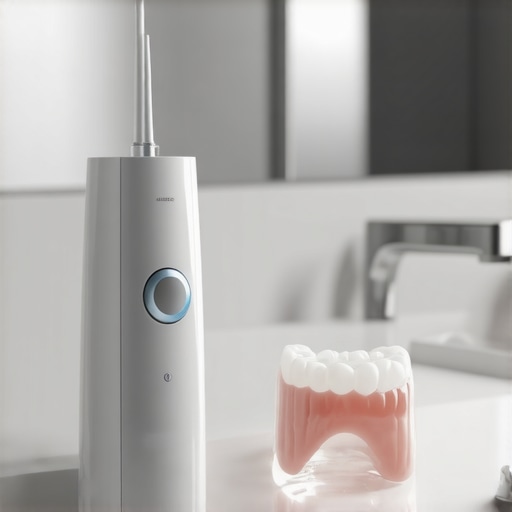
Stop guessing if your floss is actually working
It isn’t just about the tools; it’s about the frequency of professional oversight. Many people skip their cleanings once their teeth ‘look’ fixed, but that is a recipe for disaster. I now treat my dental visits as high-stakes maintenance rather than just a quick scrub. This is why a prophy treatment is much more than just a simple tooth cleaning; it’s a chance for a professional to verify that your crown margins are still sealed and your bite hasn’t shifted. According to a study published in the Journal of Prosthodontics, the leading cause of crown failure isn’t the material breaking, but rather recurrent decay at the margin and periodontal issues. By staying ahead of this, you ensure that the secret to making your dental bonding last or your crowns stay functional remains a reality for decades.
How do I maintain my dental work over time?
Maintenance is a three-pronged approach: daily irrigation, seasonal professional check-ups, and nighttime protection. If you’ve invested in understanding dental crowns and getting them placed, you must protect them from the silent destroyer: bruxism. I personally use a custom-fitted night guard because the force of grinding can shatter even the strongest ceramic over time. Learning how to clean a night guard without using harsh chemicals has kept mine in rotation for years, saving me thousands in replacement costs. Looking ahead, I predict we are moving toward a future where AI-driven scans during your routine check-up will detect margin leakage years before a human eye can see it. We are entering an era of ‘predictive’ dentistry rather than ‘reactive’ repair. If you’re worried about a current restoration or just want to start a fresh maintenance plan, I highly recommend you contact us to schedule a comprehensive evaluation. Don’t wait for the tooth to ache; try using a water flosser tonight and see how much debris you’ve been leaving behind.
What I Learned After the Screams Stopped
Reflecting on our journey from a child levitating out of a dental chair to a teenager who actually enjoys his check-ups, I’ve realized a few things that aren’t in the standard brochures. First, the ‘scary noise’ is often a fear of the unknown rather than a fear of pain. Once we identified the sensory triggers, the battle was halfway won. Second, never ignore the subtle signs of a failing restoration. If you notice a metallic taste or feel something is off, it’s a signal. I’ve learned that caring for your child’s teeth is 90% about the environment you create at home and 10% about the chair time. Finally, the longevity of any dental work depends entirely on the seal; if that margin isn’t clean, even the most expensive crown is just a ticking clock.
[IMAGE_PLACEHOLDER]
My Secret Weapons for a Stress-Free Mouth
I don’t just rely on luck to keep our family’s dental bills low. I’ve built a toolkit that I trust because I’ve seen the results in our own x-rays. I swear by a high-pressure water flosser—it’s the only way to reach the spots where bacteria hide under margins. I also suggest reading the American Academy of Pediatric Dentistry’s parent resources; they offer evidence-based comfort for those middle-of-the-night toothache panics. And for those of us who clench when stressed, a custom night guard is non-negotiable. It’s also why I advocate for regular visits; a prophy treatment is much more than just a simple tooth cleaning—it is the early warning system that protects your investment.
Build a Smile That Actually Lasts
Taking control of your oral health shouldn’t feel like a chore. Whether you are helping a toddler navigate their first ‘spaceship noise’ or you are personally maintaining a mouth full of restorations, remember that consistency beats intensity every time. We are moving toward a future where proactive care prevents the need for major drills in the first place. You can find the secret to making your dental bonding last or your crowns stay pristine simply by showing up for yourself daily. If you ever feel overwhelmed by the technical side of dentistry, don’t hesitate to contact us for guidance. Your smile is the foundation of your confidence—let’s keep it strong together. Have you ever had a moment where a simple home tool completely changed how you or your child felt about the dentist? Let me know in the comments below!