I remember the first time I felt that weird, rough “bump” behind my lower teeth with my tongue. I panicked for a second, thinking the wire had snapped. But it was actually worse—it was a literal wall of tartar that had set up camp because I was clueless about the right way to brush around my permanent retainer. I’d been so focused on cosmetic dentistry innovations and keeping the front of my teeth white that I completely neglected the “fortress” being built in the back. My early mistake was assuming a standard toothbrush could reach those tiny nooks and crannies. Spoiler alert: it can’t. If you’ve ever walked out of a cleaning feeling like your hygienist just did a deep-sea excavation on your lower jaw, you know exactly why we need to talk about this. Today, I’m breaking down the method that finally kept my gums healthy and my dentist happy.
Stop Treating Your Wire Like It’s Part of Your Tooth
The biggest mental hurdle I had to jump was realizing that the retainer is an obstacle, not a surface. When I first got mine, I just brushed over it. I thought, “Hey, I’m hitting the area, right?” Wrong. You are essentially leaving a “dead zone” for bacteria to party in. This is exactly why your bottom teeth feel crowded or tight even years after braces—inflammation from poor cleaning can make everything feel “off.” It’s a common struggle I see in any family dentistry guide, yet we rarely get a tutorial on it when the braces come off. According to a study published in the Journal of Clinical & Diagnostic Research, patients with fixed retainers show a significantly higher rate of calculus formation compared to those without, simply because the hardware acts as a physical barrier to natural saliva cleaning. Have you noticed a persistent “fuzzy” feeling behind your teeth even right after you brush?
Is it even possible to get these clean without professional tools?
I used to think that unless I had that little ultrasonic water-poker thing the dentist uses, my retainer would always be a bit gross. I was skeptical that a regular human with a regular toothbrush could actually reach the “underside” of the wire. But it’s not about having expensive gadgets; it’s about the angle and the patience. I spent a year doing it wrong, causing my gums to bleed every time I tried to force floss through. Now, I use a specific “wiggle” technique that mimics the secret to cleaning teeth while wearing a retainer, and it’s a total game changer. We’re going to get into the nitty-gritty of the tools you actually need—and the ones you should definitely stop wasting your money on.
Master the 45-Degree Tilt Against the Wire
The secret to bypassing that wall of tartar isn’t force; it’s geometry. Most people hold their toothbrush flat against the back of their teeth, which means the bristles just bounce off the metal wire. Instead, you need to tilt your brush at a 45-degree angle pointing downward toward the gum line for the top of the wire, and then flip it upward for the underside. Think of it like cleaning a gutter on a house—you can’t just spray the roof and hope the debris disappears; you have to get the nozzle inside the crevice. When I first tried this, I was shocked at how much ‘gunk’ I saw in the sink. I realized that my previous ‘flat’ brushing had been missing about 60% of the actual surface area. This technique is a staple in any caring for your childs teeth essential family dentistry tips because it builds the right muscle memory early on.
Wiggle the bristles instead of scrubbing
Instead of the long, sweeping motions you use on the front of your teeth, use short, vibrating ‘wiggles.’ This allows the bristles to slip behind the wire and into the interproximal spaces. If you scrub too hard, you’re just fraying your brush and irritating your gums. I used to be a ‘heavy-handed’ brusher until my gums started receding, which is a common reason the truth about how often you should replace your toothbrush head becomes so important—worn bristles won’t wiggle, they just scratch.
Why a standard floss string is your worst enemy
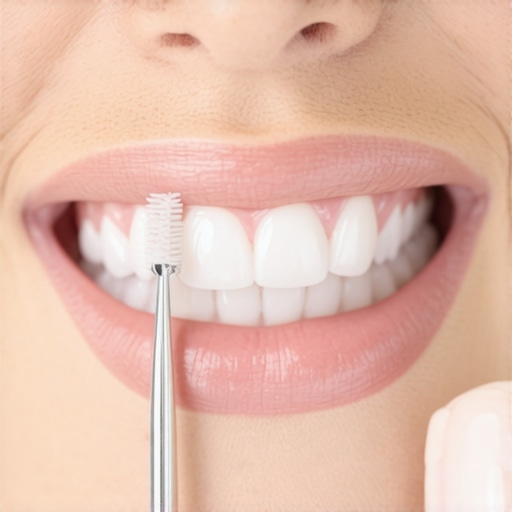
Trying to use regular floss on a permanent retainer without a threader is like trying to thread a needle with a piece of cooked spaghetti—it’s frustrating and eventually, you just give up. For the longest time, I simply stopped flossing those bottom six teeth because it took ten minutes of poking and prodding. That was a massive mistake that led to the ‘stone wall’ of calculus I mentioned earlier. You need a dedicated tool. Whether it’s a stiff-ended floss threader or a specialized ‘super floss,’ you must physically guide the string under the wire to reach the gum line. This is very similar to the best way to clean under a dental bridge to prevent smells; if you don’t get underneath the hardware, the bacteria just ferments.
The proxy brush is a literal life saver
If you hate floss threaders, the interdental (proxy) brush is your new best friend. These look like tiny pipe cleaners and are small enough to slide right between the teeth, underneath the wire. I remember the first time I used one; I thought my teeth were clean, but the proxy brush pulled out a literal feast of blueberry skin from breakfast three days prior. It was gross but eye-opening. It provides a level of mechanical scrubbing that a water flosser sometimes misses. If you do use a water-based approach, make sure you know how to stop your gums from hurting when you use a water flosser by starting on the lowest pressure setting and aiming at a 90-degree angle to the tooth, not directly into the gum pocket. Combined with the secret to cleaning your teeth while wearing a retainer, these tools ensure that your ‘permanent’ hardware doesn’t become a permanent source of decay.
The mistake I made with my retainer is actually a symptom of a much larger issue in how we view modern dental work. We often treat high-end restorations like they are ‘set it and forget it’ upgrades, much like a software patch for our mouth. But whether you are looking into cosmetic dentistry innovations or you’ve just had a major restoration, the reality is far more biological than mechanical. People assume that once a tooth is covered, it’s safe. In my experience, the opposite is true: once you add hardware, you’ve actually increased the complexity of your hygiene routine by tenfold.
The Aesthetic Trap That Could Rot Your Tooth From Within
Everyone says that a porcelain crown is the ultimate protection for a weak tooth, but I’ve seen this belief lead to total disaster. The contrarian truth is that a crown actually creates a new, 360-degree vulnerability point at the margin where the porcelain meets your natural tooth. If that margin is even a fraction of a millimeter off, or if your hygiene isn’t surgical in its precision, you end up with ‘recurrent decay.’ This is the hidden trap. You think you’re safe because you can’t see the tooth, but how to tell if your dental crown is leaking bacteria becomes a vital skill for anyone with extensive work. I’ve seen people lose entire teeth because they ignored a ‘slight’ bad taste or minor gum sensitivity, assuming their dental crowns explained as a ‘shield’ were doing their job.
Can a crown actually leak without showing up on an X-ray?
This is the question that haunts advanced dental patients, and the answer is a frustrating ‘yes.’ X-rays are two-dimensional tools trying to capture a three-dimensional problem. If the leak is occurring directly behind the metal or thick porcelain, it might stay hidden until the tooth underneath is soft. This is why you must pay attention to the ‘squish’ factor—that tiny, almost imperceptible movement when you bite. A classic study in the Journal of Periodontology emphasizes that when restorations invade the ‘biologic width’—the specific amount of space required by the gum tissue to stay healthy—the body responds with chronic inflammation. This is often the real reason your porcelain crown keeps chipping or why the gums around it stay red no matter how much you brush. 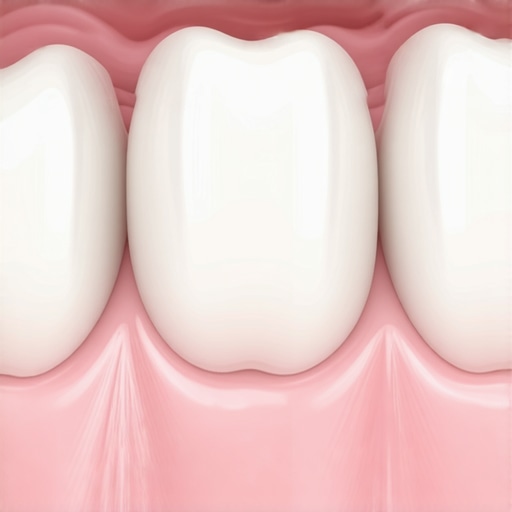
Why Your Gums Might Be Retreating From Your New Smile
If you have moved beyond basic cleanings and into the world of expert cosmetic dentistry solutions, you need to understand the ‘biologic price’ of beauty. Many people struggle with why your porcelain veneers might look bulky or unnatural, and it’s usually because the dentist tried to hide the margin too deep under the gum line. While it looks great for the first six months, the long-term ‘oops’ factor is that the gums will eventually ‘run away’ from the irritation, leading to recession that exposes the very roots you were trying to hide. This is why family dentistry guide principles are so important; you cannot build a beautiful house on a swampy foundation. You need to know how to tell if your dental crown has a hidden crack before it becomes a structural failure. Have you ever fallen into the trap of choosing aesthetics over the long-term health of your gum line? Let me know in the comments.
After years of trial and error, I’ve realized that maintenance isn’t about working harder; it’s about working smarter with the right hardware. I stopped buying those cheap multi-pack toothbrushes and invested in an electric model with a visible pressure sensor. Why? Because I was literally scrubbing my gums away. If you’ve ever wondered why your gums bleed only when you use an electric toothbrush, it’s usually because the tech is exposing existing inflammation that a manual brush was too ‘lazy’ to reach. My daily kit now includes an oscillating head brush, a water flosser for the deep pockets, and a specific set of interproximal brushes that look like tiny trees. These are non-negotiable if you want to avoid understanding dental crowns when and why they are needed for a second time on the same tooth.
How do I keep my expensive dental work from failing over the years?
It comes down to what the legendary dental researcher Dr. Gordon Christensen calls ‘meticulous home care.’ In his work with the Clinicians Report, he emphasizes that the margins of our restorations—the tiny seam where the crown meets the tooth—are the most common failure points. I’ve found that using a high-fluoride toothpaste at night without rinsing helps ‘seal’ those areas. This isn’t just for kids; the role of family dentistry in ensuring oral health for all ages means adapting these professional-grade habits at home. If you are debating dental crowns vs other restorations which is right for you, remember that the ‘best’ one is the one you are actually willing to clean every single night.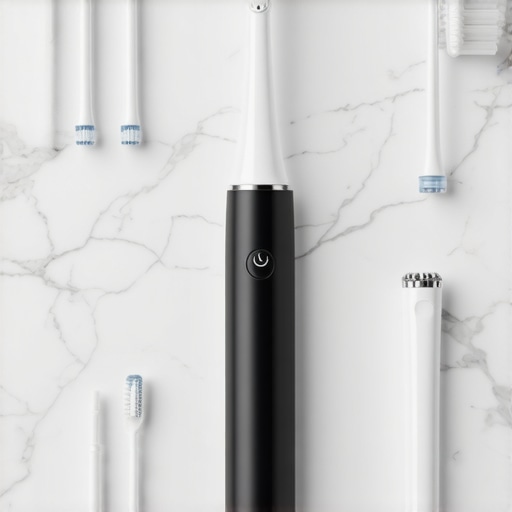
The specific kit that actually protects your investment
The real ‘secret weapon’ in my cabinet is a pH-balancing mouthwash. Most commercial rinses are actually quite acidic, which can slowly etch the surface of your porcelain or composite. I switched to a neutral-pH rinse to keep my mouth’s ecosystem stable. This is a huge part of expert cosmetic dentistry solutions that often gets left out of the initial consultation. You also need to keep an eye on how to tell if your dental crown is leaking bacteria by doing a ‘sniff test’ with your floss. If the floss smells like anything other than mint after passing through a crown, you have a bacterial leak that needs professional attention immediately.
Why the next decade of dentistry will be in your pocket
I predict that within the next five years, we won’t just be ‘guessing’ if we brushed well enough. We are already seeing the rise of smart toothbrushes that map your mouth in 3D, but the real jump will be bio-sensors in our top cosmetic dentistry trends for 2025. Imagine a crown that can alert your phone if it detects a change in acidity or a microscopic crack. Until then, you have to be your own bio-sensor. Don’t wait for pain to be the signal; pain usually means the problem is already expensive. Start by using that 45-degree ‘wiggle’ technique tonight and pay attention to any change in the texture of your gums. Your future self—and your bank account—will thank you.I remember the first time I felt that weird, rough “bump” behind my lower teeth with my tongue. I panicked for a second, thinking the wire had snapped. But it was actually worse—it was a literal wall of tartar that had set up camp because I was clueless about the right way to brush around my permanent retainer. I’d been so focused on cosmetic dentistry innovations and keeping the front of my teeth white that I completely neglected the “fortress” being built in the back. My early mistake was assuming a standard toothbrush could reach those tiny nooks and crannies. Spoiler alert: it can’t. If you’ve ever walked out of a cleaning feeling like your hygienist just did a deep-sea excavation on your lower jaw, you know exactly why we need to talk about this. Today, I’m breaking down the method that finally kept my gums healthy and my dentist happy.
Stop Treating Your Wire Like It’s Part of Your Tooth
The biggest mental hurdle I had to jump was realizing that the retainer is an obstacle, not a surface. When I first got mine, I just brushed over it. I thought, “Hey, I’m hitting the area, right?” Wrong. You are essentially leaving a “dead zone” for bacteria to party in. This is exactly why your bottom teeth feel crowded or tight even years after braces—inflammation from poor cleaning can make everything feel “off.” It’s a common struggle I see in any family dentistry guide, yet we rarely get a tutorial on it when the braces come off. According to a study published in the Journal of Clinical & Diagnostic Research, patients with fixed retainers show a significantly higher rate of calculus formation compared to those without, simply because the hardware acts as a physical barrier to natural saliva cleaning. Have you noticed a persistent “fuzzy” feeling behind your teeth even right after you brush?
Is it even possible to get these clean without professional tools?
I used to think that unless I had that little ultrasonic water-poker thing the dentist uses, my retainer would always be a bit gross. I was skeptical that a regular human with a regular toothbrush could actually reach the “underside” of the wire. But it’s not about having expensive gadgets; it’s about the angle and the patience. I spent a year doing it wrong, causing my gums to bleed every time I tried to force floss through. Now, I use a specific “wiggle” technique that mimics the secret to cleaning teeth while wearing a retainer, and it’s a total game changer. We’re going to get into the nitty-gritty of the tools you actually need—and the ones you should definitely stop wasting your money on.
Master the 45-Degree Tilt Against the Wire
The secret to bypassing that wall of tartar isn’t force; it’s geometry. Most people hold their toothbrush flat against the back of their teeth, which means the bristles just bounce off the metal wire. Instead, you need to tilt your brush at a 45-degree angle pointing downward toward the gum line for the top of the wire, and then flip it upward for the underside. Think of it like cleaning a gutter on a house—you can’t just spray the roof and hope the debris disappears; you have to get the nozzle inside the crevice. When I first tried this, I was shocked at how much ‘gunk’ I saw in the sink. I realized that my previous ‘flat’ brushing had been missing about 60% of the actual surface area. This technique is a staple in any caring for your childs teeth essential family dentistry tips because it builds the right muscle memory early on.
Wiggle the bristles instead of scrubbing
Instead of the long, sweeping motions you use on the front of your teeth, use short, vibrating ‘wiggles.’ This allows the bristles to slip behind the wire and into the interproximal spaces. If you scrub too hard, you’re just fraying your brush and irritating your gums. I used to be a ‘heavy-handed’ brusher until my gums started receding, which is a common reason the truth about how often you should replace your toothbrush head becomes so important—worn bristles won’t wiggle, they just scratch.
Why a standard floss string is your worst enemy
Trying to use regular floss on a permanent retainer without a threader is like trying to thread a needle with a piece of cooked spaghetti—it’s frustrating and eventually, you just give up. For the longest time, I simply stopped flossing those bottom six teeth because it took ten minutes of poking and prodding. That was a massive mistake that led to the ‘stone wall’ of calculus I mentioned earlier. You need a dedicated tool. Whether it’s a stiff-ended floss threader or a specialized ‘super floss,’ you must physically guide the string under the wire to reach the gum line. This is very similar to the best way to clean under a dental bridge to prevent smells; if you don’t get underneath the hardware, the bacteria just ferments.
The proxy brush is a literal life saver
If you hate floss threaders, the interdental (proxy) brush is your new best friend. These look like tiny pipe cleaners and are small enough to slide right between the teeth, underneath the wire. I remember the first time I used one; I thought my teeth were clean, but the proxy brush pulled out a literal feast of blueberry skin from breakfast three days prior. It was gross but eye-opening. It provides a level of mechanical scrubbing that a water flosser sometimes misses. If you do use a water-based approach, make sure you know how to stop your gums from hurting when you use a water flosser by starting on the lowest pressure setting and aiming at a 90-degree angle to the tooth, not directly into the gum pocket. Combined with the secret to cleaning your teeth while wearing a retainer, these tools ensure that your ‘permanent’ hardware doesn’t become a permanent source of decay.
The mistake I made with my retainer is actually a symptom of a much larger issue in how we view modern dental work. We often treat high-end restorations like they are ‘set it and forget it’ upgrades, much like a software patch for our mouth. But whether you are looking into cosmetic dentistry innovations or you’ve just had a major restoration, the reality is far more biological than mechanical. People assume that once a tooth is covered, it’s safe. In my experience, the opposite is true: once you add hardware, you’ve actually increased the complexity of your hygiene routine by tenfold.
The Aesthetic Trap That Could Rot Your Tooth From Within
Everyone says that a porcelain crown is the ultimate protection for a weak tooth, but I’ve seen this belief lead to total disaster. The contrarian truth is that a crown actually creates a new, 360-degree vulnerability point at the margin where the porcelain meets your natural tooth. If that margin is even a fraction of a millimeter off, or if your hygiene isn’t surgical in its precision, you end up with ‘recurrent decay.’ This is the hidden trap. You think you’re safe because you can’t see the tooth, but how to tell if your dental crown is leaking bacteria becomes a vital skill for anyone with extensive work. I’ve seen people lose entire teeth because they ignored a ‘slight’ bad taste or minor gum sensitivity, assuming their dental crowns explained as a ‘shield’ were doing their job.
Can a crown actually leak without showing up on an X-ray?
This is the question that haunts advanced dental patients, and the answer is a frustrating ‘yes.’ X-rays are two-dimensional tools trying to capture a three-dimensional problem. If the leak is occurring directly behind the metal or thick porcelain, it might stay hidden until the tooth underneath is soft. This is why you must pay attention to the ‘squish’ factor—that tiny, almost imperceptible movement when you bite. A classic study in the Journal of Periodontology emphasizes that when restorations invade the ‘biologic width’—the specific amount of space required by the gum tissue to stay healthy—the body responds with chronic inflammation. This is often the real reason your porcelain crown keeps chipping or why the gums around it stay red no matter how much you brush.
Why Your Gums Might Be Retreating From Your New Smile
If you have moved beyond basic cleanings and into the world of expert cosmetic dentistry solutions, you need to understand the ‘biologic price’ of beauty. Many people struggle with why your porcelain veneers might look bulky or unnatural, and it’s usually because the dentist tried to hide the margin too deep under the gum line. While it looks great for the first six months, the long-term ‘oops’ factor is that the gums will eventually ‘run away’ from the irritation, leading to recession that exposes the very roots you were trying to hide. This is why family dentistry guide principles are so important; you cannot build a beautiful house on a swampy foundation. You need to know how to tell if your dental crown has a hidden crack before it becomes a structural failure. Have you ever fallen into the trap of choosing aesthetics over the long-term health of your gum line? Let me know in the comments.
After years of trial and error, I’ve realized that maintenance isn’t about working harder; it’s about working smarter with the right hardware. I stopped buying those cheap multi-pack toothbrushes and invested in an electric model with a visible pressure sensor. Why? Because I was literally scrubbing my gums away. If you’ve ever wondered why your gums bleed only when you use an electric toothbrush, it’s usually because the tech is exposing existing inflammation that a manual brush was too ‘lazy’ to reach. My daily kit now includes an oscillating head brush, a water flosser for the deep pockets, and a specific set of interproximal brushes that look like tiny trees. These are non-negotiable if you want to avoid understanding dental crowns when and why they are needed for a second time on the same tooth.
How do I keep my expensive dental work from failing over the years?
It comes down to what the legendary dental researcher Dr. Gordon Christensen calls ‘meticulous home care.’ In his work with the Clinicians Report, he emphasizes that the margins of our restorations—the tiny seam where the crown meets the tooth—are the most common failure points. I’ve found that using a high-fluoride toothpaste at night without rinsing helps ‘seal’ those areas. This isn’t just for kids; the role of family dentistry in ensuring oral health for all ages means adapting these professional-grade habits at home. If you are debating dental crowns vs other restorations which is right for you, remember that the ‘best’ one is the one you are actually willing to clean every single night.
What Years of Retainers and Crowns Taught Me
The most important realization I had wasn’t about a specific brush; it was the fact that my mouth is now a hybrid of biology and engineering. When you have a permanent retainer or a crown, you can’t rely on your body’s natural defenses anymore. Saliva can’t reach those hidden gaps. You have to be the one to manually intervene every single day. This is a core pillar of the role of family dentistry in ensuring oral health for all ages—realizing that as our dental needs evolve, our level of responsibility must increase too.
- The ‘Invisible’ Danger: Just because it doesn’t hurt doesn’t mean it’s clean. Bacteria are patient; they don’t need a lot of space to cause a massive problem.
- Hardware Is Not Indestructible: I used to think understanding dental crowns when and why they are needed meant I was ‘fixing’ the tooth forever. In reality, I was just resetting the clock.
- Consistency Beats Intensity: Five minutes of gentle, focused cleaning is worth more than twenty minutes of aggressive scrubbing once a week.
Tools That Stop the Rot Before It Starts
If you’re serious about keeping your smile for the next thirty years, your toolkit needs to look a bit different than the average person’s. I personally trust a few specific items that have saved me thousands in repair costs. First, a high-quality electric toothbrush with a pressure sensor is non-negotiable. It forces you to be gentle while the vibrations do the heavy lifting. Second, interproximal brushes—those tiny trees—are the only things that truly get into the ‘caves’ created by a permanent wire. Finally, I always suggest checking a family dentistry guide for age-appropriate recommendations, as the needs of your gums will change as you get older. These aren’t just gadgets; they are insurance policies for your mouth.
Start Protecting Your Investment Today
Whether you are just starting your journey with top cosmetic dentistry trends for 2025 or you’ve been wearing the same retainer for a decade, remember that your oral health is a marathon, not a sprint. The small habits you build tonight—like that 45-degree wiggle—are what determine whether your dental work lasts a lifetime or ends up as a cautionary tale. Don’t be afraid to ask your hygienist for a ‘hands-on’ tutorial during your next visit; they would much rather teach you how to brush than have to prep you for a replacement crown. Have you ever felt like your dental work was a ‘set it and forget it’ solution? Let me know your experience in the comments below!