I remember staring into my son’s mouth like I was inspecting a high-security vault. He was nearly eight, and while his best friend looked like a jack-o’-lantern with all those gaps, my kid’s smile was perfectly intact. Not a single loose tooth. I panicked. I thought I’d failed at the basic child-friendly dental care we’d practiced for years. It’s that sinking feeling that your child is falling behind, even in something as biological as losing teeth. Today, I want to share why those teeth might be clinging on for dear life and when you actually need to call in the pros.
When the Tooth Fairy Skips Your House for Months
Early on, I made the classic mistake of thinking ‘nature knows best.’ I figured if the tooth wasn’t moving, the adult tooth just wasn’t ready. I waited and waited, ignoring the fact that his family dentistry checkup was already six months overdue. That delay was a mistake because it turns out, sometimes the adult tooth is ready, but it’s just lost its way. This is exactly what we’re going to solve today: identifying if your child’s timeline is just ‘slow and steady’ or if there’s a biological roadblock. You’ll learn how to spot the difference between a late bloomer and a potential orthodontic issue without losing your mind.
Will My Kid Actually Need Braces if These Teeth Stay Put?
This is the big fear, isn’t it? We worry that every extra month a baby tooth stays in means another year of expensive orthodontics later. Skepticism is normal—you might wonder if dentists just want to pull teeth for the sake of it. But here is the surprising reality: according to the American Association of Orthodontists, about 7% of people are born missing at least one permanent tooth, a condition known as hypodontia, which means that baby tooth might be the only one they ever get. This is why following essential dental tips like getting an X-ray by age seven is so vital. If you’ve noticed that your child’s adult teeth look yellow compared to their baby teeth, don’t fret; it’s a common sight that usually just highlights the contrast between old and new enamel. Have you ever spent weeks obsessively wiggling your kid’s tooth only for it to stay rock solid? Tell me your ‘stubborn tooth’ story in the comments! Getting a handle on this now is the first step in a lifetime of healthy smiles.
Look for the Double Row of Teeth Known as Shark Teeth
The most common reason for a stubborn baby tooth is that the permanent successor is taking a detour. Normally, the adult tooth acts like a slow-moving bulldozer, dissolving the root of the baby tooth as it pushes upward. But sometimes, the adult tooth decides to emerge behind the baby tooth, creating a double row. This is often called ‘shark teeth’ because of the layered appearance. If you spot this, the wiggle method won’t work because the baby tooth’s root is still fully intact and anchored. I remember my son’s bottom incisors coming in this way; it looked like he was growing a second set of armor. We had to realize that why your child needs a professional cleaning even with perfect brushing isn’t just about cavities—it’s about the dentist physically checking the path of these new arrivals. 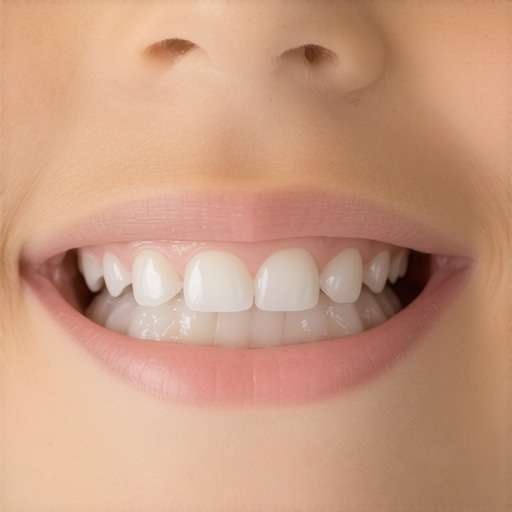
How to Tell if a Tooth Is Literally Fused to the Bone
Sometimes, the tooth isn’t just slow; it’s actually stuck. This is called ankylosis. Think of it like a house that was built without a proper foundation, and now the floor has fused directly to the ground. In dental terms, the root of the baby tooth has fused to the surrounding jawbone. If you tap the tooth with a metal spoon and it makes a sharp, high-pitched ‘clink’ instead of a dull thud, or if it sits lower than the teeth next to it, it might be ankylosed. This is a situation where the role of family dentistry becomes critical, as these teeth rarely fall out on their own and can actually block the adult tooth from ever surfacing.
Decide When to Intervene with Professional Help
You don’t want to rush into an extraction, but you shouldn’t ignore a tooth that has been loose for six months with no progress. A good rule of thumb is to evaluate the space. If the adult tooth is more than halfway in and the baby tooth isn’t even wiggling, it’s time to see a specialist. This is often how to tell if your child is ready for their first orthodontic checkup. An orthodontist can use high-tech scans to see exactly where the permanent tooth is hiding. If the baby tooth is eventually pulled, your dentist might suggest understanding dental crowns if there was decay involved, or a space maintainer to keep the ‘parking spot’ open for the adult tooth.
Prepare for the Cosmetic Transition Phase
Once the stubborn teeth are out, the adult teeth might look massive and slightly misplaced. This is the ‘ugly duckling’ stage of dental development. It’s helpful to view dental crowns explained as a solution for damaged teeth, but for alignment, you’re looking at the long game of jaw growth. If the gap remains empty for too long, the surrounding teeth might drift. In my case, after we finally had my son’s stubborn tooth removed, we had to watch the gap closely. If you’re worried about the aesthetics, there are ways how to fix a small gap between your teeth without braces later in life, but during childhood, the focus is purely on functional alignment. We often worry about the look, but the goal of early child-friendly dental care is ensuring the ‘subway tracks’ are clear for the permanent teeth to arrive in their proper stations.Most people assume that looking into expert cosmetic dentistry solutions is strictly for adults chasing Hollywood smiles. But here is the contrarian truth: cosmetic and restorative dentistry are often two sides of the same coin, even in the realm of family dentistry. We tend to view dental crowns as a purely defensive ‘repair’ job, while veneers are ‘beautification.’ In my experience, this distinction is a myth. A well-placed crown on a child’s damaged molar or an adult’s cracked tooth does more than just look good; it prevents the entire dental arch from collapsing and shifting, which is the very foundation of a lifetime of healthy smiles. When we treat ‘looks’ and ‘function’ as separate goals, we miss the bigger picture of oral structural integrity.
The Hidden Trap of Choosing Aesthetics Over Alignment
The biggest ‘oops’ factor I see is when patients or parents rush into aesthetic fixes without addressing the underlying mechanics. It’s a classic trap: paying for a beautiful porcelain restoration without figuring out why the original tooth failed in the first place. For instance, if you don’t address a misaligned bite or nighttime grinding, you will quickly discover the real reason your porcelain crown keeps chipping isn’t the material—it’s the pressure. A study published in the Journal of Prosthetic Dentistry found that the longevity of restorations is significantly compromised when the patient’s ‘occlusal scheme’ (how the teeth meet) isn’t perfectly balanced. If the foundation is shaky, the ‘decoration’ won’t last. 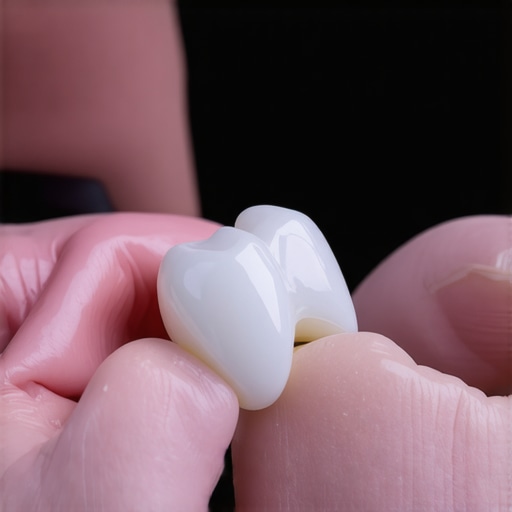
Why Do High-End Crowns Sometimes Feel Worse Than the Original Tooth?
A sophisticated question many patients ask is why their expensive new tooth feels ‘off’ even if it looks perfect in the mirror. This usually happens when the restoration doesn’t respect the biological width or the tooth’s natural emergence profile. If your porcelain veneers look bulky or unnatural, it’s often because the prep work didn’t account for the way the gum tissue interacts with the ceramic. In top cosmetic dentistry trends for 2025, we are seeing a shift toward ‘micro-esthetics’ where the focus is on the transition between the tooth and the gum line, rather than just the whiteness of the tooth itself. If that transition isn’t seamless, you risk a ‘leaking’ restoration that traps bacteria. Have you ever had a dental procedure that felt great at first but changed the way you chew a month later? I’d love to hear your experiences in the comments—let’s help each other avoid these common dental pitfalls.Maintaining a high-end smile isn’t a ‘set it and forget it’ situation. I learned the hard way that even the most expensive dental crowns need a specific toolkit to stay functional for decades rather than years. Personally, I swear by a high-pressure water flosser for cleaning the precise junction where the ceramic meets the gum line. This is the frontline defense for how to tell if your dental crown is leaking bacteria. If you have a bridge, you already know the struggle of food getting trapped in impossible spots, but mastering the best way to clean under a dental bridge to prevent smells is non-negotiable for oral health. A comprehensive review in the Cochrane Library confirms that interdental cleaning devices are significantly more effective at reducing gingivitis than brushing alone, which is why I’ve integrated GUM Soft-Picks into my daily routine; they are far more forgiving on sensitive gum tissue than traditional string floss.
How do I maintain my dental restorations over the long haul?
The secret to longevity isn’t just better brushing; it’s about mechanical protection. If you’ve invested in expert cosmetic dentistry solutions, you must protect that investment from your own jaw muscles. I recommend a custom-fit occlusal guard for every patient who has multiple restorations. This prevents the micro-cracks that lead to the real reason your porcelain crown keeps chipping. It is also vital to stick to a consistent family dentistry guide by getting professional checkups where a dentist can check for margin failure. Dr. Gordon Christensen, a renowned expert in clinical dentistry, suggests that the lifespan of a zirconia crown can exceed 20 years, but only if the patient avoids ‘parafunctional habits’ like ice chewing or nail-biting. 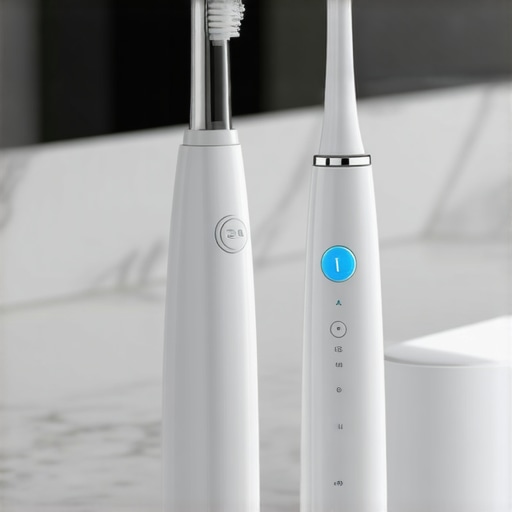
The Future of Smart Dentistry is Already Here
Looking ahead, we are moving toward a world of ‘Smart Crowns’ and bio-interactive materials. As highlighted in top cosmetic dentistry trends for 2025, we are seeing the rise of 3D-printed restorations that are custom-milled in the office while you wait, using AI to match your natural bite with 99% accuracy. This eliminates the need for temporary crowns that often feel too high. For now, your best bet is a low-tech but high-accuracy approach: grab a small flashlight and a mirror tonight and check the base of your existing dental crowns for any tiny dark lines or receding gum tissue. Catching a ‘leak’ or a gap early can save the tooth from a painful root canal later. I challenge you to do this visual audit tonight—if anything looks asymmetrical or ‘off,’ it’s time to call the pros before a minor fix becomes a major overhaul in the role of family dentistry care.
Lessons Learned from the Stubborn Tooth Trenches
After navigating the maze of late-blooming teeth and dental restorations, a few lightbulb moments changed everything for me. First, do not let a natural timeline override common sense; if a tooth has not moved in half a year, something is likely blocking it. Second, always prioritize the foundation. If you are looking into expert cosmetic dentistry solutions, ensure your alignment is solid first, or you will be fixing chips and cracks forever. Lastly, remember that the role of family dentistry is not just reactive—it is about staying ahead of these growth spurts to avoid emergency extractions later.
The Gear That Saves My Smile Daily
To keep everything running smoothly, I have curated a small toolkit that makes a massive difference. I rely on a high-quality water flosser specifically to prevent issues like how to tell if your dental crown has a hidden crack by keeping the margins debris-free. I also recommend checking out the AAO (American Association of Orthodontists) guidelines for age-appropriate milestones—they saved me from many sleepless nights. For the kids, GUM Soft-Picks are far more effective for those tight spaces between new adult molars and stubborn baby teeth. Finally, keeping a digital folder of your child’s dental X-rays helps you track shifts over the years, ensuring you follow a proper family dentistry guide for long-term health.
Start the Journey to a Confident Smile Today
Patience is a virtue, but in the world of dental health, proactive care is the real hero. Whether you are dealing with a shark tooth situation or just trying to protect a new set of crowns, remember that every small step you take now pays off in decades of confidence. You do not have to have all the answers—you just need the right team to guide you toward a lifetime of healthy smiles. Have you ever had to deal with a baby tooth that just refused to budge despite your best efforts? I would love to hear your tooth fairy horror stories in the comments below!