I was standing in the bathroom, staring at my reflection after a thirty-minute deep-clean routine. I had flossed until my gums were nearly raw, brushed with a high-end electric toothbrush, and finished it off with a minty mouthwash that promised 24-hour freshness. Yet, five minutes later, I breathed into my hand and caught that unmistakable, rotten-egg scent. It’s frustrating, isn’t it? You do everything the dentist tells you, yet you’re still terrified to whisper in someone’s ear or laugh too loudly in a quiet room. I spent months thinking I was just destined to have stinky breath forever before I realized that flossing, while essential, isn’t always the magic bullet we think it is. Have you ever felt like you are losing the battle against bad breath no matter how much you scrub? I have been there, and I promise you, there is a reason for it that doesn’t involve your lack of effort. [IMAGE_PLACEHOLDER]
Stop Blaming Your Flossing Habits for That Rotten Egg Smell
I used to think that if I just flossed harder or more frequently, the smell would eventually vanish. That was my first big mistake. I actually ended up irritating my gums so much that I had to look into the role of family dentistry in ensuring oral health for all ages just to make sure I hadn’t caused permanent damage. The truth is, sulfur-like breath often has very little to do with the food stuck between your teeth and everything to do with the chemistry of your mouth. When you wake up and realize why your breath smells like sulfur in the morning, it is usually because of anaerobic bacteria breaking down proteins. These bacteria love oxygen-free environments, and they produce volatile sulfur compounds (VSCs) as a byproduct. According to the American Dental Association (ADA), these VSCs are the primary culprits behind chronic halitosis, and they can hide in places your floss simply cannot reach. If you have older dental work, you might even need to learn how to tell if your dental crown is causing your bad breath by trapping these microscopic particles. We are going to solve this mystery today by looking past the floss and into the hidden corners of your oral biome.
Is your mouth actually hiding a secret bacterial party?
Many people worry that a persistent smell means they have a systemic health issue or that they are just naturally unhygienic. I felt that exact same shame. However, the most common reason for that sulfur stench—even after flossing—is the tongue. If you aren’t cleaning the very back of your tongue, you are leaving a massive carpet of bacteria behind. I learned the hard way that you can still experience why your breath still smells bad after brushing your tongue if you aren’t using the right technique or tools. Sometimes, the issue isn’t even in the mouth itself. You might need to investigate how to stop bad breath caused by tonsil stones, which are notorious for smelling like pure sulfur and can hide deep in the folds of your throat. Today, we are going to walk through exactly how to identify these hidden odor-traps and what you can do to finally achieve truly fresh breath that lasts longer than a piece of gum.To get rid of that persistent rotten-egg smell, you have to stop thinking of your mouth as a flat surface and start treating it like a complex plumbing system. The first real step I took was ditching my toothbrush for the tongue and getting a dedicated stainless steel scraper. I remember the first time I used it; I stood over the sink, pulled the scraper from the very back of my throat—yes, I gagged a little—and saw a thick, yellowish film. It was disgusting, but it was also a revelation. That film is a biofilm of sulfur-producing bacteria that flossing cannot touch. If you find that your breath still reeks, you might need to realize why your breath still smells bad after brushing your tongue—it is usually because you aren’t going far enough back or using enough pressure to actually lift the biofilm. It is all about the mechanical removal of those volatile sulfur compounds (VSCs) that thrive in oxygen-poor environments.
Scrape the Back of Your Tongue Like You Mean It
To actually fix the smell, you need to reach the ‘V’ shape at the very back of your tongue where the majority of odor-causing bacteria live. Use a metal scraper and pull forward five or six times, rinsing the tool between each swipe. If you just use a toothbrush, you are mostly just massaging the bacteria into the grooves rather than removing them. I also started paying attention to the truth about how often you should replace your toothbrush head because an old, frayed brush just spreads existing bacteria around your mouth like a dirty mop. 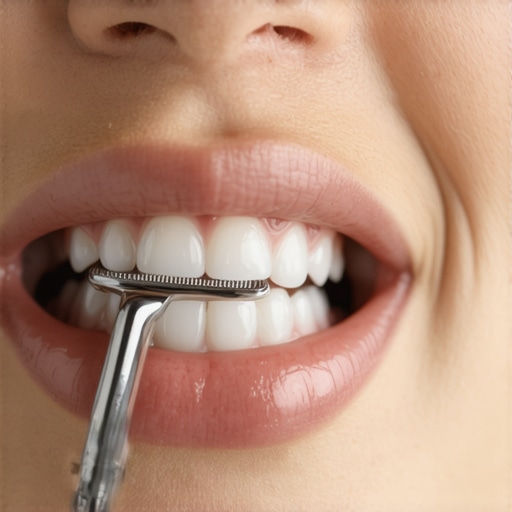
Check Your Old Dental Work for Hidden Leaks
Odors often hide under bridges and crowns where your floss can’t reach effectively. Think of a dental crown like a high-end seal on a jar; if that seal breaks, the contents spoil quickly. You need to know how to tell if your dental crown is leaking bacteria because that trapped moisture and microscopic debris create a perfect breeding ground for stench. I had an old crown that looked perfect in the mirror but was leaking just enough for bacteria to colonize underneath. Following a comprehensive family dentistry guide building a lifetime of healthy smiles involves having your dentist check these margins with an explorer tool during every visit. If you have a bridge, master the best routine for cleaning under a dental bridge using threaders or specialized interdental picks to clear out the sulfur-producing sludge.
Flush Out the Hidden Odor Traps
Finally, investigate your tonsils. If you see white, pebble-like spots in the back of your throat, those are tonsil stones—hardened clumps of bacteria and debris that smell remarkably like pure sulfur. You can gently use a water flosser on a low setting to dislodge them, but you must be careful not to trigger your gag reflex too hard. If you are struggling with the pressure, learn how to stop your gums from hurting when you use a water flosser by starting at the lowest possible setting and using warm water. Also, do not ignore the signs of dental wear; understanding the real cost of delaying a necessary dental crown is vital, as a cracked or failing restoration can harbor billions of bacteria that no amount of minty mouthwash will ever reach.
One of the biggest mistakes I see—and one I nearly made myself—is the assumption that cosmetic dentistry is purely about vanity. We are often taught to believe that as long as our teeth look white and straight, the biological job is done. But here is the contrarian truth: many aesthetic fixes are actually vital structural repairs, and if they are not maintained with precision, they become the very source of the odors you are trying to escape. I used to think a crown was a set-it-and-forget-it solution, but focusing only on the surface is essentially like painting over a rotting fence. I have spoken to specialists who emphasize that a poorly fitted veneer or crown is a ticking time bomb for bacterial colonization.
Stop ignoring the dark line at your gum line
If you look in the mirror and notice a shadow where your porcelain meets the gum, do not just assume it is a sign of aging. While some older restorations used metal bases that show through, that shadow is often a warning sign of receding gums or, worse, a failing seal. Research published in the Journal of Prosthetic Dentistry highlights that ‘microleakage’—the microscopic gap between the restoration and the tooth—is a primary cause of secondary decay. This gap is where sulfur-producing bacteria throw a party. If you are noticing this, you need to understand why your porcelain crown has a dark line at the gum line before it leads to a total failure of the tooth underneath. In my experience, people often wait until there is pain, but by then, the bacterial infiltration is usually deep enough to require a root canal.

Why does my expensive dental work still trap smells?
The ‘oops’ factor many patients fall into is prioritizing the immediate ‘wow’ factor of a white smile over the functional fit. For example, if you are looking to transform your look with expert cosmetic dentistry solutions, you must ensure the margins are perfectly smooth. If a veneer or crown is even a fraction of a millimeter too thick, it creates a ledge that catches plaque. This is exactly why your porcelain veneers might look bulky or unnatural and why they might start to smell. It is not just about the look; it is about creating a hygiene-friendly environment. When comparing dental-crowns vs other restorations which is right for you, always ask your dentist about how the transition between the tooth and the restoration will be managed to prevent bacterial traps.
Another common trap is choosing materials based solely on price. I’ve seen many people regret their choices after learning the truth about the lifespan of composite vs porcelain veneers. Composite might be cheaper today, but its porous nature makes it far more likely to absorb odors and stains over time compared to high-quality porcelain. True family dentistry involves looking at the next twenty years, not just the next twenty months. If you are worried about the health of your existing work, you should learn how to tell if your crown needs to be replaced immediately to save yourself from a much more expensive emergency later. Have you ever fallen into this trap? Let me know in the comments.
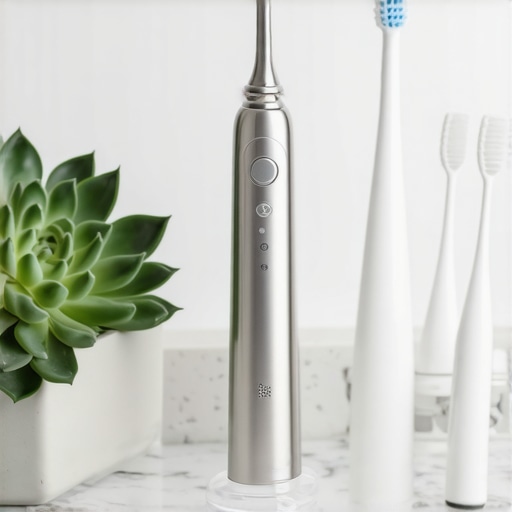
I am not just a hobbyist when it comes to oral health; I have turned my master bathroom into a mini-clinic. If you want to keep those expensive crowns and veneers smelling like absolutely nothing, you need a system that goes beyond the basic drugstore aisle. I personally swear by a professional-grade water flosser. Why? Because the pulsation technology actually knocks loose the biofilm that manual flossing misses, especially at the delicate margins where your restoration meets the gum line. If you wear a night guard to protect your teeth from grinding, do not just rinse it with tap water. You need to master the best way to clean a night guard to prevent odors, or you are simply reintroducing a colony of bacteria into your mouth every single night. Even when I am teaching my kids about caring for your childs teeth with essential family dentistry tips, I emphasize that the tools you choose dictate the results you get.
The gear I actually use to keep my mouth sterile
Dr. Gordon Christensen, a world-renowned authority in restorative dentistry, has frequently noted that the longevity of a dental restoration is roughly 50% the dentist’s skill and 50% the patient’s home care. To stay on the winning side of that equation, I use interdental brushes in three different sizes. These tiny brushes look like miniature Christmas trees, and they are the only things that can mechanically scrub the concave surfaces of your teeth that flat floss simply glides over. This is particularly vital for those with complex dental work; it is a core part of the best routine for cleaning under a dental bridge. If you are not scrubbing those gaps, you are leaving sulfur-producing bacteria to calcify into tartar that only a professional can remove.
How do I maintain my cosmetic dental work over time?
The secret isn’t a miracle toothpaste; it is consistency and the right diagnostic mindset. You have to realize that your mouth is a living, shifting environment. If you have spent the money to enhance your confidence with cosmetic dentistry innovations to watch, you must protect that investment like a luxury car. I suggest a ‘high-low’ maintenance strategy: high-tech tools at home and low-stress, frequent check-ups. I always ask my hygienist to use an ultrasonic scaler specifically around my crown margins during my six-month cleanings. If you are just starting your journey or considering a makeover, keep an eye on revamp your smile top cosmetic dentistry trends for 2025 to see how newer ceramic materials are becoming even more resistant to bacterial attachment and staining.
Predictive dentistry is the future of fresh breath
I truly believe we are moving toward a future where we won’t just ‘guess’ why someone has bad breath. We are entering an era of personalized microbial mapping. Soon, you will likely see why your dental implant specialist needs a high-tech scan becoming the standard for every routine patient, not just those undergoing surgery. These 3D scans can identify microscopic gaps in a crown or bridge long before they start to emit a foul odor. This shift from reactive treatment to predictive maintenance is going to be the biggest game-changer in family dentistry. My challenge to you today is simple: Go buy a high-quality stainless steel tongue scraper and use it for seven days straight. If you do not notice a massive difference in how your mouth feels and smells by next week, I will be shocked. It is the single most effective $10 investment you can make to stop the sulfur factory in its tracks.
[IMAGE_PLACEHOLDER_E]
The Bitter Pill I Swallowed About Dental Perfection
After years of obsessing over my routine, I realized that bad breath isn’t a moral failure—it’s a biological puzzle. One major lightbulb moment was discovering that a crown isn’t just a cap; it’s a living part of my mouth’s ecosystem. If I had understood the real cost of delaying a necessary dental crown sooner, I could have avoided months of sulfur-scented anxiety. I also learned that teaching my kids about child friendly dental care early on prevents these bacterial colonies from ever taking root in the first place.
Another hard truth? Your nose is a better diagnostic tool than your mirror. If you smell something off, even if your teeth look white, trust your gut. Bacteria love to hide where they can’t be seen, especially in the deep fissures of the tongue or under aging dental work. Don’t let the fear of a dentist appointment keep you in a cycle of shame. It’s often just a simple mechanical adjustment away from resolution.
My Non-Negotiables for a Stench-Free Mouth
I don’t leave my oral health to chance anymore. Here are the tools I trust with my life (and my social life):
- Stainless Steel Tongue Scraper: Forget the plastic ones; they don’t have the mechanical edge needed to lift the biofilm. It is the highest ROI for your mouth.
- Interdental Brush Set: These are far superior to string floss for cleaning the concave gaps where sulfur builds up between molars.
- High-Quality Water Flosser: This is a game-changer for cleaning under bridges. If you are nervous about the sensation, look into how to stop your gums from hurting when you use a water flosser to make the transition easier.
Take Back Your Social Confidence One Swipe at a Time
You deserve to laugh, whisper, and breathe without checking your hand every five minutes. Solving the sulfur mystery is about moving past the surface and getting into the nooks and crannies. Modern family dentistry is more than just fillings; it’s about maintaining the complex balance of your oral biome. If you have tried these steps and the smell persists, it is time to call in the pros. Don’t hesitate to contact us to get a professional look at what might be hiding beneath the surface. Have you ever felt like you are doing everything right but still can’t shake that morning breath? Let me know your experience in the comments below.