I used to look at the ‘pink in the sink’ every morning and just shrug it off. I was busy, my coffee was getting cold, and a little bit of gum sensitivity felt like a minor annoyance I could deal with later. I told myself I would just buy a softer toothbrush and the problem would vanish. I even made the classic mistake of brushing harder to ‘clean out’ the soreness, which we all know now is a recipe for disaster. But then, my uncle—a guy who ran marathons and ate like a saint—had a sudden cardiac scare. During his recovery, his cardiologist asked a question that stopped me cold: ‘How has your gum health been lately?’ At first, it sounded like a reach. It wasn’t. It was the moment I realized my mouth wasn’t an island, and ignoring why your gums are receding in only one area is about much more than just a gap in your smile.
I had spent years treating dental care like a cosmetic chore, something to do if I wanted a brighter look for photos. I never saw it as a vital part of my cardiovascular system. Today, I want to pull back the curtain on this connection. We are going to look at why that inflammation in your mouth is actually a flare gun for your heart, and I will show you exactly how to protect both without feeling overwhelmed by a twenty-step routine. Have you ever noticed your gums acting up right when you feel most stressed or run down?
Stop Ignoring the Pink in the Sink Before It Affects Your Heart
When you ignore bleeding or swelling, you aren’t just risking a tooth; you are letting systemic inflammation run wild through your body. The bacteria that cause periodontal disease don’t just stay put. They hitch a ride on your bloodstream, heading straight for your heart valves and arteries. It is a sobering thought, but catching it early through a consistent family dentistry guide approach can literally save your life. According to the Harvard Health Publishing, people with gum disease are two to three times more likely to have a heart attack or stroke. This isn’t just about ‘bad luck’; it’s about the biological pathway where oral bacteria trigger a protein that causes blood vessels to inflame and clog.
Early on, I thought I could outsmart the system by just using mouthwash, but I was missing the point. You can’t just rinse away an infection that has moved into the tissue. This is why starting early with caring for your child’s teeth is so important—it sets the cardiovascular baseline for the rest of their lives. If I had known that my gum health was a mirror for my arterial health, I would have taken those early warning signs much more seriously.
Is This Connection Actually Scientifically Proven?
You might be thinking, ‘Is this just another health scare to keep me in the dental chair?’ I get the skepticism. I used to be the person who only flossed the night before a cleaning. But the reality is that chronic inflammation is a silent, persistent pressure on your heart. Just like what your chronic bad breath is actually saying about your gut health, your gums provide a real-time report on how your body is handling bacterial load. If your body is constantly fighting an infection in your mouth, it has fewer resources to keep your heart running at peak performance. We are going to break down the specific steps you can take to lower your risk, starting with the habits you might be getting wrong right now.
Stop the Inflammation Before It Spreads
The first thing you need to do is stop viewing your gums as just a frame for your teeth. Think of them as a protective gasket. When that gasket fails, the engine—your heart—is exposed to contaminants. I used to think that as long as I didn’t have a cavity, I was doing great. But once I learned about why your gums are receding in only one area, I realized my gasket was leaking. You need to perform a visual check every morning. Look for redness at the margins, any localized swelling, or areas where the tooth looks longer than it used to. These aren’t just aesthetic shifts; they are structural failures that allow oral bacteria to enter your systemic circulation.
Check Your Restorations for Bacteria Traps
If you have existing dental work, those sites are often the primary entry points for heart-damaging bacteria. I learned this the hard way with a molar that I had capped years ago. I ignored a slight metallic taste and a faint pressure when I chewed. It turned out the seal had failed. Learning how to tell if your crown is leaking and trapping bacteria is a skill everyone with dental work needs. A leaking crown is like a Trojan horse; it looks fine on the surface but harbors a bacterial colony underneath that is constantly pumping inflammatory markers into your body. This is exactly where understanding dental crowns: when and why they are needed becomes vital—it is about replacing failing work before it becomes a cardiac risk.
Commit to Professional Support for the Whole Family
You cannot DIY your way out of systemic inflammation once it has taken hold. This is where the role of family dentistry in ensuring oral health for all ages becomes the most important part of your medical team. I used to be terrified of deep cleanings. I remember one session where my mouth felt so sensitive afterward that I almost skipped the follow-up. I had to research why your gums are still sore a week after a deep cleaning just to convince myself that the healing process was actually working. That soreness is often just the tissue reattaching once the bacterial load has been cleared away. Don’t be discouraged if the reason your teeth feel gritty even after a professional cleaning bothers you at first; it is a sign that the calculus that was shielding the bacteria has been removed, allowing your body to finally start the repair process on its own.
Optimize Your Home Care Routine Without the Overkill
More pressure is never the answer. I spent years scrubbing my teeth like I was trying to remove rust from a car bumper, only to find out I was actually destroying the very barrier I needed. Now, I focus on the sweep method—angling the brush at 45 degrees toward the gum line. If you are noticing changes in your smile or feel like your current routine isn’t cutting it, look into enhance your confidence: cosmetic dentistry innovations to watch for ways to restore that protective barrier effectively. Modern techniques can now rebuild what chronic inflammation has stripped away, giving your heart the break it deserves. By the time you notice symptoms, the inflammation is already active, so being proactive with your tools is the only way to stay ahead of the curve.
Staying ahead of the curve means understanding that most people treat a crown like a ‘diamond shield’ that makes the tooth underneath invincible. I used to think that once a tooth was capped, it was essentially retired from my list of worries. But here is the contrarian truth: a crowned tooth is often more vulnerable to silent infection than a natural one. The real danger isn’t the porcelain breaking; it’s what happens at the margin—that tiny microscopic line where the crown meets your natural gum. If that seal isn’t perfect, or if you let your gum health slide, you’ve essentially built a high-tech house on a swamp. One of the biggest ‘oops’ factors I see is people waiting for pain before they get a restoration checked. In the world of high-end dentistry, pain is a late-stage symptom. By the time your crown starts to throb, the bacteria have likely reached the pulp or started affecting the bone. This is why dental crowns explained: the ultimate solution for damaged teeth should always include a disclaimer about maintenance. It’s not a ‘one and done’ procedure; it’s a long-term partnership with your provider.
Stop Treating Your Crowns Like a One-Time Fix
Many of us have seen that tell-tale gray or dark purple shadow at the base of an old restoration. I used to think it was just ‘getting older.’ It isn’t. While it can sometimes be the metal substructure of an old porcelain-fused-to-metal crown showing through, it is often a sign of gum recession or even decay. You should investigate the hidden reason your gums look dark around an old dental crown because it might be the first warning that your ‘protective gasket’ is failing.
Is that dark line around your gum a sign of failure?
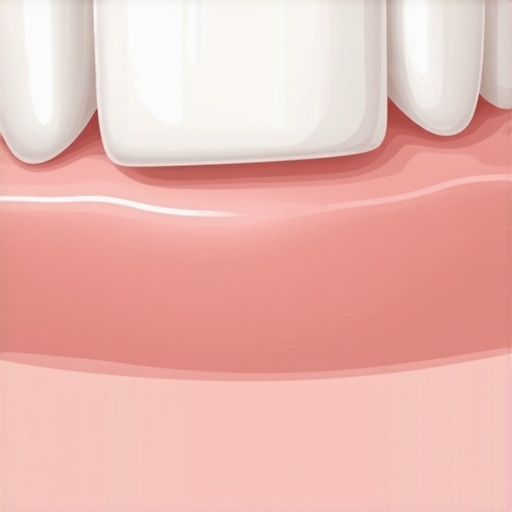
A study in the Journal of Oral Rehabilitation highlights that the success of these restorations is overwhelmingly tied to the ‘biological width’—the specific distance needed between the restoration and the bone. If your crown violates this space, your body will literally pull the gums away in a desperate attempt to create a buffer, leaving you wide open to the heart-damaging bacteria we discussed earlier. This is especially true when comparing why your gums look dark around an old metal-fused crown versus newer all-ceramic options. When it comes to the aesthetic side, the mistake is chasing ‘blinding white’ rather than ‘anatomically correct.’ We often see people jump into transform your look with expert cosmetic dentistry solutions without realizing that health must come first.
If you place veneers or crowns on top of inflamed gums, you are trapping a fire under a beautiful new floor. I always tell friends: fix the foundation, then paint the house. This applies to the little ones too; child-friendly dental care: the foundation of good oral health isn’t just about avoiding cavities; it’s about training the gums to support restorations decades down the line. We also need to reconsider the materials we use; the truth about silver fillings vs composite shows that even small choices impact the long-term structural integrity of your bite. Have you ever fallen into this trap where you ignored a minor change in your dental work? Let me know in the comments.
I’ve realized that the ‘brush and floss’ mantra is the absolute floor, not the ceiling, for someone who wants their dental work to outlive them. When I first got my crowns, I was using standard wax floss, thinking I was doing enough. Then, my dentist showed me an intraoral scan of the plaque buildup hiding in the ‘interproximal’ space—the gap between the teeth. That was my wake-up call to move toward more specialized tools. If you are debating dental crowns vs other restorations: which is right for you, remember that the restoration is only as good as the maintenance equipment you own. Personally, I switched to high-caliber interdental brushes. Unlike string floss, which can slide right over a concave root surface, these little ‘Christmas tree’ brushes physically scrub the area. A meta-analysis in the Journal of Clinical Periodontology confirmed that interdental brushes are significantly more effective at removing plaque and reducing inflammation than floss alone.
How do I keep my dental work lasting for decades?
The secret isn’t more brushing; it’s better physics. I recommend a water flosser for anyone with a bridge or multiple crowns. The pressurized stream gets into the ‘biological width’ areas that a bristle simply cannot reach. If you’ve ever worried about how to tell if your crown is leaking and trapping bacteria, the water flosser is your best preventative insurance policy. It flushes out the microscopic debris before it can ferment and cause decay at the margin. Also, check the truth about how often you really need to replace your toothbrush because a frayed bristle is basically a dull knife—it won’t clean, it will just irritate. Using these tools correctly is the only way to achieve the secret to making your dental bonding last more than five years, or even fifteen.

Looking ahead, I see a major shift toward ‘Digital Twins’ in dentistry. We are moving toward a world where your dentist maintains a 3D digital model of your mouth that updates every visit. This allows for predictive analysis—detecting a potential failure in a crown or a shift in the gum line months before it’s visible to the naked eye. This is a huge part of revamp your smile: top cosmetic dentistry trends for 2025. We’re also seeing AI-driven sensors in electric brushes that sync with your clinic to provide real-time feedback. It’s not just about aesthetics anymore; it’s about high-tech data management for your health. To keep the whole house in order, follow a family dentistry guide: building a lifetime of healthy smiles to ensure everyone is using the same high-standard protocols. If you want to see an immediate difference, try the ‘size-up’ challenge: buy a variety pack of interdental brushes and find the largest size that fits comfortably between each tooth. Most people use a size that’s too small, leaving a gap where bacteria can still thrive.
The Three Hardest Lessons I Learned After My First Crown
Reflecting on my own journey, I realized that many of us are taught how to brush, but not how to maintain the systemic integrity of our bodies. Here is the wisdom I wish I had known years ago:
- A crown is a shield, not a suit of armor. I learned that bacteria don’t care how expensive your restoration was; they only care about the tiny gaps at the margin. If you don’t clean that line, the ‘leak’ persists.
- Pain is a late-stage warning sign. In the world of oral health, if you wait for it to hurt, you’ve already allowed inflammation to impact your cardiovascular baseline for months.
- Gums require structural support. Using a family dentistry guide: building a lifetime of healthy smiles taught me that the foundation—the bone and tissue—is the only thing keeping those beautiful restorations in place.
The Exact Tools I Use to Shield My Gums and Heart
I stopped buying whatever was on sale and started treating my dental kit like medical equipment. Here is the ‘toolkit’ that transformed my results:
- Interdental Brushes: I trust these specifically because they physically scrub the concave root surfaces where crowns meet the gum. Standard floss often just glides over the most important spots.
- High-Pressure Water Flossers: This is my ‘insurance policy’ for flushing out the biological width. It ensures that the bacteria mentioned in revamp your smile: top cosmetic dentistry trends for 2025 never gets a chance to enter my bloodstream.
- Regular Professional Monitoring: I no longer see the dentist as a ‘fixer’ but as a data analyst for my health. Understanding the role of family dentistry in ensuring oral health for all ages helped me realize that consistent professional cleanings are the only way to clear calculus that a brush simply cannot touch.
Start Your Journey Toward Total Body Wellness
Your oral health is the sentinel for your overall longevity. By treating your gums as a vital organ rather than just a frame for your teeth, you are actively lowering the inflammatory load on your heart. It’s never too late to tighten up your routine and give your cardiovascular system the break it deserves. If you are currently debating a repair or a new look, take a moment to weigh dental crowns vs other restorations: which is right for you to ensure your choice supports both your confidence and your cardiac health. Have you ever noticed a change in your gums or teeth during a period of high stress? Let me know in the comments below.