It was about 11:45 PM on a Tuesday when I stood staring into my bathroom mirror, genuinely convinced I had just chemically burned my mouth off. I had been dealing with a bit of a persistent funky taste—the kind that makes you wonder if your breath smells like sulfur even after a deep scrub—and I decided to go nuclear. I grabbed the strongest, highest-alcohol mouthwash in the cabinet and gargled like my life depended on it. When I spat it out, my gums weren’t their usual healthy pink. They were ghostly white, almost like they were covered in a thin, peeling film. I panicked. I thought I’d need to call a family dentistry professional in the middle of the night. If you are standing in front of your mirror right now seeing the same thing, take a deep breath. Today, I am going to explain exactly why this happens, why that stinging sensation isn’t actually ‘working’ the way you think it is, and how you can fix it without a frantic trip to the ER.
The Night I Mistook a Chemical Burn for a Clean Mouth
My biggest mistake early on was believing the old myth that if it doesn’t hurt, it isn’t cleaning. I wanted that clinical, sterile feeling, but I ended up with tissue sloughing. That white film you see is often just the top layer of your delicate oral mucosa reacting to harsh ingredients. It is essentially a mild chemical burn or an allergic reaction to things like high alcohol content or even certain flavoring agents. When I first saw it, I was terrified it was something more sinister, like an infection. However, learning how to tell if a white spot on your gum is serious helped me realize that this generalized blanching is usually a sign to just throw that specific bottle of mouthwash in the trash. Have you ever experienced that weird, peeling skin feeling inside your cheeks after a long rinse?
Is this a sign of permanent damage?
You might be worried that you have permanently scorched your gums or ruined your enamel. In most cases, the white color is temporary. Your mouth is incredibly resilient and heals faster than almost any other part of your body. According to the American Dental Association, the oral mucosa can shed and regenerate quite quickly when an irritant—like a harsh, alcohol-based rinse—is removed. But while the damage might not be permanent, it is a loud signal from your body that your current routine is too aggressive. We are going to look at how to pivot to a gentler approach that actually supports your oral microbiome instead of nuking it.
Stop the Burn and Start the Healing
The first thing I did once the panic subsided was flush my mouth with lukewarm water. I stopped using that specific mouthwash immediately. Think of your oral mucosa like the skin under your eyes—it is incredibly thin and sensitive. When you hit it with high-percentage alcohol, you are essentially dehydrating the cells until they die and slough off. If you are experiencing pain along with the white film, you can use a mild saltwater rinse to soothe the area, much like how you would treat a painful canker sore that wont go away. I spent three days doing this, and the ‘snowstorm’ in my mouth finally cleared up. This resting phase is crucial; you have to let the tissue regenerate before introducing any new products. This regeneration happens quite quickly, but only if you stop the chemical onslaught.
Swap Your Alcohol-Heavy Rinse for a Microbiome-Friendly One
Next, you need to audit your bathroom cabinet. If your mouthwash lists alcohol as one of the top three ingredients, it is probably time to re-evaluate. We often think that the ‘sting’ means it is working, but in reality, that sting is a signal of irritation. Alcohol is a desiccant, meaning it sucks moisture out of your tissues. Over-drying your mouth can lead to other issues, which is why your mouth feels dry no matter how much water you drink even if you are staying hydrated. Switch to an alcohol-free version or one that uses essential oils or xylitol. These ingredients help maintain a healthy balance without the scorched-earth policy. When I made the switch to a xylitol-based rinse, the chronic funky taste actually disappeared faster than when I was using the high-octane stuff.
Protecting Your Dental Work from Harsh Chemicals
You should also consider if the irritation is coming from your toothpaste. Some whitening pastes use abrasive particles that are too rough for daily use. If you have extensive dental work, such as understanding dental crowns, using a harsh chemical rinse can sometimes irritate the gum line where the crown meets the natural tooth. I once had a patient who thought their porcelain crowns were failing because the gums around them were purple and peeling. It turned out they were over-bleaching their teeth with a generic kit that was leaking onto the soft tissue, causing a localized chemical burn. We had to pause all whitening treatments for a month to let the gums settle back into their healthy pink state.
Check Your Mechanical Habits
Finally, monitor how your gums react to physical pressure. Sometimes we mistake a chemical reaction for mechanical damage. If you notice the peeling specifically in areas where you scrub the hardest, you should check how to tell if your gum recession is caused by brushing too hard. A soft-bristled brush is non-negotiable. I remember trying a ‘firm’ brush once because I thought it would be more efficient; within a week, my gums were so raw I could not even eat comfortably. Transitioning to a gentle routine is not about being ‘soft’ on hygiene; it is about being smart so you do not end up needing a family dentistry expert to repair preventable recession or enamel wear. If the peeling persists despite these changes, it might be time to investigate why your breath smells like sulfur despite regular flossing, as it could indicate an underlying infection rather than just a product reaction.
Let’s dig deeper. Most people assume that if they have a cosmetic flaw, the solution is purely additive—add a veneer, add a crown, or add a whitening gel. However, here is the contrarian truth: **Your smile is only as good as the foundation it sits on.** Everyone tells you to focus on the shade of your teeth, but in my experience, the health of the ‘pink’ (your gums) is far more important than the ‘white.’ If you rush into top cosmetic dentistry trends for 2025 while your gums are still recovering from a chemical burn or chronic inflammation, you are essentially building a mansion on a swamp. A reputable family dentistry professional will tell you that a stunning result depends on ‘biological width’—the tiny, crucial space between your dental work and your bone.
Why does my gum line look dark even after getting a new crown?
This is an advanced concern I hear often, and it is a classic ‘nuance’ mistake. It is usually not dirt or a stain. It is often a sign of a ‘leaking’ restoration or a reaction to the metal base of an older style of dental work. If you are understanding dental crowns, you know that the fit at the margin is everything. A study in the Journal of Prosthodontic Research found that even a micro-gap of a few microns can lead to bacterial colonization that causes that unsightly dark halo or localized gum recession. Before you assume you just need more bleach, you must learn how to tell if your crown is leaking and trapping bacteria.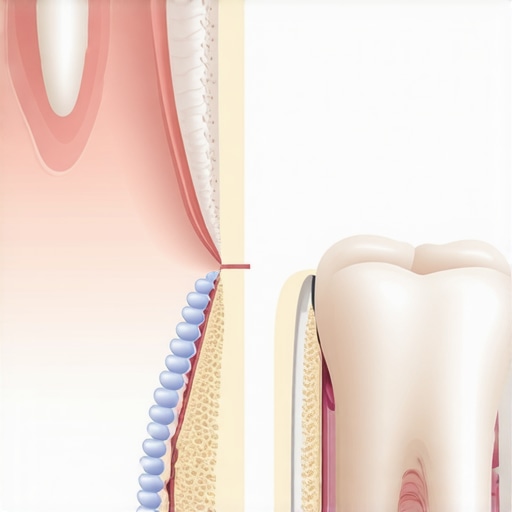
The Whitening Trap and the ‘Oops’ Factor
One of the biggest traps I see involves patients attempting to whiten their way out of a structural problem. If your teeth look transparent at the edges, using a high-acid, professional-strength whitener will only exacerbate the issue by further thinning the enamel. You need to seek out the safest way to whiten teeth if you have thin enamel rather than grabbing the strongest bottle on the pharmacy shelf. That ‘nuclear’ approach I took with the mouthwash? It is the exact same mistake people make with whitening strips. It leads to intense sensitivity and the same tissue sloughing we discussed earlier.
Stop Chasing Perfection Without a Foundation
A great family dentistry practice won’t just give you what you want; they will give you what your mouth can structurally support. Whether you are weighing dental crowns vs other restorations or looking for expert cosmetic dentistry solutions, the goal should be longevity over a temporary glow-up. Have you ever fallen into the trap of prioritizing color over gum health? Let me know in the comments.
Maintaining the ‘perfect’ smile after you have invested in veneers or crowns isn’t about working harder; it is about working smarter with the right gear. After my mouthwash disaster, I realized that my tool kit was more suited for a medieval dungeon than a modern mouth. I ditched the manual scrubbing and moved to a high-frequency sonic toothbrush with a built-in pressure sensor. This is a game-changer because it vibrates at around 30,000 to 60,000 strokes per minute, which is physically impossible to achieve by hand. More importantly, it stops vibrating the second you press too hard, preventing that localized gum recession I was so worried about. If you are curious about the mechanics, you should look into how to tell if your gum recession is caused by brushing too hard before you do any more damage.
How do I keep my dental work looking brand new for a decade?
The secret isn’t a special toothpaste; it is the marginal integrity of your restorations. According to a study published in the International Journal of Prosthodontics, the longevity of a crown is directly linked to the ‘marginal fit’—the tiny seam where the porcelain meets your natural tooth. If you let plaque sit on that seam, you risk a ‘leaking’ restoration. I personally use a water flosser on a medium-low setting specifically to blast out debris from those margins without the aggressive sawing motion of traditional floss that can sometimes snag on a porcelain crown. To keep everything pristine, I also make sure I am the secret to making your dental bonding last more than five years by avoiding staining agents like turmeric and black coffee immediately after a session.
Why your night guard is the unsung hero of cosmetic longevity
If you have spent money on expert cosmetic dentistry solutions, you are throwing that money away if you aren’t wearing a night guard. Micro-bruxism—the tiny, unconscious grinding of your teeth at night—is the number one killer of ceramic work. Porcelain is incredibly strong under vertical pressure (chewing), but it is brittle under lateral shearing forces (grinding). I have seen $20,000 worth of veneers shattered in six months because of stress-induced clenching. You also have to be careful with how you maintain that guard; avoid the temptation to use harsh cleaners. Learn how to clean a night guard without using harsh chemicals or bleach to ensure you aren’t introducing irritants back into your mouth every night.
The future of your smile looks like a high-tech scan
I predict that within the next five years, the ‘standard’ check-up will move away from physical impressions and toward AI-driven 3D mapping. We are already seeing cosmetic dentistry innovations to watch that allow us to track enamel wear at a micron level over time. This means your family dentistry professional can catch a hairline crack in a crown before it becomes a full-blown emergency. If you want to stay ahead of the curve, ask your dentist for a digital scan at your next cleaning to establish a ‘baseline’ for your oral health. My advanced tip for today: Grab a pack of interdental brushes in three different sizes. Standard floss often misses the concave surfaces of your back molars where dental crowns are most likely to fail. Use them once a day before bed—you will be shocked at what your ‘regular’ routine was leaving behind.
Three Hard Lessons I Learned While Saving My Own Gums
After that midnight panic attack, I had to unlearn everything I thought I knew about ‘deep cleaning.’ First, I realized that squeaky-clean teeth shouldn’t come at the cost of peeling or bleeding gums. If your mouth feels tight or parched after rinsing, you have gone too far. Second, I learned that high-alcohol products are the silent enemies of longevity, especially for those with sensitive tissues. Third, even the most expensive dental work won’t save you if you don’t respect the ‘pink’—your gum health is the true indicator of how long your smile will stay intact. It is about harmony, not hostility. Understanding the truth about fluoride treatments for adults with thin enamel helped me see that protection is better than aggressive scrubbing.
#IMAGE_PLACEHOLDER_E#
Gear That Actually Protects Your Cosmetic Investment
Building a routine shouldn’t feel like a chore. Here are the tools I genuinely trust to keep my mouth in peak condition without the scorched-earth policy:
- Alcohol-Free Xylitol Rinses: These stimulate healthy saliva flow and manage bacteria without causing chemical sloughing.
- Sonic Technology with Sensors: A brush that alerts you when you press too hard is non-negotiable for preventing recession. It is a vital supplement to your regular visits because why a prophy treatment is much more than just a simple tooth cleaning is all about the professional-grade removal of what we miss at home.
- Expert Consultations: Don’t guess. The the role of family dentistry in ensuring oral health for all ages is to provide a roadmap tailored to your specific biology.
Take the First Step Toward a Pain-Free Routine
You do not have to wait for a scary ‘white film’ moment to start treating your mouth with the respect it deserves. Whether you are maintaining natural teeth or managing complex restorations, the goal is consistent, gentle care. A solid foundation in family dentistry ensures that your oral microbiome stays balanced for decades. If you are worried about past damage or current irritation, feel free to contact us to get your health back on track. Your future self will thank you for the gentleness you show today. Have you ever felt that scary ‘sting’ from a mouthwash and wondered if it was actually doing more harm than good? Let me know your experience in the comments below!