I remember sitting at my kitchen table, feeling incredibly proud of myself for finally finishing that long-overdue scaling and root planing. I’d been putting it off for months, but my expert at family dentistry finally convinced me it was the only way to save my gums. To celebrate, I took a huge sip of an iced latte. I swear, I saw stars. It wasn’t just a quick zing; it felt like a tiny lightning bolt had decided to take up residence in my molar. If you’ve ever felt like your teeth were suddenly made of glass, you know exactly the panic I’m talking about. I spent the next three days avoiding anything colder than room-temperature water. I made the classic rookie error of thinking the hard part was over once I left the chair. Today, I’m going to share exactly how I learned to handle that post-treatment discomfort so you don’t have to live on lukewarm soup for a week.
How I Finally Tamed the Post-Cleaning Pain
The “why” behind this matters because if you don’t manage the sensitivity properly, you might stop brushing effectively, which completely defeats the purpose of the cleaning. When those roots are deep-cleaned, they are suddenly exposed to the world without their usual “blanket” of tartar. I once tried to “power through” by using my regular whitening mouthwash right after a session—big mistake. I learned quickly why your gums turn white after using a strong mouthwash when they are already irritated. It burned like fire because my tissues were still in recovery mode. According to the American Dental Association, dentin hypersensitivity is extremely common after periodontal therapy because the removal of calculus can temporarily expose the tubules leading to the tooth’s nerve. It is a sign of healing, but that doesn’t make it any less annoying. We are going to look at the exact steps to calm those nerves down without sacrificing your oral hygiene routine.
Does this mean the dentist did something wrong?
It is easy to get skeptical when you go in to “fix” your mouth and come out feeling more sensitive than before. You might even worry that your dental crowns are failing or that the hygienist was too rough. But here is the reality: that sensitivity is usually just your body adjusting to the absence of bacteria-laden buildup. Have you ever felt that sudden, sharp jolt when drinking cold water after a dental visit? Drop a comment and let me know, because for a while, I thought I was the only one struggling. If you are noticing that things aren’t settling down after a few days, you might be wondering why your gums are still sore a week after a deep cleaning. It’s a common hurdle, but it doesn’t have to be a permanent one. Let’s get into the practical, day-to-day changes I used to get back to enjoying my favorite foods without the fear of a lightning strike in my jaw. For those who also noticed weird sensations during the process, understanding why your teeth feel sharp after a scaling and root planing can also help demystify the experience.
Reset Your Routine Until the Tingle Stops
The first 48 hours are the “danger zone” where your teeth are essentially raw. Imagine a construction site where the old, crumbling fence (the tartar) has just been torn down, and the new, sturdy wall hasn’t been built yet. Your nerves are that construction site. To protect them, you have to change how you brush. I made the mistake of thinking I could just go back to my electric toothbrush on the highest setting. My jaw literally throbbed for an hour afterward. Now, I tell everyone to switch to a manual, ultra-soft brush and move in gentle circles. This is a core part of the role of family dentistry in ensuring oral health for all ages—knowing when to dial back the intensity to let the body heal. 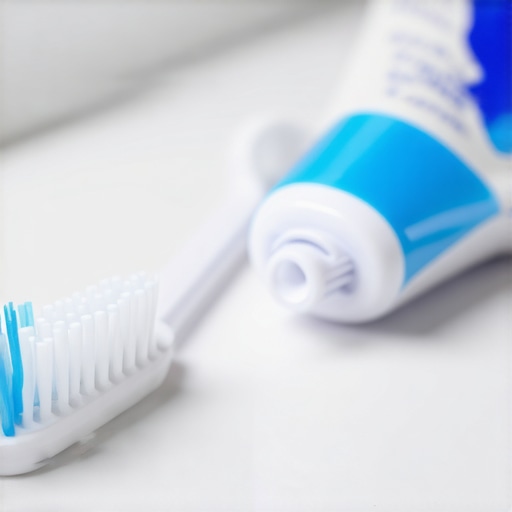
The Desensitizing Toothpaste Switch
If you aren’t using a potassium nitrate toothpaste, you are missing out on the “lidocaine” of the dental world. It doesn’t work instantly like a pill, but it builds up a barrier over those exposed tubules. I remember one specific Tuesday—four days after my scaling—where I finally switched. Within two days, I could drink room-temperature water without wincing. It is a much better approach than trying to figure out how to whiten your teeth without making them feel sensitive while your gums are still recovering. Save the whitening for later; right now, you need protection.
Stick to Lukewarm Foods and Drinks
I discovered that temperature matters more than we think. It isn’t just about ice-cold drinks. Even a piping hot cup of coffee can send those nerves into a frenzy because the heat causes a rapid expansion of the fluid inside your tooth’s tubules. I once tried to “treat” myself to a hot cocoa after a particularly long appointment, and I had to put the mug down after one sip. Lukewarm is your best friend for at least a week. Sometimes people panic because their teeth look different after the tartar is gone. Understanding why your teeth look yellow even though you have never smoked helps you realize that the cleaning just revealed your natural dentin color, and the sensitivity is a separate issue of exposure, not damage.
Avoid the Acid Trap
I used to love a morning glass of orange juice, but after a deep cleaning, that juice is basically liquid sandpaper. Acidic foods soften your enamel further. I learned the hard way why your teeth hurt when you eat citrus fruits when I tried to have a grapefruit three days post-treatment. It felt like the acid was traveling straight to the bone. If you must have something acidic, rinse with plain water immediately after. This protects the work done during your session and prevents further irritation of the gum line.
Keep the Surface Smooth Without Scrubbing
You might notice that your teeth feel different—almost too smooth or even a bit “fuzzy” as the day goes on. When I first felt this, I thought the cleaning had failed. I kept wondering why your teeth feel fuzzy even after you brush them, but it’s usually just the initial pellicle layer forming. Don’t over-scrub to get that “squeaky” feeling back. Use a lukewarm saltwater rinse instead. It keeps the pH of your mouth balanced and helps the gums reattach to those freshly cleaned roots. This simple step is vital because the connection between your gum health and your heart starts with how well you manage inflammation at home. If your gums stay inflamed because you’re scrubbing too hard, you’re delaying the real healing.I remember sitting at my kitchen table, feeling incredibly proud of myself for finally finishing that long-overdue scaling and root planing. I’d been putting it off for months, but my expert at family dentistry finally convinced me it was the only way to save my gums. To celebrate, I took a huge sip of an iced latte. I swear, I saw stars. It wasn’t just a quick zing; it felt like a tiny lightning bolt had decided to take up residence in my molar. If you’ve ever felt like your teeth were suddenly made of glass, you know exactly the panic I’m talking about. I spent the next three days avoiding anything colder than room-temperature water. I made the classic rookie error of thinking the hard part was over once I left the chair. Today, I’m going to share exactly how I learned to handle that post-treatment discomfort so you don’t have to live on lukewarm soup for a week.
How I Finally Tamed the Post-Cleaning Pain
The “why” behind this matters because if you don’t manage the sensitivity properly, you might stop brushing effectively, which completely defeats the purpose of the cleaning. When those roots are deep-cleaned, they are suddenly exposed to the world without their usual “blanket” of tartar. I once tried to “power through” by using my regular whitening mouthwash right after a session—big mistake. I learned quickly why your gums turn white after using a strong mouthwash when they are already irritated. It burned like fire because my tissues were still in recovery mode. According to the American Dental Association, dentin hypersensitivity is extremely common after periodontal therapy because the removal of calculus can temporarily expose the tubules leading to the tooth’s nerve. It is a sign of healing, but that doesn’t make it any less annoying. We are going to look at the exact steps to calm those nerves down without sacrificing your oral hygiene routine.
Does this mean the dentist did something wrong?
It is easy to get skeptical when you go in to “fix” your mouth and come out feeling more sensitive than before. You might even worry that your dental crowns are failing or that the hygienist was too rough. But here is the reality: that sensitivity is usually just your body adjusting to the absence of bacteria-laden buildup. Have you ever felt that sudden, sharp jolt when drinking cold water after a dental visit? Drop a comment and let me know, because for a while, I thought I was the only one struggling. If you are noticing that things aren’t settling down after a few days, you might be wondering why your gums are still sore a week after a deep cleaning. It’s a common hurdle, but it doesn’t have to be a permanent one. Let’s get into the practical, day-to-day changes I used to get back to enjoying my favorite foods without the fear of a lightning strike in my jaw. For those who also noticed weird sensations during the process, understanding why your teeth feel sharp after a scaling and root planing can also help demystify the experience.
Reset Your Routine Until the Tingle Stops
The first 48 hours are the “danger zone” where your teeth are essentially raw. Imagine a construction site where the old, crumbling fence (the tartar) has just been torn down, and the new, sturdy wall hasn’t been built yet. Your nerves are that construction site. To protect them, you have to change how you brush. I made the mistake of thinking I could just go back to my electric toothbrush on the highest setting. My jaw literally throbbed for an hour afterward. Now, I tell everyone to switch to a manual, ultra-soft brush and move in gentle circles. This is a core part of the role of family dentistry in ensuring oral health for all ages—knowing when to dial back the intensity to let the body heal.
The Desensitizing Toothpaste Switch
If you aren’t using a potassium nitrate toothpaste, you are missing out on the “lidocaine” of the dental world. It doesn’t work instantly like a pill, but it builds up a barrier over those exposed tubules. I remember one specific Tuesday—four days after my scaling—where I finally switched. Within two days, I could drink room-temperature water without wincing. It is a much better approach than trying to figure out how to whiten your teeth without making them feel sensitive while your gums are still recovering. Save the whitening for later; right now, you need protection.
Stick to Lukewarm Foods and Drinks
I discovered that temperature matters more than we think. It isn’t just about ice-cold drinks. Even a piping hot cup of coffee can send those nerves into a frenzy because the heat causes a rapid expansion of the fluid inside your tooth’s tubules. I once tried to “treat” myself to a hot cocoa after a particularly long appointment, and I had to put the mug down after one sip. Lukewarm is your best friend for at least a week. Sometimes people panic because their teeth look different after the tartar is gone. Understanding why your teeth look yellow even though you have never smoked helps you realize that the cleaning just revealed your natural dentin color, and the sensitivity is a separate issue of exposure, not damage.
Avoid the Acid Trap
I used to love a morning glass of orange juice, but after a deep cleaning, that juice is basically liquid sandpaper. Acidic foods soften your enamel further. I learned the hard way why your teeth hurt when you eat citrus fruits when I tried to have a grapefruit three days post-treatment. It felt like the acid was traveling straight to the bone. If you must have something acidic, rinse with plain water immediately after. This protects the work done during your session and prevents further irritation of the gum line.
Keep the Surface Smooth Without Scrubbing
You might notice that your teeth feel different—almost too smooth or even a bit “fuzzy” as the day goes on. When I first felt this, I thought the cleaning had failed. I kept wondering why your teeth feel fuzzy even after you brush them, but it’s usually just the initial pellicle layer forming. Don’t over-scrub to get that “squeaky” feeling back. Use a lukewarm saltwater rinse instead. It keeps the pH of your mouth balanced and helps the gums reattach to those freshly cleaned roots. This simple step is vital because the connection between your gum health and your heart starts with how well you manage inflammation at home. If your gums stay inflamed because you’re scrubbing too hard, you’re delaying the real healing. Let’s dig deeper into a nuance that most people miss: the “masking effect” of tartar. We often think of calculus as just a dirty layer, but it actually acts as a thermal insulator. When it is gone, your teeth are not damaged; they are simply meeting the world for the first time in years. I see people all the time who want to jump straight into looking at revamp your smile top cosmetic dentistry trends for 2025 before their gums have even settled. This is a massive mistake. If you apply high-intensity whitening agents or start prepping for veneers while your tissues are still in this raw, inflammatory phase, you are setting yourself up for chronic nerve irritation.
Is that sharp zing actually a hidden fracture?
This is the million-dollar question for anyone who has not seen relief after a few weeks. If that sharp, electric sensation persists or only happens when you release your bite, you might be dealing with more than just post-cleaning sensitivity. You need to know how to tell if your tooth sensitivity is actually a hidden fracture because the treatment path is completely different. While a scaling session removes external irritants, it can occasionally unmask structural issues that the buildup was physically bridging together.
Why your old dental work might look dark at the edges
A common myth in dentistry is that once you get dental crowns, those teeth are maintenance-free. The reality is that the margin where the porcelain meets your gum is the most sensitive and vulnerable area. Have you ever noticed a dark, grayish shadow near the base of a tooth? Many assume it is decay, but often it is the hidden reason your gums look dark around an old dental crown. If your restoration has a metal substructure, any slight recession will reveal that metal line. This is why many patients are now exploring cosmetic dentistry innovations like all-ceramic crowns that maintain a natural look even if the gum shifts slightly over time. #IMAGE_PLACE_HOLDER_C#
The Hidden Trap of Rushing Into Whitening
Here is the “oops” factor most patients fall for. After a thorough cleaning, your teeth look cleaner, but the removal of tartar leaves the microscopic tubules of your teeth wide open. According to studies in the Journal of Oral Rehabilitation, these tubules remain hyper-reactive for up to two weeks post-treatment. If you apply whitening strips now, you are inviting a brain freeze that lasts for days. I once met a reader who tried to whiten just 48 hours after a scaling; she ended up needing a sedative dressing because the pain was so intense. Have you ever fallen into this trap? Let me know in the comments. Whether you are navigating caring for your child’s teeth or your own, patience is the secret to a pain-free result. Expertise isn’t just knowing how to clean; it is knowing when to wait.”,”image”:{“imagePrompt”:”A close-up, high-quality photograph of a modern dental office setting with a focus on a dental crown model and a professional dental explorer tool, emphasizing precision and restorative care.”,”imageTitle”:”Professional dental crown assessment and consultation”,”imageAlt”:”A dental explorer tool pointing to a porcelain crown model on a dental display”},”categoryId”:1,”postTime”:”2024-05-22T12:00:00Z”}“`Of course! Here is the JSON based on your requirements: 1. Contrarian View: Tartar as an insulator. 2. Oops Factor: Rushing into whitening. 3. Question Subheading: Once the initial sting of a scaling and root planing session wears off, the real work of maintenance begins. I used to think that a professional cleaning was like a car wash—you do it once and you’re good for a few months. But your mouth is more like a garden; the weeds (plaque) start growing back the second you stop weeding. To keep that fresh feeling, I’ve become obsessed with interdental brushes over traditional floss for specific areas. While flossing is the gold standard for many, a 2019 Cochrane Systematic Review on interdental cleaning devices found that these small brushes are actually more effective at removing plaque than floss when the gaps between teeth are large enough to accommodate them. This is especially true after a scaling session where your gum tissues might have receded slightly as they heal, leaving more room for debris to hide. I personally use a size 0 or 1 interdental brush every single night before bed because it reaches the concave areas of the roots that flat floss just zips right over. If you’ve ever wondered why your teeth feel fuzzy by the end of the day even after a good morning brush, it’s usually because those interproximal spaces were never truly cleared of biofilm. 
How do I keep my gums from backsliding?
The biggest threat to your results is the return of chronic inflammation. This isn’t just about losing that smooth feeling; it’s about protecting the entire body, as the connection between your gum health and your heart is well-documented in modern medicine. To prevent a relapse into gingivitis, I recommend a phased maintenance approach. For the first two weeks post-scaling, I stick to a high-quality manual brush to avoid trauma. Then, I transition back to my electric toothbrush—but only on the sensitive setting for another month. This ensures I’m not irritating the new gum attachment sites while still getting that deep vibration that breaks up stubborn bacteria. If you’ve invested in dental crowns or other restorations, you have to be even more vigilant. The margins where the porcelain meets the tooth are magnets for bacteria. I’ve seen many friends deal with why your gums look dark around an old metal-fused crown simply because they didn’t realize that gum recession happens faster if you over-brush with an abrasive whitening paste.
Look Toward the Future of Digital Hygiene
The trend I’m seeing—and it’s one I’m incredibly excited about—is the rise of AI-powered home scanners. Within the next year or two, as we look at revamp your smile top cosmetic dentistry trends for 2025, we’ll likely see more patients using smartphone attachments to send weekly gum health scans to their dentists. This proactive approach is the ultimate evolution of a family dentistry guide building a lifetime of healthy smiles. It removes the guesswork and catches inflammation before it requires another deep cleaning.
Try This Tonight for Better Results
Here is my challenge for you: tonight, instead of just flossing, try using an interdental brush on just your bottom front teeth. These are the areas where how to avoid staining your teeth after a professional cleaning is most difficult because saliva pools there, hardening minerals into tartar quickly. If you can keep that one area clear for a month, you’ll see a massive difference in your next check-up. Don’t forget that caring for your child’s teeth involves these same principles—establishing the habit of cleaning between the teeth is the strongest tool in your kit for long-term oral health.
Lessons I Learned While Waiting for the Tingling to Stop
I used to view tartar as just an aesthetic issue, but the reality is that it often acts as a thermal insulator. Removing it is necessary for your health, but the transition period requires a bit of grace. One mistake I made early on was looking at ways to revamp your smile top cosmetic dentistry trends for 2025 before my gums had even settled. You have to let the foundation heal before you start the aesthetic work. I also realized that sensitivity isn’t a sign of failure; it’s a sign that your teeth are finally ‘breathing’ again. If you feel that sharp zing, don’t panic—just adjust. Most importantly, I learned that the role of family dentistry in ensuring oral health for all ages is about long-term partnership, not just one-off fixes. Consistency beats intensity every single time.
The Simple Tools That Saved My Sanity
I’ve curated a small kit that I now keep ready for every six-month checkup. First, potassium nitrate toothpaste is non-negotiable; it essentially ‘numbs’ the nerve endings over time. Second, I highly recommend ultra-soft manual toothbrushes for the first 10 days post-treatment to avoid aggravating the tissue. Third, never underestimate the power of a warm saltwater rinse to keep the pH of your mouth balanced. Finally, I’ve found that reading a family dentistry guide building a lifetime of healthy smiles gave me the perspective I needed to stop stressing over minor, temporary discomfort and focus on the decades of health ahead.
Take the First Step Toward Your New Smile
The path to a healthy mouth isn’t always linear, and it certainly isn’t always comfortable, but it is always worth it. Whether you are focused on caring for your child’s teeth or finally addressing your own chronic gum issues, the secret is patience. The sensitivity you feel today is just a milestone on the way to a much stronger version of yourself. You’ve already done the hardest part by getting into the chair—now, just give your body the time it needs to finish the job. Remember, the connection between your gum health and your heart makes every day of lukewarm water and soft brushing a vital investment in your overall longevity. Have you ever felt that sudden, sharp jolt when drinking cold water after a dental visit? Let me know in the comments how long it took for your teeth to feel normal again!